




🌽 Mchadi: Georgian Cornbread Recipe and How to Serve It
Three ingredients: corn flour, warm water, and a pinch of salt. No yeast, no eggs. Five minutes a side in the pan, a piece of cheese on the side, and you'll see why Georgians eat this every single day.
Let’s be honest: almost everyone skips mchadi the first time around. On the menu it sits somewhere between khachapuri and khinkali, looks like a plain flatbread, and your hand reaches for something richer instead. That’s a mistake. Try a hot mchadi with a chunk of salty sulguni, and you’ll understand why western Georgia ate it instead of bread for centuries: with cheese in the morning, with beans at midday, with herbs and adjika in the evening. Let’s dig into where it comes from, how grandmothers used to bake it, and how to make the same thing in your own kitchen.
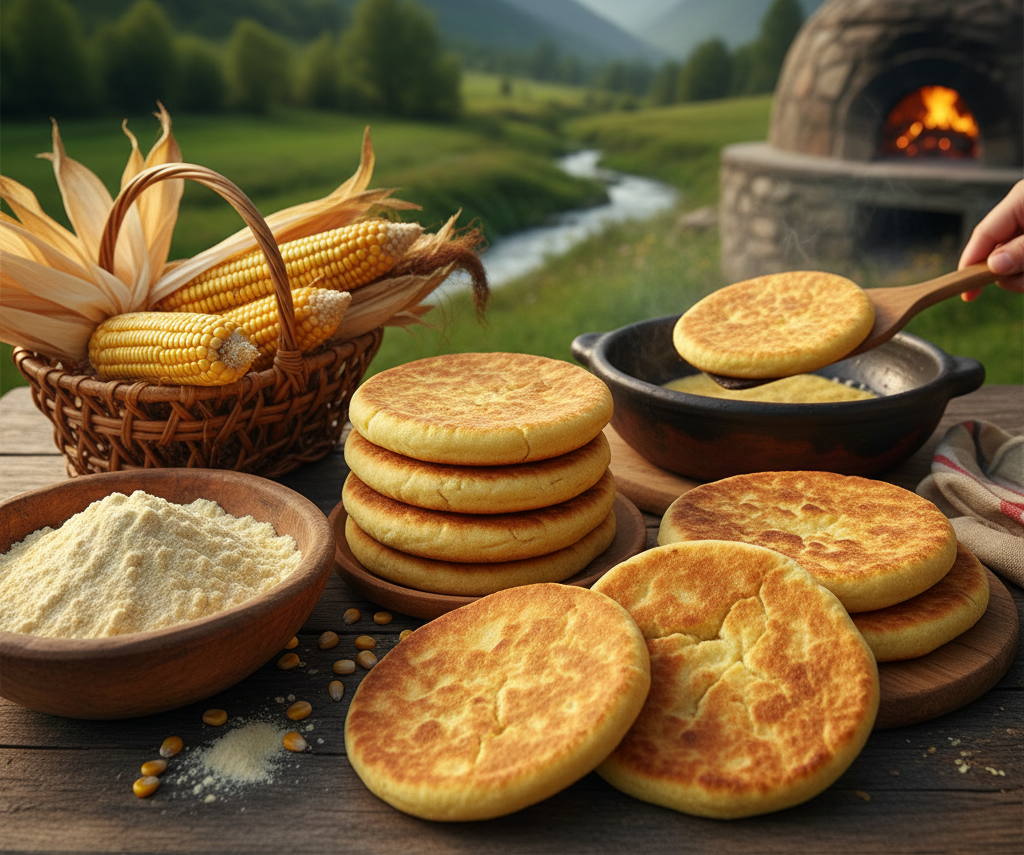
🌽 The History of Mchadi: How Corn Became Georgia’s Bread
Here’s the funny part: corn is not an ancient guest in Georgia at all. It sailed over from the Americas and arrived sometime in the 16th or 17th century. But it settled in as if it had always grown there, the damp climate of western Georgia turned out to be perfect for it. Georgia’s official tourism portal writes that corn almost completely pushed out millet, which had been grown there before. Every family in western Georgia had its own cornfield, and a good harvest meant no fear of hunger come winter. Flour from the small watermills tucked into river gorges was especially prized, light, almost flaky.
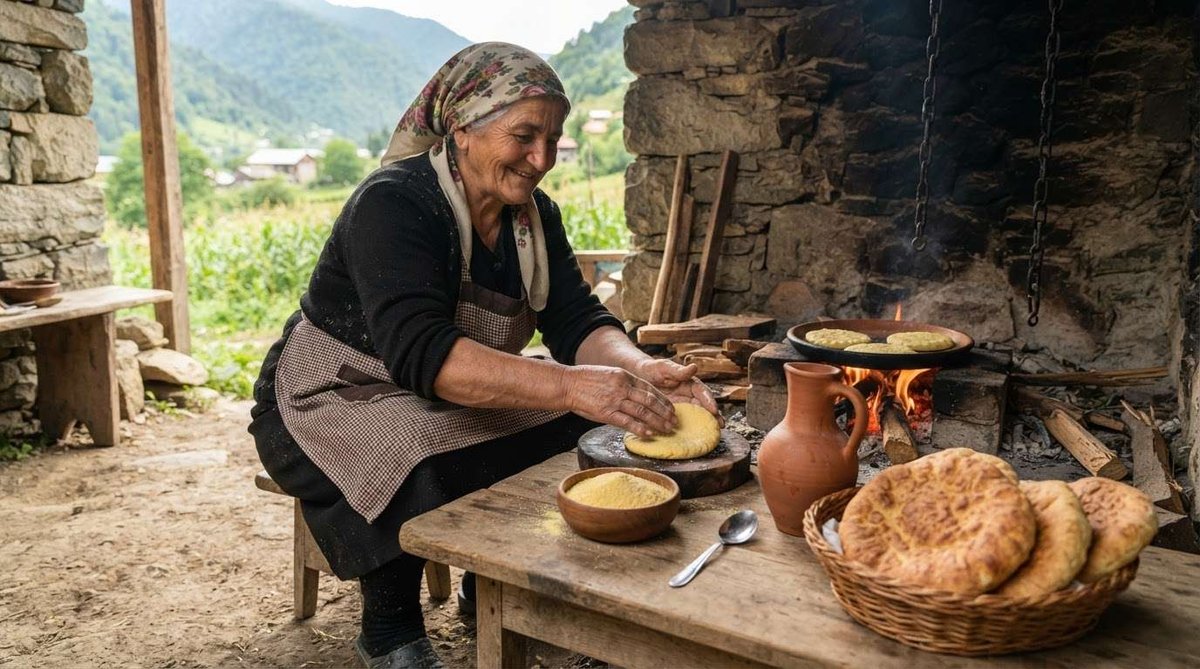
The word “mchadi” itself is older than corn, and there’s a small mystery tucked inside it. One version says it once named the old millet bread, and the name simply carried over to the new corn flatbread. Another traces it to a Georgian verb meaning “to lay down” or “to set,” describing how the dough is placed onto the pan. In everyday speech, people often shorten it even further to “chadi.”
Over time, Georgia split roughly into two halves. In the west, in Imereti and Samegrelo, people baked corn mchadi every day. In the east, in Kakheti and Kartli, bread meant wheat puri from a tone oven. So if you’re served mchadi in Kutaisi and puri in Telavi, that’s not a coincidence, it’s history on a plate.
🔥 How Mchadi Used to Be Baked
No gas stoves back then, but plenty of ingenuity. Every method gave its own flavor, and villages still argue over which one's best.
Today mchadi is fried in a pan almost everywhere, but in the villages of Imereti and Samegrelo, people still pull out the clay ketsi. Curious what this cookware is and why food tastes better in it? Take a look at our article on clay ketsi pans.
👩🍳 Mchadi Recipe at Home
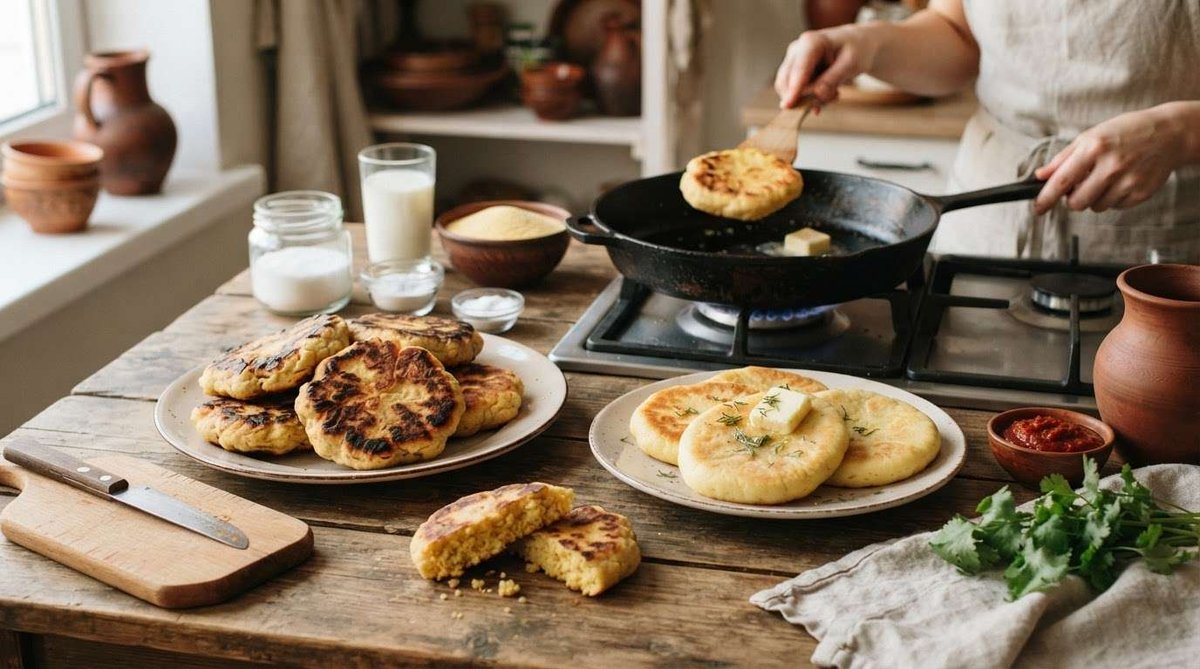
Good news: it’s hard to ruin mchadi. There are two paths. The rustic one, the most honest: flour, water, salt, and a dry pan. And the city one, a bit softer: with some milk, a pinch of baking soda, and a drop of oil. Pick whichever matches your mood, neither one takes more than half an hour.
- Mix the dry ingredientsSift the corn flour into a bowl and add the salt. For the soft version, toss in the sugar and baking soda too.
- Knead the doughPour in the warm water bit by bit, kneading by hand. For the soft version, add the milk and butter as well. How do you know it's ready? The dough breaks cleanly, doesn't crumble, and doesn't stick to your hands. You might need a little more or less water depending on the flour, so don't be afraid to adjust as you go.
- Let it restCover the bowl and let it rest for 10–15 minutes. The flour will absorb the water, and shaping the flatbreads will go much more smoothly.
- Shape the flatbreadsWet your hands with water, pinch off a piece of dough about 80 g (2.8 oz), and pass it from palm to palm until you get an oval about 1.5–2 cm (0.6–0.8 in) thick. Wet hands are your best friend here, they keep the edges from cracking.
- Heat the panWarm a cast-iron skillet or ketsi over medium heat. For the rustic version, skip the oil entirely; for the soft one, pour in just a thin layer.
- FryLay the flatbreads in the pan and cook over low heat for about 5 minutes per side, until golden. If you're making one big, thick rustic-style loaf in a dry pan, give it 20–30 minutes before flipping, patience pays off here.
- Serve hotMchadi is best eaten the moment it comes off the pan, while it still has some crunch. If any is left over by morning, just warm it back up in a dry skillet.
🧀 Variations: Mchadi with Cheese, Chvishtari, and Relatives
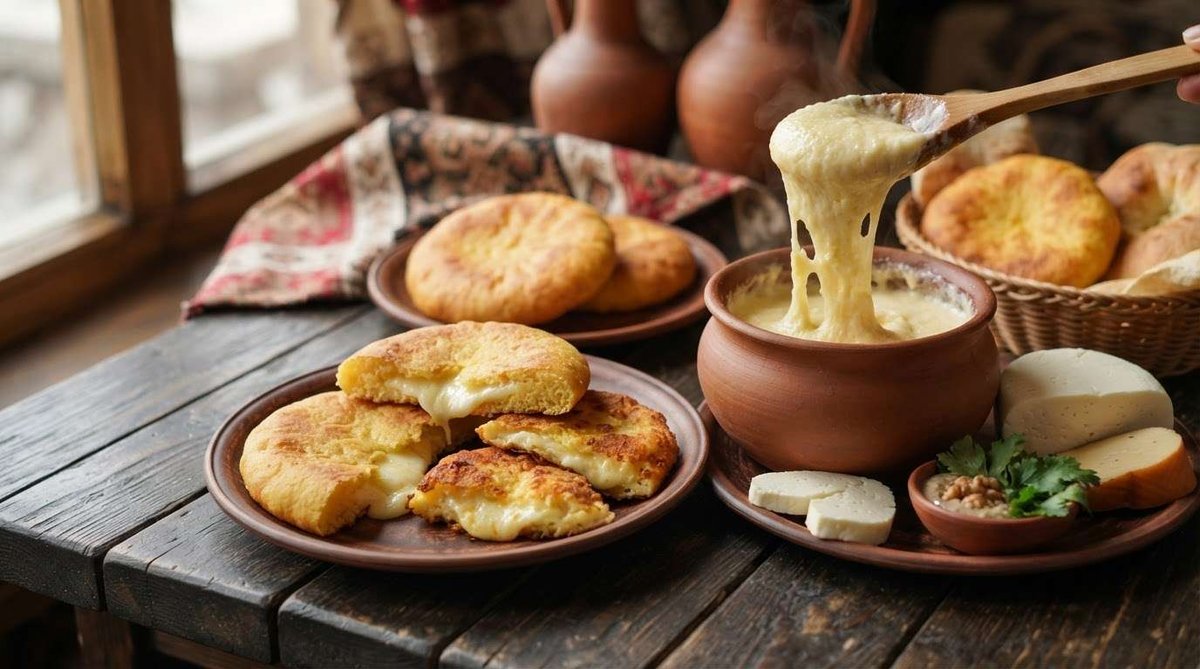
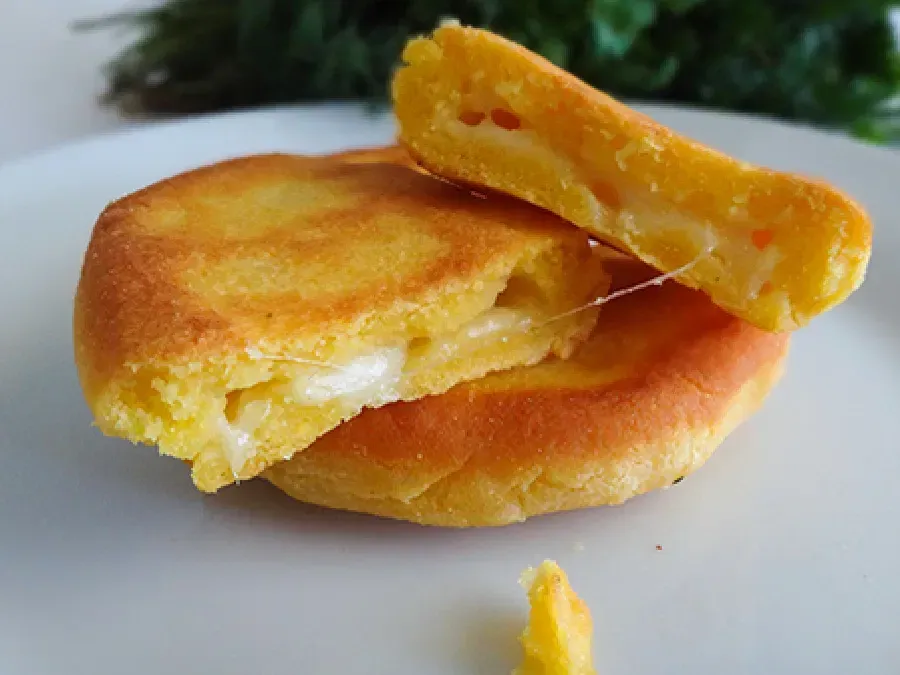
Georgian grandmothers will tell you, of course, that real mchadi is flour, water, and salt, full stop. But in cafes you’ll often find mchadi with sulguni or herbs mixed right into the dough, and it’s delicious too. From there, the family tree branches out. Chvishtari is a dish entirely its own: a generous handful of grated sulguni, ideally smoked, gets worked into corn dough, which is then fried in oil. The result is a cheesy flatbread that’s hard to stop eating. It’s considered a signature dish of Samegrelo and Svaneti. And the cheesiest relative of all is elarji, a stretchy cornmeal porridge with sulguni that pulls into long strands off your spoon.
If that table left you craving cheese, here’s our article on elarji: a Megrelian dish of cornmeal and sulguni.
🍲 What to Serve with Mchadi
Mchadi is almost flavorless on its own, and that’s exactly the point. It’s like a good friend at the table: it doesn’t steal the spotlight, it just helps everything else shine.
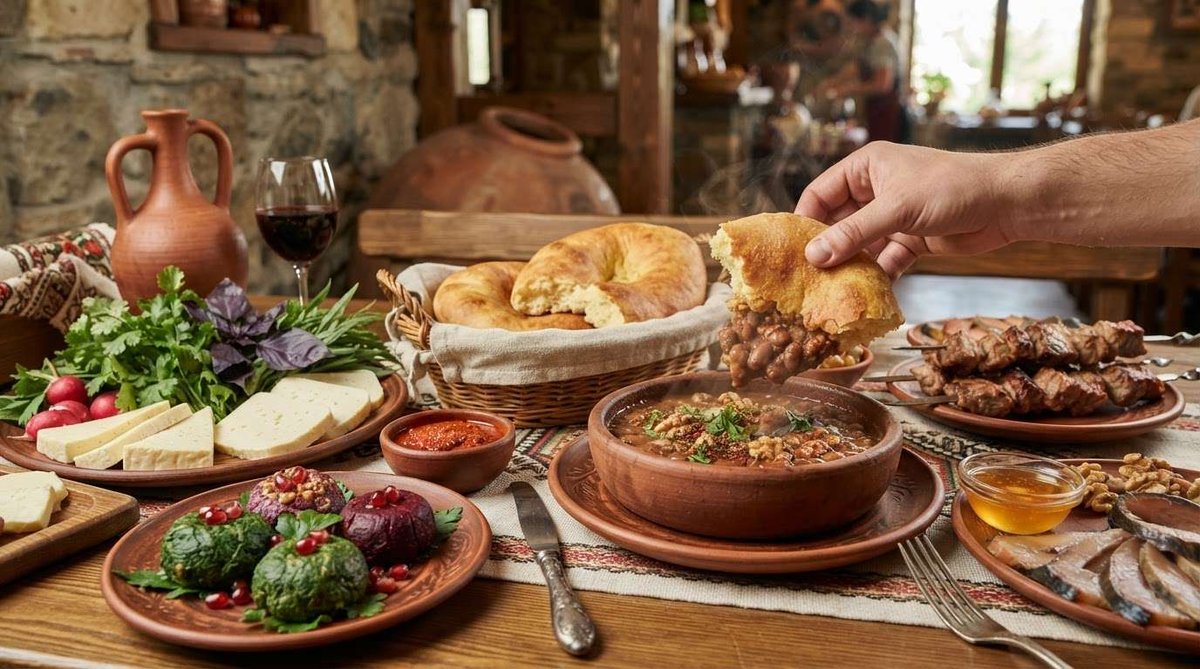
Here’s what Georgians eat it with:
- With lobio. The classic of classics. People crumble mchadi right into hot bean stew, or dip it in, the way you’d dip bread into soup. If you haven’t tried lobio yet, start with our article on what to eat with lobio.
- With cheese. Sulguni, Imeretian cheese, or soft nadugi. In western Georgia, this is just an everyday breakfast, and honestly, you won’t find a better one.
- With herbs and pkhali. A plate of fresh herbs, radishes, and pkhali made from spinach or beets with walnuts. Light, bright, and very Georgian.
- With adjika. Spicy Megrelian adjika on a plain corn flatbread is love at first bite.
- With smoked meat and grilled dishes. Mchadi pairs beautifully with smoked fish, chakapuli, and meat off the grill.
- With honey. Unexpected but genuinely delicious: warm mchadi, cheese, and honey. Our readers tried exactly this combination in Kutaisi, you can read their review in our article on Georgian bread.
Put the knife and fork away: mchadi is broken apart by hand. In restaurants it’s usually brought to the table hot, in a basket or on a wooden board, almost always with cheese alongside.
📍 Where to Try Mchadi in Georgia
Look for it on the menu right next to lobio and cheese. Touristy cafes don't always have it, but family-run restaurants and guesthouses almost always do.
We’ve rounded up places in our catalogs, browse by reviews: restaurants and cafes in Imereti, restaurants and cafes in Samegrelo, and restaurants in Tbilisi.
Flatbreads cracking at the edges? Chances are your dough needs more water, or your hands are too dry. Keep a bowl of warm water next to you and wet your palms before shaping each piece, you'll notice the difference right away. And bring home a bag of local, finely ground corn flour from Georgia, you'll spot it in supermarkets labeled "mchadis fkvili," literally "mchadi flour." With that in hand, your homemade mchadi will taste close to the real thing from Kutaisi.
Have you tried mchadi yet? Maybe you bake it at home from a family recipe, or know a spot where it’s especially good? Tell us in the comments what you like to eat it with. We’re genuinely curious, and your tip might just help another reader too.
Updated October 2026. We checked the history and old baking methods against Georgia’s official tourism portal, and cross-checked the recipe with Georgian culinary sources. How much water you need depends on your flour, so watch the dough, not the measuring cup.
❓ Frequently Asked Questions About Mchadi
💬 It’s a Georgian flatbread made from corn flour, water, and salt. It’s fried in a pan or baked in a clay ketsi, and eaten in place of bread. It’s especially loved in western Georgia.
💬 From western Georgia, mainly Imereti and Samegrelo. Corn arrived there in the 16th or 17th century, pushed out millet, and mchadi became the everyday bread.
💬 There’s no exact translation, but there are two nice theories. One says the name carried over from the old millet bread. The other links it to a verb meaning “to lay down,” describing how the dough is placed on the pan. In everyday speech, people often just call it “chadi.”
💬 The classic recipe uses only corn flour, water, and salt, so there’s no wheat involved. That said, some cafes do mix in wheat flour, so if gluten is an issue for you, it’s worth asking your server.
💬 Usually the flour is too coarse, or the dough doesn’t have enough water. Use a fine grind, add warm water gradually, and shape the flatbreads with wet hands, that should solve it.
💬 Small flatbreads about 1.5–2 cm (0.6–0.8 in) thick need roughly 5 minutes per side over low heat. A large, thick rustic loaf in a dry pan needs 20–30 minutes before you flip it.
💬 Mchadi is a plain cornbread with no filling. Chvishtari has plenty of sulguni cheese worked right into the dough and gets fried in oil, making it a much richer, cheesier snack.
💬 With lobio, sulguni or Imeretian cheese, fresh herbs, pkhali, adjika, and smoked meats. For something unexpected, try it with cheese and honey, the way they do in Imereti.
💬 Yes. Place the flatbreads on a greased baking sheet and bake at 200°C (390°F) until golden, flipping once. It won’t be quite as crisp as pan-fried, but it’s still delicious.
💬 At restaurants in Kutaisi and Zugdidi, at guesthouses in Imereti and Samegrelo, and at Georgian cuisine restaurants in Tbilisi. We’ve gathered reviewed spots in Madloba’s catalogs by region.

0 comments
Log in to leave a comment