


⛪ The Cathedral of Sts. Peter and Paul in Kutaisi: a modest church with an imperial past
📋 What you need to know before your visit
| 📍 Address | Tevdore Beri street, 9, Kutaisi |
| 🕐 Opening Hours | Mon–Fri 10:00–16:30, Sat–Sun 09:00–18:00 |
| 📅 Construction | Founded in 1881–1882, fully completed by 1903 |
| 🙏 Consecration | With the blessing of Bishop Gabriel (Kikodze) |
| 🏛️ Style | Pseudo-Russian style with classicist features |
| 🏗️ Status | the only cathedral in Kutaisi |
🧭 About this article
The Cathedral of Saints Peter and Paul in Kutaisi was founded in 1881–1882 in the historic Sili district. Useful if you want to learn the story of its construction, its architecture, and the personal stories of people for whom this place means more than just a sight to see.
⛪ A place that lives, not just stands there looking good
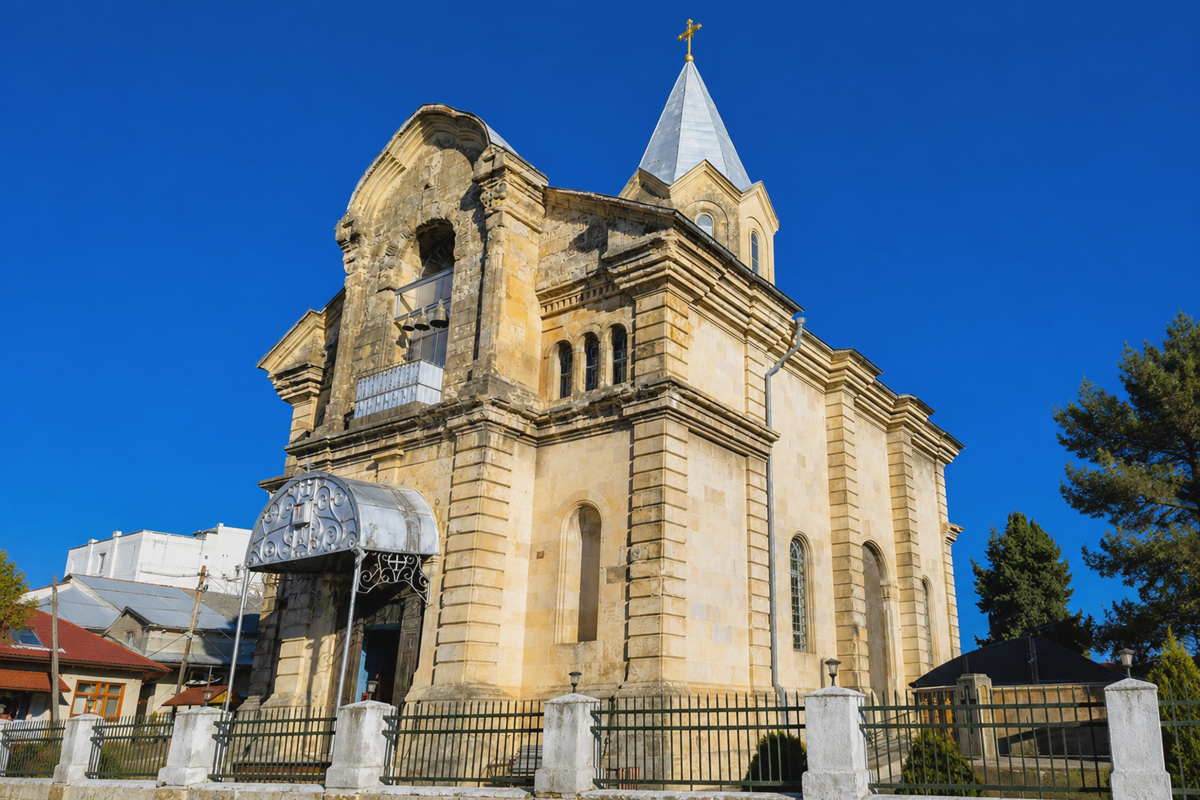
On Tevdore Beri Street, in the old Sili district, stands a building that's hard to mistake for an ordinary neighbourhood church: its dome holds itself too confidently above the rooftops of the surrounding houses. This is the Cathedral of Saints Peter and Paul, and, honestly, the first thing that catches your eye isn't the architecture, it's how ordinary people's daily life feels here.
Visitors say the building has held up remarkably well for its age. For locals, it stopped being an architectural monument long ago, it's simply the place where people get married, have their children baptised, and stop in to pray. That, really, is the difference between the Cathedral of Saints Peter and Paul and a dozen other churches of Kutaisi that tourists find more interesting than locals do: here, the history hasn't been preserved behind glass, it's still going on.
📜 1881: how it all began
The cathedral was founded in 1881–1882, by blessing of Bishop Gabriel (Kikodze). This isn't an abstract name out of a chronicle: Gabriel actually governed the Imereti diocese in the second half of the 19th century, and today his relics rest at Gelati, honoured alongside the monastery's other holy treasures. In other words, the man who consecrated this cathedral himself became part of Georgian sainthood.
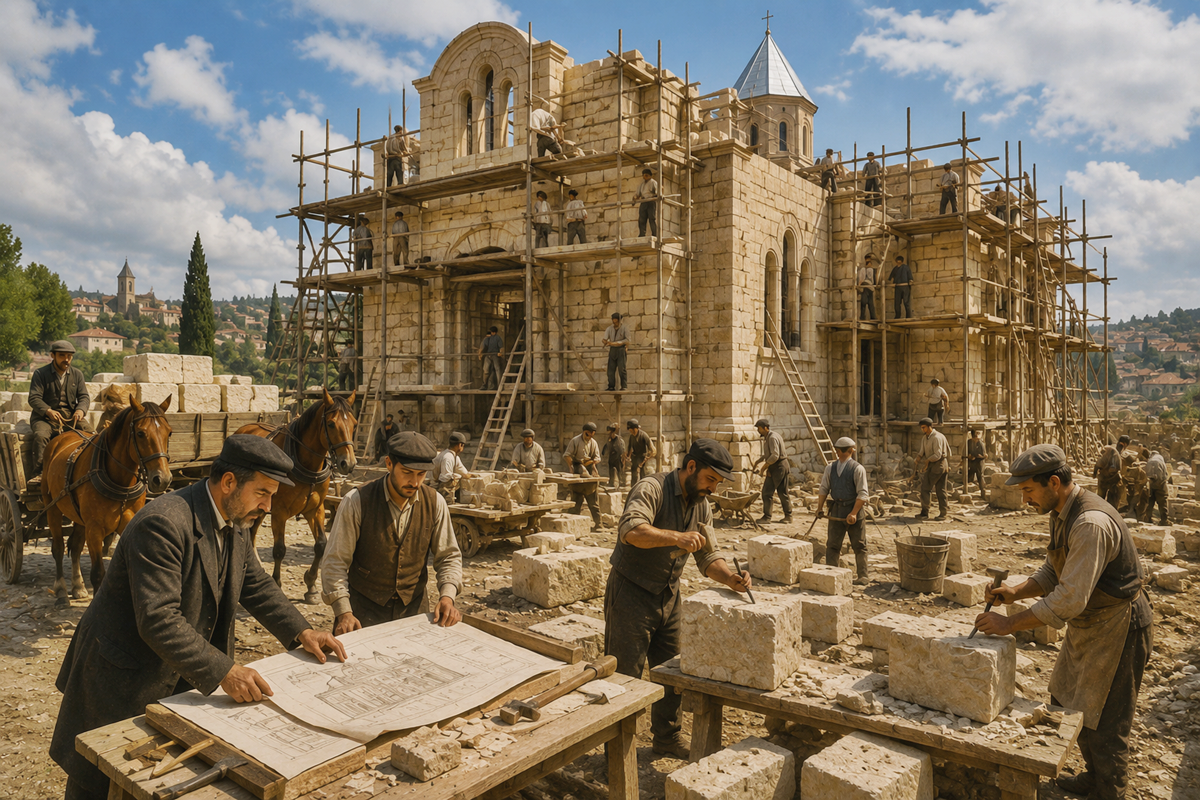
The cathedral was built by Greek craftsmen A. Zakharidi and A. Slirov, and when something didn't go to plan, a Georgian, I. Berekashvili, saw the work through to completion. According to local tourism sources, hewn stone from Eklari, a village near Kutaisi, was used for the construction. The construction itself spanned two decades: the cathedral's foundation stone was laid in the early 1880s and it wasn't fully completed until 1903.
What's also interesting is who backed the project financially: according to available records, it was supported by the future emperor Nicholas II and Saint John of Kronstadt, one of the most venerated Orthodox ascetics of his time. Not the most obvious pairing of names for a provincial Imereti church, but this is apparently how church life in the empire worked at the end of the 19th century: the capital helped the provinces, not the other way around.
☭ Closure under the Bolsheviks and return in 1944
In fact, "the capital helping the outskirts" didn't last long. After the Sovietization of Georgia, the Bolsheviks closed the cathedral, like almost all active churches in the country, and converted the building into a communist club. Part of the church's furnishings were donated to a museum rather than destroyed, which, by the standards of the era, could almost be considered merciful.
Services in the cathedral resumed only in 1944. So the current, calm and everyday life of the parish—weddings, baptisms, regular Sunday services—is not simply a continuation of the 19th-century history, but a true revival after several decades when the building served everything but its original purpose.
💡 Editor's tip
Don't rush straight inside if the service hasn't started yet. The grounds around the cathedral, the trees, benches and well-kept paths, are worth a few minutes on their own. Visitors say this is one of those rare places in Kutaisi where you actually want to sit and do nothing, rather than snap a quick photo and move on.
🏛️ Why the building doesn't look like its neighbours
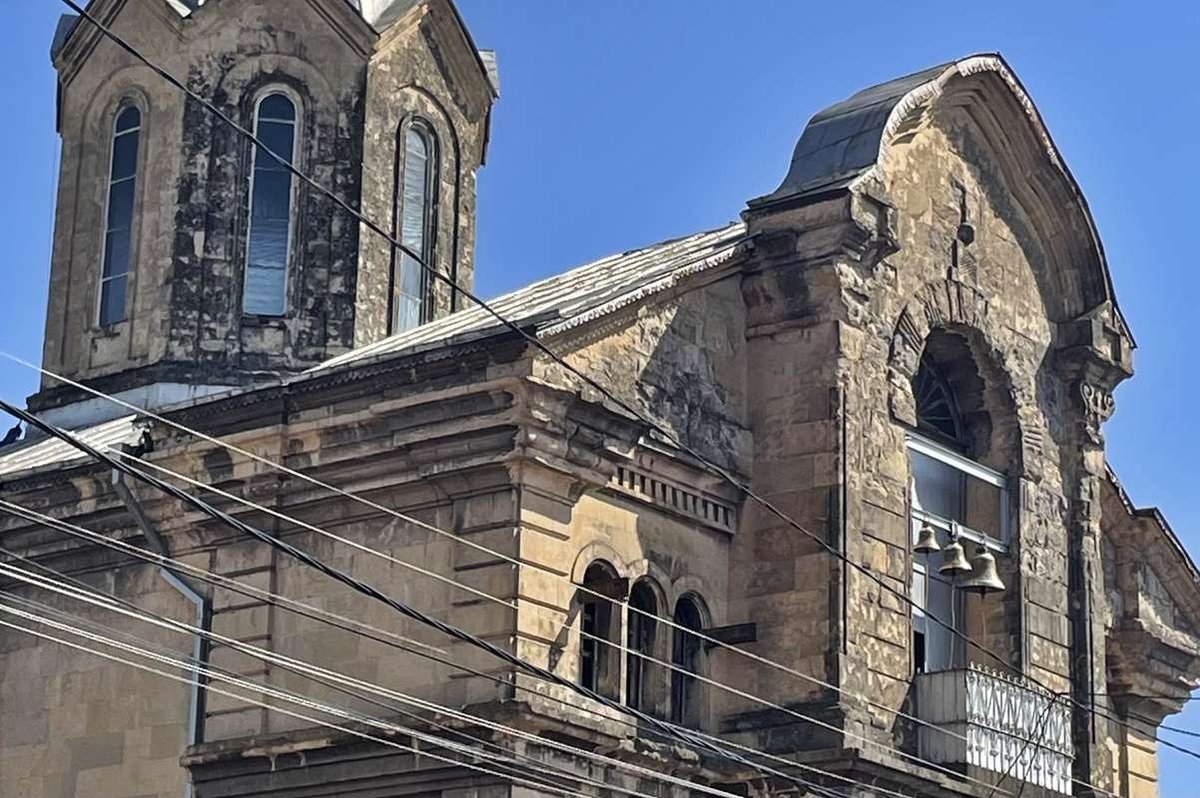
The first thing that surprises anyone who's already seen plenty of Georgian cross-domed churches: the Cathedral of Saints Peter and Paul looks completely different. The building was built in the pseudo-Russian style with a touch of classicism, rather than in the manner traditional to Imereti. Square in plan, with a single central dome above the crossing, it resembles churches of central Russia more than the neighbouring churches of Kutaisi.
Is that a coincidence? Hardly. The pseudo-Russian style was almost the official language of imperial church architecture at the end of the 19th century, and this building's appearance in Kutaisi is most likely part of the same logic that lay behind the funding from the capital: the cathedral wasn't built just for the local parish, it was built as a visible marker of the empire's presence.
👤 What's inside, and what really makes this place memorable
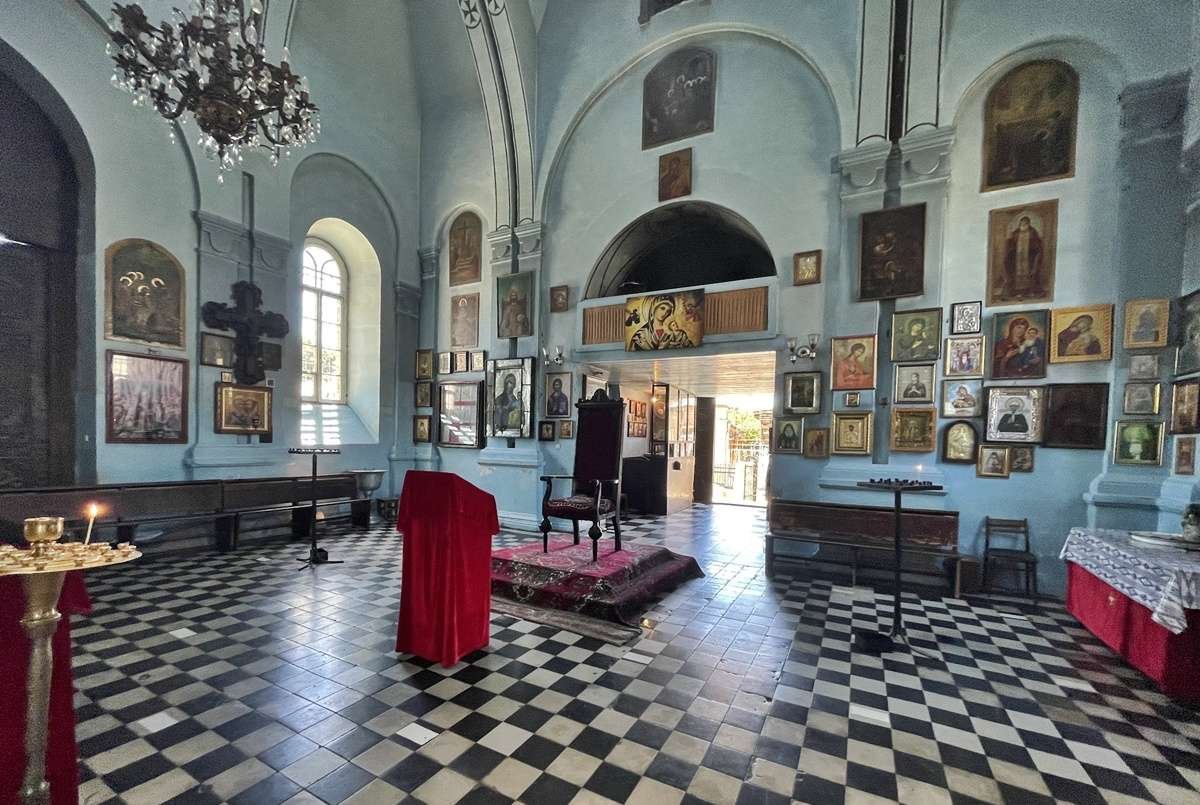
Inside, the cathedral is brighter than the façade suggests: the vaults are painted a bluish-grey, decorated with Maltese crosses along the ribs, and the floor is laid with black-and-white checkerboard tiles. The walls are covered with icons in frames of every kind, from plain wood to gilded settings, and a gilded iconostasis stands out in front of the altar.
Far more striking than the interior, though, are the stories of people for whom this cathedral isn't an architectural monument but part of their personal biography. One visitor was baptised here, and his parents were secretly married in this cathedral back in Soviet times, when doing so could have cost them their careers.
Another visitor, a woman from St. Petersburg, heard about "her own Peter and Paul" here in Kutaisi and made a special trip to see it, calling the cathedral a "brother" to the one back home in St. Petersburg. Standing inside, she said, felt almost like looking through a window into the past.
🗺️ How to get here
The cathedral sits within a residential historic part of Kutaisi, so it's easier to navigate by map than by general route descriptions.
🌍 What's nearby


ℹ️ The historical information is based on open, specialized sources on the architecture of Orthodox churches and the official tourism website kutaisi.travel. The detail about the Eklari stone is provided with a caveat, as it appears in only one source. Opening hours are current at the time of publication; please check before visiting.
💬 Tell us
Have you been to the Cathedral of Saints Peter and Paul in Kutaisi? Share your impressions in the comments, and if the cathedral is tied to your own family's story, we'd love to hear about that too.
📝 In short
The Cathedral of Saints Peter and Paul is easy to overlook on a list of Kutaisi's sights, it keeps such a modest profile next to the more famous Gelati and Bagrati. But it has perhaps the most understandable fate of all: it was built, closed by the Bolsheviks, converted into a club, and then returned to the faithful. The architecture will be remembered in photographs, but the fact that the building survived the closure and was brought back to life will linger in the memory much longer.
🧡 Keep reading about Kutaisi
- ⛪ The Church of the 100,000 Martyrs in Kutaisi: remembering the tragedy of 1226
- ⛪ The Armenian Church of St. George in Kutaisi: a community's legacy
- ⛪ Mirkma Church in Tskaltubo: what this rare name means
💾 Save this article to come back to it before your trip to Kutaisi.
❓ Questions people often ask about the Cathedral of Saints Peter and Paul in Kutaisi
💬 Construction began in 1881–1882, with the blessing of Bishop Gabriel (Kikodze), and was fully completed by 1903.
💬 Yes, after the Sovietization of Georgia, the Bolsheviks closed the church and converted the building into a communist club, donating some of the furnishings to a museum. Services resumed only in 1944.
💬 The stone building was built by Greek craftsmen A. Zakharidi and A. Slirov, and the work was later completed by I. Berekashvili.
💬 In the pseudo-Russian style with classicist touches, the building is square in plan with a central dome, an unusual choice for church architecture in Georgia.
💬 At 9 Tevdore Beri Street, in the historic Sili district.
💬 According to a community-maintained catalogue of Orthodox architecture, Kutaisi has 26 churches and just one cathedral in the strict sense of the word, this one.

1 comment
Log in to leave a comment