


⛪ The Armenian Church of St. George in Kutaisi: the community's legacy
📋 What to know before your visit
| 📍 Address | 15 Dvalishvili Street, Kutaisi, by the Rioni River |
| 🕐 Opening hours | Mon–Fri 10:30 AM–4:30 PM, Sat 10:00 AM–5:30 PM, Sun 9:00 AM–4:30 PM |
| ✝️ Denomination | Armenian Apostolic Church |
| 🎶 Highlight | the male choir's singing, often singled out by visitors |
| ⚠️ Not to be confused with | the Lower Church of St. George, a separate building now under Georgian Orthodox use |
🧭 About this article
The Armenian Church of St. George in Kutaisi is the spiritual centre of the city's Armenian community, standing on the bank of the Rioni. Useful if you want to understand how this church differs from Georgian Orthodox churches, and to learn more about the history of the Armenian diaspora in Kutaisi.
⛪ A church on the bank of the Rioni
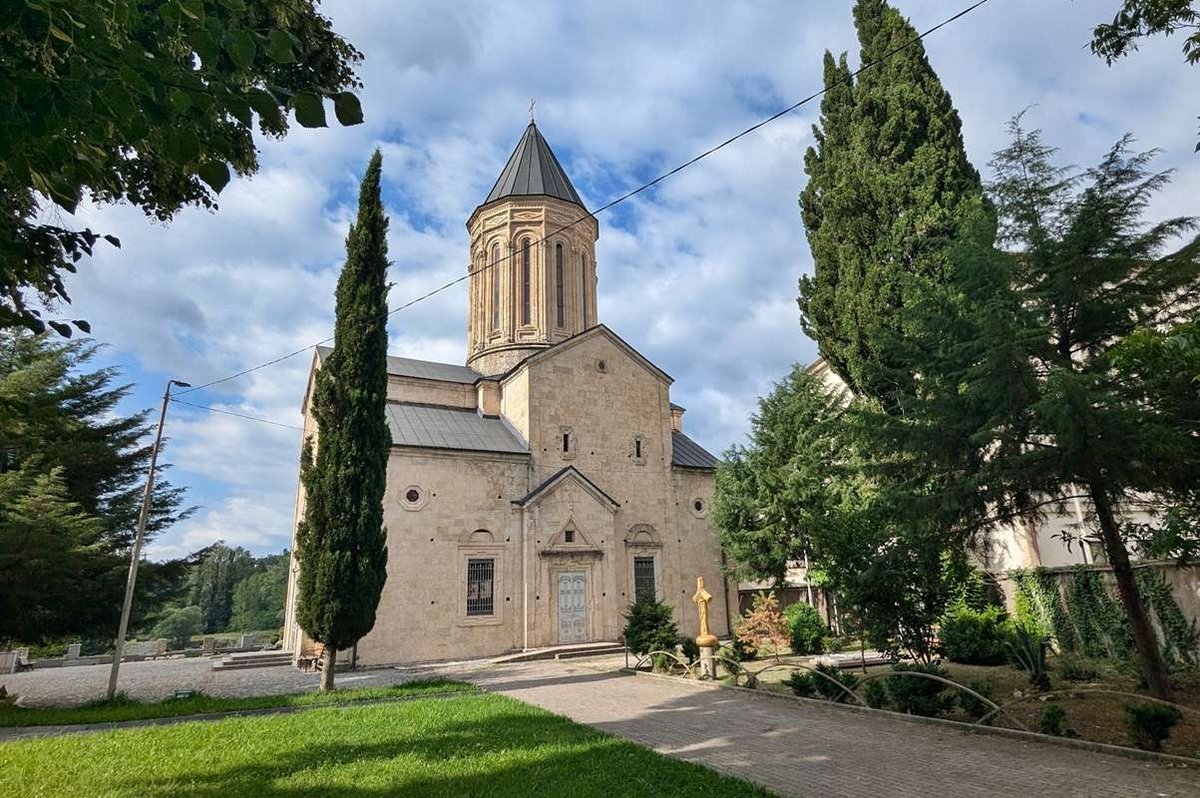
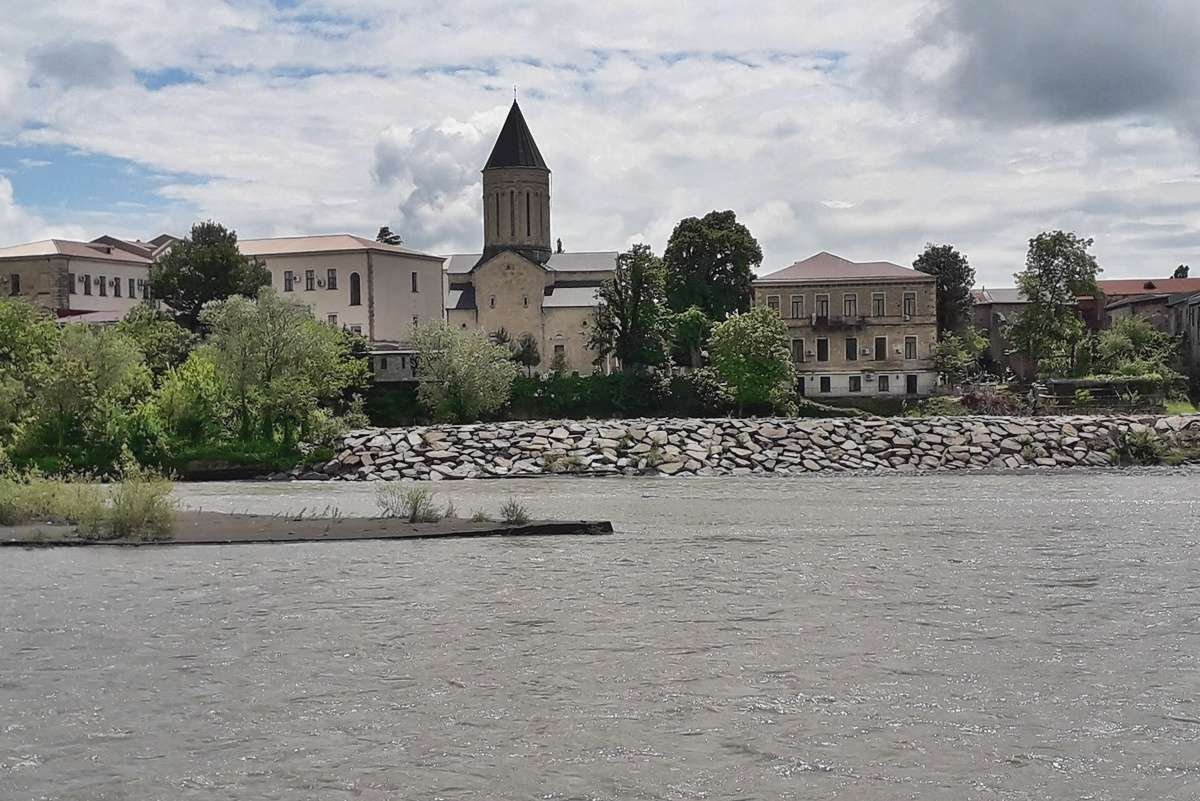
The Armenian Church of St. George stands on Dvalishvili Street, right by the water. It's an active church of the Armenian Apostolic Church, the spiritual centre of Kutaisi's Armenian community.
The place is recognisable not just for its architecture but for its surroundings: massive boulders lie next to the church, where you can sit and watch the river flow and the city go about its life.
✝️ How the Armenian Apostolic Church differs from Georgian Orthodoxy
The Armenian Apostolic Church is one of the oldest Christian churches in the world. A few facts help explain where the differences between it and Georgian Orthodoxy come from:
- In 301 AD, Armenia officially adopted Christianity as its state religion, the first country in the world to do so
- In 396 AD, the scholar Mesrop Mashtots created the Armenian alphabet, which made it possible to translate the Bible into the native language and cement the church as a national institution
- In 506 AD, at the Council of Dvin, the Armenian church did not accept the decisions of the Council of Chalcedon, and from that point its path diverged from the Byzantine tradition, and by extension from the Georgian Orthodox one
Formally, both churches, Armenian and Georgian, trace back to a shared early Christian heritage, but it was the decision of 506 that became the point after which they exist separately.
💡 Editor's tip
Try to catch the church during a service, when the male choir sings. According to visitors, the singing leaves the strongest impression, even more than the architecture. After the visit, you can head down to the river and sit on the boulders nearby, that's part of the same outing, not a separate stop on the route.
📜 Armenians in Kutaisi: a short history of the diaspora
The Armenian community in Georgia is one of the oldest in the region. Vakhushti Bagrationi's "Geography of Georgia" already records that in the 17th–18th centuries Armenians lived in various parts of the country, including Kutaisi. Over time, a notable Armenian trading and craft community took shape in the city.
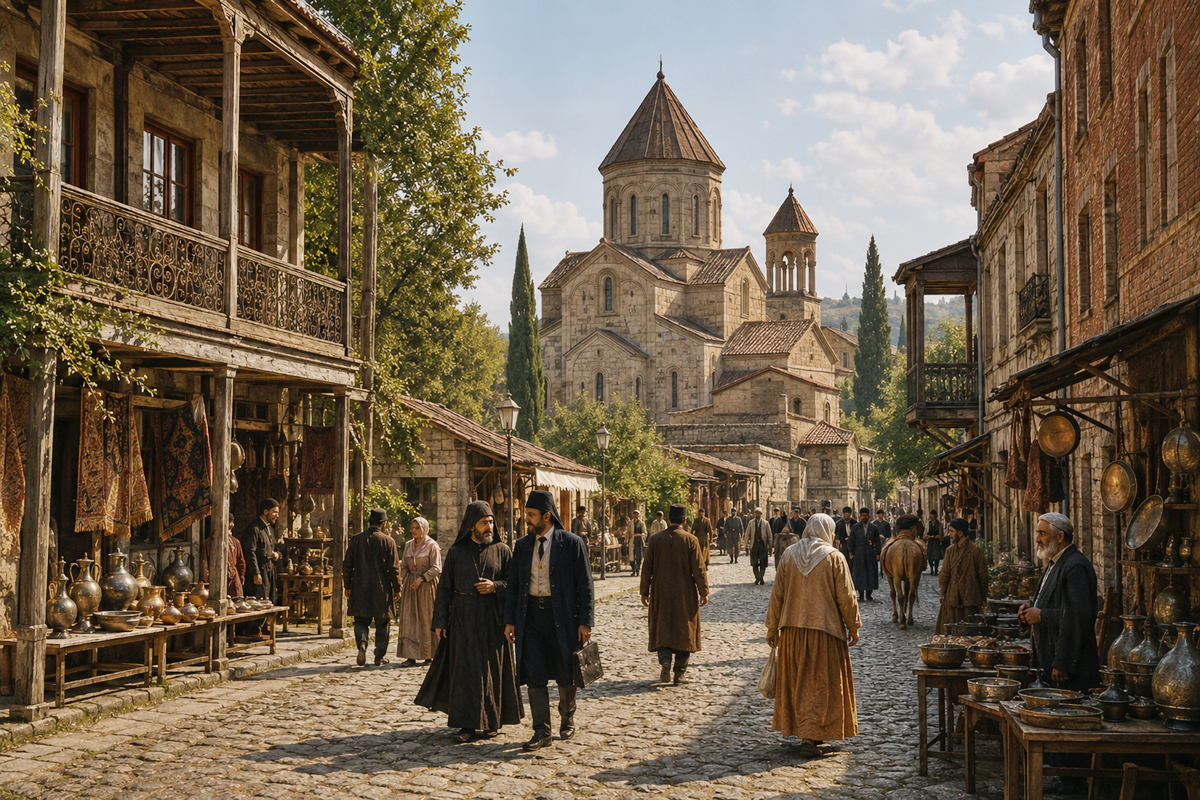
The Russian Wikipedia entry on Kutaisi cites a telling fact: at a certain point in its history, the city had five Orthodox churches, one Armenian church, one Catholic church (Georgian Orthodox today), and one synagogue. That means the Armenian church wasn't a random exception, it was part of the established religious landscape of a multi-faith city, alongside Georgian, Catholic and Jewish communities.
The fate of the Armenian diaspora in Georgia in the 20th century was not an easy one: according to the 1989 census, more than 437,000 Armenians lived in the country, but after the collapse of the Soviet Union their numbers fell significantly. Even so, Armenian communities continue to exist in cities across the country, and Kutaisi is no exception.
👀 What you'll see and hear today
According to visitors, the church makes a strong impression through the combination of its architecture and its natural surroundings. One visitor described the building as "very beautiful and distinctive", though soot from candles has slightly damaged the frescoes. Another visitor came specifically twice to hear the male choir sing, calling this one of their favourite places in the city.
The area around the church also invites a bit of rest: benches by the river, with a view of the Rioni and the city skyline. One review honestly noted that the bench wasn't the most comfortable for a long sit, but still called the church itself beautiful, so don't expect polished, tourist-ready infrastructure, think of the place as an atmospheric, unvarnished spot instead.
🗺️ How to find the church
The church stands on the riverbank, so it's easier to navigate by map than by a written route.
🌍 Near the church


ℹ️ Opening hours and contact details are given per the catalogue listing at the time of publication and may change, please check before visiting. Historical information about Kutaisi's Armenian community is drawn from publicly available sources.
📝 In short
The Armenian Church of St. George is a living reminder that Kutaisi has been a multi-faith city for centuries: Georgians, Armenians, Jews and other communities have coexisted here for generations, and this church is one of the few surviving symbols of that coexistence.
🧡 Keep reading about Kutaisi
- ⛪ The Monastery of Saint Thecla in Kutaisi: the story of the first martyr
- ⛪ Mirkma Church in Tskaltubo: what this rare name means
- ✝️ Protestant churches in Georgia: what they are and how they appeared
💾 Save this article to come back to it before your trip to Kutaisi.
❓ Questions people often ask about the Armenian Church of St. George
💬 The split happened in 506 AD, when the Armenian church did not accept the decisions of the Council of Chalcedon. Since then, they've been separate, independent Christian traditions, though both trace back to a shared early Christian heritage.
💬 No, they're two different buildings. The Lower Church of St. George, according to some accounts, was also originally Armenian, but has functioned as a Georgian Orthodox church since 1989. The church on Dvalishvili Street is a separate, independent church.
💬 Yes, Armenians lived in Kutaisi as far back as the 17th–18th centuries, and historically the city had a separate Armenian church alongside Georgian Orthodox churches, a Catholic church, and a synagogue.
💬 Weekdays 10:30 AM to 4:30 PM, Saturdays 10:00 AM to 5:30 PM, Sundays 9:00 AM to 4:30 PM.
💬 If you're interested in Kutaisi's multi-faith history or want to hear the male choir sing during a service, yes. The riverside location also makes it a good spot for a quiet walk.

5 comments
Log in to leave a comment