




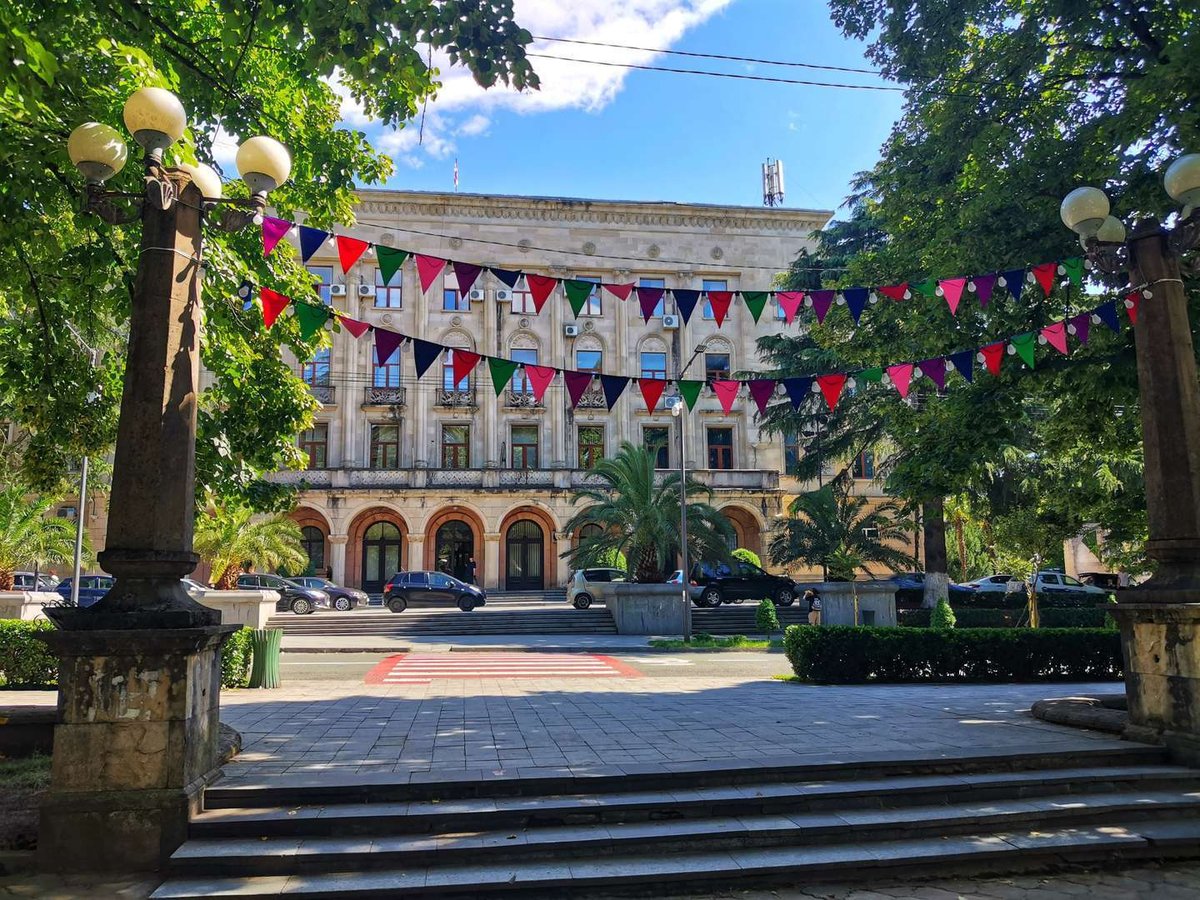
🏛️ Kutaisi City Hall building on Rustaveli Avenue 3
🟨 The key facts first
| 🏛️ What it is | The Kutaisi City Hall building, the seat of the city government |
| 📍 Where | 3 Shota Rustaveli Avenue, in the centre of Kutaisi |
| 📅 Era | Second half of the 20th century, modern look after reconstruction |
| 🏢 What is inside | Kutaisi City Hall, the working body of the city government |
| ⚠️ For the tourist | A working government office, not a museum: viewed from the outside |
| 🗺️ More details | The Kutaisi City Hall building |
💡 Tip: the city hall stands in the centre, on Rustaveli Avenue, so it is easy to see in passing during a walk through the city, without planning a separate visit.
🟦 What this article is about
The city hall building at 3 Rustaveli Avenue is easy to spot in the centre of Kutaisi, but few people know its history. Here we will sort out what kind of building it is, when it appeared and how it got its modern look, what is inside it today, and why it should not be confused with another well-known building in the city, the former Parliament of Georgia.
It will be useful if you are walking through the centre of Kutaisi and want to understand what you are passing, are searching online for "kutaisi city hall" or the address on Rustaveli 3, or are simply interested in the architecture of the city's renovated centre.
🏙️ Where it is and what it looks like
The city hall building stands right in the centre of Kutaisi, at 3 Shota Rustaveli Avenue. This is the business heart of the city: around it are government offices, banks, cafes and shops, while the embankment of the Rioni and the main bridges are a few minutes' walk away. The city hall is easy to find: it sits on one of the city's central axes and is clearly visible from the street.
In appearance it is a modern administrative building in a strict, businesslike style, without decorative excess. A clean facade, straight lines, an emphasis on function rather than grandeur. This look fits well into the renovated centre of Kutaisi, where large-scale reconstruction brought many buildings of concrete, glass and light-coloured stone. For a tourist it is not a separate site you travel for, but a noticeable landmark that is convenient to pass by during a walk through the centre.
🏛️ Architecture and history of the building
The city hall building at Rustaveli 3 dates to the second half of the 20th century. The exact year of the original construction is not recorded in open sources, so we will not tie it to a specific date, but on the whole it is a structure of the Soviet period, the kind that the centre of Kutaisi was built up with in those decades.
The building acquired its modern look later, as a result of reconstruction. The updated design and the rebuilding project were carried out with the participation of the United States Agency for International Development (USAID) and the architect Maka Shelekidze, and the renovation itself fell in the late 2010s. That is why the building looks modern and neat today, with no signs of age: what we see before us is essentially a reimagined version of an old administrative structure.
This path is typical of the centre of Kutaisi as a whole. After large-scale reconstruction the city was noticeably renewed, and old buildings often received a new facade and new content instead of being demolished. The city hall fits this logic: a historical base from the second half of the last century and a modern look that answers the present-day tasks of the city government.
🏛️ The building in facts
- Address: 3 Shota Rustaveli Avenue, central Kutaisi
- Historical base: second half of the 20th century (exact construction date not recorded)
- Reconstruction and updated design: with the participation of USAID and the architect Maka Shelekidze
- Renovation: late 2010s
- Today: a working administrative building of the city government
🏢 What is inside today: the city hall as a body of government
Today the building houses Kutaisi City Hall, that is, the executive power of the city. From here they manage the municipal economy, the city services and the everyday affairs of the city, and here they also receive residents on their applications. In essence this is the working administrative centre of the city rather than an exhibition space, so people come here on business, not on an excursion.
If you need practical details, the address, working hours, phone numbers and municipal services, it is more convenient to check a separate card. This building houses Kutaisi City Hall, where up-to-date information about the work of the city services is gathered. The municipality's official website, kutaisi.gov.ge, is also worth keeping at hand if you plan to make an inquiry.
⚖️ Do not mix them up: the city hall and the Parliament building
In Kutaisi it is easy to confuse the city hall with another well-known building, the former Parliament of Georgia building. These are different objects. The city hall at 3 Rustaveli Avenue is the working seat of the city government in the centre of the city. The large building with the big glass dome, built in 2011–2012 on Irakli Abashidze Street, was constructed specifically for the Parliament of Georgia, which moved to Kutaisi in 2012 and later returned to Tbilisi.
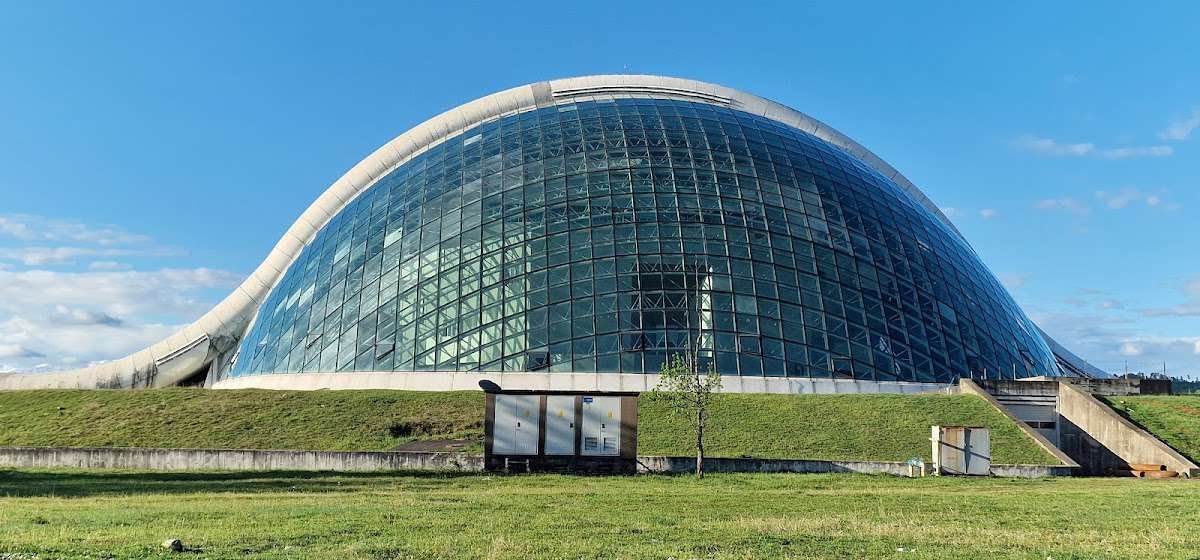
So if you come across an eye-catching structure with a dome in a search or on a photo, it is the Parliament building, not the city hall.
🚶 What to see nearby
The city hall's main advantage is that it stands in the centre of Kutaisi, so it is convenient to look at on the way to the city's real sights, which are within walking distance. There is no need to plan a separate visit, but as one stop on a route through the centre the building fits in well.
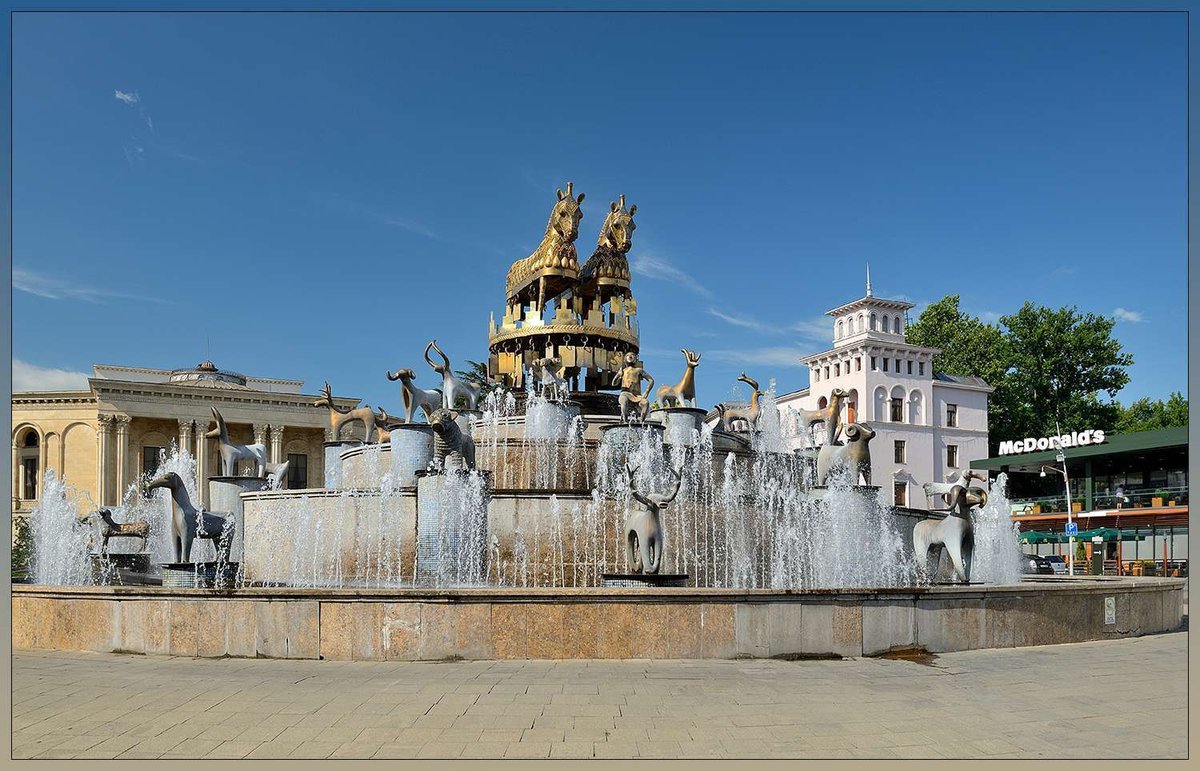
A few minutes' walk away is the embankment of the Rioni with the city's bridges. First of all there is the White Bridge, pedestrian and easy to recognise, and the Red Bridge, the one around which the legend of a French origin lives on. Above the city, on a hill, you can see Bagrati Cathedral, the main symbol of Kutaisi, worth climbing up to for the views. And in the centre, near the city hall, is the Colchis Fountain with its golden figures, one of the calling cards of the renovated Kutaisi.
📍 Nearby in the centre of Kutaisi
⛲ Colchis Fountain
A fountain with golden figures on the central square, a symbol of the renovated city.
Read more🌉 White Bridge
A pedestrian bridge over the Rioni with the sculpture of a boy on its railing.
Read more⛪ Bagrati Cathedral
The main symbol of Kutaisi on a hill, visible from many points in the city.
Read more❓ Frequently asked questions about the Kutaisi City Hall building
💬 In the centre of the city, at 3 Shota Rustaveli Avenue. This is one of the central streets of Kutaisi, near the Rioni embankment and the main bridges.
💬 The building dates to the second half of the 20th century; the exact date of the original construction is not recorded in open sources. It acquired its modern look later, after a reconstruction whose updated design was carried out with the participation of the United States Agency for International Development (USAID) and the architect Maka Shelekidze.
💬 It houses Kutaisi City Hall, the body of city government. It is a working government office where matters of city management are handled and residents are received. The address, working hours and contacts are easier to find in the separate city hall card.
💬 No, this is a working administrative building, not a museum, so there are no tours inside. For a tourist the building is interesting from the outside, as a landmark and part of the look of the centre of Kutaisi.
💬 No. The city hall at Rustaveli 3 and the Parliament of Georgia building, built in 2011–2012 on Irakli Abashidze Street, are different structures. The Parliament building is easy to recognise by its large glass dome.
🧡 The main points in brief
The city hall building at 3 Rustaveli Avenue is not a tourist site but the working seat of the Kutaisi city government. Yet it has its own history: a base from the second half of the 20th century and a modern look that the building acquired after a reconstruction carried out with the participation of USAID and the architect Maka Shelekidze. People do not go inside on a tour, but from the outside it has become part of the city's renovated centre.
If you are walking around Kutaisi, the city hall is convenient to note as a landmark on the way to the real sights: the Rioni embankment, the bridges and Bagrati Cathedral. And to avoid confusing it with the Parliament of Georgia building, keep a simple sign in mind: the Parliament has a large glass dome, the city hall does not.
🧡 Read more about Kutaisi
- The Red Bridge and the legend of its French origin
- Palace of Solomon II: residence of the last king of Imereti
- A one day walk through the centre of Kutaisi
💾 Save the article to come back to it before your trip to Kutaisi.
🗣️ Now over to you
Have you been in the centre of Kutaisi and walked past the city hall? Share your impressions and help other travellers find their bearings.
- Did you notice the city hall building during your walk through the centre?
- What did you like most in the renovated centre of Kutaisi?
- Have you dealt with the city services, and how did the visit go?
- Which nearby places are worth adding to a route through the centre?
Share in the comments, we read every story and add your findings to the article. ❤️
ℹ️ The city hall's working hours, phone numbers and reception procedure may change, so it is best to check current contacts in the Kutaisi City Hall card or on the municipality's official website. The exact address and location are given on the building page.

5 comments
Log in to leave a comment
რიგი კითხვა გამიჩნდა: როგორ შეიცვალა ეს ადგილი, როცა ქალაქში მცხოვრები უამრავი ისტორია უნახავს? და მერიის შიგნით - რას ამბობენ ისინი? მახსოვს, რომ პირველად იქ ვიყავი, ზღვის ტალღების ხმაური იგრძნობოდა.
ბოლოს და ბოლოს, ეს შენობა იმაზე მეტია, ვიდრე უბრალოდ ხელისუფლების ადგილი. იმედი მაქვს, რომ უფრო ხშირად შევხვდებით მოვლენებს, რაც აქ სიტუაციას გაათბობს. აბა, იქნებ რომელიმე ღონისძიებაზე შეგხვდეთ?
Is it just me, or does the way it stands there make you ponder the transformation of the city? I often find myself imagining the stories these bricks could tell. By the way, does anyone know if there are guided tours inside the City Hall?