



💞 Padlocks over the Borjomula: The Tradition Behind Borjomi's Love Bridge
💞 The Love Bridge in Borjomi: The Essentials
A footbridge over the Borjomula in the centre of town, its railings hung with padlocks. The tradition is neither local nor old: it reached Georgia from Europe in recent decades and works here exactly as it does in Paris, Cologne and Belgrade.
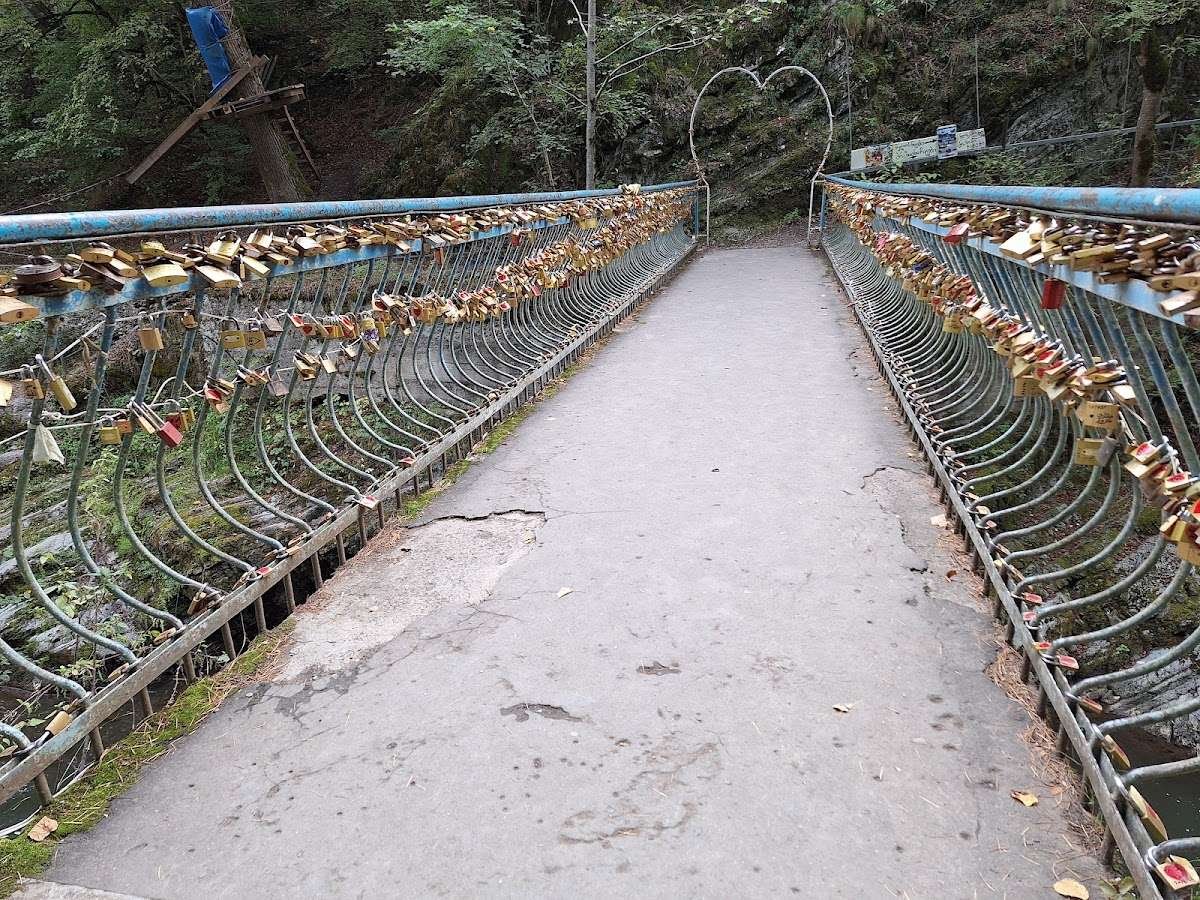
A footbridge crosses the Borjomula in the centre of Borjomi, its railings hung with padlocks. Locals and visitors alike call it the love bridge.
There is almost nothing about the bridge itself in the reference works: no date of construction, no legend. What is well documented, though, is where the tradition came from that gave it the name. And it did not start in Georgia.
🇷🇸 Nada and Relja: where the padlocks began
The story it all goes back to happened in the Serbian spa town of Vrnjačka Banja.
Two people met there, Nada and Relja. Their meeting place was a bridge, where they swore to be faithful to each other. Then the war came, Relja went to the front and did not return.
The young women of the town, alarmed by how it had ended, decided to insure their own romantic futures. They began buying padlocks, writing the names of their sweethearts on them and fastening them to the same bridge where Nada and Relja had met. The keys went into the river as a sign of lasting devotion.
That is how the custom now known everywhere came about: a padlock on the railing, a key in the water, so that nobody can retrieve it and unlock the bond.
🌍 Where else the padlocks hang
From Serbia the tradition spread across the world, and almost everywhere it ended the same way: the city authorities had to do something about it.
Paris, the Pont des Arts. The best-known case. So many padlocks accumulated that the railings could not bear the weight, and in 2015 the city cut them off and replaced the panels with glass. The tradition moved on to other bridges, including the Pont de l'Archevêché and the quays of the Seine.
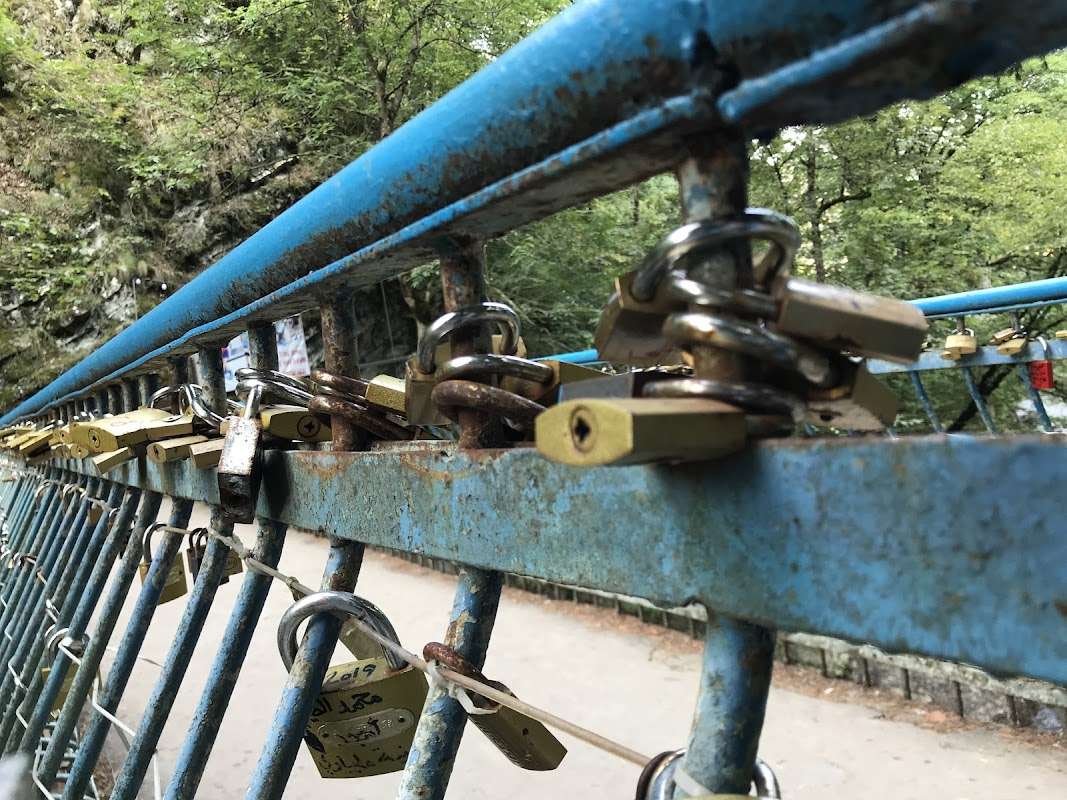
Cologne, the Hohenzollernbrücke. Here the padlocks are counted in tonnes, and the bridge is reckoned among the most romantic in the world.
Moscow, Luzhkov Bridge. The padlocks were removed as well, but metal 'love trees' were installed in their place, built for the purpose. The first went up in 2007.
Tbilisi. The Georgian capital has its own love bridge, in fact two of them.
Borjomi. And here, over the Borjomula in the centre of a spa town.
🌉 The bridges of Borjomi: which is which
The Borjomula runs through the whole town, and several bridges cross it. Visitors mix them up, so here is a short guide.
The love bridge, the one with the padlocks. It stands in the centre, five hundred metres from St Nicholas Cathedral.
The loop bridge on 9 April Street, curved into a Möbius strip. White lines give a sense of movement to a completely static structure, and the stone supports appear to grow straight out of the riverbed. On the way to the central park it is the first thing to catch your eye, and it ends up in more photographs than the rest.
The Pigeon Bridge, built in 1968.
The Tsotsiala suspension bridge.
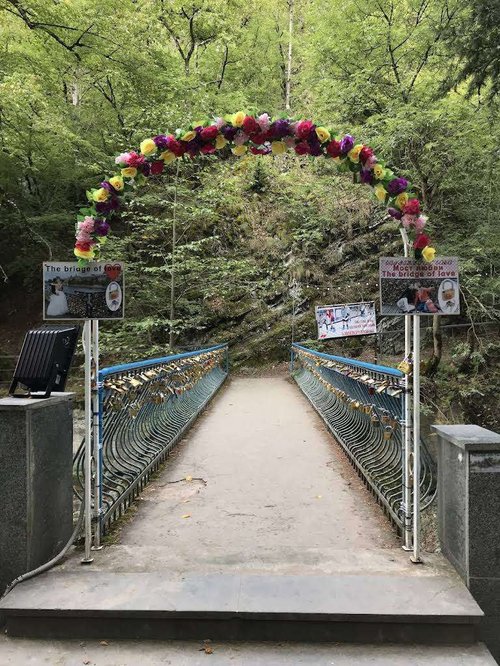
Plus several smaller footbridges between private houses, closer to the springs. 9 April Street follows the river and serves as the town's main tourist artery: it also leads to the central park and the drinking pavilion.
🚶 Fitting it into a walk
The bridge is a stop, not a destination in itself. Five minutes, a photograph, and on you go.
It does slot neatly into a walk through the centre, though.
From the bridge to St Nicholas Cathedral is five hundred metres, ten minutes at an easy pace.
The central park is close too: it stretches along the river, and the main entrance is near the centre.
St Seraphim's church is a little over a kilometre away, but that means climbing into the forest, and it counts as a separate trip.
If you intend to fasten a padlock, buy one beforehand: there are no stalls selling them in Borjomi, unlike Tbilisi's Legvtakhevi, where they are sold at the bridge itself.
🧭 What is nearby
St Nicholas Cathedral in Kostava Square, five hundred metres away. A modern church with a Bolnisi cross above the west entrance.
The central park with its mineral springs and cable car, the reason most people come to Borjomi.
St Seraphim of Sarov Church in the forest above town, with its copy of the Sarov elder's cell.
The Church of St George at Sadgeri, seven kilometres out, of the fourteenth or fifteenth century with carved reliefs.
Been to the love bridge in Borjomi? Leave a review on Madloba: tell us how many padlocks were there, whether they get cleared, and what time of day works best for photographs.
Information is current as of August 2026. City authorities periodically remove padlocks from bridges, so the state of the railings may differ from what is described here.
❓ FAQ
💬 In the centre of town, over the Borjomula river, in Borjomi Municipality, Samtskhe-Javakheti region. It is about five hundred metres from the bridge to St Nicholas Cathedral.
💬 It is an international tradition: couples fasten a padlock with their names to the railing and throw the key into the river so that nobody can unlock the bond. It reached Borjomi from Europe, as it did other towns.
💬 From the Serbian town of Vrnjačka Banja. Nada and Relja met there and swore themselves to each other on a bridge. Relja went to war and did not come back, and the young women of the town began fastening padlocks bearing their sweethearts' names to the same bridge, to insure their own futures.
💬 In Paris on the Pont des Arts, where in 2015 the padlocks were cut off and the railings replaced with glass. In Cologne on the Hohenzollernbrücke, where they run to tonnes. In Moscow on Luzhkov Bridge, where metal 'love trees' replaced the padlocks that were removed. Tbilisi has two of its own, in the Legvtakhevi gorge.
💬 Several cross the Borjomula. Besides the love bridge there is the loop bridge on 9 April Street, the Pigeon Bridge of 1968 and the Tsotsiala suspension bridge, plus smaller footbridges nearer the springs.
💬 Five minutes. It is a stop on a walk through the centre rather than a destination in itself. St Nicholas Cathedral and the central park with its springs are both close by.
💬 The tradition is open and nobody forbids it. But buy the padlock beforehand: there are no stalls for them in Borjomi, unlike Tbilisi's Legvtakhevi where they are sold at the bridge. Bear in mind too that city authorities worldwide periodically clear padlocks because of the load on the railings.
💬 St Nicholas Cathedral five hundred metres away, the central park with its mineral springs and cable car, St Seraphim's church in the forest above town, and the Church of St George at Sadgeri seven kilometres out.

1 comment
Log in to leave a comment