



⚔️ Didgori Monument: The Site of the 1121 Victory and Its Swords in the Hillside
Didgori Monument at a Glance
A 1976 memorial marking the 1121 battle: giant swords cut into the hillside, warrior statues and an amphitheatre with columns. Reachable by car only, there's no public transport out here.
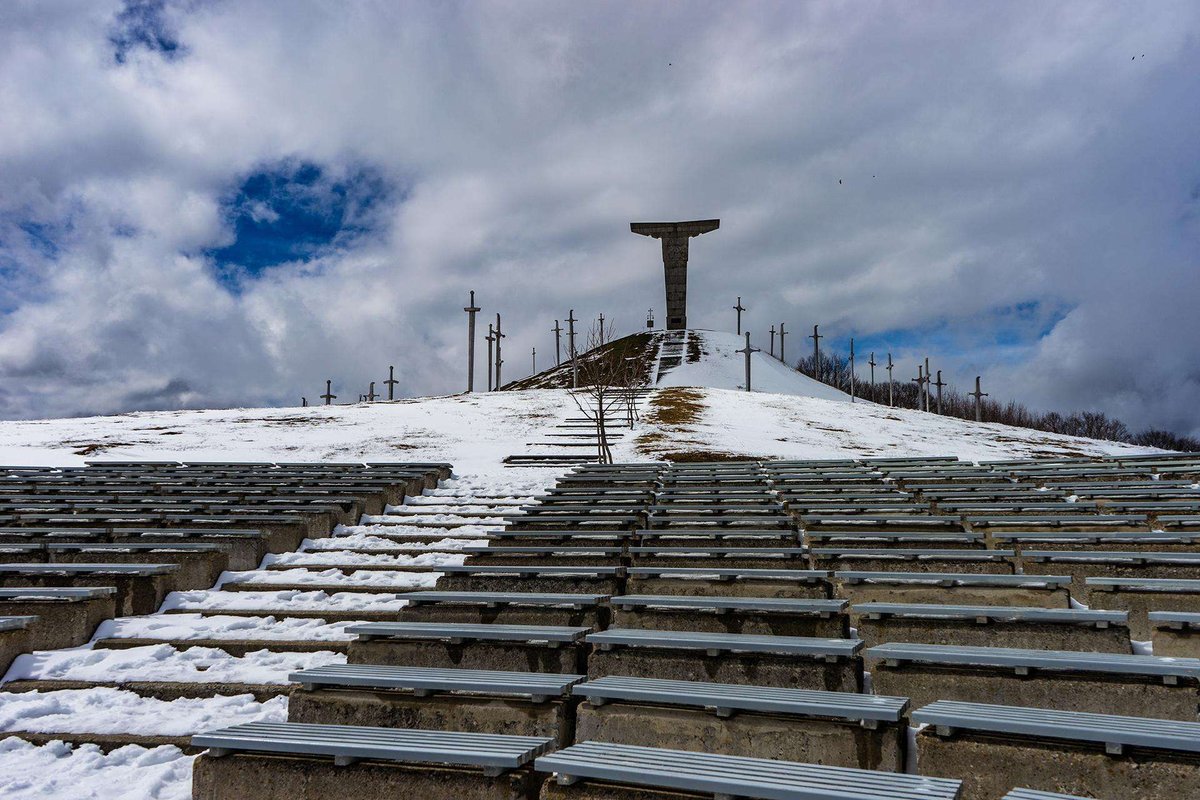
Didgori Monument marks the site of one of the most significant victories in Georgian history, the Battle of Didgori in 1121. The complex was built in 1976: giant swords are cut into the hillside, warrior statues stand nearby, and at the centre, next to a T-shaped monument with a memorial plaque, sits borjgali, the ancient Georgian sun symbol.
The place is well known, but it takes some planning to get to: there's no transport stop out here, the road climbs through the mountains, and the weather on the plateau shifts quickly, often with little relation to what's happening down in Tbilisi.
📍 Where the Monument Is
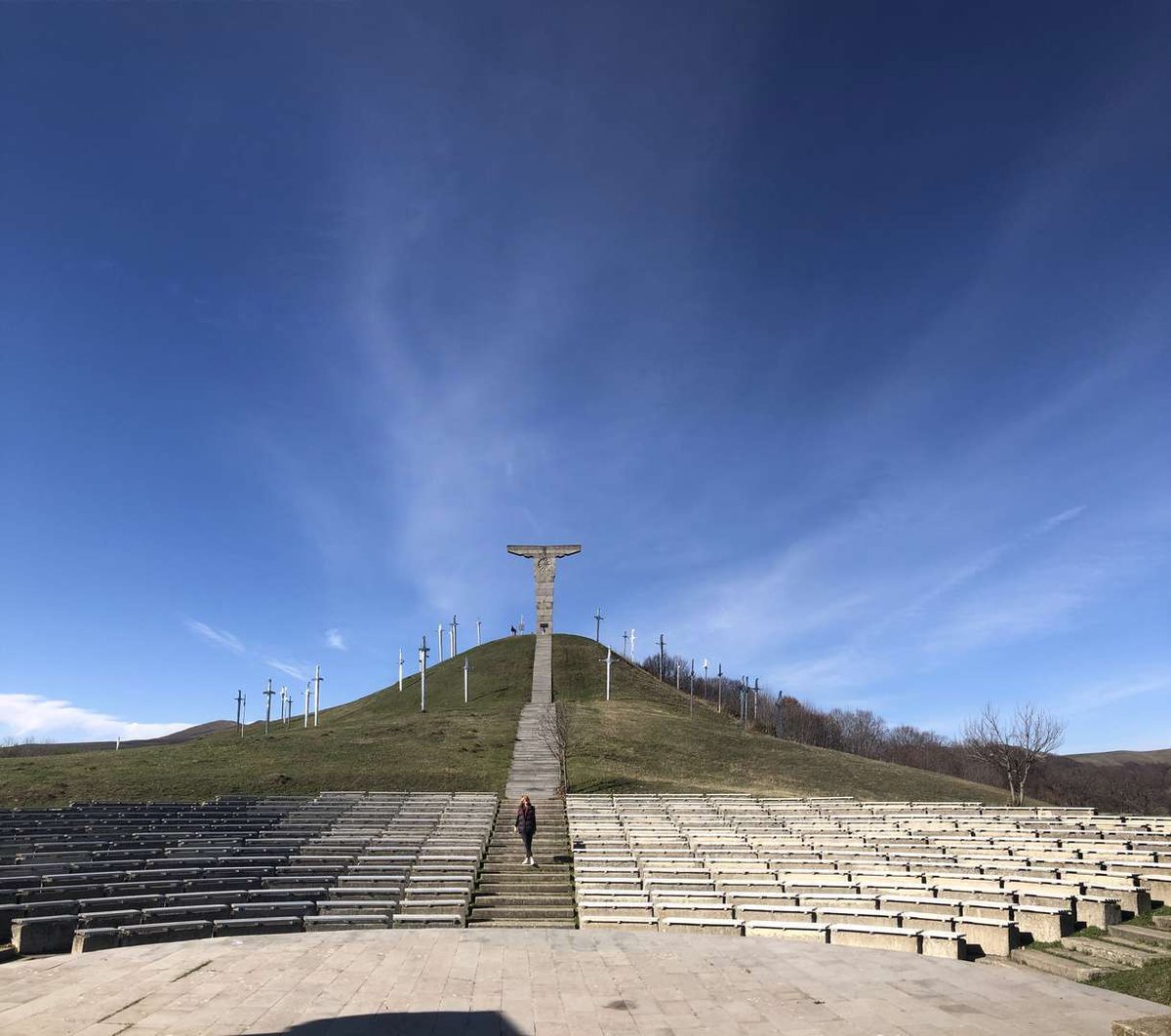
Sources don't agree on which administrative region the monument technically belongs to: some list Tetritsqaro Municipality in Kvemo Kartli, others place it in Mtskheta-Mtianeti, right on the border with Kvemo Kartli and Shida Kartli. Physically, the monument stands on the Didgori plateau, at the edge of Trialeti National Park, above 1,600 metres.
Coordinates for your GPS: 41.76084, 44.50811 (open the location in Google Maps). From Tbilisi, the road heads south-west toward Manglisi, then follows the signposted turn to Didgori.
🚗 How to Get There
There's no public transport to the monument, worth knowing before you plan around a marshrutka. Practically, a car, your own or rented, is the only option.
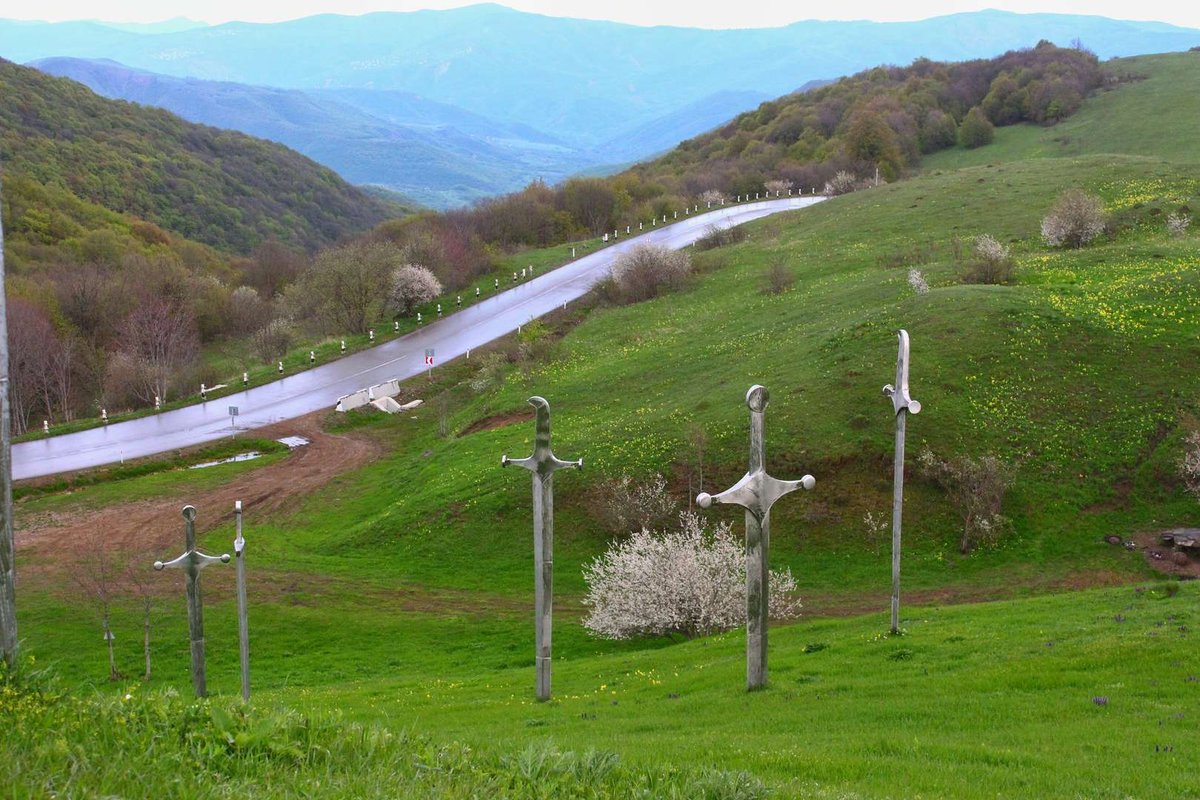
The drive from Tbilisi takes about an hour. Any GPS app will build the route from the coordinates above, or search "Didgori Monument" directly in Google Maps. Head toward Manglisi, then follow the signposted turn to Didgori. There's free parking at the foot of the monument.
Season matters here. In winter, the road up can be closed after snowfall, so it's worth checking conditions before heading out in the colder months. The plateau sits well above Tbilisi, so even on a warm, sunny day in the city, it can be cold and windy up top, sometimes below freezing.
🗡️ The Battle of Didgori: What Happened Here
On August 12, 1121, the forces of the Kingdom of Georgia under King David IV the Builder met a Seljuk-led coalition commanded by Emir Ilghazi on the Didgori plateau. Chronicles differ on the numbers, but the coalition significantly outnumbered the Georgian army. David used the mountainous terrain, the element of surprise and battlefield deception to draw the enemy into a losing position.
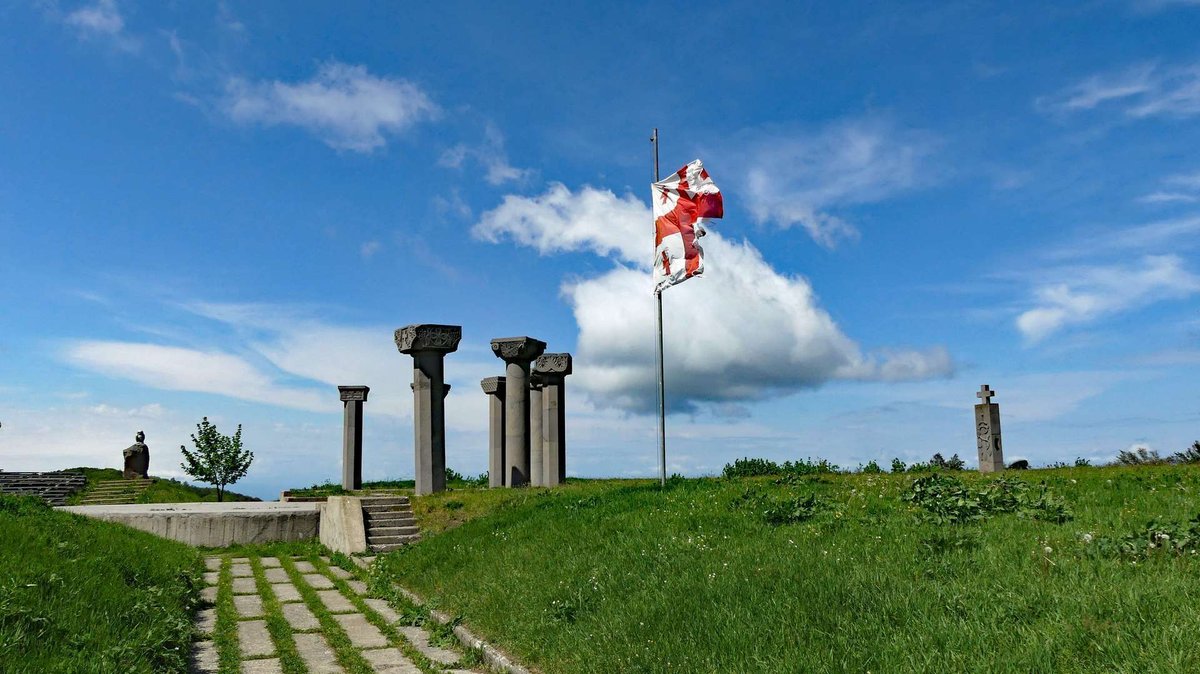
The victory was decisive. Georgian chronicles called it "dzlevai sakvirveli," the miraculous victory, and modern historians note that the fighting lasted only a few hours yet effectively ended Seljuk dominance in the region. The win was followed immediately by the liberation of Tbilisi, which became the capital of a unified kingdom, and the start of the short but brilliant period known as Georgia's Golden Age.
What to Check Before You Goorgia marks Didgoroba every August 12, a national holiday with theatrical performances, music and processions held right on the memorial grounds.
🗿 Who Built the Monument, and What's There to See
The memorial was built in 1976, designed by Georgian sculptor Merab Berdzenishvili, who is also known for other notable works, including the muse sculpture outside the Tbilisi Philharmonic, the monument to Paliashvili on Rustaveli Avenue, and the sword-bearing woman statue in Marneuli. According to one source, architect Giorgi Chakhava also worked on the complex's design.
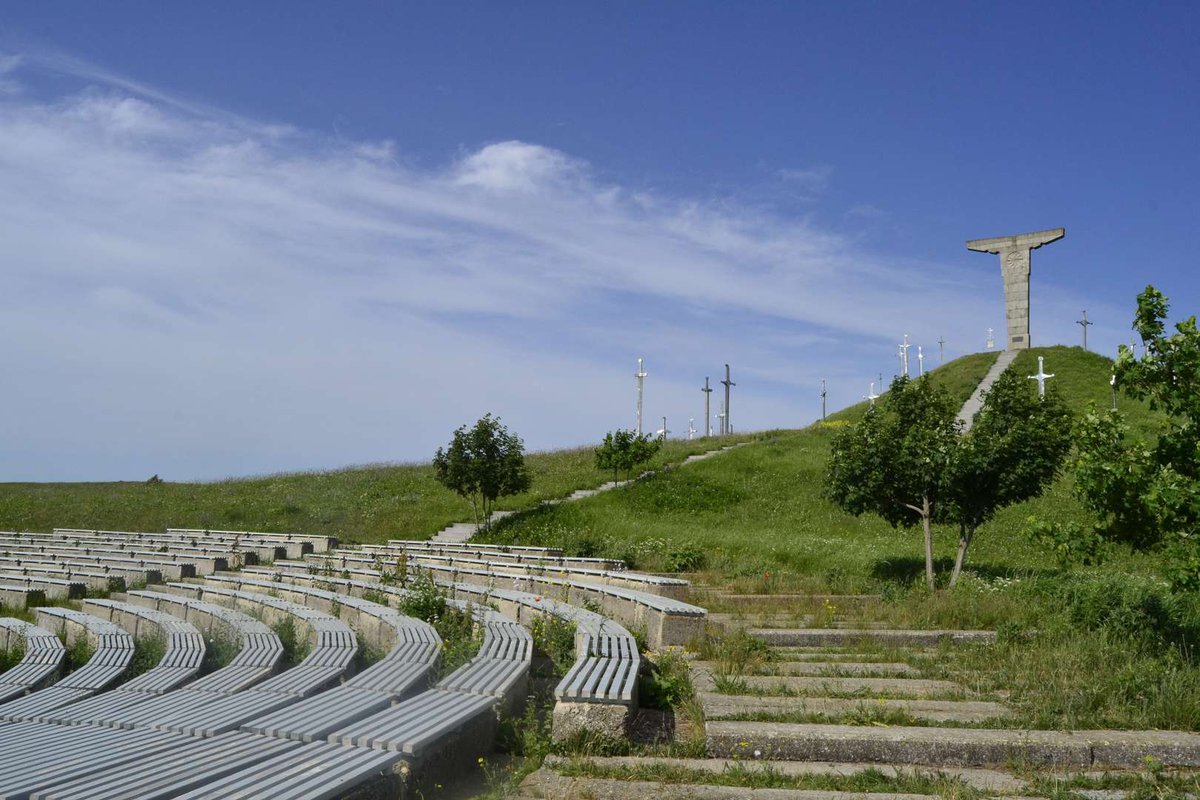
The complex spans a large open area. At the centre stands a T-shaped monument with a memorial plaque and a space for an icon and candles, along with borjgali, the ancient Georgian sun symbol. Giant metal swords are cut into the hillside below it, symbolising the lives lost in the battle, with solemn warrior statues standing behind them. At the base, there's an amphitheatre with columns and bells, where performances take place during Didgoroba. According to some accounts, a statue of King David the Builder and a small Church of St. George also stand nearby, though these details aren't confirmed by every source, so treat them as likely rather than guaranteed stops.
Seeing the whole complex takes a couple of hours: the elements are spread across a large area, and a long staircase leads up to the highest point.
📌 What to Check Before You Go
The main thing is transport: there's no way in without a car, so plan around a rental or a driver in advance. Second, the weather: bring a jacket even in summer, and check whether snow has closed the road if you're going in winter. Third, supplies: there are no cafes or shops nearby, so bring water and snacks.
Have you been to Didgori Monument? Leave a review on Madloba: tell us which route you took, whether you caught Didgoroba, and what first-timers should know.
Information is current as of July 2026. Check road conditions and the weather before you go, especially during winter.
❓ Frequently asked questions
💬 On the Didgori plateau, on the border of Mtskheta-Mtianeti, Shida Kartli and Kvemo Kartli, at the edge of Trialeti National Park, above 1,600 metres.
💬 By car only, your own or rented, there's no public transport out here. The drive takes about an hour, via Manglisi, then follow the signposted turn to Didgori.
💬 Sculptor Merab Berdzenishvili, built in 1976. He's also behind other well-known Georgian monuments, including the muse sculpture at the Tbilisi Philharmonic and the Paliashvili monument on Rustaveli Avenue.
💬 A battle on August 12, 1121, in which King David IV the Builder crushed a Seljuk-led coalition. The victory led to the liberation of Tbilisi and the start of Georgia's Golden Age.
💬 An annual national holiday on August 12 marking the Battle of Didgori, with theatrical performances, music and processions held on the memorial grounds.
💬 Late spring and summer are good for the blooming plateau views, but it's colder and windier up top than in Tbilisi. In winter, the road can be closed by snow, worth checking conditions in advance.
💬 No, there's no nearby infrastructure. Bring water, snacks and warm clothing with you.
💬 No, entry to the site and parking at the base of the monument are both free.

33 comments
Log in to leave a comment
Кейде мен осы жерде өткен жекпе-жек туралы ойланамын. Кім біледі, мүмкін, осы қылыштар бір кезде шын мәнінде қолданылған! Сіздерге осы ескерткішті көруге бару ниетімен бөлісетін боларсыздар? Толық ақпарат алу үшін бас тартпайсыздар ма?
Радует, что посетить Дидгорский монумент можно не только для того, чтобы посмотреть на него, но и также есть возможность попасть на фестиваль.
Интересно было бы увидеть величие монумента своими глазами.
У этого памятника, есть что посмотреть:живописные виды восточной Грузи,также монумент используется для других мероприятий и выступлений.