



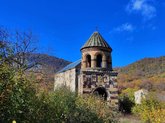

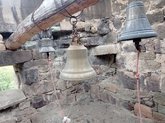


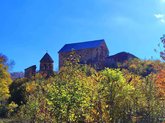

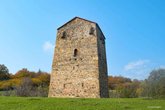

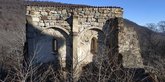

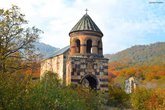

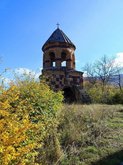




Kabeni Monastery, also known as the Kojori Monastery, is located in the gorge of the Asuretistskali River, near Kiketi village, in Tetritskaro Municipality, Kvemo Kartli, among the churches, cathedrals and monasteries of the region. The earliest known mention appears in Vakhushti Bagrationi's 18th-century "Geography of Georgia": the historian describes Kabeni as a domed nunnery "under the protection of a priest." One of the complex's churches was depicted by Prince Grigory Gagarin in his 19th-century album "The Picturesque Caucasus"; that church disappeared sometime between the late 19th and early 20th century, and the exact cause of its loss is unknown.
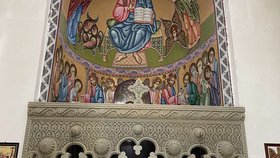
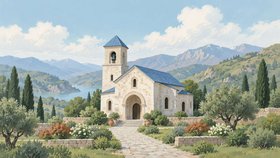
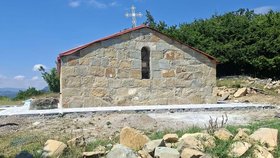
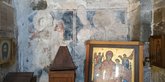
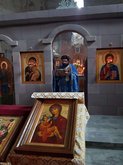
The complex's main building is the 13th-century domed Church of the Dormition, adjoined by the Great Church, the hall church of the Archangel Michael, and a separate Church of Simeon the Stylite. The eastern facade preserves an inscription recording the church's completion, carved by the sons of Giorgi Kabeni during the reign of Queen Tamar, likely the source of the monastery's name. Frescoes in one of the churches date from the 19th century. Today, several hermit monks live on the grounds, gradually restoring the Church of Simeon the Stylite.
Two main routes lead to the monastery: a short one, about 2-3 km, from Kiketi village along the riverbed, and a longer, more scenic one via Kojori and the ruins of Koroglu Fortress. From the monastery, the walk can be extended to Asureti village, about 6 km, passing the partially dried-up Asureti Reservoir, from where a marshrutka can be taken back to Tbilisi. Several cats live on the grounds and are often mentioned by visitors.