




🏰 Monasteries and Churches of Guria: Ten Holy Places of Georgia's Smallest Region
🏰 What to Know About Guria's Holy Places
Ten churches and monasteries across three districts of Georgia's smallest region. Two of them, Shemokmedi and Djumati, were episcopal sees of the Gurieli principality and among the wealthiest monasteries in the entire country. The other eight stand in villages and mountains, from the coastal plain to a resort at 2,000 metres.
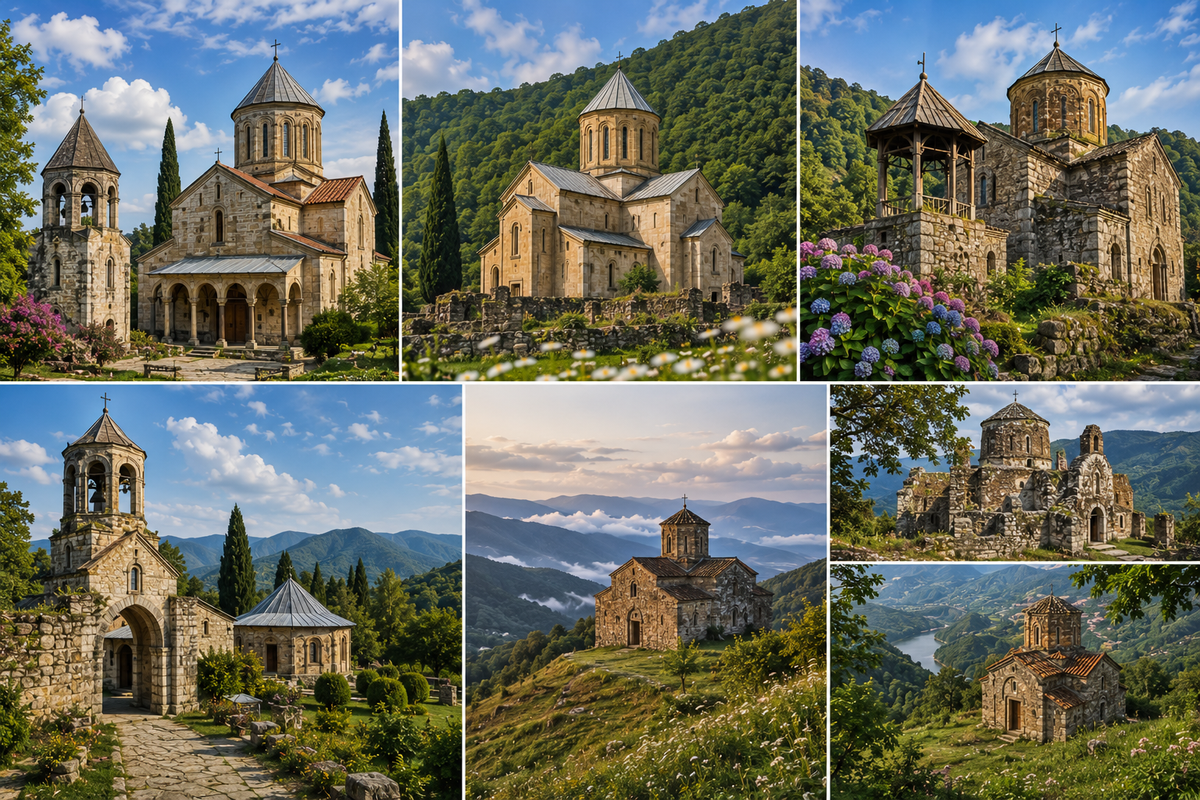
Guria is Georgia's smallest region, wedged between Adjara, the Black Sea coast and the mountains. Visitors come for the magnetic beaches of Ureki and Shekvetili, or for the mountain air at Bakhmaro. Very few come specifically for the churches. That's a mistake: this small stretch of land built up a church history well beyond its size.
The Gurieli principality had three episcopal sees: Shemokmedi, Djumati and Khino. For a region you can drive across in a couple of hours, that is remarkable. Shemokmedi was not just a monastery but the burial place of the ruling Gurieli family and one of the wealthiest church treasuries in Georgia — icons, manuscripts and liturgical objects were brought here from across the country. Djumati ranked second in importance and remained the centre of Orthodox life in western Georgia until the 19th century. The connection to the present is direct: the current Catholicos-Patriarch of All Georgia, Ilia II, served here as Bishop of Shemokmedi from 1963 to 1967.
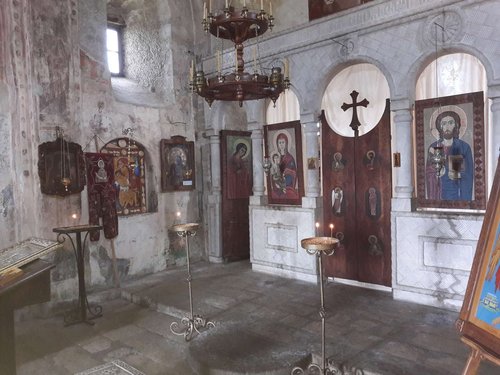
Ten holy places are spread across three municipalities. In Ozurgeti district, around the regional capital, stand Djumati Monastery, Shemokmedi Monastery Complex and the village churches of Lihouri, Achi and Nagobilevi. In Lanchkhuti district, closer to the plain, Djikheti Convent is tucked into the hills, alongside the Church of the Saviour in Aketi. In Chokatauri district, the most mountainous of the three, you find the Fathers of the Desert Monastery, Erketi Church and Bakhmaro Church at the high-altitude resort. Shemokmedi and Djumati are the natural starting point; the others reward those who want to see Guria off the tourist track.
Ten Holy Places of Guria by District
Open a district to go to the catalogue entry for each site.
⛪ Ozurgeti District 5
🕊️ Lanchkhuti District 2
⛰️ Chokatauri District 3
🗺️ Churches and Monasteries of Guria
Open in Google Maps🏰 Djumati Monastery: The Archangels' House Above the Colchian Plain
Djumati Monastery stands in the village of Dzira Djumati, Ozurgeti district, on one of the ridges of the Chokatauri range, 14-15 km from Ozurgeti. Coordinates: 42.02825, 41.98583. Its full name is the Monastery of the Archangels Michael and Gabriel. This is the main site in the collection and one where the history and the view justify the drive up together.
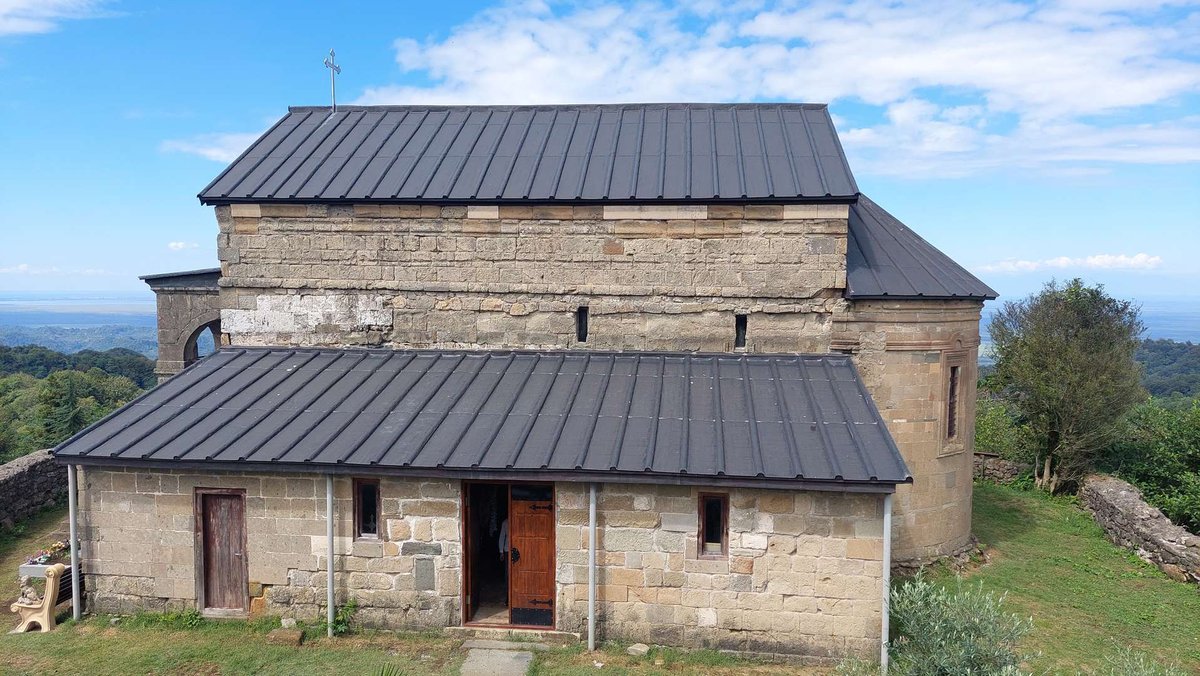
The monastery was founded in the 14th-15th centuries. For several hundred years it was one of three episcopal sees of the Gurieli principality, alongside Shemokmedi and Khino. Second in importance to Shemokmedi, Djumati remained the centre of Orthodox life across western Georgia until the 19th century. It played a significant role in the educational and social life of the region: its treasury held holy relics, ancient manuscripts and metalwork. Much of that collection eventually dispersed to Georgia's museums, as did Shemokmedi's treasures.
The monastery stands on the right bank of the Supsa River at an elevation that opens a panorama over Guria and neighbouring Adjara. On a clear day the view stretches across the Colchian plain toward the sea for many kilometres. The drive up the mountain road is itself part of the experience.
The complex includes the medieval church of the archangels, a bell tower and other structures. The monastery is active: modest dress is required — women need a headscarf and a skirt or long trousers, men need long trousers. A taxi from Ozurgeti is the most practical way to get there; public transport does not reach the summit.
🏰 Shemokmedi Monastery Complex: The Gurieli Dynasty's Burial Place
Shemokmedi Monastery Complex sits on a low hill on the left bank of the Bjuji River, 8 km southeast of Ozurgeti, in the village of Shemokmedi. Coordinates: 41.90722, 42.06277. It was one of the wealthiest monasteries not just in Guria but in all of Georgia.
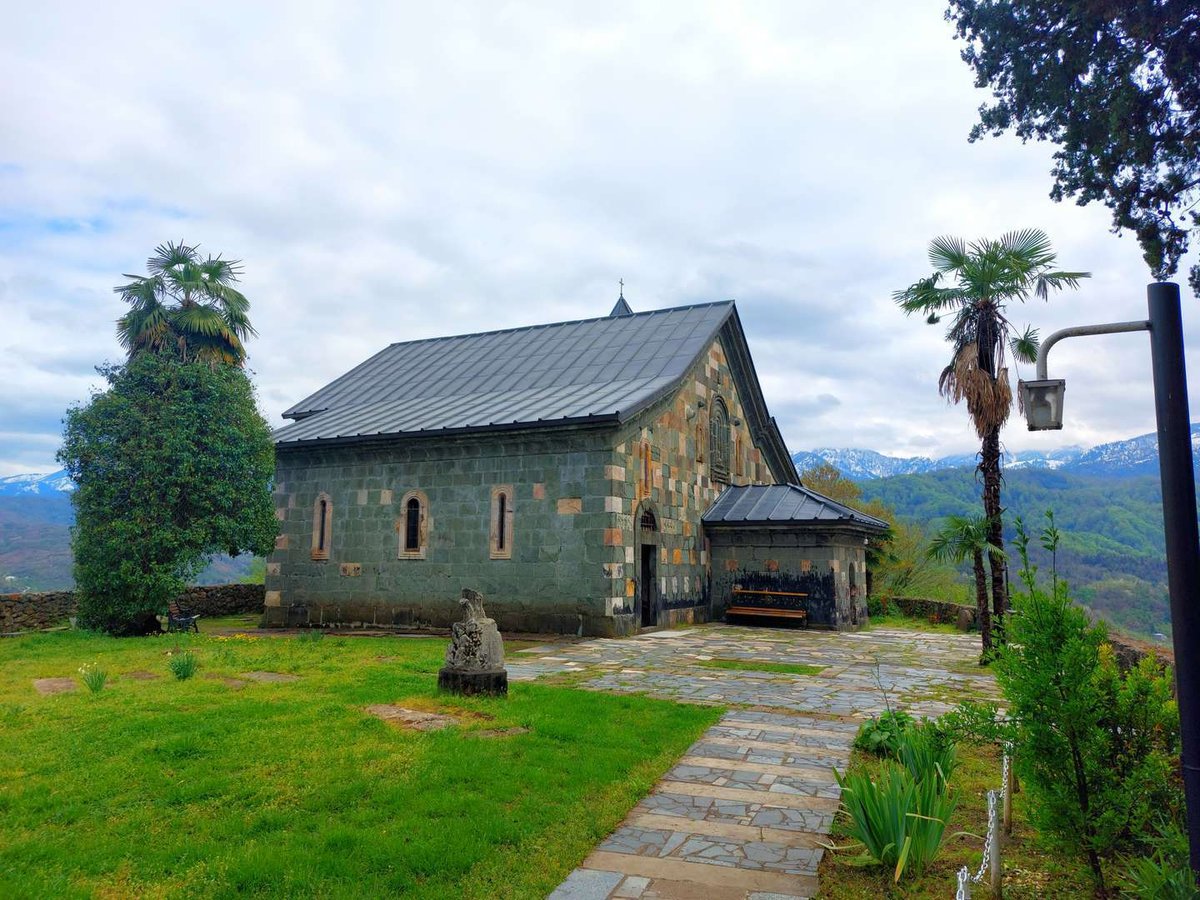
The monastery was founded in the 15th century as one of three episcopal sees of the principality and the dynastic burial place of the Gurielis. The tombs of Rostom Gurieli (died 1564) and Mamia III Gurieli (died 1714) survive. For centuries it held a treasury of church objects: icons, manuscripts and liturgical items gathered from across Georgia. The complex consists of two churches and a bell tower. The Church of the Saviour is a three-nave basilica faced in blue stone with a white marble floor. The Church of the Transfiguration, also known as "Zarzma", was added to the south in the 16th century to house an icon brought from the ransacked Zarzma Monastery in Samtskhe. According to legend, the icon and church treasures were tied to a bull and left to walk until he stopped. He stopped at Shemokmedi.
The living link to the present: His Holiness Ilia II, the current Catholicos-Patriarch of All Georgia, served here as Bishop of Shemokmedi from 1963 to 1967. A separate Shemokmedi diocese was re-established in 1995; its jurisdiction now covers all three municipalities of Guria.
The full history, architecture and story of the treasury are in the Shemokmedi Monastery guide.
🕊️ Djikheti Convent: The Legend of Three Doves
Djikheti Convent stands on the heights of Mount Nigoiti in northern Guria, between the villages of Chkonagora and Sameba in Lanchkhuti district. Coordinates: 42.06918, 42.15650. An active women's monastery with its own founding legend.
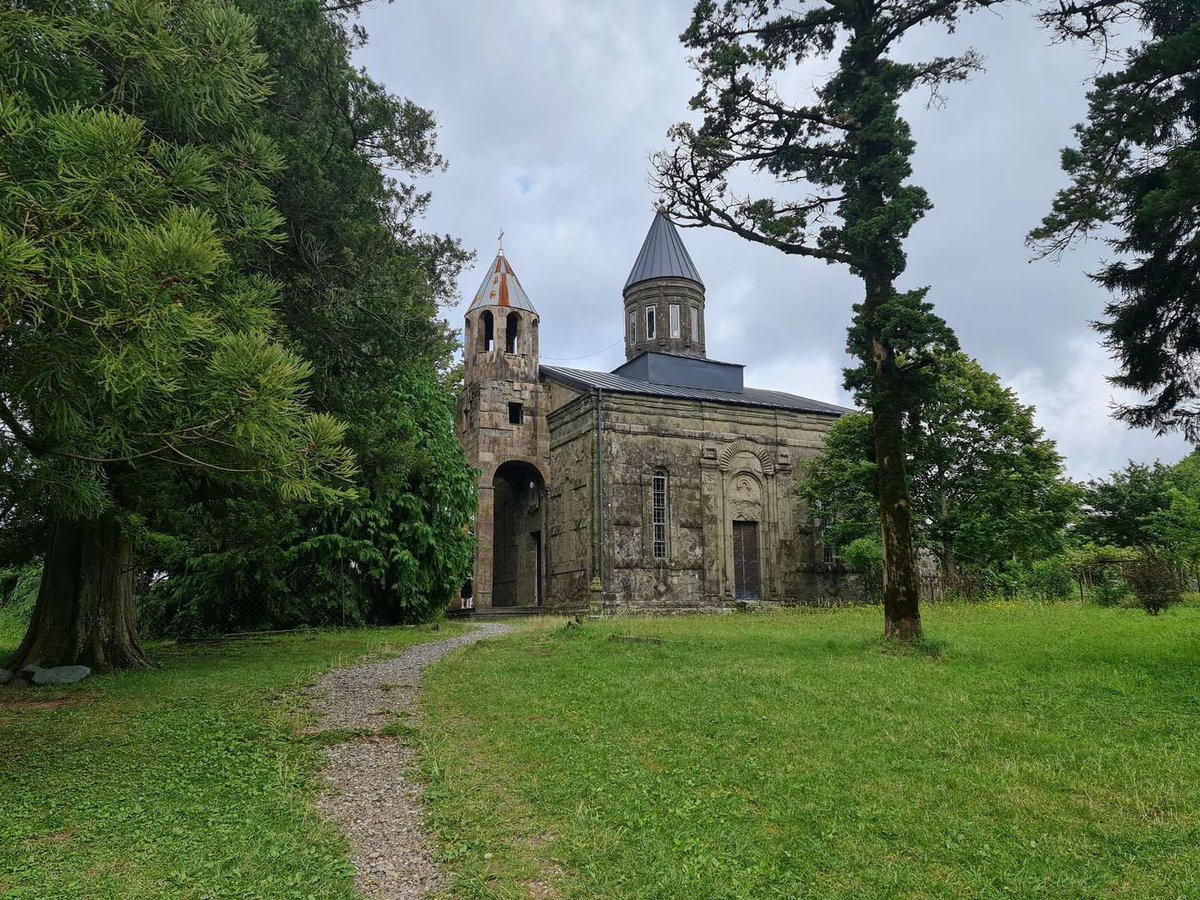
According to tradition, three doves settled on this spot to mark the place for a new church. In ancient times a castle stood here; a church later rose on its ruins. The present monastery was founded in the 19th century under the nun Elena Mgaloblishvili, with the support of the Machutadze princely family. Today the monastery runs a school and museum housing relics and household objects belonging to its early inhabitants.
A spring on the grounds is called the "Jordan": its water is believed to have healing properties, and a pool has been built for ritual bathing. The monastery sits away from tourist routes, and that remoteness is part of its character. A full guide to Djikheti is in preparation.
⛰️ Fathers of the Desert Monastery: Solitude in the Chokatauri Hills
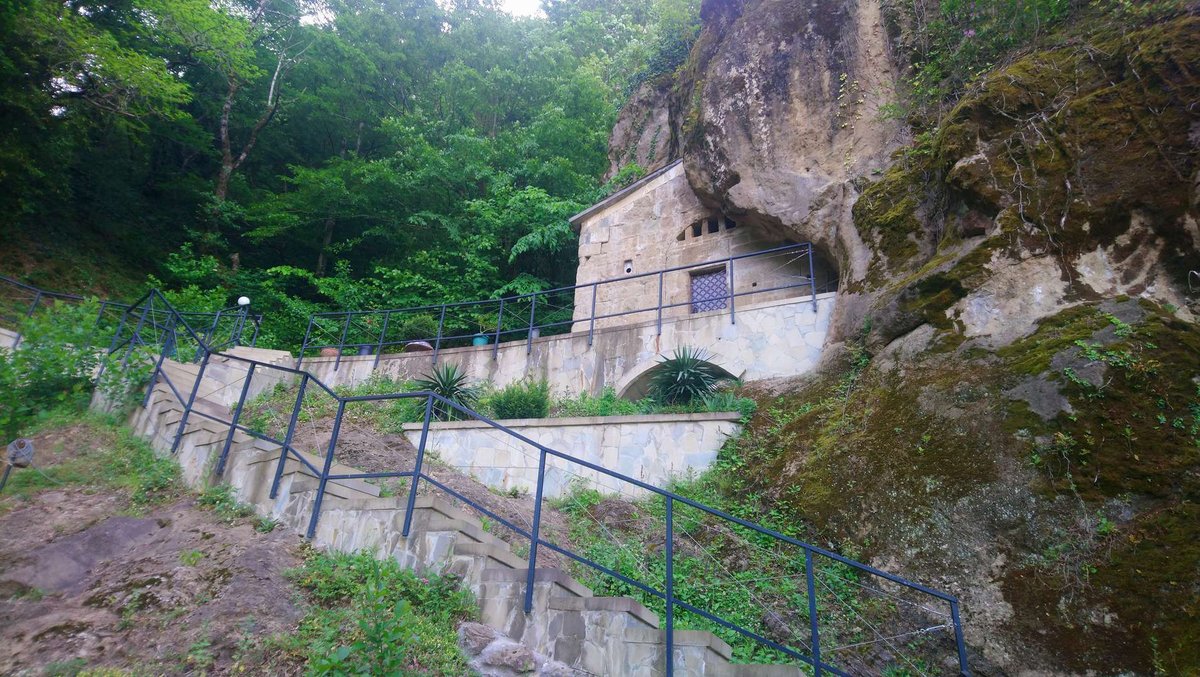
Guria's Fathers of the Desert Monastery is near the village of Shua Ganakhleba in Chokatauri district. Coordinates: 42.05798, 42.21910. A male monastery in the hesychast tradition — Orthodox monastic withdrawal from the world for the sake of prayer.
"Desert" in this context is not a landscape but a spiritual condition: distance from ordinary life. The monastery stands in the wooded mountains of the district, and the atmosphere reflects that: quiet, almost no tourist flow, the measured rhythm of monastic life. This is a place for those who come for contemplation rather than sightseeing in the conventional sense. A dedicated article is in preparation.
⛰️ Bakhmaro Church: A Place of Worship at 2,000 Metres
Bakhmaro Church stands in the centre of the Bakhmaro mountain resort in Chokatauri district, at around 2,000 metres above sea level. Coordinates: 41.85086, 42.32290. It is the highest-altitude site in this collection, tied to the life of the resort and to one annual feast.
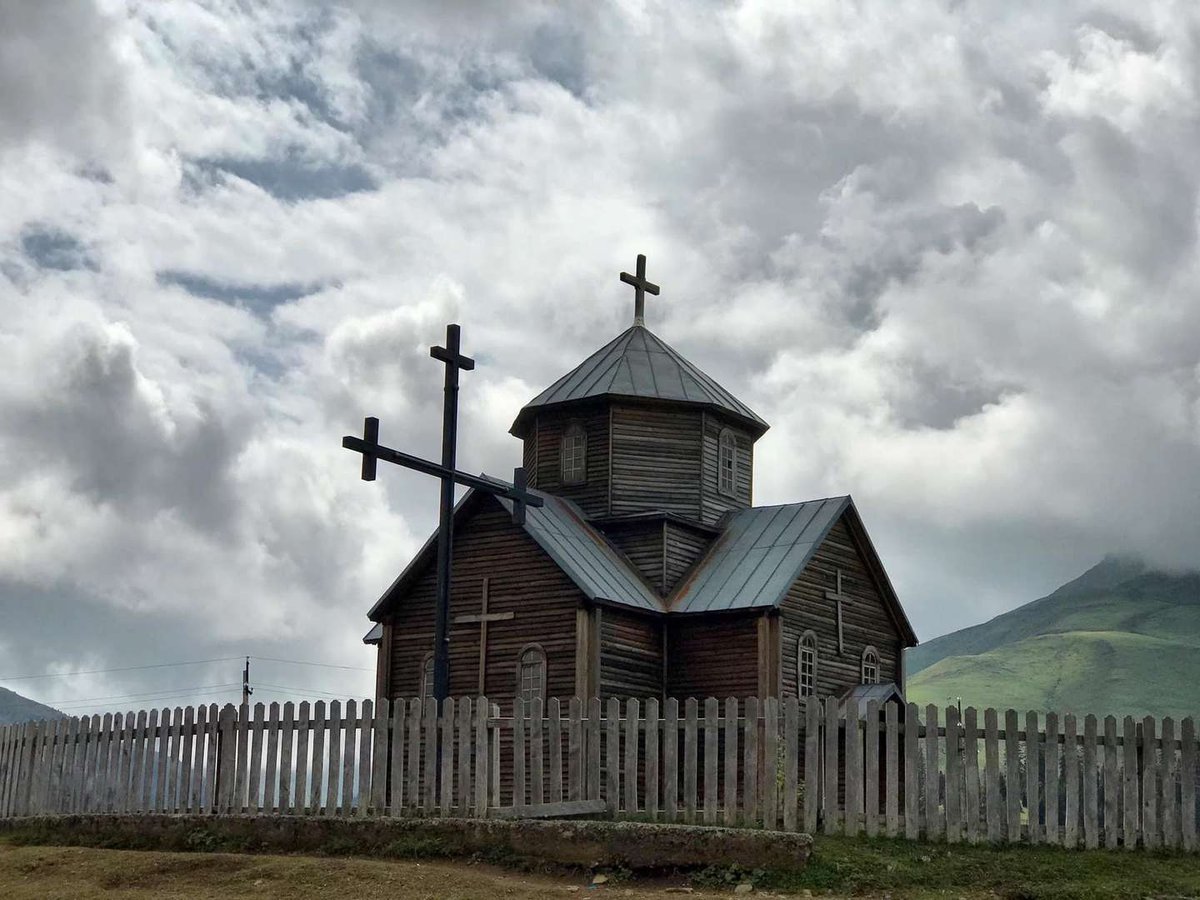
Bakhmaro is known primarily for its microclimate: a combination of sea air rising from the west and mountain air that is said to have health benefits. Once a year the church moves to the centre of local life. On 19 August, the Feast of the Transfiguration of the Lord, traditional horse races are held here, drawing riders and spectators from across Georgia and beyond. Winning is considered a matter of honour.
Bakhmaro is a summer destination: the mountain road is difficult in winter, and even in summer the heights can be cold and wet. A full guide is in preparation.
⛪ Erketi Church and the Village Sanctuaries
Erketi Church stands in the village of Zemo Erketi in Chokatauri district, in the mountain section of the municipality. Coordinates: 41.98303, 42.27384. A village church among the hills, convenient to include on a route heading toward Bakhmaro or the Fathers of the Desert Monastery.
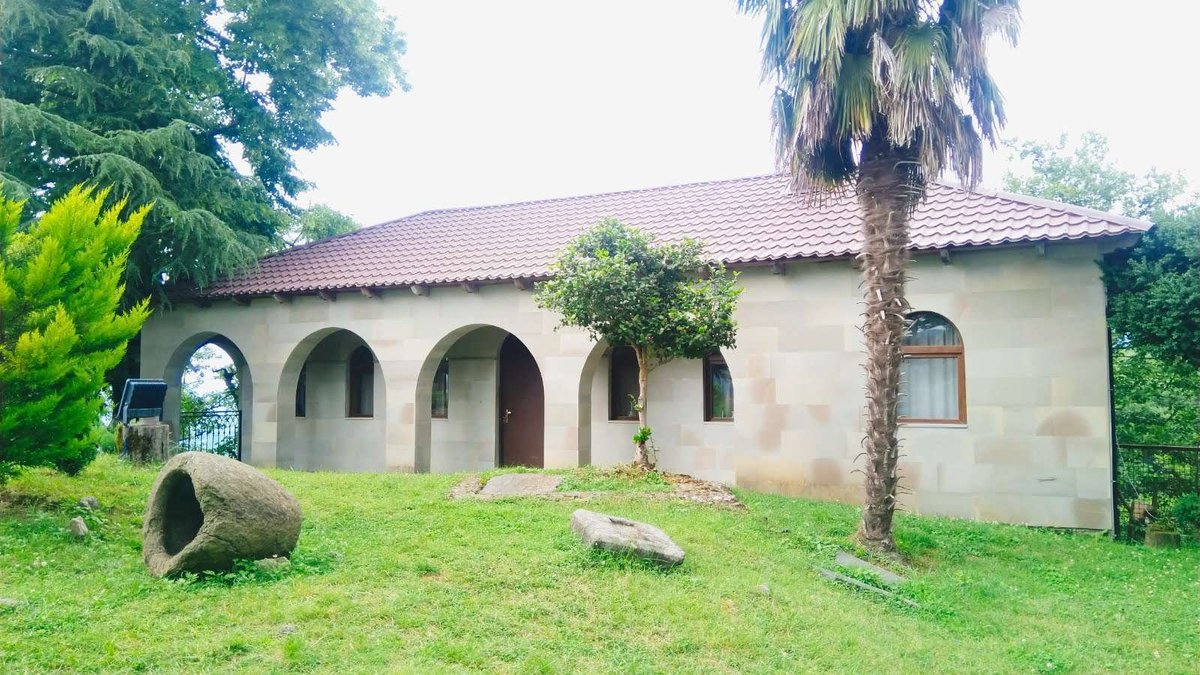
The remaining four sites stand in villages of Ozurgeti and Lanchkhuti districts. Two of them have histories worth knowing.
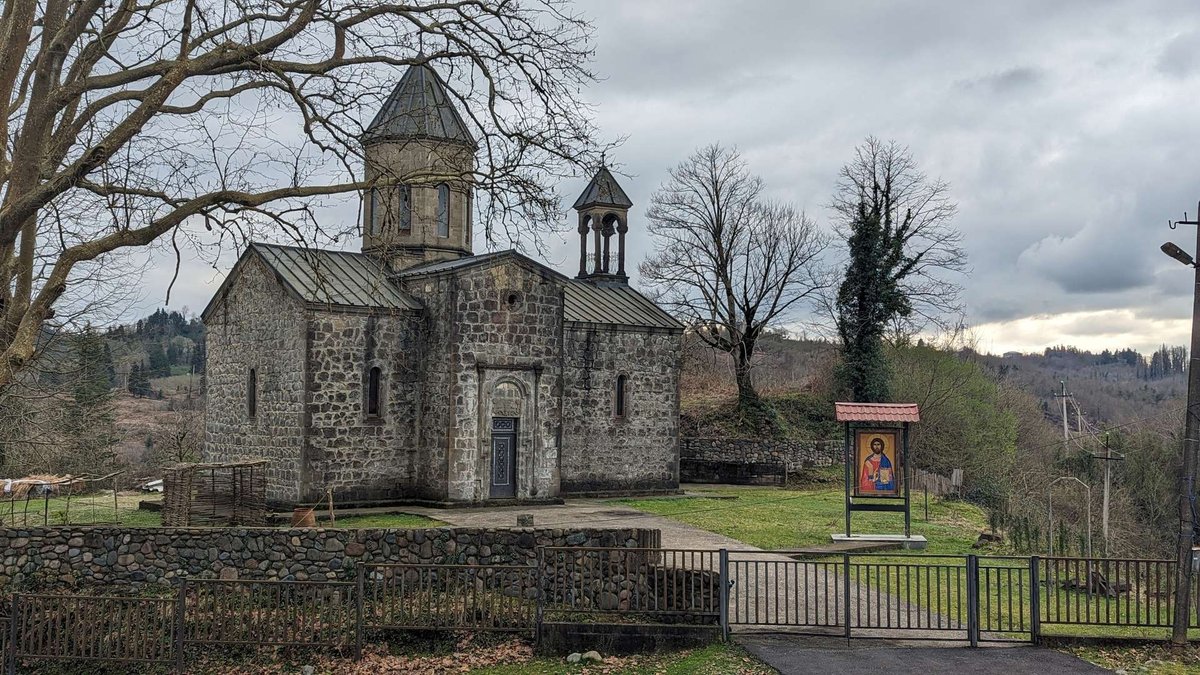
Church of the Nativity of the Virgin, Lihouri was built in 1352 by Kakhaberi I Gurieli, one of the rulers of the Gurieli principality. A bell tower was added in 1483 under King George and Queen Elena. The tower carries a relief of a ram's head and an inscription in the old Georgian "nuskhuri" script — which incidentally records that the village was formerly called Rekheuli. The church is considered a rare Georgian example of stone carving. It was looted in 1924 and restored in 1989. Coordinates: 41.87302, 42.00941.
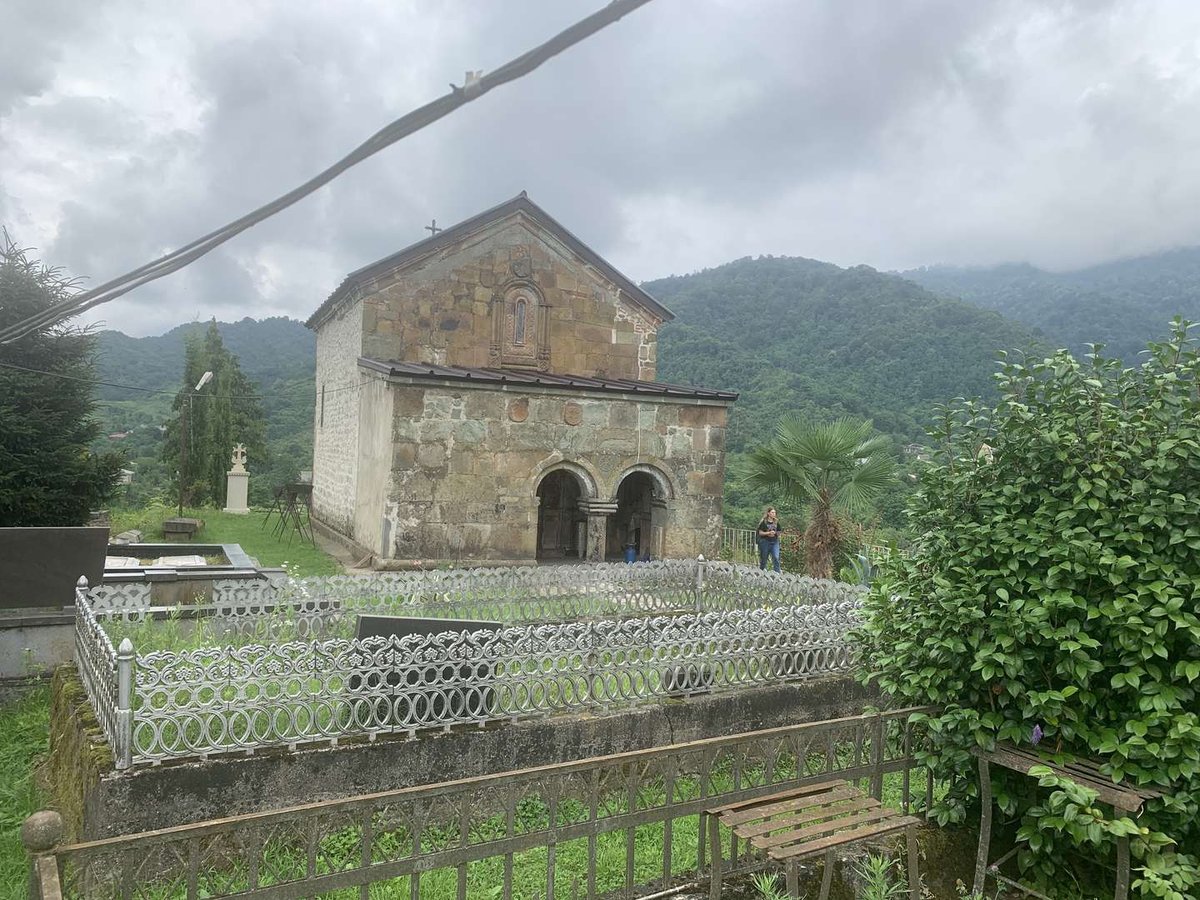
Achi Church is a medieval monastery church of St. George, 9 km south of Ozurgeti. Built in the late 13th or early 14th century from cut stone, it was later enclosed by a defensive wall. The Gurieli rulers Simeon I and Kaikhosro I were generous patrons in the 17th century; Kaikhosro I made it a dependency of the Shemokmedi episcopal throne. Inside, frescoes from the late 13th century show Byzantine Paleologian influence — a Greek inscription names Onisim of Trebizond as the likely artist. The church also holds a gilded silver cross with an inscription invoking Queen Tamar; by tradition she donated it after a military victory. The cross survived the Soviet period in the Salukavadze-Takaishvili family and was returned to Achi in 2015. Coordinates: 41.84767, 42.00529.
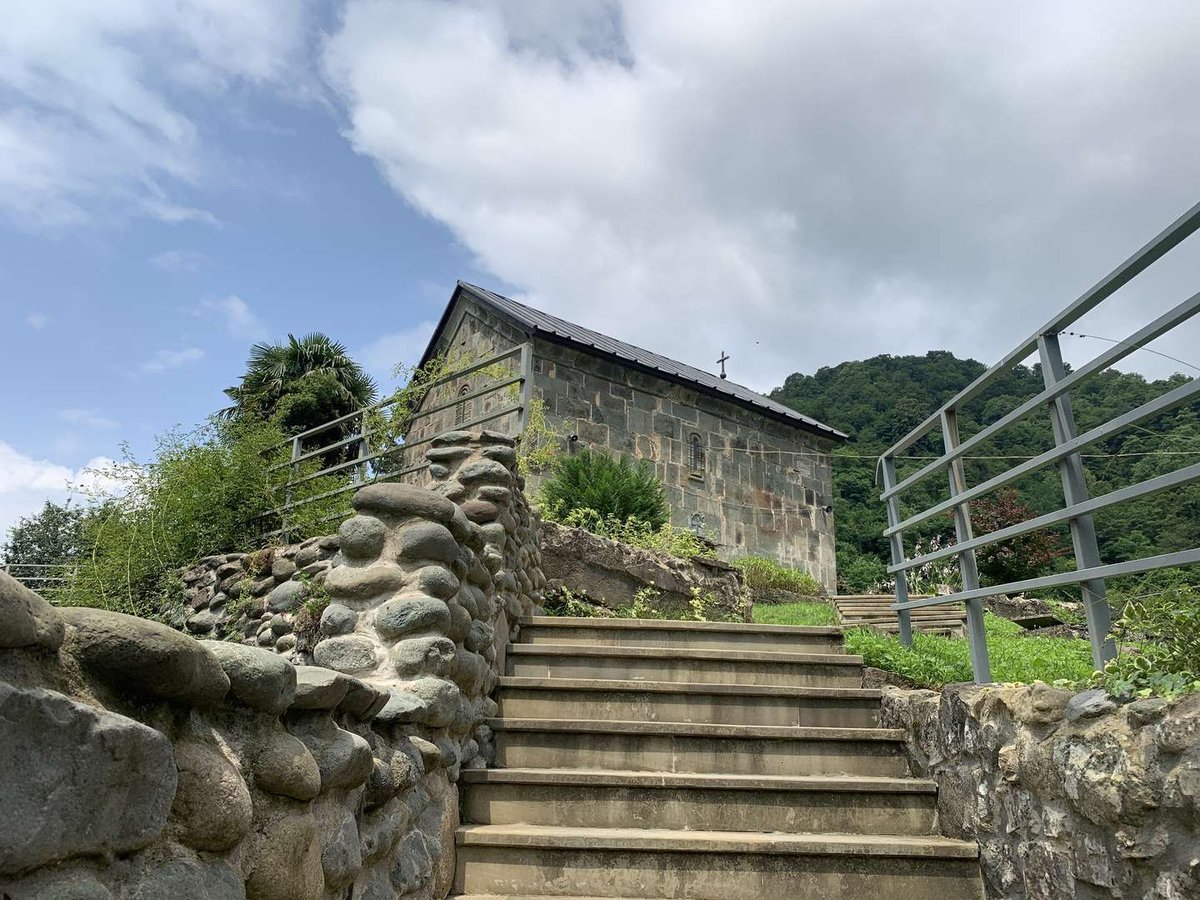
St. Barbara's Church, Nagobilevi is an active parish church in Nagobilevi village, built in the post-Soviet period. It is a living community church rather than a medieval monument. Coordinates: 41.93926, 41.85758.
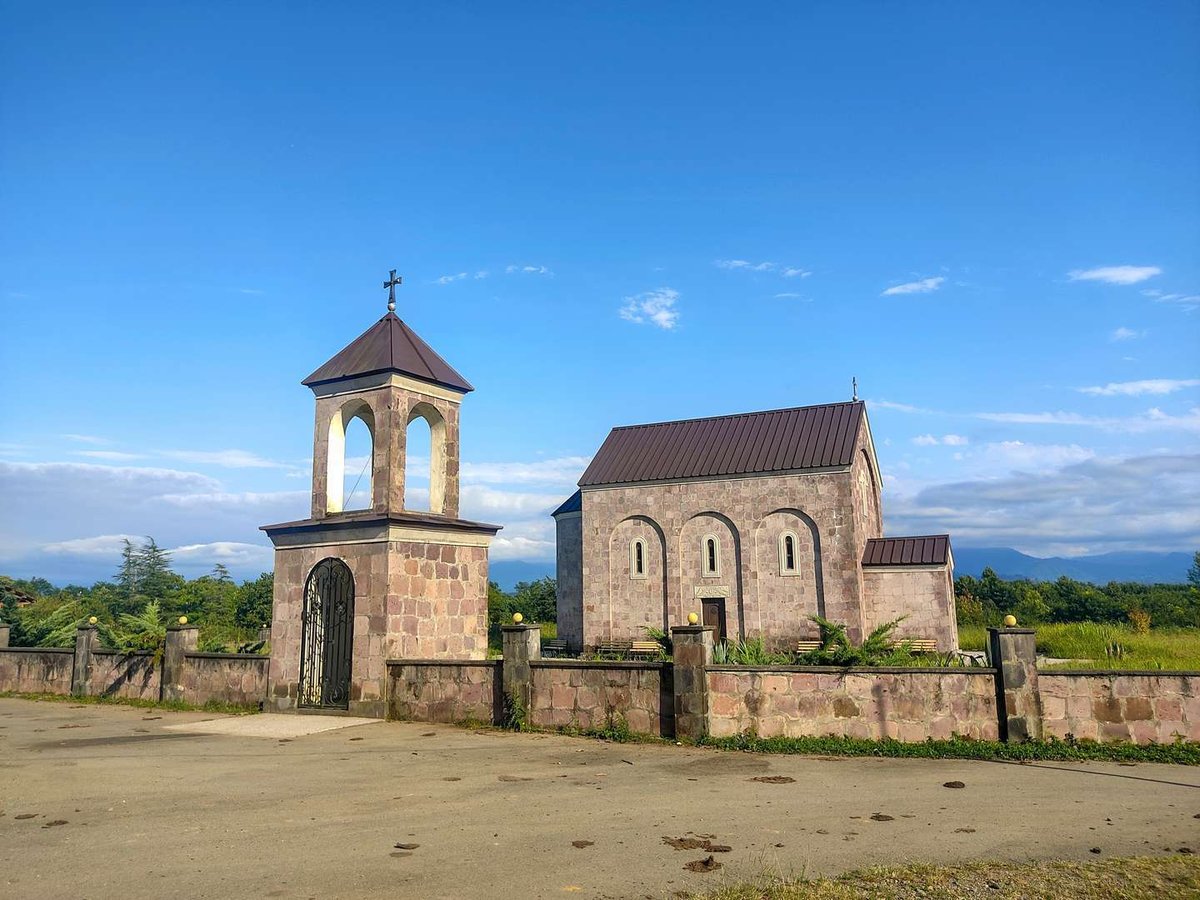
Church of the Saviour, Aketi stands in the village of Kvemo Aketi (Chanchati), Lanchkhuti district. Coordinates: 42.02730, 42.09233. An active village church in the mountain part of the district, off the tourist routes.
🗺️ Route Options
Route Options depending on time and priorities
🚗 Getting There
The most practical base for most routes is Batumi (60-70 km) or Ozurgeti, the regional capital. From Batumi to Ozurgeti is about one hour by minibus or car along the main road. Ozurgeti is the closer starting point for Djumati and Shemokmedi.
🚗 Transport to Each Site
📜 Three Sees of the Gurieli Principality
Guria was an independent principality from the 13th century until the early 19th. The ruling Gurieli dynasty fought neighbours, struck alliances with the Ottomans or with the Kartli-Kakheti kingdom, and remained devout Orthodox Christians throughout. The wealth they poured into their monasteries partly explains why such a small region ended up with three episcopal sees: Shemokmedi, Djumati and Khino.
Shemokmedi was the principal one. Princes were buried here, the most important relics were kept here, and from here came the ecclesiastical authority over the whole territory. When Ottoman raids devastated neighbouring regions, icons and treasures were brought to Shemokmedi for safekeeping — including the Transfiguration icon from Zarzma, which the bull "chose" to stop carrying at Shemokmedi. Djumati ranked second in importance but was arguably the most striking by position — on a hill with a view over the entire Colchian plain. Khino, the third see, has survived less well and is not included in this overview.
After Georgia joined the Russian Empire in the early 19th century, the church organisation was restructured and the sees were dissolved or merged. Shemokmedi was re-established as an episcopal see in 1920 and as a separate diocese in 1995. It was in this context — during the diocese's earlier phase — that the young bishop Ilia served here from 1963 to 1967. He is now Ilia II, Catholicos-Patriarch of All Georgia.
📌 What to Bring and Check Before You Go
Have you visited Guria's monasteries? Leave a review: tell us how you got to Djumati, what stayed with you at Shemokmedi, and whether the smaller village churches are worth a separate trip.
Information is current as of June 2026. Check road conditions for mountain routes (especially Bakhmaro and the Fathers of the Desert Monastery) before travelling.
❓ FAQ
Shemokmedi and Djumati. Shemokmedi was the wealthiest monastery in Guria, the burial place of the ruling Gurieli dynasty and one of three episcopal sees of the principality. Djumati was second in importance and the centre of Orthodox life in western Georgia until the 19th century. Both are worth visiting even if you only have one day in the region.
The Gurieli principality was an independent political entity for several centuries. Its ruling dynasty invested heavily in church building: monasteries served as spiritual centres, treasuries and dynastic burial places simultaneously. Three sees — Shemokmedi, Djumati and Khino — reflected the political and religious weight of the region, out of all proportion to its physical size.
The current Catholicos-Patriarch of All Georgia, Ilia II, served as Bishop of Shemokmedi from 1963 to 1967 — this is where his episcopal career began.
By car or taxi from Ozurgeti, about 14-15 km. The road is mountain track; no public transport reaches the summit. The most practical approach is a taxi arranged in Ozurgeti for a half-day.
It is an active women's monastery. Modest dress is required: headscarf and skirt for women, long trousers for men. The "Jordan" spring on the grounds has a pool for ritual bathing. The convent is on Mount Nigoiti in Lanchkhuti district — a car is necessary.
Summer. The Bakhmaro resort sits at 2,000 metres; the mountain road is difficult in winter. The main occasion is 19 August — the Feast of the Transfiguration, when traditional horse races are held.
Inside there are late-13th-century frescoes showing Byzantine Paleologian influence — a Greek inscription names a painter from Trebizond. The church also holds a gilded silver cross associated with Queen Tamar: it survived the Soviet period in a private family and was returned to Achi only in 2015.
Adjara and Guria share a border, and Shemokmedi or Djumati are reachable from Batumi in one day. But combining the Chokatauri mountain sites with Batumi or Kobuleti in one trip is too much driving to be comfortable. The better approach: Shemokmedi and Djumati as a day trip from Batumi; the Chokatauri mountain sites as a separate excursion.
Shemokmedi and Djumati receive both tourists and pilgrims. Djikheti Convent with its "Jordan" spring draws those seeking a spiritual experience: the pool is considered to have healing properties. The Fathers of the Desert Monastery is more for those seeking solitude than conventional sightseeing.
Read also
- Mamkodi Monastic Complex in Tbilisi National Park
- Natlismtsemeli Monastery, Gareji: History, Frescoes, Route
- Saint Nino Church in Tana Valley: Monastery and History
- Churches and Temples of Batumi: A Guide to 30+ Sacred Sites Across Faiths
- Desert Fathers Monastery in Guria: What to Know and How to Get There

5 comments
Log in to leave a comment
Every trip feels like peeling back layers of time, and Guria does it so artfully. It’s raw and beautiful, a bit chaotic, but in the best way. You leave with more questions than answers, and somehow, that’s the point.