




⛪ The Church of Saint Sameba in Kutaisi: a temple that was born twice
📋 What to know before your visit
| 📍 Address | 4th Tsminda Sameba Lane, Sapichkhia Cemetery, Kutaisi |
| 📅 Built | in 1906–1911, designed by engineer Sakharov |
| 🏛️ Architecture | a cross-domed church built of white tuff |
| 🔄 Consecrated today | to the Holy Trinity, originally to the Descent of the Holy Spirit |
| ⚰️ Surroundings | Sapichkhia Cemetery, opened in 1892 |
| 🕐 Access | the church is open to visitors, free entry |
🧭 About this article
The Church of Holy Sameba stands in Sapichkhia Cemetery in Kutaisi and has changed its dedication over the course of a century. Useful if you want to know the history of this church, its architecture, and how it connects to the historic cemetery surrounding it.
⛪ A church amid cemetery quiet
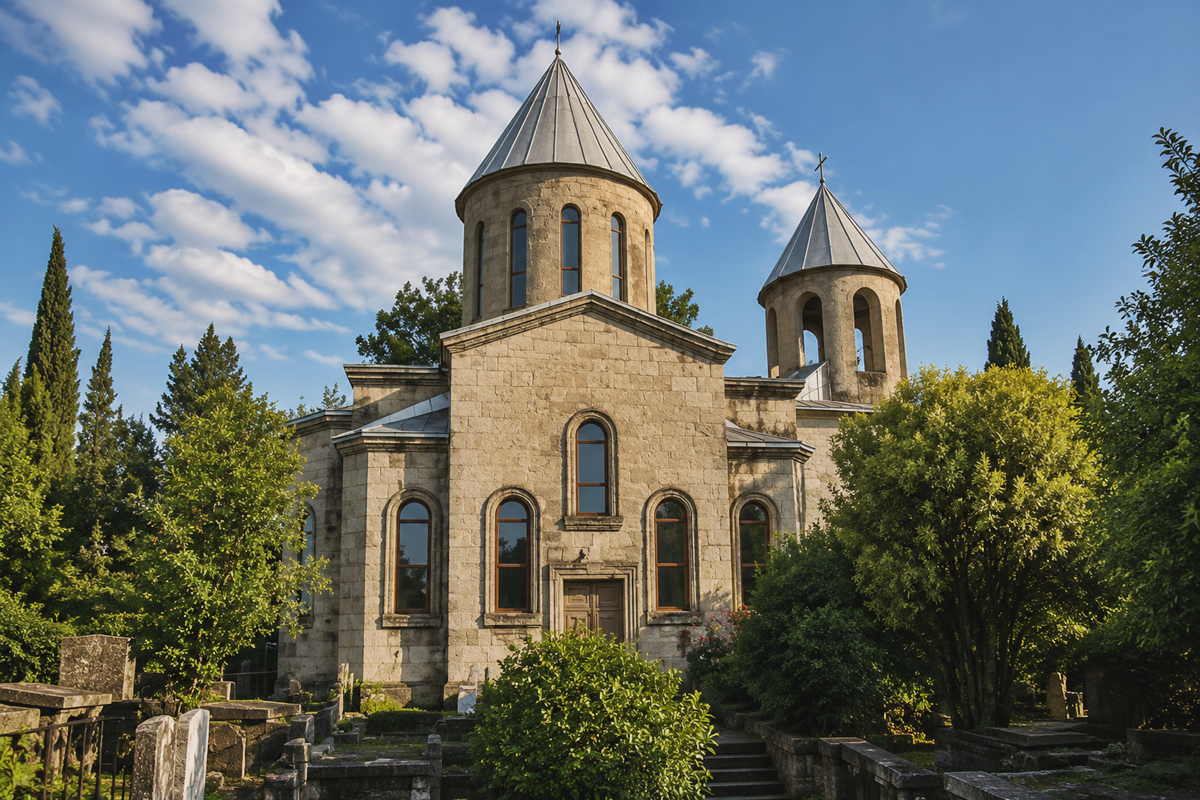
The Church of Holy Sameba stands in the western part of Sapichkhia Cemetery, on high ground roughly two kilometres southeast of the Colchis Fountain. It's not a freestanding church in the city centre, but part of a cemetery complex, which gives the place a distinct, subdued atmosphere.
The building stands out among Kutaisi's other structures for its cladding of white limestone tuff, a pale stone that gives the church a light, almost weightless look against the surrounding greenery.
📜 From the Descent of the Holy Spirit to the Holy Trinity
The church was built in 1906–1911, designed by engineer Sakharov. The construction itself was carried out by Greek craftsmen, Topal-oglu and G. Adam-oglu, an unusual detail in itself for religious building in Kutaisi at the time.
The church was originally consecrated to the Descent of the Holy Spirit. But the Soviet era did not spare it: in 1939 it was closed, like many other religious buildings during those decades.
Revival came only in 1990, when services resumed and the church was reconsecrated, this time to the Holy Trinity, which is where its current name, "Sameba", comes from.
💡 Editor's tip
Come during daylight hours and in a calm frame of mind: this is still an active cemetery, not just a historical sight. Five tall windows in the side walls light the interior well during the day, so a daytime visit will show the church at its best.
🗓️ History in dates
🏛️ Architecture: light and stone
The church is built as a cross-domed church, a scheme classic to Orthodox architecture. The dome rests on four rectangular piers, and the interior is well lit thanks to five tall windows in the side walls, a rarity for churches of this period, whose interiors more often stayed dim.
A few details worth knowing before your visit:
- The cladding is white limestone tuff, a light, pale stone
- Construction was carried out by Greek craftsmen rather than local workshops
- The design belongs to an engineer rather than an architect in the classical sense, typical for the turn of the 19th to 20th century
⚰️ Sapichkhia Cemetery
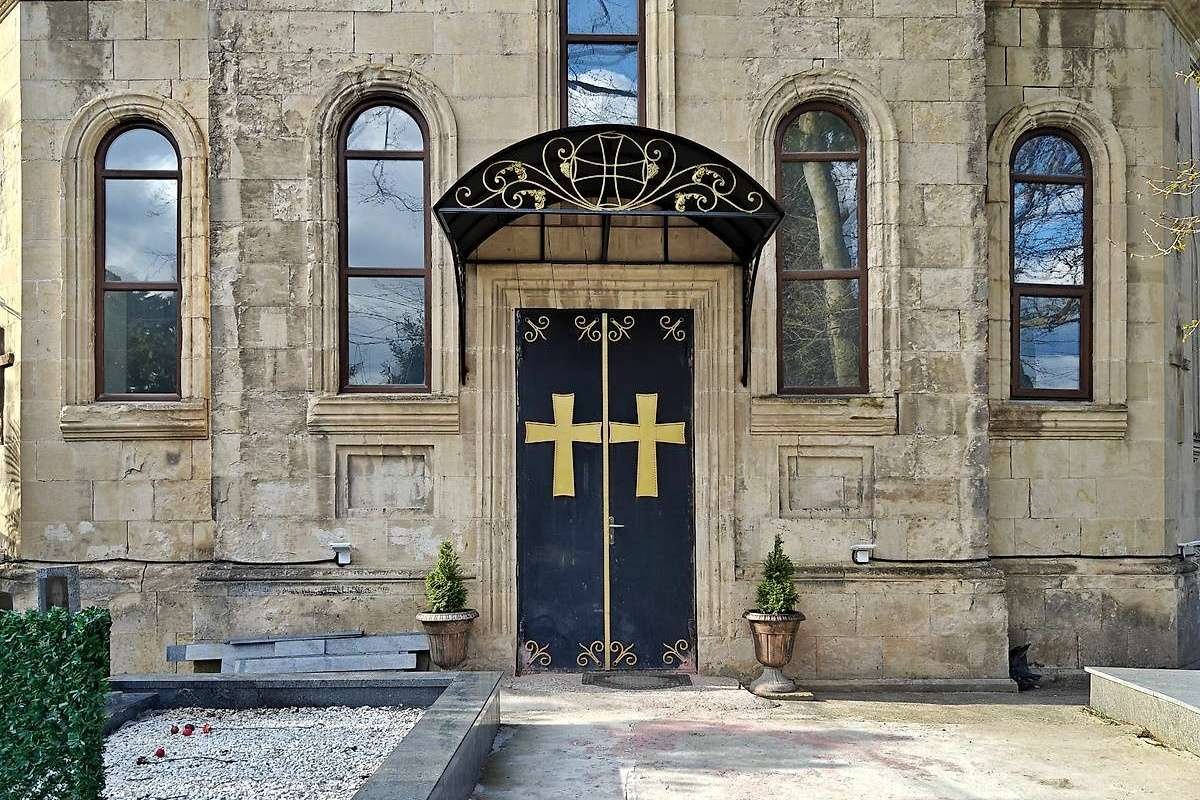
Sapichkhia Cemetery opened in 1892, long before the church itself was built. It sits on high ground, which gives a good view over the surroundings of Kutaisi. The church was built in the western part of the cemetery a decade and a half after it opened, likely as a natural addition to a burial ground already in use.
Today the cemetery and the church form a single complex, a place of remembrance where people come not only to pray but also to honour the memory of those buried here.
🗺️ How to find the church
The church stands within the cemetery grounds, on high ground, so it's easier to navigate by map than by a written route description.
🌍 Near the church


ℹ️ Historical information is drawn from available open sources and may be incomplete. Please check details if you're planning a visit for research purposes.
💬 Tell us
Have you been to the Church of Holy Sameba in Sapichkhia Cemetery? Share in the comments what left the strongest impression on you, the church's architecture or the atmosphere of the place as a whole.
📝 In short
The Church of Holy Sameba is a rare example of a church that survived closure and was reborn: built by Greek craftsmen in the early 20th century, closed during the Soviet years, and reconsecrated in 1990 with a new name and new meaning.
🧡 Keep reading about Kutaisi
- ⛪ The Armenian Church of St. George in Kutaisi: a community's legacy
- ⛪ The Monastery of Saint Thecla in Kutaisi: the story of the first martyr
- ⛪ Mirkma Church in Tskaltubo: what this rare name means
💾 Save this article to come back to it before your trip to Kutaisi.
❓ Questions people often ask about the Church of Holy Sameba
💬 It was built in 1906–1911, designed by engineer Sakharov, with construction carried out by Greek craftsmen Topal-oglu and G. Adam-oglu.
💬 It was originally consecrated to the Descent of the Holy Spirit. After being closed during the Soviet period and reviving in 1990, it was reconsecrated to the Holy Trinity, "Sameba" in Georgian.
💬 In 1939, as part of the broader Soviet policy of closing religious buildings. Services resumed only in 1990.
💬 It's a cross-domed church clad in white limestone tuff. The dome rests on four rectangular piers, and the space is lit by five tall windows.
💬 In 1892, a decade and a half before construction of the church itself began.

1 comment
Log in to leave a comment