


✝️ Protestant Church in Georgia: What is it and how did it appear
📖 Terms at a Glance
| 📅 In Georgia since | 1817, German Lutheran colonists |
| ✝️ "Evangelical" church | not a separate religion, but part of Protestantism |
| 🌍 Denominations in Georgia | Lutherans, Baptists, Pentecostals, and others |
| ⚖️ Legal status | freedom of religion is enshrined in the Constitution of Georgia |
🧭 What This Article Is About
We break down what the Protestant and Evangelical churches are using the story of how these movements emerged in Georgia—from 19th-century German colonists to modern communities, including those in Kutaisi. This article is ideal for anyone seeking a clear definition of the terms along with their Georgian context.
✝️ Protestantism in Georgia: not a borrowed phenomenon, but part of local history
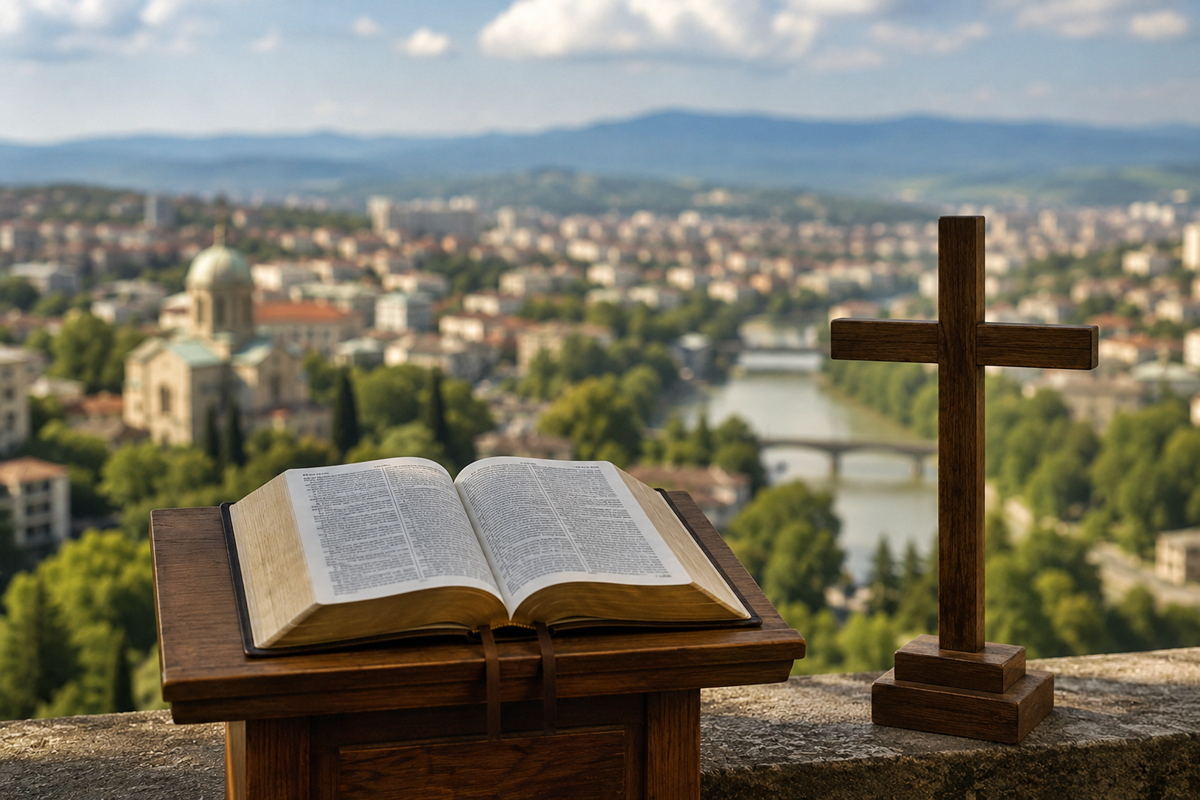
In short: Protestantism is one of the three main branches of Christianity, along with Orthodoxy and Catholicism, and the Evangelical Church is a specific tradition within Protestantism, not a separate religion. In Georgia, a country with a centuries-old Orthodox tradition, Protestantism has nevertheless existed and developed for over two hundred years, and this history has very specific, well-documented chapters.
🚢 From Wittenberg to Tiflis
The global history of Protestantism begins on October 31, 1517, when the German theologian Martin Luther nailed his 95 Theses to the door of the Wittenberg Castle Church, criticizing the sale of indulgences and the clergy's role as intermediaries between man and God. Thus began the Reformation, a movement based on the principle of Sola Scriptura, "Scripture alone": the Bible is recognized as the sole authoritative source of faith.
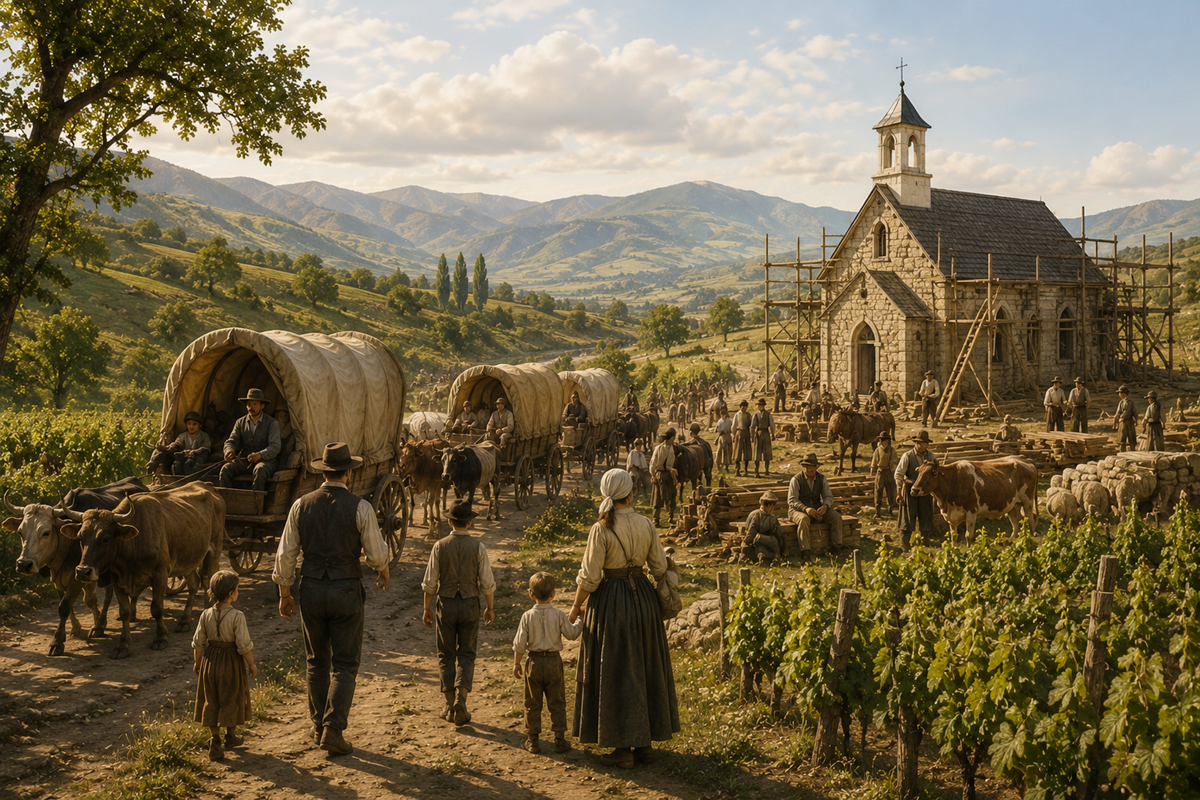
Protestantism arrived in Georgia not in the abstract, but with specific individuals. On September 7, 1818, the Russian Committee of Ministers issued a regulation "On the Settlement of Württembergers in Georgia," after which the first 85 families of Swabian Lutheran colonists arrived in the city, renamed Katharinenfeld (today's Bolnisi) in their honor. By the end of 1819, six German colonies already existed in eastern Georgia, including Marienfeld, Neu-Tiflis, and Elisabethtal (today's Asureti). The colonists moved to Georgia for various reasons: some were fleeing hunger, some were looking for a better life, and some believed that resettlement would bring them closer to the Second Coming.
💡 Lifehack from the Editors
Lutheran churches built by German colonists can still be seen across various corners of Georgia, including Bolnisi. During the Soviet era, many of these buildings were repurposed as warehouses, libraries, and community centers, so don't be surprised if the architecture looks familiar even if the building's purpose has changed over the past century.
🕊️ Tbilisi, the birthplace of Russian Baptism
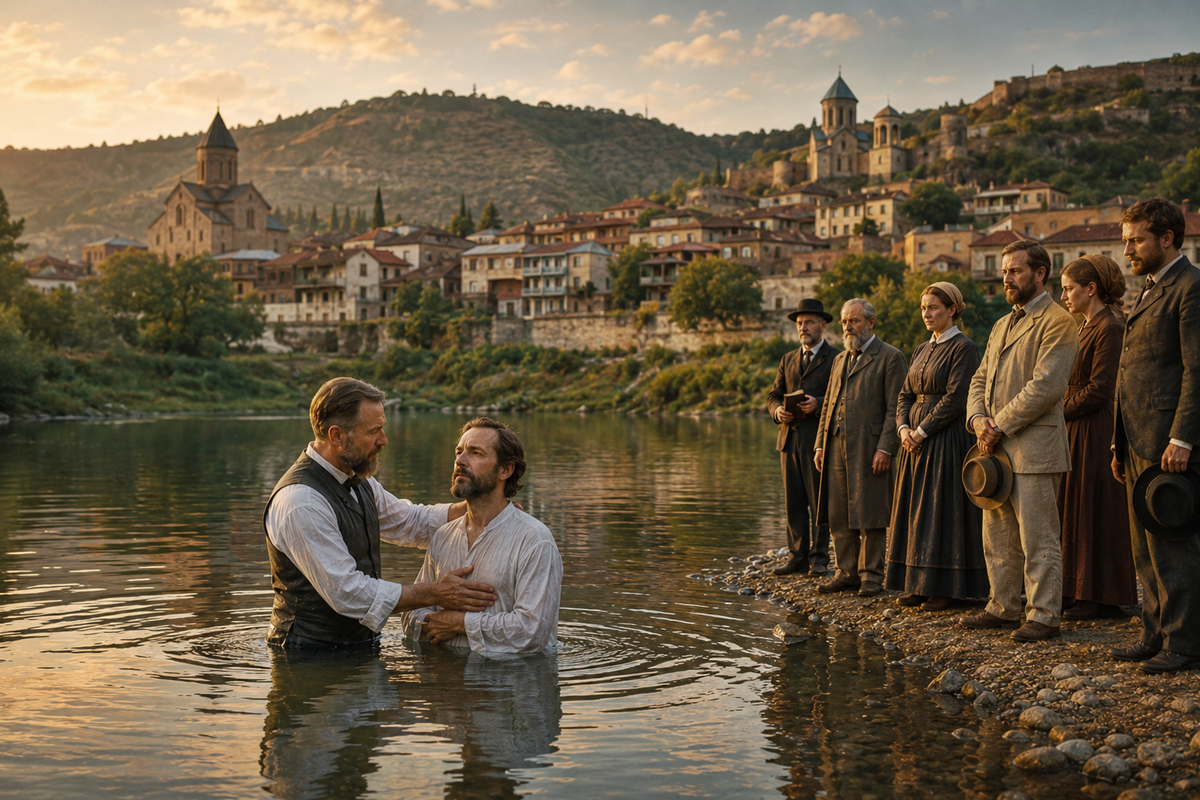
Another specific milestone worth knowing: Tbilisi is considered the birthplace of Russian Baptism.
It was there in 1867 that the German Baptist M.K. Kalweit, who had moved to the Caucasus in 1863, baptized Nikita Voronin, a man considered the first Russian Baptist, according to the Baptist rite.
In other words, the Georgian capital was not just a point on the map of global Protestantism, but the birthplace of an entire religious movement that would later spread throughout the Russian Empire.
🏁 Protestantism in modern Georgia
Today, several Protestant denominations operate in Georgia.
Besides Baptists, Protestantism is represented by Pentecostals (5,000-6,000 members), Lutherans (around 1,000), and small groups of the New Apostolic Church and the Salvation Army.
Article 9 of the Constitution of Georgia proclaims complete freedom of religion and the separation of church and state, while simultaneously recognizing the special historical role of the Georgian Orthodox Church.
🏛️ A living example: the Evangelical Faith Church in Kutaisi
The theory is best illustrated with a real-life example.
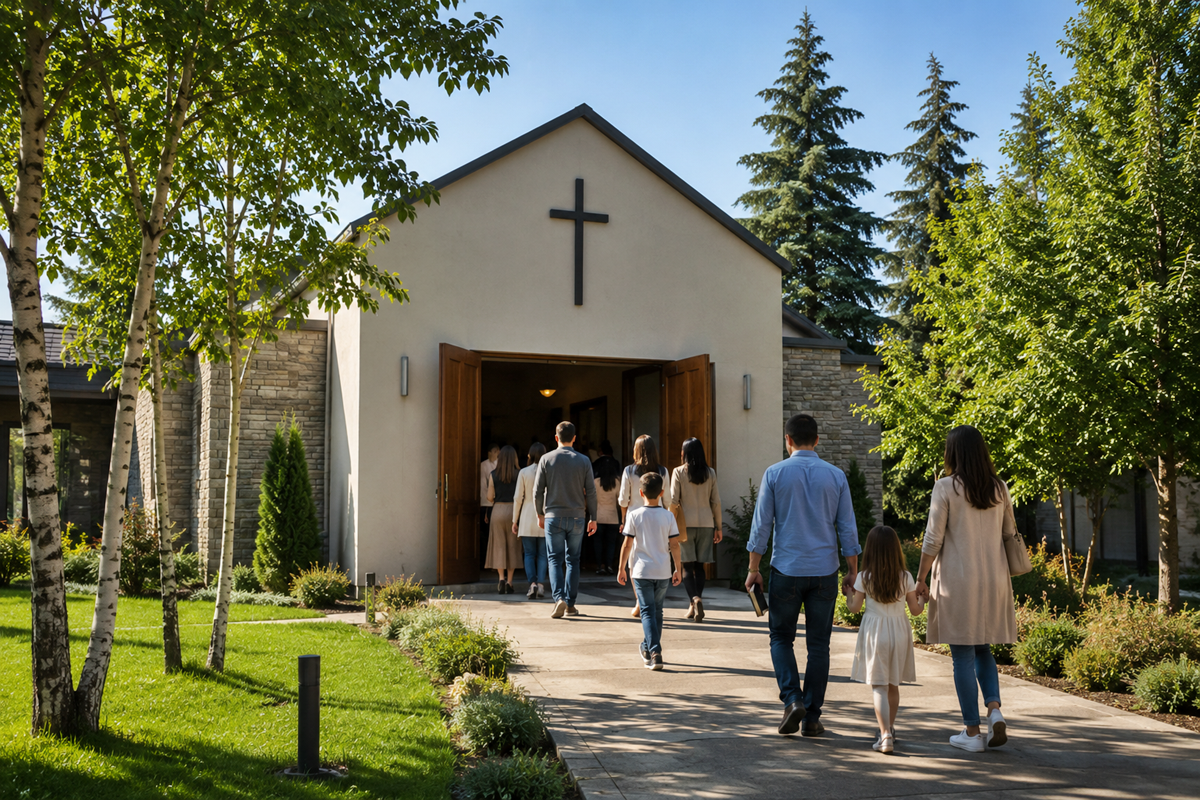
In Kutaisi, there is the Evangelical Faith Protestant Church, a congregation that has united believers for over 45 years, meaning it grew up during Soviet times, when openly professing one's faith was not always easy.
It holds regular Sunday services, as well as a separate service in English on Sundays at 5:00 PM for foreign parishioners and visitors to the city.
If you would like to know more about this particular church, its address and service schedule Check out her card in the Madloba catalog.
ℹ️ This article is for informational and encyclopedic purposes only and does not reflect the editorial board's position on matters of faith. Historical dates and figures are based on generally accepted sources.
💬 Tell Us
Did you know that Protestantism in Georgia has over two hundred years of history? Share in the comments what surprised you most about this story!
📝 Let's sum it up
Protestantism in Georgia is not a borrowed trend, but a part of local history with specific dates: 1817, the first German colonists, 1867, the birth of Russian Baptism in Tbilisi, and today's vibrant communities like the Kutaisi Church of the Evangelical Faith.
🧡 Read More About Kutaisi
- The Bagrationi Dynasty: Georgia's Royal House
- Peoples of Georgia: The Origin of the Country's Name, Character, and Language
- Fereydanians: Georgians Forcibly Relocated to Iran in the 17th Century
💾 Save this article to return to it later.
❓ Frequently searched questions about Protestant and Evangelical churches
💬 One of the three main branches of Christianity, along with Orthodoxy and Catholicism, which emerged as a result of the 16th-century Reformation in Europe.
💬 One of the traditions within Protestantism, particularly emphasizing commitment to the Gospel as the primary source of faith. Evangelical churches typically include Baptists, Pentecostals, and similar movements.
💬 There is no difference in the sense of contrast: an Evangelical church is a type of Protestant church, not a separate phenomenon.
💬 Since 1817–1818, when the first German Lutheran colonists settled in the country. Later, in 1867, Russian Baptism was founded in Tbilisi.
💬 Precise overall data is scarce, but it is known that there are approximately 5,000–6,000 Pentecostals, about a thousand Lutherans, plus Baptists and small groups of other denominations.

1 comment
Log in to leave a comment
Aber wie schmal der Grat zwischen Tradition und Moderne sein kann. Manche mögen die alten Lehren bewahren wollen, während die Jüngeren nach neuen Ausdrucksformen suchen. Es ist eine ständige Auseinandersetzung, die sowohl Herausforderungen als auch Chancen mit sich bringt.
Ich erinnere mich an ähnliche Diskussionen in meiner eigenen Gemeinde. Der Versuch, Brücken zu bauen, kann manchmal frustrierend sein, doch letztendlich ist es das Miteinander, das zählt. Das, was die Menschen verbindet, ist oft viel stärker als das, was sie trennt.