



Khertvisi and Tmogvi: Two Fortress Ruins in Samtskhe-Javakheti
In Georgia, the word "Khetvisi" refers to the confluence of two rivers. This word also gives its name to the fortress located near the confluence of the Faravani and Kura rivers.
One of the masterpieces of Georgian architecture, Khertvisi is located on the border of Samtskhe and Javakheti, at the mouth of the Parvana (Artaana) and Javakheti Kura rivers, near the village of Khertvisi (Aspindza Municipality). The fortress served as a stronghold for the Jakeli clan, rulers of the Samtskhe region, and for centuries controlled the main route of southern Georgia, which ran along the Kura River valley.
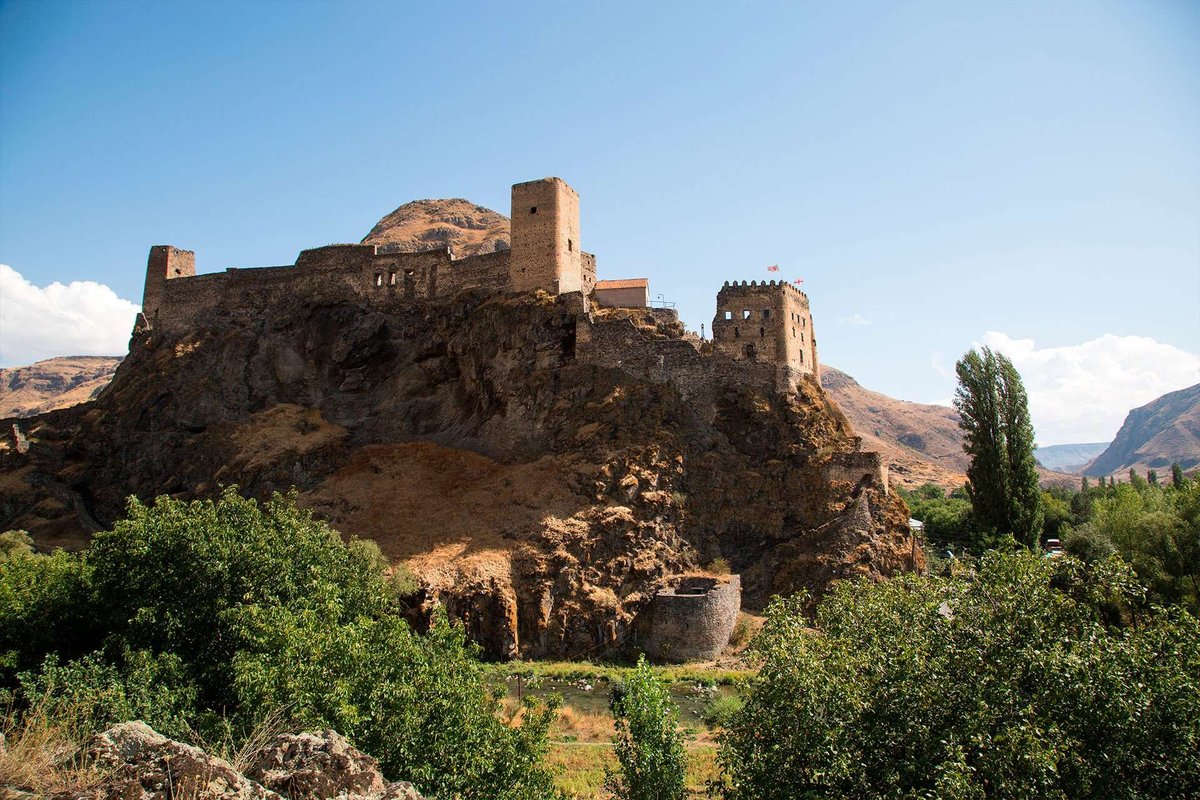
The Khertvisi fortress is well preserved. It is located on a high rocky mountain. It is inaccessible from the northeast. The citadel, with supporting columns, stands on a narrow rocky summit and consists of several sections. In the center stands a twenty-meter-tall tower, which is square in plan with rounded corners and is unique in Georgian architecture. A hall church made of hewn stone and a large reservoir carved into the rock are also located here.
A second, five-story tower is located at the end of the eastern part of the fortress. The inner fortress is surrounded by a fence on the southern and partially eastern sides. Two tunnels run from the eastern side of the fortress to the Javakheti Kura River, one of which was a secret passage, while the other served as an aqueduct during wartime.
The Khertvisi Fortress was presumably built in the 4th century BC. It is first mentioned in historical monuments in a list of fortresses that existed during Alexander the Great's campaigns in Iberia. According to legend, the first walls of the fortress were built by Alexander the Great's soldiers. In 1578, the fortress was captured by the Turks, and Khertvisi, like all of Southern Georgia for three hundred years, was under Ottoman rule. A thorough restoration of the fortress was carried out between 1980 and 1998. Since 2007, the Khertvisi Fortress, along with the Vardzia Monastery Complex, has been included on the UNESCO World Heritage Tentative List.
At the turn of the 12th and 13th centuries, some feudal lords rebelled against Queen Tamar. Sargis Tmogveli (Varam, son of Mkhargrdzeli) supported the queen along with other loyal feudal lords. After the rebellion was suppressed, the queen, in gratitude, gifted him the Tmogvi fortress. From then on, Sargis was known as Tmogveli.
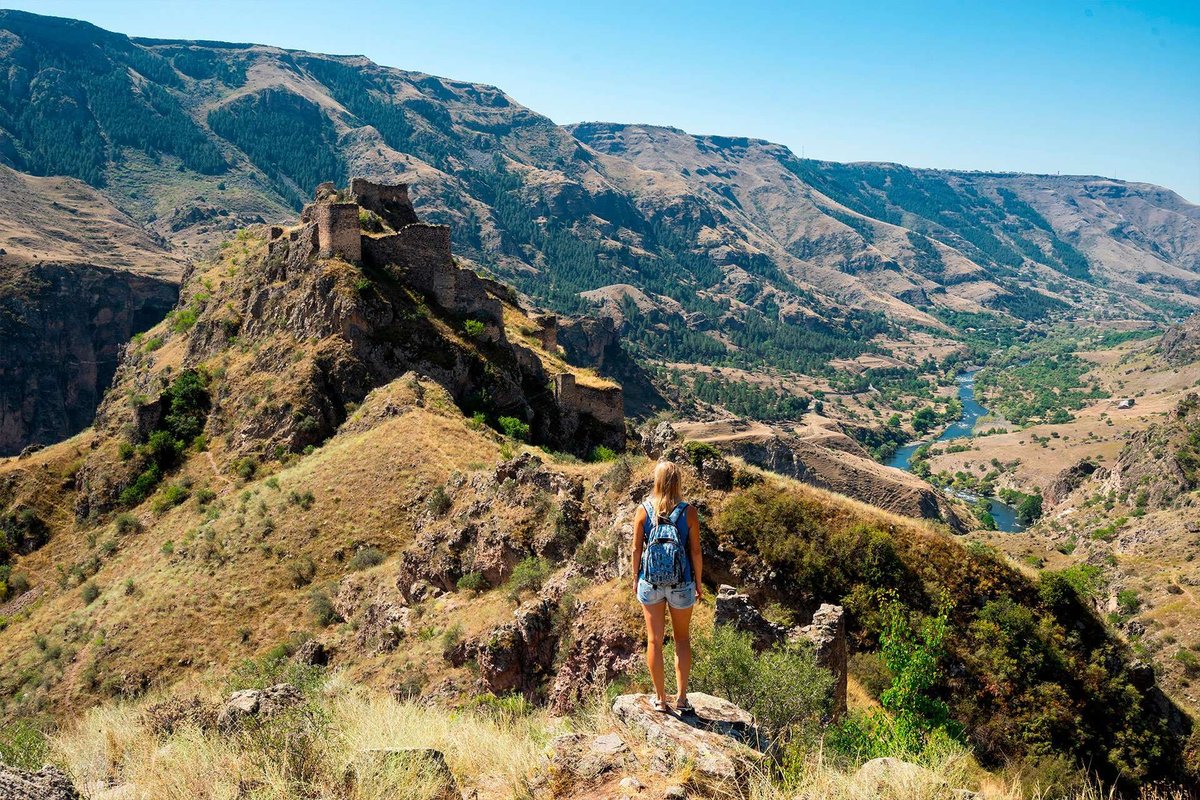
Georgia's main river, the Kura, flows near Vardzia, down a gentle slope through a canyon-like valley. The canyon is formed between the volcanic mountain range of Erusheti and the Javakheti volcanic plateau. The canyon's depth in some places reaches 500 meters. The canyon's slopes are steep and precipitous at the top, while the lower slopes are gentle. Volcanic boulders sometimes fall from the upper slopes, cluttering the canyon's base. This section of the river valley contains several artificial cave complexes, including Vardzia, the Van cauldrons, and others. The ruins of a historic fortress city, Tmogvi, have been preserved on one of the highest volcanic cliffs in the valley.
In the 9th-10th centuries, Tmogvi was an urban-type settlement. It is believed that the fortress was built during this time. Historical records mention it in 914, in connection with the campaign of the Arab commander Abu al-Qasim. At that time, the Arabs attempted to storm the fortress, but their attempts failed.
The Tmogvi fortress stands atop a low mountain and blends seamlessly with the rocky terrain. The western part of the fortress is fortified with a fence and pillars erected in three tiers on the sloping cliff face.
On the southeastern side, the fortress wall is located next to the entrance to a secret cave, through which one can enter the citadel and the Kura River. Ruins of bridge supports have been preserved along the river. One of them connected two palaces on either side of the river, while the other bridge was intended for transport. In the 16th century, Tmogvi Fortress was the site of constant Georgian battles against the Turks and Iranians. After the Iranian-Turkish peace treaty, the Turks held sway in Tmogvi Fortress. Only in 1829, after the Treaty of Adrianople, did Tmogvi Fortress return to Georgia. The fortified city was destroyed several times by earthquakes.
Magnificent Georgia endlessly amazes with its ancient finds and landmarks. In any hidden corner, you're sure to find something incredible, historical, and valuable to the country's residents.
You can always learn more about this on the pages of the madloba catalog. Visit our website right now and discover Georgian traditions, legends, and unique features. Make your travel more exciting!

41 comments
Log in to leave a comment
Czy ktoś z was był tam, żeby poczuć tę historię na własnej skórze? Jakie wrażenia z tych miejsc? 🌄
Bei einem Besuch in Samtskhe-Javakheti mit meiner Familie - meine Tochter, voller Staunen, rannte zwischen den Ruinen umher, als ob sie die Geister der Vergangenheit spüren könnte. Der Wind, der um die zerfallenen Mauern wehte, schien mir Geschichten zuzuflüstern. Es war eine seltsame Mischung aus Melancholie und Ehrfurcht. Man fragt sich, was noch alles verborgen ist unter dem Staub der Jahrhunderte. Die Schönheit Georgiens ist nicht nur in den Landschaften, sondern auch in den Erinnerungen, die diese Steine tragen. Ein wahres Erbe, das es wert ist, bewahrt zu werden.
Автор отлично передаёт, что крепость Хертвиси — это не просто памятник, а настоящая живая легенда, возраст которой насчитывает почти 1500 лет: сражения, осады и многократные перестройки сделали её настоящим символом стойкости. А когда я сама поднималась по крутой тропе к её стенам, ветер был словно эхом тех древних времён!
И Тмогвия — монастырский комплекс у реки Куры — произвёл на меня не меньшее впечатление: белокаменные храмы в окружении зелени, ощущение тишины и глубокого умиротворения. Советы местных — идти туда ранним утром, чтобы поймать мягкое световое золото на стенах — оказались идеальными для атмосферных фотографий.
Кроме того, отзывы других путешественников помогли мне выбрать оптимальный маршрут: сначала Хертвиси, а затем неспешная прогулка к Тмогвии — так история раскрывается более логично и красиво.
Спасибо автору за такой живой обзор!
А вы предпочитаете сначала крепостные стены и панорамы, как в Хертвиси, или духовную тишину, как в Тмогвии? 🏞️🥾