




Tbilisi National Park: Hiking Trails, Rare Plants and Wildlife
🌿 What you need to know before visiting
| 📍 Location | North of Tbilisi, Saguramo-Ialno Range. About 20 km from the city center |
| 📐 Area | 243 km². Borders Shida and Kvemo Kartli, Ertso-Tianeti, and Kakheti |
| 📅 Established | 1973. The first national park in Georgia. Formed on the basis of the Saguramo Nature Reserve |
| 🌱 Flora | About 700 plant species, including relict Colchic species of the Tertiary period |
| 🦌 Fauna | Protected Caucasian red deer and other large mammals |
| 🚴 Routes | 3 cycling routes (easy / medium / difficult), a horse-riding and hiking trail, 2 picnic areas, 2 campsites |
| 🏛️ Nearby | Mtskheta (UNESCO) · 6th-century Jvari Monastery · Unique archaeological sites |
🧭 Who This Article Is For
Tbilisi National Park is a place many have heard of, but few actually reach. And that's a shame: it's just 20 km from the city, featuring 243 km² of pristine nature, relict plants, state-protected Caucasian red deer, cycling trails of three difficulty levels, and a campsite with fire pits. Plus, Mtskheta and Jvari Monastery are just a few kilometers away. This article is for those who want to understand exactly what to do here.
📜 First in Georgia: How the Park Came to Be
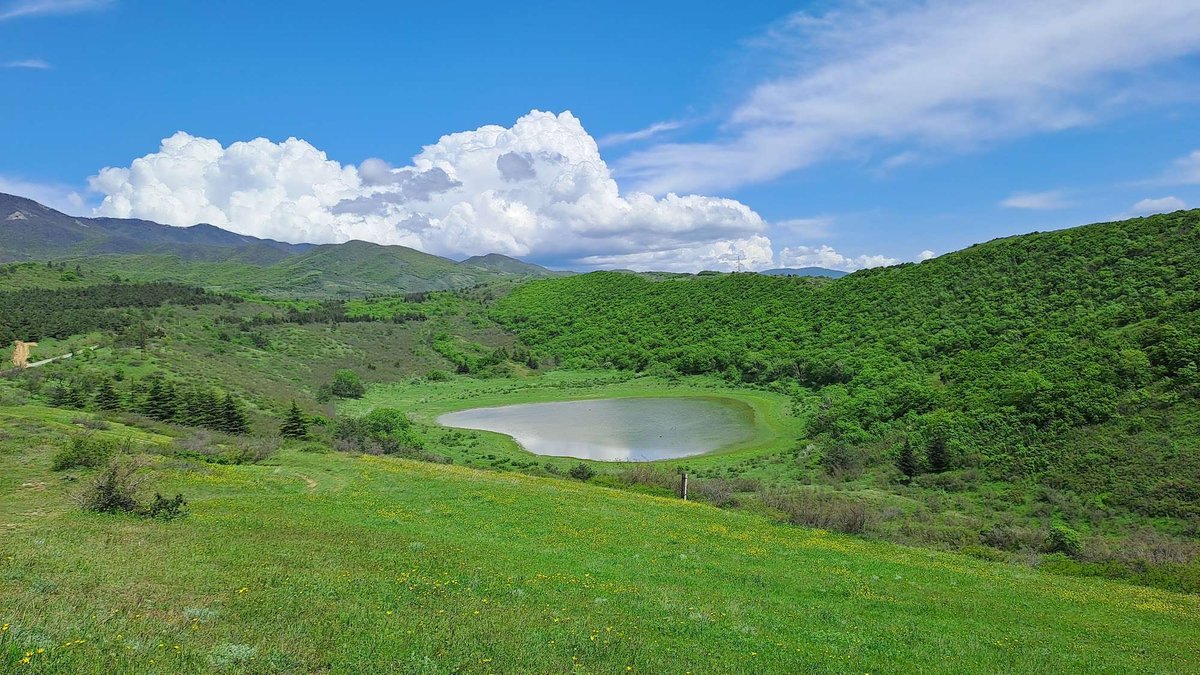
Tbilisi National Park was established in 1973 on the basis of the Saguramo Nature Reserve, which began operating in the mid-20th century. It is the first national park in Georgia—and that fact alone changes how people perceive the place.
The park is located on the Saguramo-Ialno Range, north of Tbilisi. It borders several historical provinces: Shida and Kvemo Kartli, Ertso-Tianeti, and Kakheti. Its area—243 km²—is five times larger than the entire territory of Monaco.
🌿 Climate: Four Types in One Park
One of the most unusual facts about the park is that four different types of climate form on its territory. This is due to the diversity of the terrain and the orientation of the slopes.
The general climate type is moderately humid subtropical. In practice, this means: clean air, high humidity in forested areas, and a noticeable coolness compared to Tbilisi—especially in the beech forest belt.
🌲 700 Plant Species and Relicts from the Past
The park is home to about 700 plant species—from common mountain herbs to rare relicts that have survived for millions of years.
- Colchic holly (Ilex colchica) — a holly with shiny dark green leaves, included in protected lists.
- Colchic ivy and Pastukhov's ivy (Hedera colchica, Hedera pastuchowii) — evergreen lianas associated with pre-glacial climate conditions.
- Caucasian rhododendron (Rhododendron caucasicum) — a mountain rhododendron that blooms in June-July with white or pink flowers. One of the most recognizable symbols of the Caucasus Mountains.
Several forest zones succeed each other within the park: hornbeam-oak forests, oak forests, and beech forests. This transition from zone to zone is one of the main impressions of the walk: the forest literally changes right before your eyes.
🦌 Caucasian Red Deer
The Caucasian red deer (Cervus elaphus) holds a special status in the park. For decades, its protection has been a priority. The deer is a large, rare animal, and encountering it in the wild is a unique experience. According to visitor reviews, it does happen—especially on the trails during early morning hours.
In addition to the deer, several other species of large mammals are under state protection. Hunting in the park is strictly prohibited.
🚴 Routes: From Cycling Paths to Horse Trekking
From visitor Andrew's comment, here is the specific infrastructure:
- 3 cycling routes: easy, medium, and difficult, catering to different fitness levels.
- A hiking and equestrian trail Zedazeni – Didveli – Mamkoda: an extended route through forests, mountain meadows, and historical points.
- 2 picnic sites — equipped areas with fire pits.
- 2 campsites — with spots for tents and campfires. An opportunity to spend a night in the forest within Tbilisi National Park.
⛪ Nearby: Mtskheta and Jvari
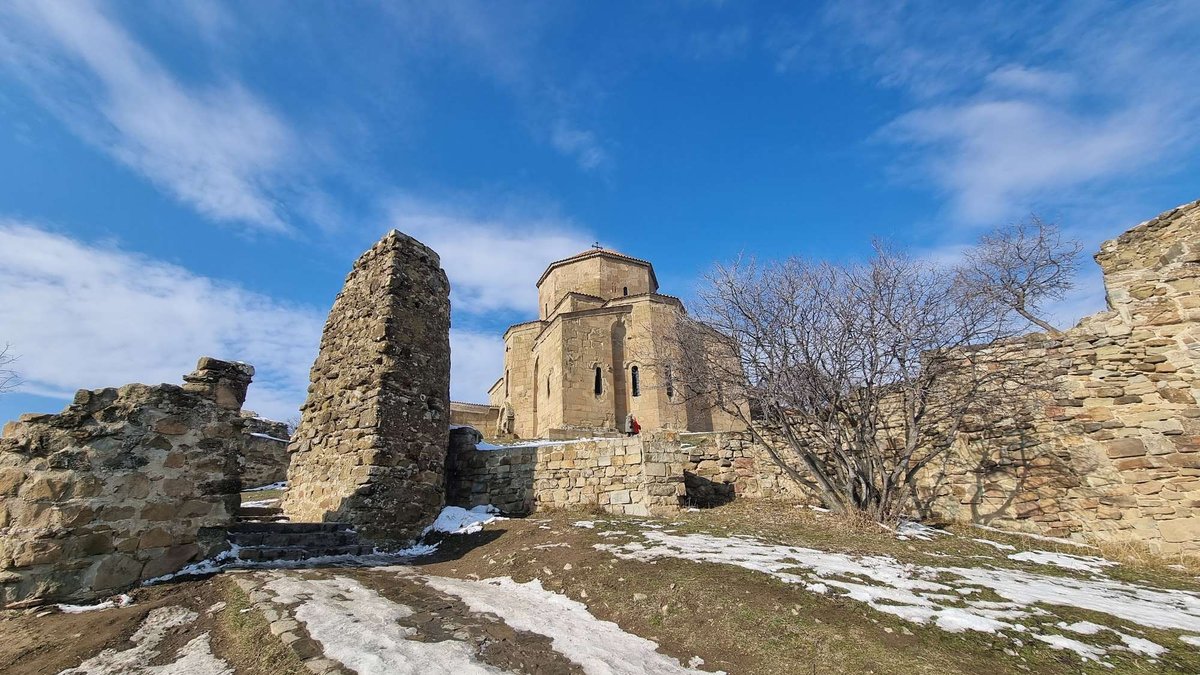
The western border of the park approaches Mtskheta, the ancient capital of Georgia with world historical significance. Located here is the 6th-century Jvari Monastery, one of the greatest monuments of Georgian architecture and Christian culture, listed as a UNESCO World Heritage site.
Combining a trip to the national park with a visit to Mtskheta is one of the best itinerary formats. Nature and history in a single journey.
Come in autumn — October and early November. The beech forests burn with gold, the oaks turn red, and the conifers stand green. Visitors who have been here in different seasons unanimously call autumn the best time. Summer is hot and sunny — good for cycling, but tough for long hikes. Early morning in any season offers the best chance to spot a deer on the trail. Go with a guide or at least download an offline map: the park is huge and it is easy to veer off the path.
🗺️ How to Spend a Day in the Park
1️⃣ Travel from Tbilisi (20 km) by taxi or car. Check the current route before heading out.
2️⃣ At the entrance, choose a cycling route based on your fitness level or the Zedazeni – Didveli – Mamkoda hiking trail.
3️⃣ In the forested area, look for relict plants: Colchic ivy, rhododendron, and holly. Many are marked with information signs.
4️⃣ The best time to encounter a deer is during the early morning hours on forest trails away from tourist spots.
5️⃣ Take a break at a picnic area or set up camp at one of the two campsites.
6️⃣ At the end of the day, head to Mtskheta and the Jvari Monastery. Sunset from Jvari overlooking the confluence of the rivers is one of the best views in Georgia.
💬 What Those Who Have Been Here Say
"Tbilisi National Park is best visited in autumn. At this time of year, the local forests are filled with all the colors of the rainbow! Deciduous trees turn red, yellow, orange... And all this beauty is wonderfully highlighted by the green of evergreen spruces and pines."
"I've been there twice, in summer and autumn. Of course, the park in the autumn period is incomparable. There are so many unusual plants. The air is absolutely pure!"
"During our visit, we encountered a Caucasian red deer — it was unforgettable! I recommend it to anyone interested in biology and who loves spending time in nature."
"The park features 3 cycling routes, a hiking and horse trail, 2 picnic areas, and 2 camping sites. You can have a great time."
"The park offers various routes, from simple walks to long treks. You can even get lost there, so you shouldn't step off the paths."
🏁 Why It's Worth Going
Tbilisi National Park is the first in the country, established in 1973. It offers 243 km² of genuine, untouched forest just 20 km from Tbilisi. It features 700 plant species, including Tertiary period relicts, the protected Caucasian deer, three levels of cycling trails, campsites with fire pits, and Jvari nearby. In autumn, it is one of the most beautiful places in Georgia.
ℹ️ The park is open year-round. Campsites and cycling routes are available during the season — check conditions before your trip. How to get there: about 20 km from Tbilisi, most convenient by car or taxi. Information is current at the time of publication.
Have you been to Tbilisi National Park? What time of year did you visit, and what impressed you the most? Did you manage to spot a deer? Tell us — we read all comments ❤️
❓ Frequently Asked Questions
💬 About 20 km from the center of Tbilisi. By car or taxi, it takes approximately 30–40 minutes depending on the route. Check the current road conditions before your trip.
💬 In 1973, on the basis of the Saguramo Nature Reserve — making it the first national park in Georgia's history. Its creation laid the foundation for the country's system of protected areas.
💬 Autumn is the best time according to the unanimous opinion of visitors. October and early November: beech and oak forests provide maximum color. Spring is wonderful for blossoms, including rhododendrons. Summer is hot but suitable for cycling. Winter is uncrowded and beautiful.
💬 Yes. The Caucasian red deer is a protected species and one of the park's top priorities. Sightings do happen, especially early in the morning on forest trails. Several visitors have described this as an "unforgettable" experience.
💬 Yes. Three cycling routes: easy, medium, and difficult, for different fitness levels. There is also the Zedazeni – Didveli – Mamkoda hiking and horse trail.
💬 Yes. There are two official campsites in the park with tent spaces and fire pits. Check conditions and booking requirements before your trip.
💬 Mtskheta — the ancient capital of Georgia, a UNESCO site. The 6th-century Jvari Monastery — located near the western border of the park, one of Georgia's main architectural landmarks. Combining a nature route with a cultural one is one of the best trip formats.
💬 The park is large — 243 km². Visitors warn that it is easy to lose your orientation on the trails. It is recommended to either go with a local guide or download an offline trail map before your trip, and never step off the marked paths.

45 comments
Log in to leave a comment
Тбилисский национальный парк как будто хочет напомнить нам, что есть жизнь за пределами асфальта и бетона. Я не любитель долгих походов, но иногда стоит рискнуть этими тридцатью километрами и посмотреть, что там. Надо просто решиться. Искренне надеюсь, что не разочарует.
Особенно вдохновляет, что этот природный рай находится так близко к древним Мцхете и её культовому храму Джвари ⛪ — это идеальный баланс природы и истории в одном маршруте! 🤩 И советы от местных жителей, отзывы и ответы на вопросы делают рейтинг ещё полезнее для тех, кто ценит настоящие впечатления 👣💬.
Я уже запланировала свой маршрут: сначала длинная прогулка по парку, а затем — уютное кафе в Мцхете ☕ to celebrate a perfect day на свежем воздухе 🌄!
А вы уже были в Тбилисском национальном парке? Какие места, тропы или сезоны посоветуете обязательно включить в план путешествия? ✨🌲🗺️
Обязательно хоть раз сходите на прогулку туда, воздух чистейший!
Но место невероятное, конечно.