




Tbilisi Zoo: 300 Animal Species and 90 Years of History
🦁 Zoo · ⏱️ 2–4 hours · 📍 Vere River Valley, Tbilisi
🐾 What to Know Before Your Visit
| 📅 Founded | February 10, 1927. Over 90 years of operation |
| 🐾 Animals | Around 300 species: white tigers, white lions, Caucasian endemics, rare fish |
| 🐟 Aquarium | The very first marine aquarium in the entire Caucasus (opened in 2007) |
| 🏛️ Sections | Birds · Predators · Primates · Ungulates · Exotarium · Educational Center |
| 📚 Science | Research, breeding of rare species, educational center for children |
| 🕐 Opening Hours | Daily. Please check specific hours before visiting |
| 💰 Admission | Paid. Discounts for children and seniors. Please check current prices |
🧭 Who This Article Is For
Tbilisi Zoo is one of the oldest zoos in the Caucasus. It boasts nearly 100 years of history, around 300 animal species, the region's first marine aquarium, and the 2015 tragedy that became deeply embedded in the city’s memory. This article is for those who want to visit mindfully—knowing exactly what to look for and the history behind this place.
📜 History: From 1927 to the Present Day
Foundation and Early Years
Tbilisi Zoo opened on February 10, 1927, by decision of the city authorities. A 70-hectare territory in the Vere River valley was allocated for its construction. G. A. Hanson was appointed as its first director.
Right from its inception, the zoo featured several thematic sections: the Caucasus and regional studies, fauna of the USSR, exotic animals, and agricultural breeds. It was not just a place of entertainment—scientific research was conducted here from its very first years.
In 1931, a parasitology laboratory and a zoology museum were established. In 1935, a biological station opened at the zoo (under the leadership of I. Dzandieri), which was later handed over to Tbilisi State University.
The decade under the leadership of director G. Hanson (1934–1944) brought an especially large number of scientific discoveries. Scientists I. Beritashvili and N. Dzidzishvili studied primate psychology here—a cutting-edge field of science at the time.
2007: The First Marine Aquarium in the Caucasus
In 2007, the zoo opened the first marine aquarium in the entire Caucasus. Fish, corals, and marine life—all within the landlocked city of Tbilisi. It became a distinct point of attraction for visitors.
June 13, 2015: The Tragedy
This event is impossible to overlook. On the night of June 13–14, 2015, due to torrential rains, the Vere River overflowed its banks and destroyed the lower part of the zoo. Enclosures were completely swept away. Panicked animals escaped into the city streets. Many perished—some were shot by Ministry of Internal Affairs officers, although, according to the zoo director, this was not necessary.
Three zoo workers tragically lost their lives in this disaster, saving their animals until the very end.
Tbilisians responded immediately. Volunteers, donors, and city services worked side by side. On September 13, 2015—exactly three months later—the zoo reopened.
🐅 Who Lives in the Zoo
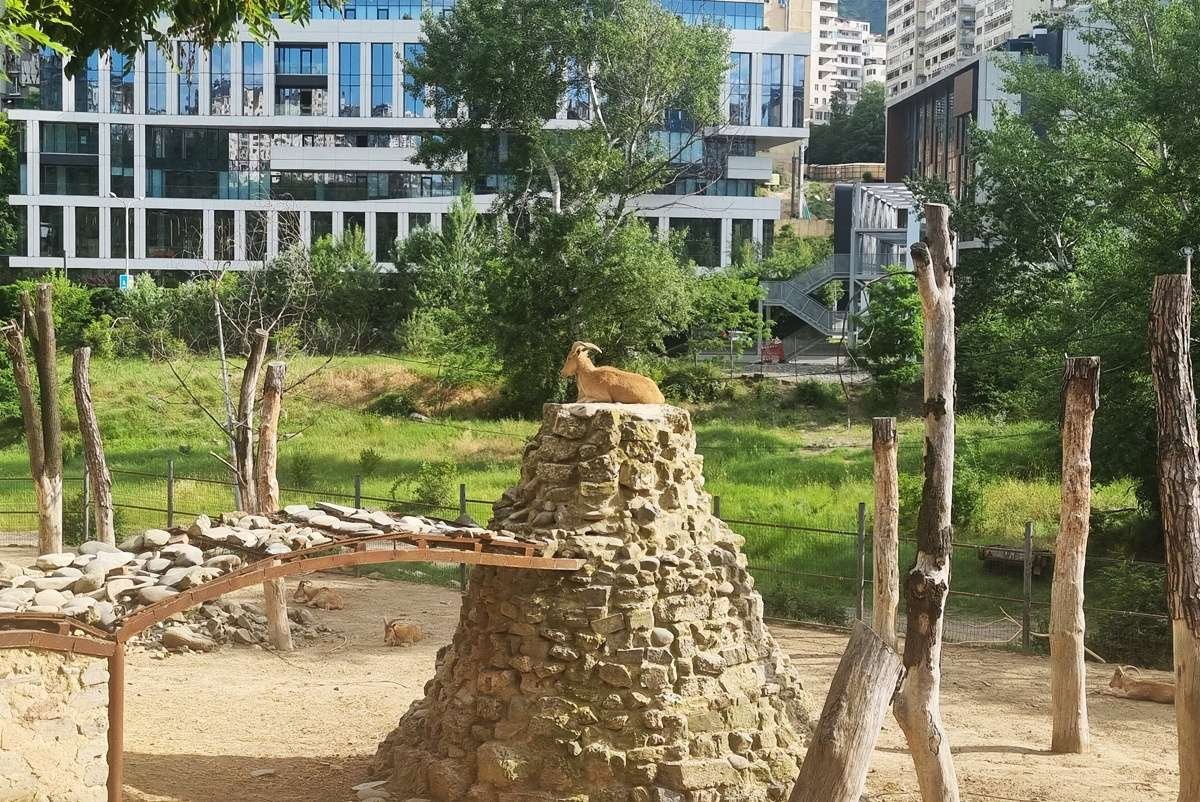
Caucasian endemics: turs (mountain goats), roe deer, Caucasian snowcocks (rare birds), and wild goats. These are animals native specifically to the Caucasus region.
Rare and exotic species: white tigers, white lions, and white rhinoceroses—truly rare colorations. African wild dogs. Animals from Africa, Asia, and other continents.
Many species housed in the zoo are on the brink of extinction in the wild. The zoo runs breeding programs to increase the populations of rare animals—this is a concrete effort, not just a declaration.
Exotarium—a separate pavilion featuring amphibians, reptiles, and rare fish. The marine aquarium is located inside.
Educational Center for children—lectures, programs, and events.
🦁 Zoo Sections
The zoo is divided into six main sections:
- Bird Department—a diverse variety of species, from local to exotic.
- Predator Department—large cats, including the rare white tigers and white lions.
- Primate Department—monkeys, whose study in this zoo dates back to the 1930s.
- Ungulate Park—turs, roe deer, and stags.
- Exotarium—reptiles, amphibians, rare fish, and the marine aquarium (2007).
- Educational Center—for children and school groups.
Start with the exotarium—it is darker and cooler inside, making it a great beginning on a hot day. Look for the white tigers and white lions in the predator department—some visitors walk right past, not knowing they are a unique rarity. It is best to visit the marine aquarium in the first half of your visit before you get tired. If you are coming with children, check the schedule of educational programs at the entrance. There are fewer crowds on weekdays.
🗺️ How to Spend Your Time at the Zoo
1️⃣ Buy a ticket and ask at the ticket counter about the feeding and educational program schedules for the day.
2️⃣ Start with the exotarium—rare fish, reptiles, and the Caucasus’s first marine aquarium (2007).
3️⃣ Head over to the predator department to see the white tigers and white lions. They are among the very few in the region.
4️⃣ Visit the bird department and Caucasian endemics—turs, roe deer, and snowcocks.
5️⃣ Stop by the educational center—especially if you are with children.
6️⃣ There are children's amusement rides on the grounds—a great option for a break midway through your route.
💬 What Visitors Say
"I enjoyed my time at Tbilisi Zoo. The animals have good, spacious enclosures. They are clean, and there is no unpleasant odor. The animals look well-fed, their coats are glossy, and they behave calmly. The territory itself is large—you can take your time and walk around for a while."
"Over 300 animal species, including rare and endangered ones. The exotarium with fish and reptiles left a special impression. The children's rides are a big plus."
"The zoo's history, along with its unique discoveries and the tragic event of 2015, makes this place even more significant."
"It is so tragic that the 2015 disaster happened. They were so attached to the animals, saving them until the very last moment. Thank God they managed to restore it in just three months."
🏁 Is It Worth Visiting?
Tbilisi Zoo is one of those rare places where the institution's history becomes an integral part of the visit itself. 90 years of operation, a 1930s scientific laboratory, the first marine aquarium in the Caucasus, the 2015 tragedy, and its rapid rebirth. With 300 species—including white tigers and rare Caucasian species that you won't see this close anywhere else—it is absolutely worth a visit.
ℹ️ The zoo is open daily. Please check ticket prices and operating hours before visiting, as rates may change. Discounted tickets are available for children and seniors. Information is current as of the publication date.
Have you been to Tbilisi Zoo? Which animal did you find most memorable—the white tigers, the marine aquarium, or the Caucasian endemics? Let us know—we read all your comments! ❤️
❓ Frequently Asked Questions
💬 In the Vere River valley, in the western part of Tbilisi. It is close to the Marjanishvili/Vere area. It is easy to get there by taxi or bus—please check the route before heading out.
💬 Admission is paid. Discounts apply for children, seniors, and certain categories of visitors. Please check current prices at the ticket box or on the official website before your visit, as rates can change.
💬 On February 10, 1927—making it one of the oldest zoo institutions in the Caucasus. It has over 90 years of continuous operation, despite the 2015 tragedy.
💬 On the night of June 13–14, 2015, following severe torrential rains, the Vere River flooded. The floodwaters destroyed the lower section of the zoo, causing animals to escape into Tbilisi's streets. Many animals perished, as did three zoo employees who were trying to save them until the end. Thanks to the help of city residents, the zoo was restored in three months and reopened on September 13, 2015.
💬 Yes. Among the rarest are white tigers, white lions, and white rhinoceroses. There are also Caucasian endemics: turs, Caucasian snowcocks, and roe deer. Many species are endangered in the wild, and the zoo runs specialized breeding programs for them.
💬 A separate pavilion housing amphibians, reptiles, and rare fish. It also includes the first marine aquarium in the Caucasus, which opened in 2007.
💬 Yes. The zoo features an educational center for children, offering guided tours, lectures, and themed activities. Please check the schedule on-site or call ahead.
💬 At least 2–3 hours to explore the main sections. If you are visiting with children or planning to see the marine aquarium, allow 3–4 hours. The area is large and perfect for a leisurely walk.

34 comments
Log in to leave a comment
Очень радуют советы от местных 👣💬 — они помогают выбрать лучшие маршруты по зоопарку, узнать, где можно сделать самые красивые фото 📸 и какие зоны особенно интересны для детей и взрослых. Такие подсказки делают прогулку куда насыщеннее и помогают почувствовать место ещё до посещения! 💛
После прогулки среди животных так приятно представить, как ты зайдёшь в уютное кафе ☕🍰, обсудишь впечатления с друзьями за чашечкой ароматного кофе и бокалом грузинского вина 🍷 — идеальное завершение тёплого дня на свежем воздухе 🌞
Мне очень нравится, как этот рейтинг помогает прочувствовать атмосферу зоопарка: живые описания, реальные отзывы и полезные подсказки делают путешествие настоящим удовольствием 🌿✨
А вы уже были в Тбилисском зоопарке? Какие животные или уголки вам запомнились больше всего, и в какое время дня, по вашему мнению, здесь особенно приятно гулять? 🐒🦋💚