



Bedeni Stone Pavement: Lava Blocks and Plateau Mounds
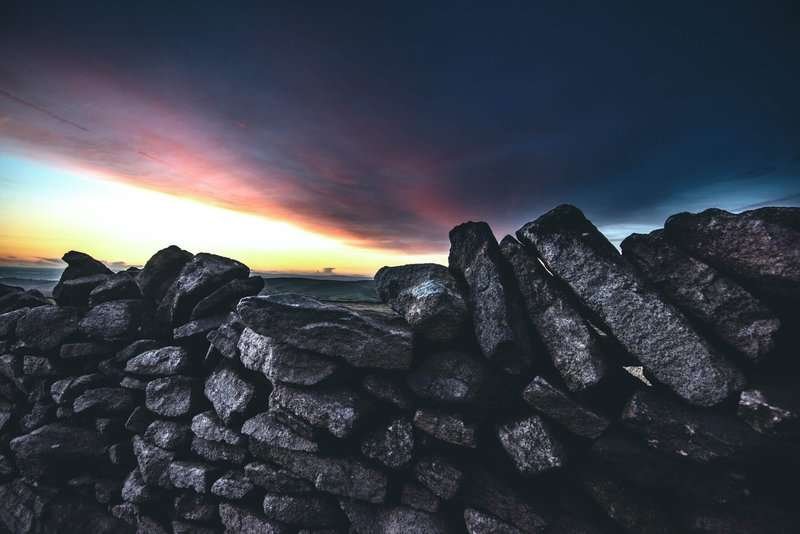
Paving stones made of "giant stones" are figuratively called such surfaces of volcanic lavas, which, due to the presence of crevice systems, are divided into polygonal parts during cooling. These polygonal parts are the tops of columnar lava blocks. Such forms are found in many volcanic regions of Georgia. One of these regions is Kvemo Kartli. Here on the Bedeni plateau, consisting of dolerites, these forms are well folded and preserved. The diameter of polygonal (mainly hexagonal) slabs of some of them reaches 2-3 m.
There are small and large hills on the plateau. In the 50-60s of the twentieth century, archaeological research revealed that some of these hills are man-made and are burial mounds. During the excavations of the main one among the mounds (the so–called "Cut Mountain") with a height of 6 m, a diameter of 100 m, an oak crypt with an area of 30 sq.m was discovered. presumably, it was the burial of the tribal leader. Unfortunately, the crypt was plundered. According to scientists, it was robbed 700-800 years ago. During the excavations, only two large gold pins were found.
Later, the mounds of the Bedene plateau were separated into a separate group and called the "Bedene culture. Unlike the items from the Kuro-Arak culture mounds, the dishes from the Bedene burials are more perfect. It is believed that the heyday of the Bedene culture came at the end of the early Bronze Age, which in a certain way makes it closer to the Trialet culture. On the southern periphery of the Bedene plateau, near the Nadarbazevi locality, at an altitude of 1419 m, there is Lake Ku (or Nadarbazevi). To the east of the lake, in the historical Kvemo Kartli, on the territory of the modern Tetritskaroy district, about 10 km from the center there is a monument of Georgian architecture of the IX-X centuries – Nadarbazevi Palace. The ruins of a palace and a residential building have been preserved to this day. During the excavations , a 6 km long water pipe was discovered .
Location:
Tetritskaro Municipality, Bedeni Plateau, between the headwaters of the Kledistskali and Chivchavi rivers; elevation — 1600–1700 meters above sea level.
Coordinates:
41°37′04″N; 44°18′28″E.
How to get there:
From Tetritskaro through Patara Kledisi and Didi Kledisi villages a vehicle can reach Didi Kledisi, and via Ivanovki village — almost to the final destination. Distance: from Tbilisi — 90 km, from Tetritskaro — 40 km.

46 comments
Log in to leave a comment
By the way, do you think it’s possible to actually preserve these sites without losing their essence?
Брусчатка в Бедени, судя по описанию, — это природная структура, похожая на огромную каменную мостовую, словно оставленную древними гигантами 👣💫 Уже представляю, как гуляю по этой «каменной дороге» среди зелёных склонов, слушаю тишину природы и наслаждаюсь ощущением единения с удивительной геологией местности 🌄📸 Такое место идеально подходит для прогулки пешком, небольшого пикника или фотосессии, когда хочешь поймать атмосферу дикой природы и её причудливых форм.
Мне особенно понравилось, что в рейтинге объясняют, как правильно добраться до скалы, сколько времени занимает маршрут и на что обратить внимание — именно такие детали делают путешествие увереннее и приятнее ✨
Брусчатка в Бедени теперь однозначно в моём списке мест, которые я хочу посетить во время следующего путешествия по Грузии 💛
А вы уже видели такие природные образования своими глазами? Что больше поразило — сама форма скалы или ощущения от прогулки по ней? 😊📸
вое.И очень заинтересовали булыжники огромных размеров,интересные образования.Вмегда хотелось поучаствовать в раскопках ,чтобы прям
ух!какая древность была,но увы не довелось.Остаётся только зачитываться о раскопках,а в лучшем случае посмотреть в музее.То,сколько я
узнала в справочнике,это дорогого стоит.В сотый раз говорю спасибо создателям Мадлоба за такую содержательную и объёмную работу.
лава при остываний образовала брусчатые булыжники.
Такие булыжники много встречаются на территорий Грузий, но в Бедени они столбообраз-
ные большие блоки длиною до 3 метров.
На поверхности плато есть большие малые холмы. Некоторые сложены людми.
Археологи находили старые захоронения, которые были разграблены.
Это чудеса природы ,раньше проживали люди и они неверное эти булыжники применяли как
строительный материал и для изготовления посуд для нужды жизни.
По этому курганы находившиеся на этом плато называли ,,Беденской культурой .
До современности сохранились руины былой архитектуры древности.
Благодаря автору еще раз окунулась в древнюю историю человечества . Спасибо