




🏹 Dali: the goddess of the hunt from the Svan cliffs
Dali is the goddess of the hunt and mistress of wild animals in the mythology of Svaneti and mountainous Georgia. According to legend, she is a golden-haired beauty who dwells among the inaccessible cliffs of the high mountains and rules over turs, ibexes, and deer. She is the dangerous lover of hunters and the mother of the greatest hero of Georgian epic, Amirani.
🌿 In brief
Dali is the Svan goddess of the hunt and protector of wild animals. She lives high among the cliffs, a golden-haired beauty and a shapeshifter. She takes hunters as lovers and punishes betrayal harshly. She is the mother of the main hero of Georgian epic, Amirani.
🏹 Who is the goddess Dali, in simple terms
Put simply, Dali (Dæl in Svan) is the goddess and mistress of wild animals among the Svans and in other mountainous parts of Georgia. The mountain beasts are hers, turs, ibexes, and deer above all, and hunting them was considered the goddess's own permission.
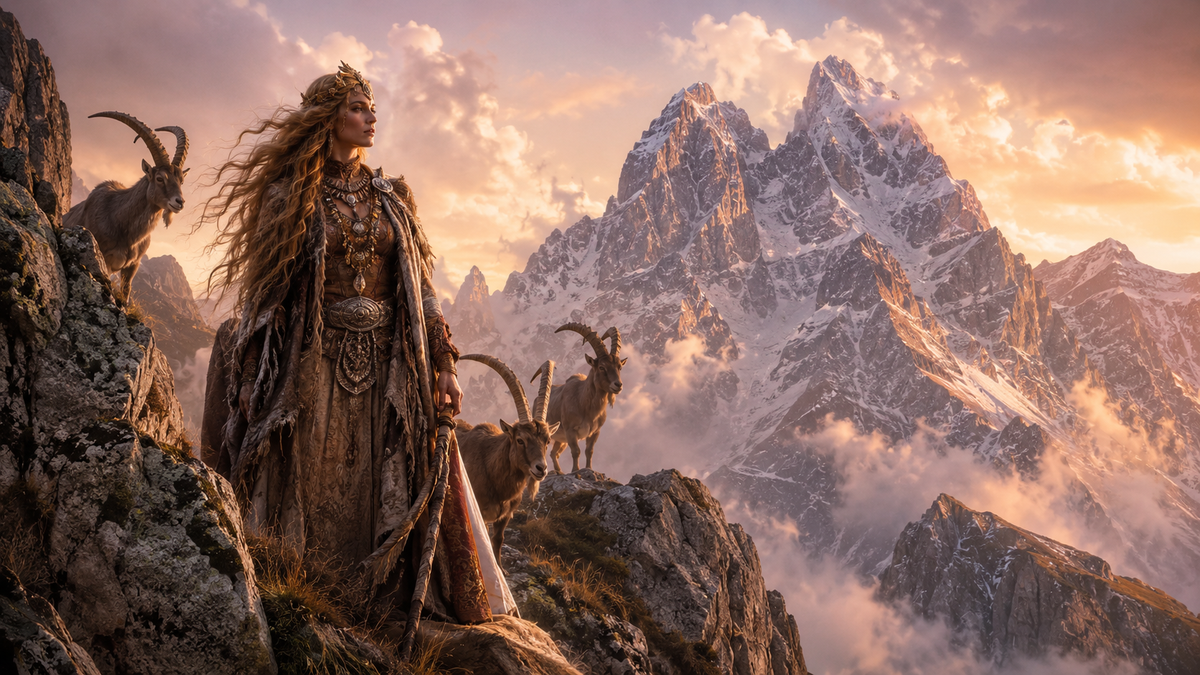
Dali's mood decided not only a hunter's luck but his very life: to anger her meant coming home empty-handed, or not coming back from the mountains at all.
Dali was revered above all in Svaneti, in the northwest of Georgia, a land of high peaks and ancient stone towers, where the culture of tur hunting took shape over centuries.
💛 Appearance and power: golden hair and mountain cliffs
Dali was imagined as an extraordinarily beautiful woman with long golden hair. In some versions her hair shone and her skin gleamed like gold, hence her enduring image as the golden-haired huntress.
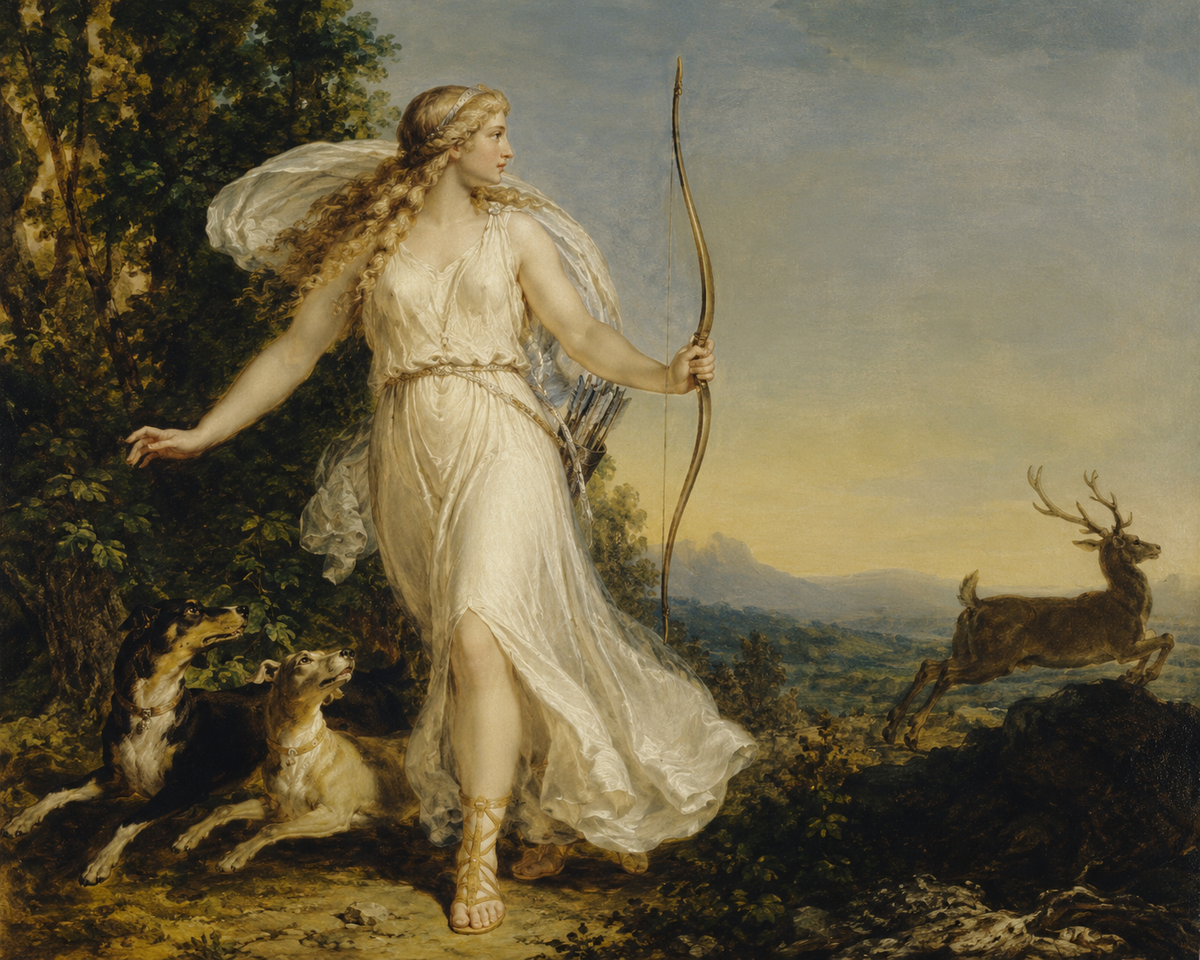
The goddess was said to dwell in caves and on the sheer cliffs of the highest mountains, places where no path leads. It was there, at the edge of the abyss, that her encounters with hunters most often took place.
According to some legends, the source of Dali's power is hidden in her golden hair: there is a recurring motif of a cut or stolen lock that strips the goddess of her might. The details vary from one record to another, so it is best not to pin down a rigid "rule of the hair".
🦌 Mistress of beasts: Dali's pact with the hunter
Dali does not merely patronise the hunt, she owns the wild beasts of the mountains like her own herd. A successful hunt is, in essence, the goddess's gift rather than the marksman's merit. Greed, an extra shot, hunting on a forbidden day, all of it was punished by the loss of luck.
Sometimes Dali chose a hunter as her lover. To such a fortunate man she granted extraordinary game, but on two conditions: to keep the affair secret and to stay faithful to her. One slip of the tongue or union with a mortal woman, and the luck turned to disaster.
The set of prohibitions varied across different records, and the Svans had no single "code of rules". In general terms, Dali's pact with the hunter can be pictured like this:
| Dali's rule | What happens if you break it |
|---|---|
| Do not be greedy, take no more than allowed | Luck runs dry, the game stops giving itself up |
| Keep the affair with the goddess secret | Loose talk forfeits her protection, by legend, at the cost of life |
| Stay faithful, do not be with a mortal woman | The jealous goddess takes revenge, often luring onto the cliffs |
| Observe the forbidden days and places of the hunt | Misfortune in the mountains awaits the one who breaks them |
🐐 The shapeshifter: transformations and deceit
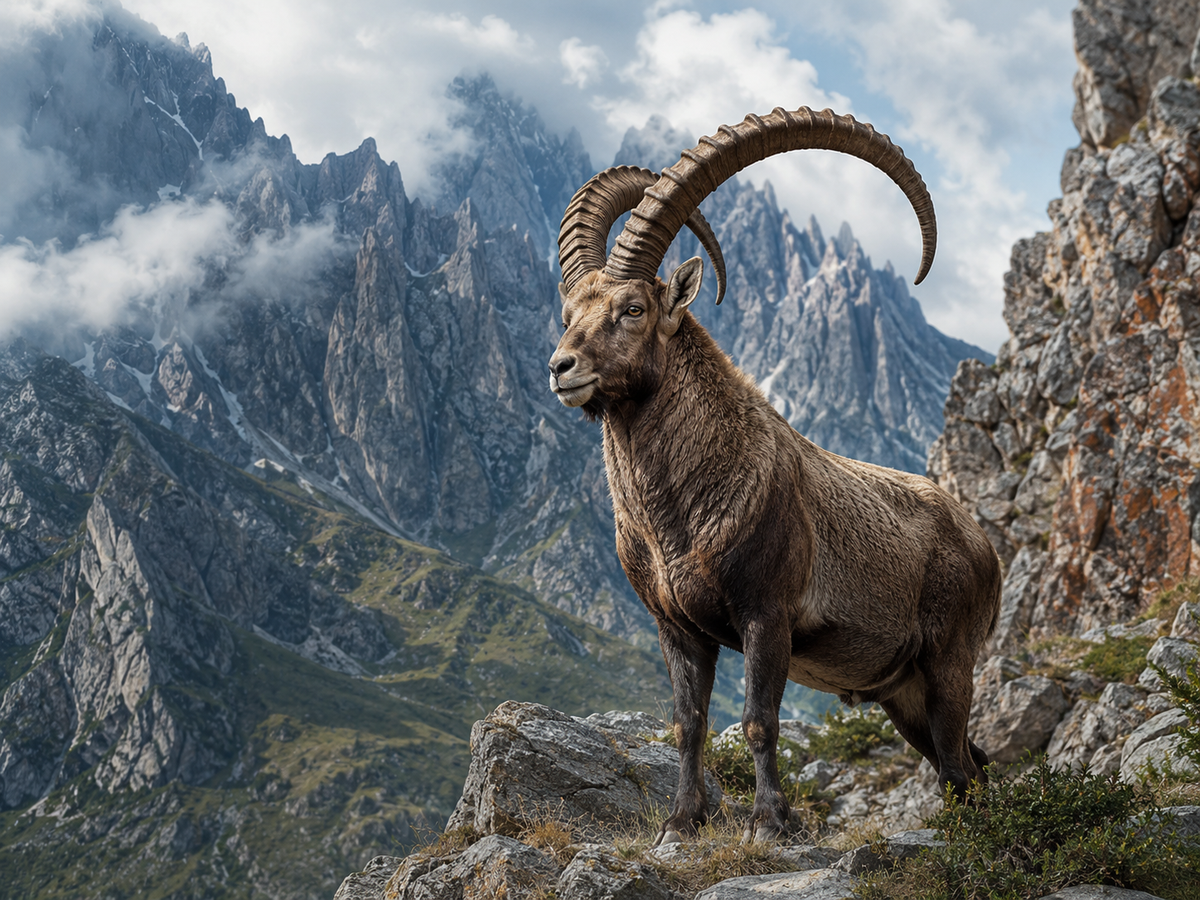
Dali is a masterful shapeshifter. Most often she turns into a white or golden-horned tur, less often into a doe or some other animal. It is in such a guise that she meets the hunter in the mountains.
This is not always a good sign. Chasing an unusually beautiful "magical" beast, the hunter climbs higher and higher without noticing and finds himself on a sheer cliff with no way down. The pursuit of game turns into a trap.
In this lies the whole character of the goddess: beauty and danger are inseparable in her. Dali is at once the protector and the destroyer of those who come into her mountains.
⛓️ Dali, the mother of Amirani
Dali's most famous role in Georgian mythology is the maternal one. From her union with a mortal hunter is born Amirani, the central hero of Georgian epic, often called the Georgian "Prometheus".
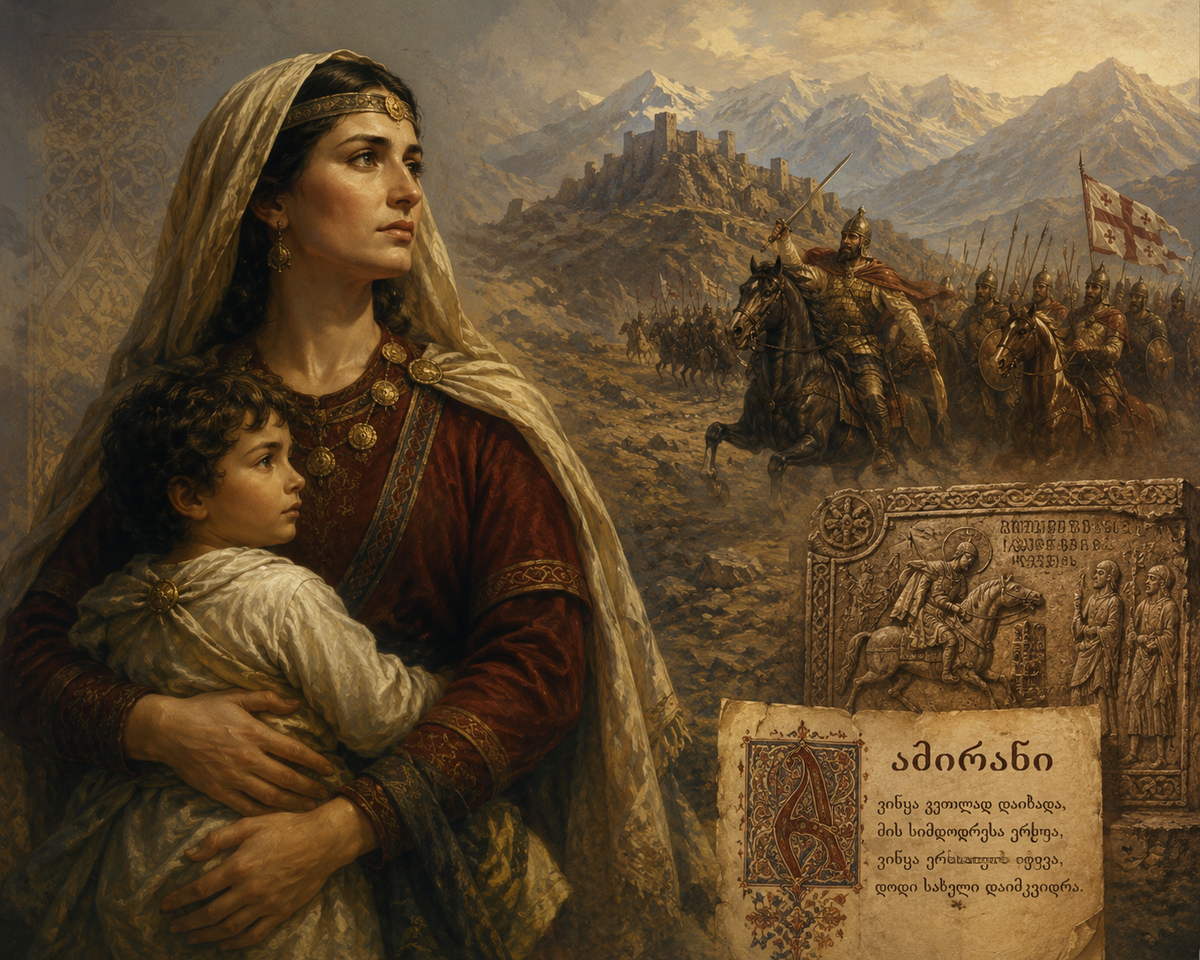
According to legend, Dali dies before giving birth. In some versions she is killed by a jealous mortal woman who cuts off the goddess's golden hair. The unborn Amirani is taken from his mother's womb prematurely, and this strangeness of birth explains his superhuman nature.
🎵 The legend of Betgil: the hunter and Dali
The pact and its price are shown best by the famous Svan ballad of Betgil (the form Betkil also occurs). Betgil, a hunter and Dali's lover, breaks his faith: in some versions he flirts with girls at a festival, in others he boasts of his affair with the goddess.
The enraged Dali lures him high into the mountains, onto a sheer cliff where he is cut off from the world. Betgil can no longer climb down and dies alone on the crag.
This is a sad song, not a tale of horror, and it is valuable because, through a living folk example, it shows Dali's central law: the goddess's generosity and the inevitability of the reckoning go hand in hand.
⛪ Dali and Christianity: a faith that outlived the centuries
With the coming of Christianity the image of Dali did not vanish but became interwoven with the new faith. The Svans increasingly regarded Saint George as the patron of the hunt, yet the ancient beliefs and hunting taboos connected with Dali held on in the mountains for a very long time, coexisting with the church calendar for centuries.
Alongside Dali, Svan tradition also mentions Apsati. In various versions he is the lord of beasts and birds, whose "powers" overlap in places with the domain of the goddess of the hunt. There is no clear hierarchy here: the relationship between Dali, Saint George, and Apsati is interpreted differently in different records.
⛰️ Where to look for Dali: Svaneti today
The homeland of Dali's cult is Svaneti, a high mountain region in the northwest of Georgia. Here both the culture of tur hunting and the famous Svan towers are still alive, as is the very landscape in which it is easy to believe in a goddess of the cliffs.
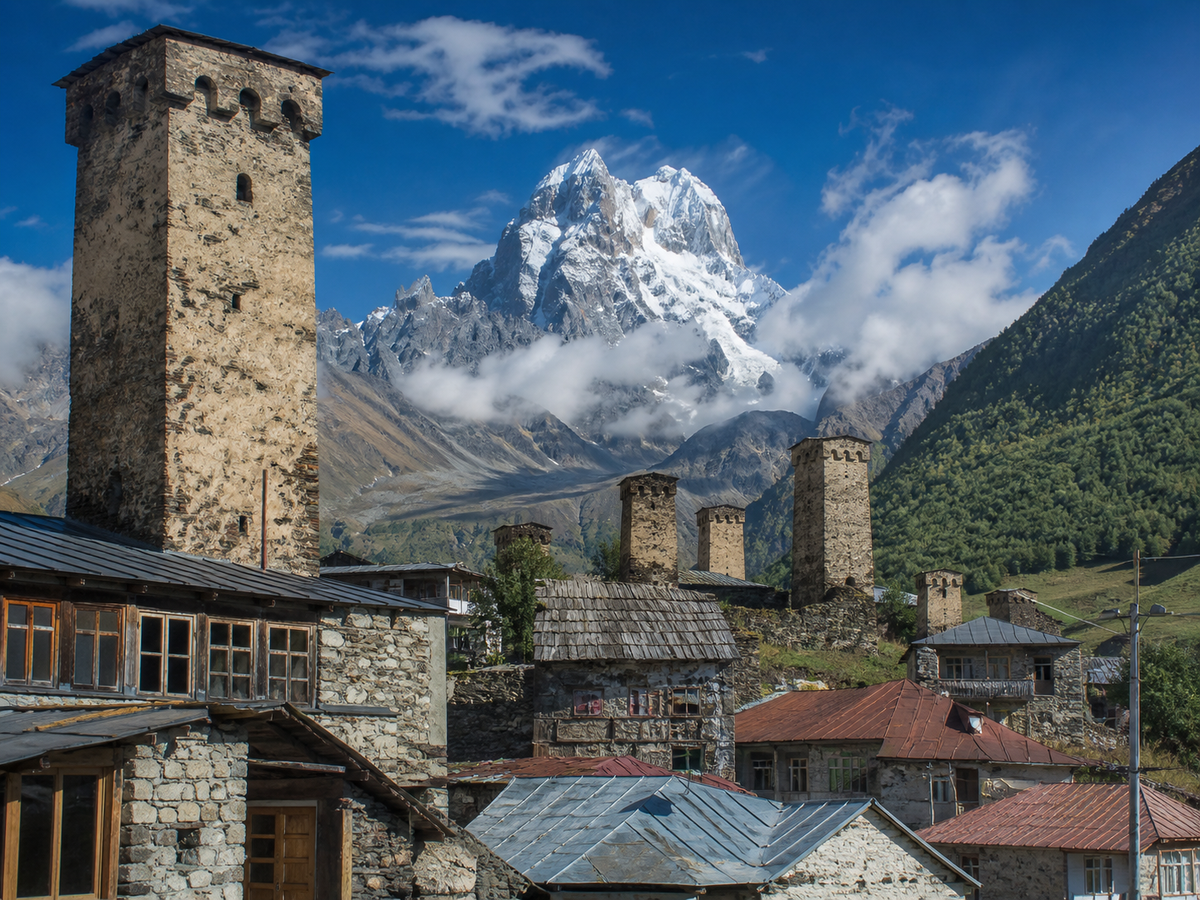
Legends link the fearsome twin-peaked Ushba to Dali herself (precisely as legend, not as historical fact). From Mestia and the slopes of Tetnuldi open up the very mountains that the myths considered the goddess's domain, while local museums keep old hunting relics. And the Caucasian tur, that very "beast of Dali", is still found on these crags today.
Where to go and what to see in Svaneti itself:
| Place | Connection to Dali | What to see |
|---|---|---|
| Svaneti | Homeland of the cult: highlands, tur hunting, Svan towers | Svaneti: mountains, towers, glaciers |
| Ushba | Legends link the twin-peaked summit to the goddess (as legend) | Trail to the Ushba waterfall |
| Mestia | The heart of Svaneti; old hunting relics in local museums | Guide to Mestia, Svaneti museum |
| Caucasian tur | "That very beast of Dali", which she considered her own | Mountains around Mestia and Tetnuldi |
❓ Frequently asked questions about the goddess Dali
💬 The goddess of the hunt and mistress of wild animals among the Svans and in mountainous Georgia. A golden-haired beauty who lives among inaccessible cliffs, and the mother of the hero Amirani.
💬 She owns the wild animals of the mountains: turs, ibexes, deer. Both a hunter's luck and his safety depended on her mood.
💬 She took hunters as lovers and helped them generously, but for betrayal or loose talk she took cruel revenge, often luring them onto the cliffs.
💬 Yes, in Georgian epic Amirani is the son of Dali and a mortal hunter.
💬 Golden hair is her main defining feature, and according to some legends the source of her power as well. The details vary from one record to another.
💬 In caves and on the sheer cliffs of the high mountains of Svaneti. Legends link her, in particular, to the peak of Ushba.
💬 A famous Svan ballad about a hunter, Dali's lover, who broke his faith and was destroyed by the goddess. A tragic example of "the pact and its price".
💬 After Christianization, Saint George came to be seen as the patron of the hunt, but the old beliefs about Dali survived in Svaneti for a very long time.
💗 The key points in brief
Dali is one of the most vivid figures of Georgian mythology and the mistress of the wild nature of the Svan mountains. Her image unites beauty, generosity, and ruthlessness: she granted hunters luck but demanded faithfulness and secrecy, and punished any breach with death on the cliffs. The goddess could turn into a golden-horned tur and lure the careless into the mountains. Her main mark on the larger mythology is motherhood: Dali, the mother of Amirani, the Georgian "Prometheus". And the living home of the goddess remains to this day Svaneti, with its towers, glaciers, and turs.
💗 Read next
- Prometheus and Amirani: the son of Dali and a hero of Georgian epic.
- Myths and legends of Georgia: a general guide to the topic.
- The pagan pantheon of Georgia: the gods and spirits of pre-Christian Georgia.
- Creatures of Georgian folklore: shapeshifters, spirits, and mountain monsters.
🗣️ Now over to you
The image of Dali still stirs interest and debate today. What do you think?
- Have you come across legends of Dali while travelling in Svaneti or in the museums of Mestia?
- Which image of the goddess feels closer to you: the kind protector of beasts or the fearsome shapeshifter?
- Why do you think it was the Svan mountains in particular that gave rise to such a vivid cult of the hunt?
- Do you know of similar "masters of beasts" in the myths of other peoples of the Caucasus?
Share your thoughts and stories in the comments, we are interested in your opinion.

1 comment
Log in to leave a comment