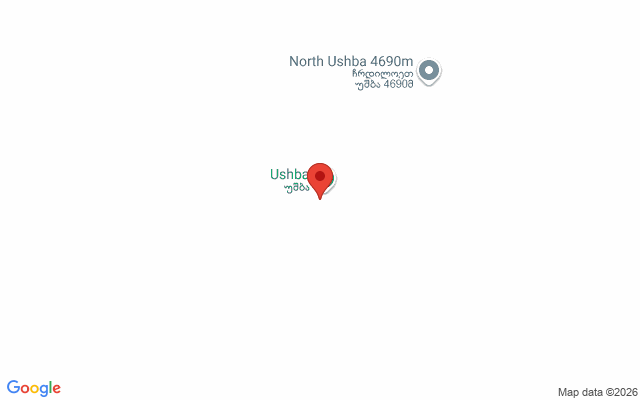



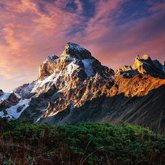

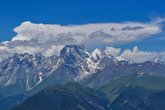

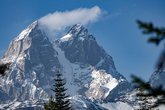

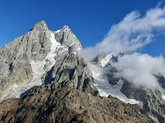

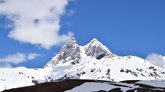

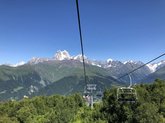

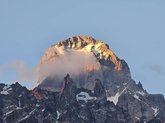

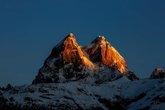

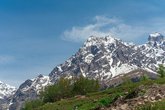

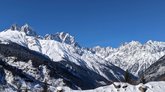

The mountain is located near the town of Mestia, in Mestia Municipality, Samegrelo-Zemo Svaneti, among the natural attractions of the region. Ushba is known as the "Matterhorn of the Caucasus" for its distinctive twin-spired silhouette: the south peak reaches 4,710 metres, the north peak about 20 metres lower, at roughly 4,690 metres.
For more on the history of climbing Ushba and the legends surrounding the mountain, see the article on Mount Ushba.
Although Ushba doesn't rank among the ten highest peaks in the Caucasus, it's widely regarded as the most difficult ascent in the range and one of the hundred hardest peaks in the world. The north route is technically considered more accessible than the south, but it remains a serious alpine climb: it requires experience with ice and rope work, ice slopes up to 60 degrees, and a qualified mountain guide is essential. Climbers camp in tents, as there are no shelters along the route. The ideal climbing window runs from late July to around 20 August, though the mountain's microclimate makes weather notoriously unpredictable even in summer.
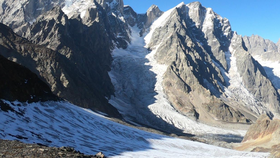
The history of climbing Ushba is marked by both triumph and tragedy: the north peak was first summited in 1888, the south in 1903, and the first Georgian ascent took place in 1934, led by Alexandra and Aleksandre Japaridze, with Alexandra becoming the first woman to reach Ushba's summit. In 1984, an avalanche killed six Georgian climbers, remembered as the "Ushba boys." Glaciers, the Guli and the Ushba, descend from its slopes, forming one of Svaneti's most recognisable glacial landscapes.
In Georgian folklore, Ushba and the neighbouring peak Tetnuldi are linked by a legend of tragic love: a poor young man named Ushba and a wealthy girl named Tetnuldi fell in love, but her family opposed the match, and ever since, according to tradition, the two have stood on the Caucasus ridge, facing one another.