




🍇 The Legend of the Birth of Georgian Wine
Georgia is rightly called one of the cradles of wine, and its "birth" here is told not through dry dates but through poetic legends about the grapevine. Yet the legend is unexpectedly close to the truth: winemaking in Georgia is around eight thousand years old, and folk tales of the vine sit side by side with this very real fact. Wine here has long been not merely a drink but a part of the people's soul, and in this article we speak precisely about the legend and the cultural view, while the winemaking detail (qvevri, technique, grape varieties) we leave to separate articles.
🍇 In short
Georgia is one of the cradles of winemaking (around 8000 years). Folk legends poetically explain the "birth" of wine and revere the grapevine. The vine is a symbol of both faith and the Georgian land (the cross of Saint Nino). Details about qvevri and technique, in the wine section.
🍇 The Legend of the Birth of Wine in Brief
The short version is this. According to Georgian legends, wine was born together with the grapevine, which here has been cherished and revered as a gift since time immemorial. And the "grain of truth" in this legend is entirely scientific: the traces of winemaking in Georgia are around eight thousand years old, and this is one of the oldest wine traditions on earth. The legend of wine and the real antiquity of the tradition come together right here. The winemaking itself (qvevri, regions, tours) we do not examine in this article: it lives in the Georgian wine section.

🐦 How, According to Legend, Wine Came to Be
This legend has no single "canonical" text: in different parts of Georgia it is told in different ways. But the common motif is recognisable, and many peoples share it. People noticed that grape juice, after a while, changes: it begins to ferment, it plays, and if you taste it, it cheers you and seems to give you strength. And so, according to the legend, wine was "discovered", and this gift of the earth was received almost as a miracle.
The vine itself is surrounded by special care in Georgian legends. It is cherished, passed from generation to generation, and songs are composed about it; a vineyard for a Georgian is not merely a farm but something almost akin to kin. That is exactly why the "birth of wine" is always told here warmly, as a story about a gift, not about profit.
🐦 How wine was born (by legend)
Fermented grape juice revealed wine to people: it plays, cheers you and gives you strength. Since then the grapevine has been cherished and revered as a gift. The legend has no single text; there are various folk tales.
🏺 The Grain of Truth: Georgia, the Cradle of Wine
The poetic legend has a thoroughly earthly confirmation. Georgia is considered one of the oldest centres of winemaking in the world: archaeologists have found traces of wine here around eight thousand years old, on the hills of Gadachrili Gora and Shulaveri, south of Tbilisi. This makes Georgian wine history one of the longest on the planet.
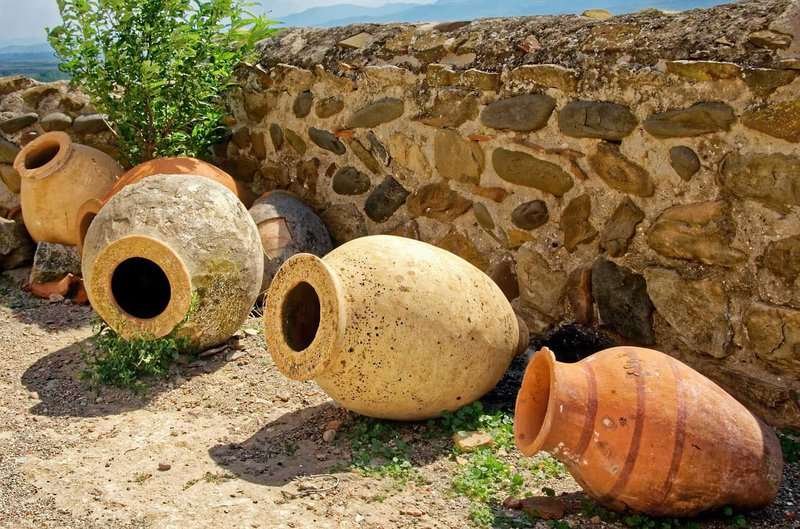
In Georgia, wine has long been made in qvevri, large clay vessels buried in the ground; this ancient method is inscribed on the list of intangible UNESCO heritage.
There is also a beautiful linguistic conjecture: by one version, the word "wine" itself in many languages is traced back to the Georgian "ghvino". The hypothesis is disputed, and not all linguists agree with it, but in tales of Georgian wine it comes up constantly.
✝️ The Vine in Georgia's Soul: The Cross of Saint Nino and the Supra

The vine in Georgia is not only about wine but also about faith. According to legend, Saint Nino, the enlightener of Georgia, brought to the country a cross made of grapevine and bound with her own hair. Since then the grapevine has become a twofold symbol: of the Christian faith and of the Georgian land itself. This image is still found in Georgian churches and on icons.
A whole culture of feasting has grown up around wine. The Georgian supra is not just a dinner but a special ritual with a succession of toasts led by the tamada. He sets the tone for the whole evening and pronounces the toasts: to the homeland, to ancestors, to guests. At such a table wine becomes the language of hospitality and memory.
And so the legend of the "birth of wine" grows into something greater: wine in Georgia is a part of identity, faith and human warmth.
🍷 Where to Feel the "Birth of Wine" Today
If you want to see how the legend comes alive, you should go to Kakheti, the main wine region in eastern Georgia, and above all to the Alazani Valley with its endless vineyards. Here wine is made not in factories but in families, and a feast with homemade wine is an everyday affair.
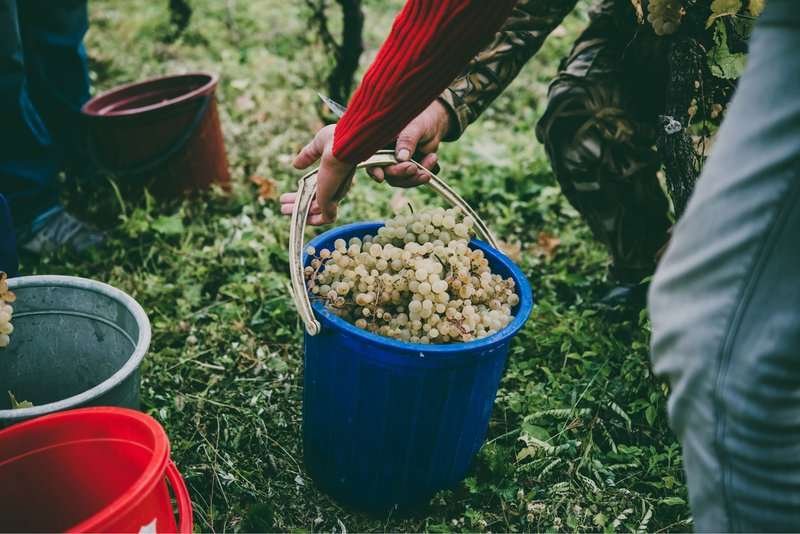
The spirit of the "living legend" is felt especially well in the old marani, the wine cellars with qvevri sunk into the ground, and in autumn, during rtveli, the traditional grape harvest, when a new wine crop is born amid work and song. On days like these it is easy to believe that wine here really is alive.
❓ Frequently Asked Questions About the Birth of Georgian Wine
💬 Georgia is called one of the cradles of winemaking: wine has been made here for around eight thousand years. Folk legends tell of the "birth" of wine poetically, while archaeology confirms the antiquity of the tradition.
💬 By various legends, people noticed that fermented grape juice cheers you and gives you strength, and so they discovered wine; the vine, meanwhile, was revered as a gift. The legend has no single canonical text.
💬 Georgia is considered one of the oldest centres of winemaking in the world: traces of wine around eight thousand years old have been found here.
💬 A large clay vessel in which wine is made in Georgia by an ancient technique (the method is inscribed on the UNESCO list).
💬 According to legend, Saint Nino brought to Georgia a cross made of grapevine. So the vine became a symbol of both faith and the Georgian land.
💬 The supra is a Georgian feast, and the tamada is the leader of the toasts. Wine and toasts are an important part of the culture that grew up around winemaking.
💬 Above all in Kakheti (Eastern Georgia), including the Alazani Valley.
💬 By one version, the word is traced to the Georgian "ghvino". This is a disputed hypothesis, but it often comes up in tales of Georgian wine.
📌 The Key Points in Brief
The legend of the birth of Georgian wine is a beautiful story about how people received the fermented juice of the vine almost as a miracle, and came to cherish and revere the vine itself as a gift. This poetry has a firm foundation: winemaking in Georgia is around eight thousand years old, traces of wine have been found on the hills of Gadachrili Gora and Shulaveri, and the ancient qvevri method is inscribed in UNESCO heritage. The vine here long ago became a symbol not only of wine but of faith (the cross of Saint Nino) and of the feast (the supra and the tamada). And the "living legend" is best felt in Kakheti and the Alazani Valley, among the vineyards and the old marani.
🗣️ Now Over to You
- Have you tried real Georgian wine from a qvevri, and what stayed with you about it?
- Which version of the "birth of wine" is closer to you: the poetic legend or the dry archaeology, or perhaps both at once?
- Have you ever been to a Georgian supra, and which toast stayed with you the most?
- And if you go to Georgia, would you like to catch rtveli, the autumn grape harvest?

0 comments
Log in to leave a comment