




🎉 Tbilisi City Day: How Tbilisoba Began and What Happens at It
🎉 Tbilisoba 2026: when it will be held
The date is set each year by Tbilisi city hall, and it moves noticeably. Historically the festival ran at the end of October; in recent years it has shifted to the start of the month. The official announcement usually comes in September, and we will update this block as soon as it does.
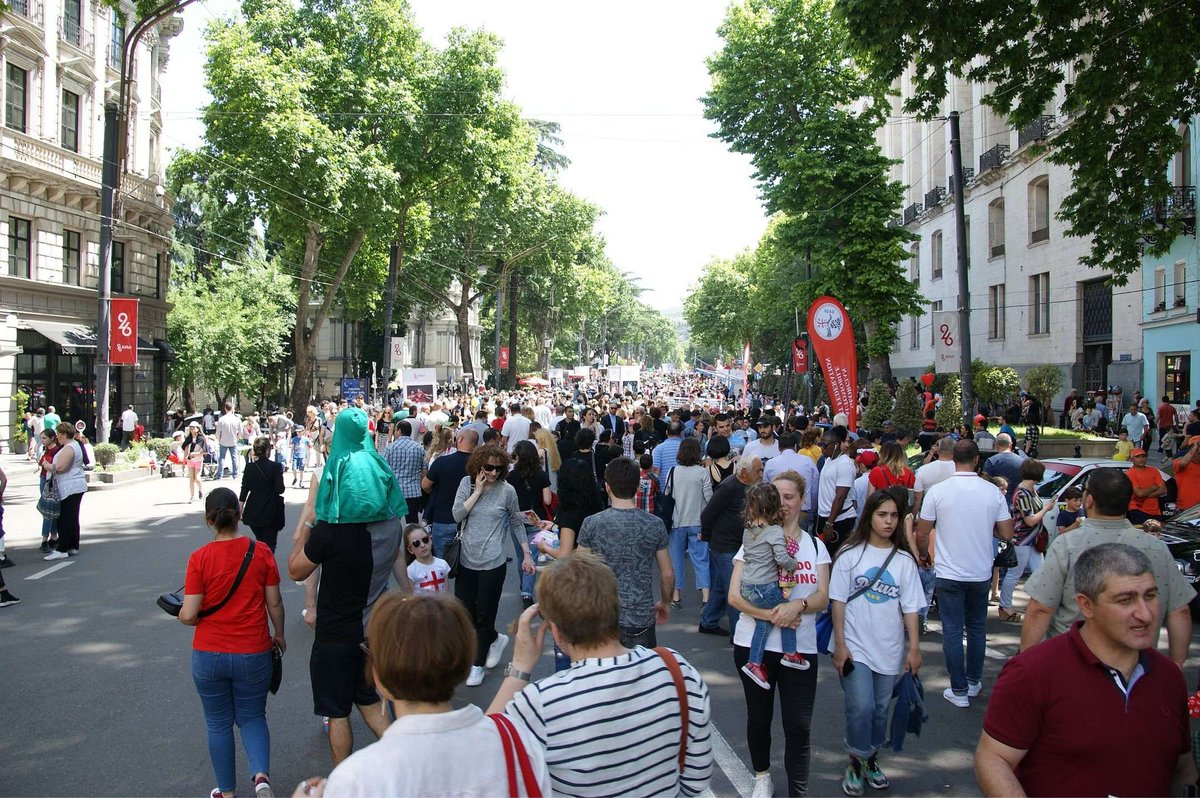
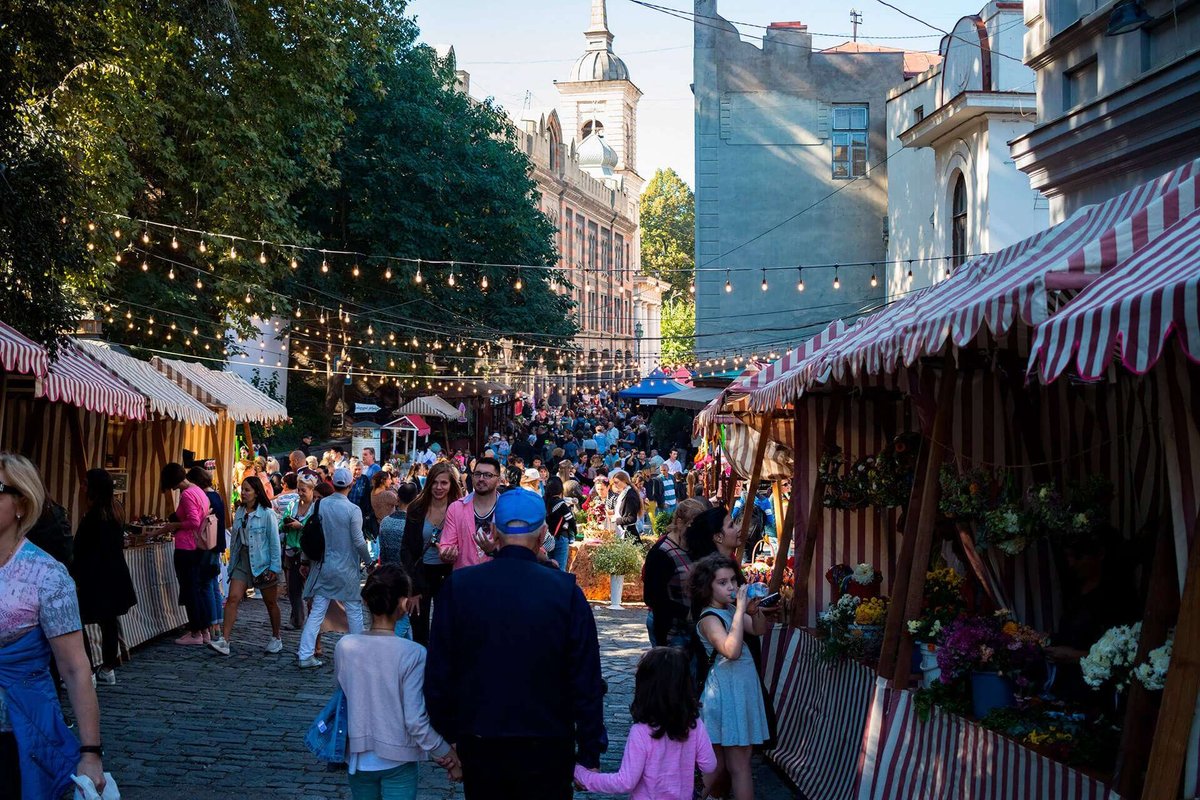
Once a year Tbilisi stops being a city you walk through and becomes one that carries you somewhere. Streets are closed, tables go up in the courtyards of the old town, a stage is assembled by Rike Park, and somewhere in the middle of the pavement a person is treading grapes in a wooden trough, and nobody finds this odd.
This is Tbilisoba, the city's own day. And it comes with a quirk worth knowing in advance: the festival has no fixed date.
📅 When Tbilisoba falls, and why that is a hard question
Let us start with the thing that confuses everyone.
The date is set by Tbilisi city hall, freshly each year. Historically, going back to the very first Tbilisoba on 28 October 1979, it was held on the last or second-to-last weekend of October. That held for decades.
In recent years it has moved to the start of the month: in 2024 it fell on the first weekend of October, and that pattern has held since.
What follows from this. Going by last year's date is possible but risky: the gap between early and late October is three weeks, and that kind of mistake is expensive once flights are booked.
The official announcement usually comes from city hall in September, a few weeks before the event, along with the programme, the venues and the stage schedule.
We will update this section with the confirmed date as soon as it is published.
🏛️ Where Tbilisoba came from
The history is not what is usually told, and it is more interesting for it.
The idea did not come from the authorities. It was proposed by a journalist and geographer, Gvanji Mania, who published the suggestion in the newspaper Tbilisi on 5 November 1976. So the article came first, and everything else followed.
The party leadership took the idea up, and the founding of the festival is credited to Eduard Shevardnadze, then First Secretary of the Central Committee of the Georgian Communist Party.
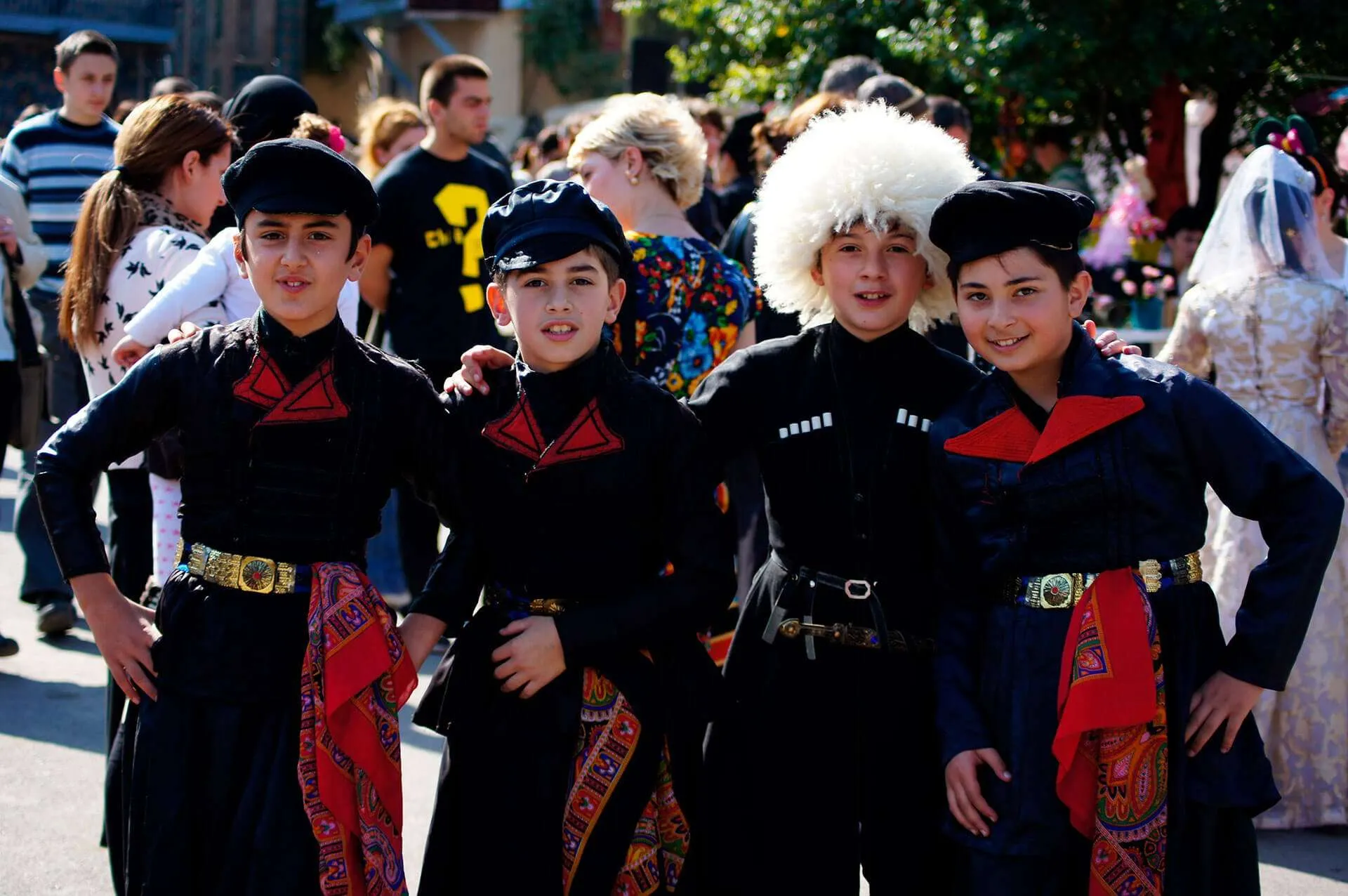
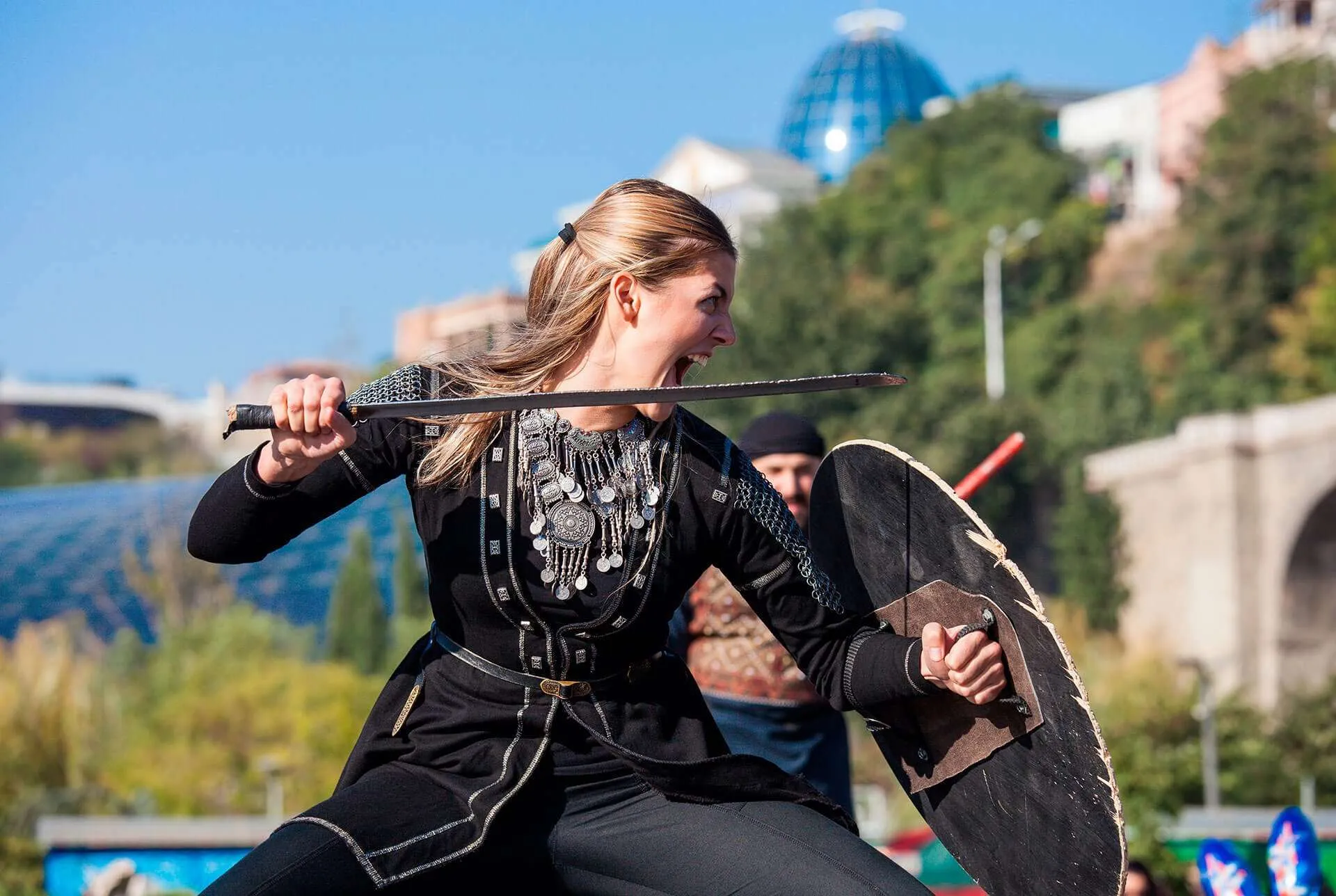
The first Tbilisoba was held on 28 October 1979. The intent was to show off the city's traditional urban culture, its multi-ethnic character, its crafts, food and winemaking. The main events took place in Abanotubani and on Meidan, and representatives of the various peoples living in the capital took part.
The interruption. In the late 1980s and early 1990s the festival was not held for several years; the country had other concerns. Sources differ on the year it resumed, with 1995 and 1997 both cited, but it has run annually ever since.
A related tradition. The title of Honorary Citizen of Tbilisi is tied directly to this festival: it is conferred during Tbilisoba.
And an honest caveat. The festival has its critics, who see it as something introduced from above: Tbilisi had plenty of popular street celebrations in earlier centuries, and Tbilisoba in its present form did not grow out of them but out of a Soviet administrative decision. There is not much to argue about here, since both sides have a point: the origin genuinely is administrative, but over forty-odd years the festival has grown into the city.
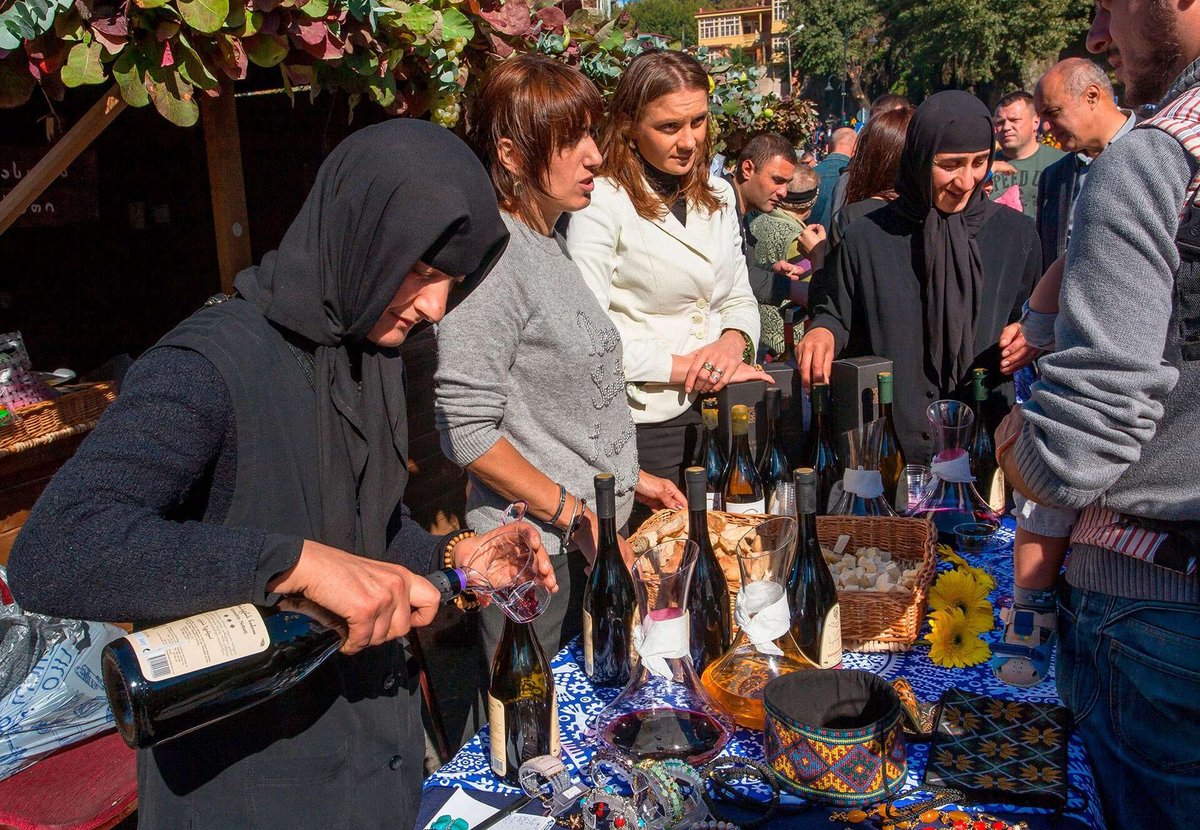
🍇 What happens at the festival
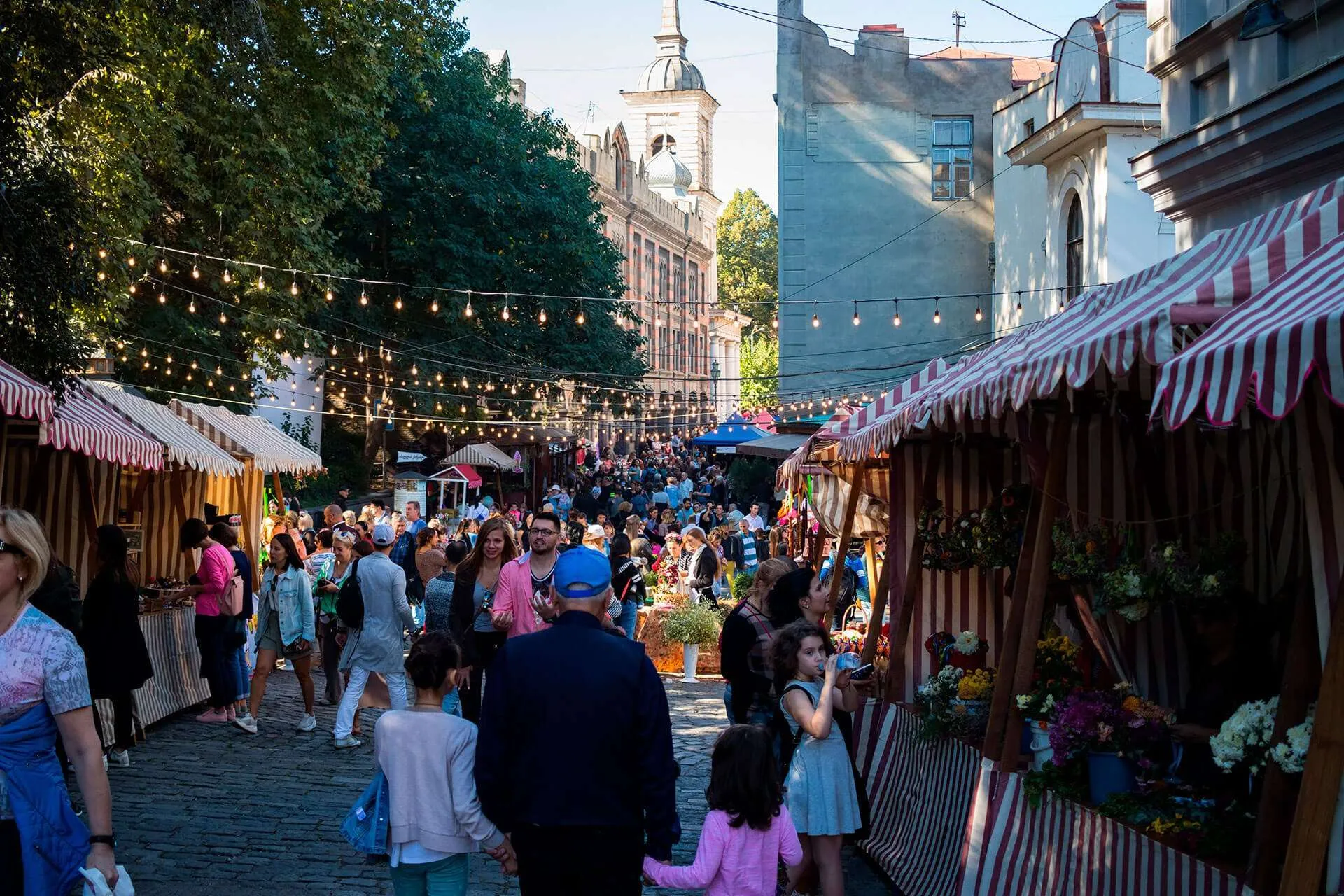
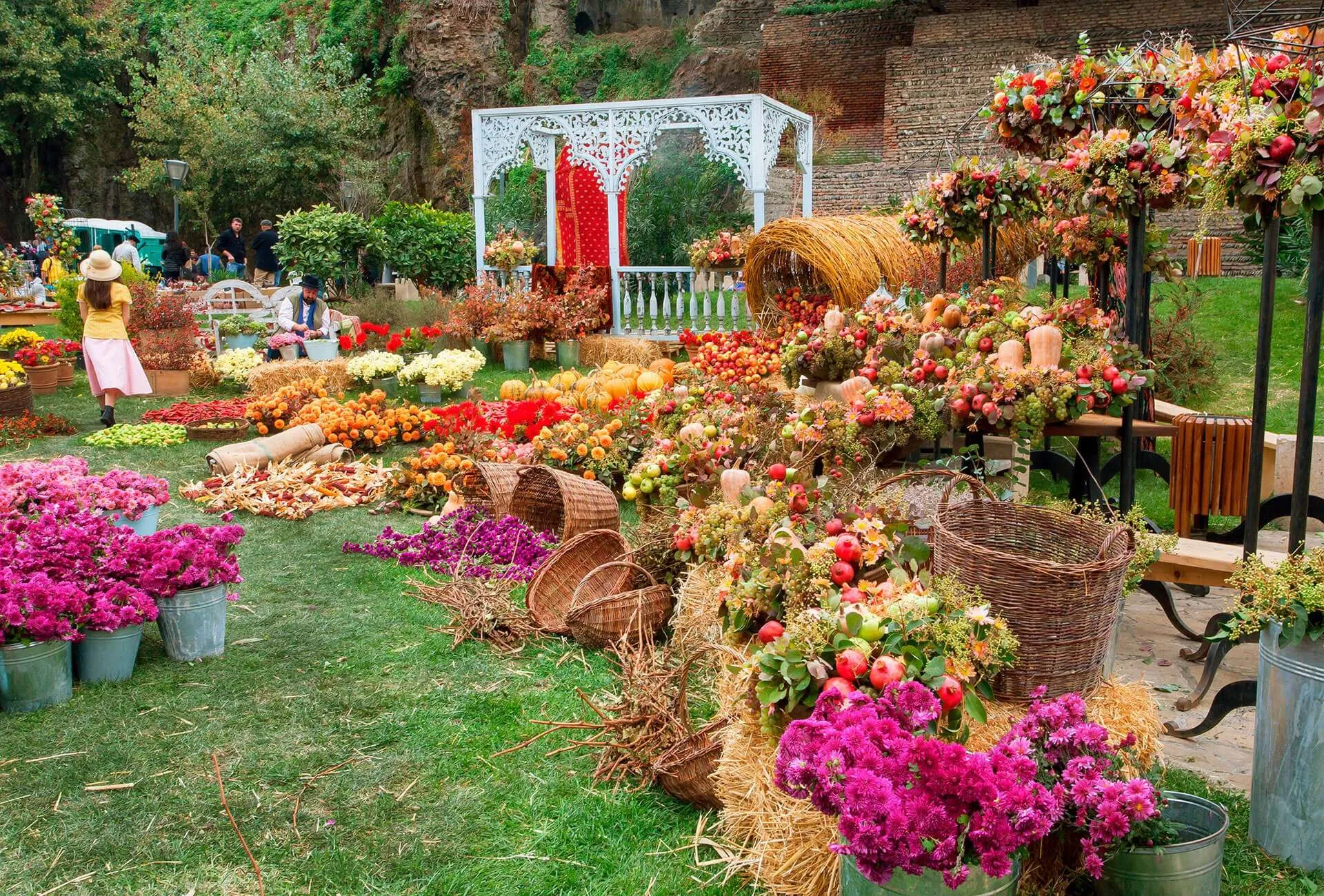
The format has settled over the years and is broadly predictable, even if the specific programme changes annually.
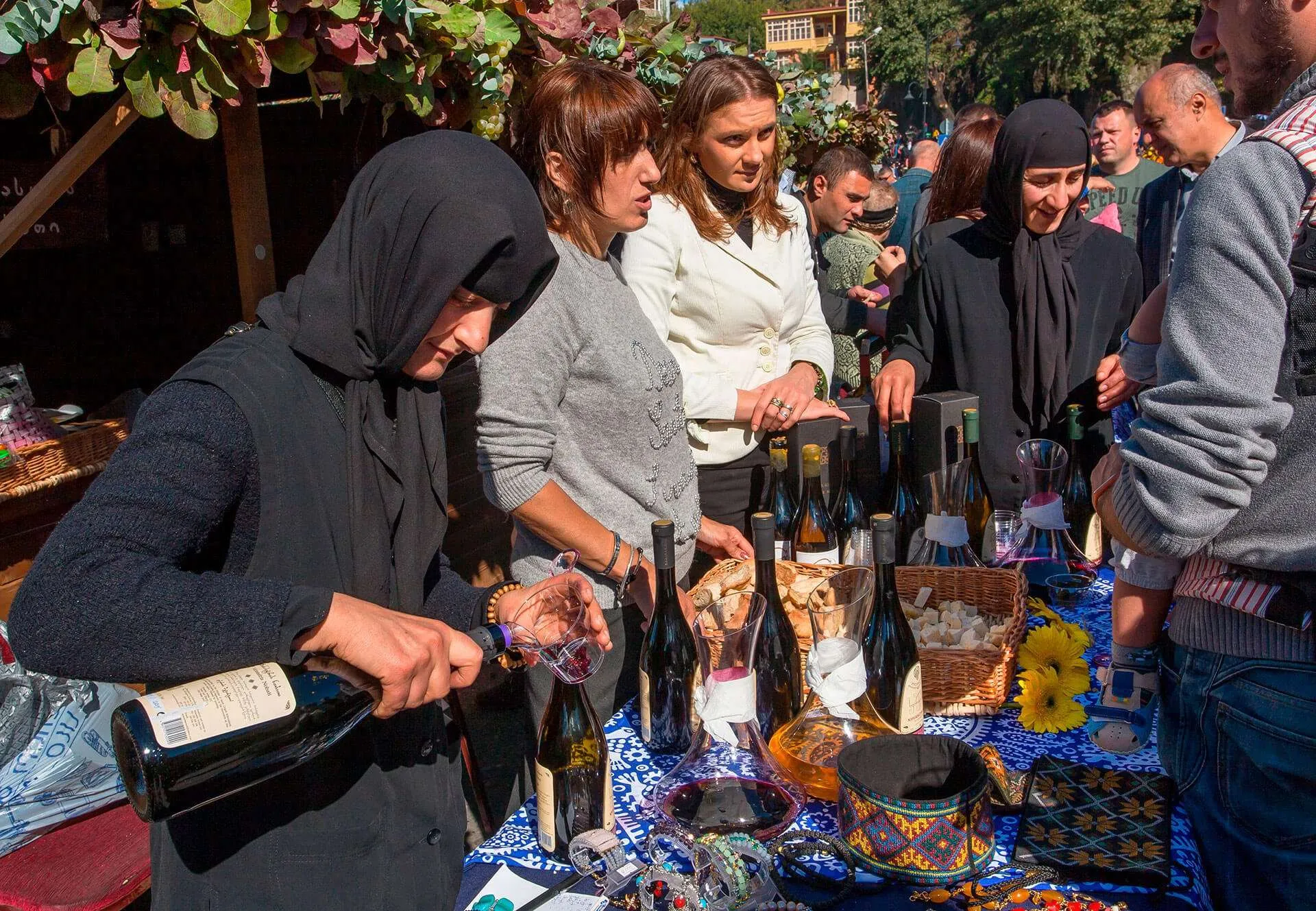
Grapes are pressed in the street. Wooden troughs are set up at the venues and anyone can climb in and tread. This is not staged for photographers; it is the single most recognisable thing about Tbilisoba.
Young wine is poured everywhere. The festival falls at the end of the rtveli season, so there is something to show. Winemakers come in from Kakheti and other regions, set up tables and pour.
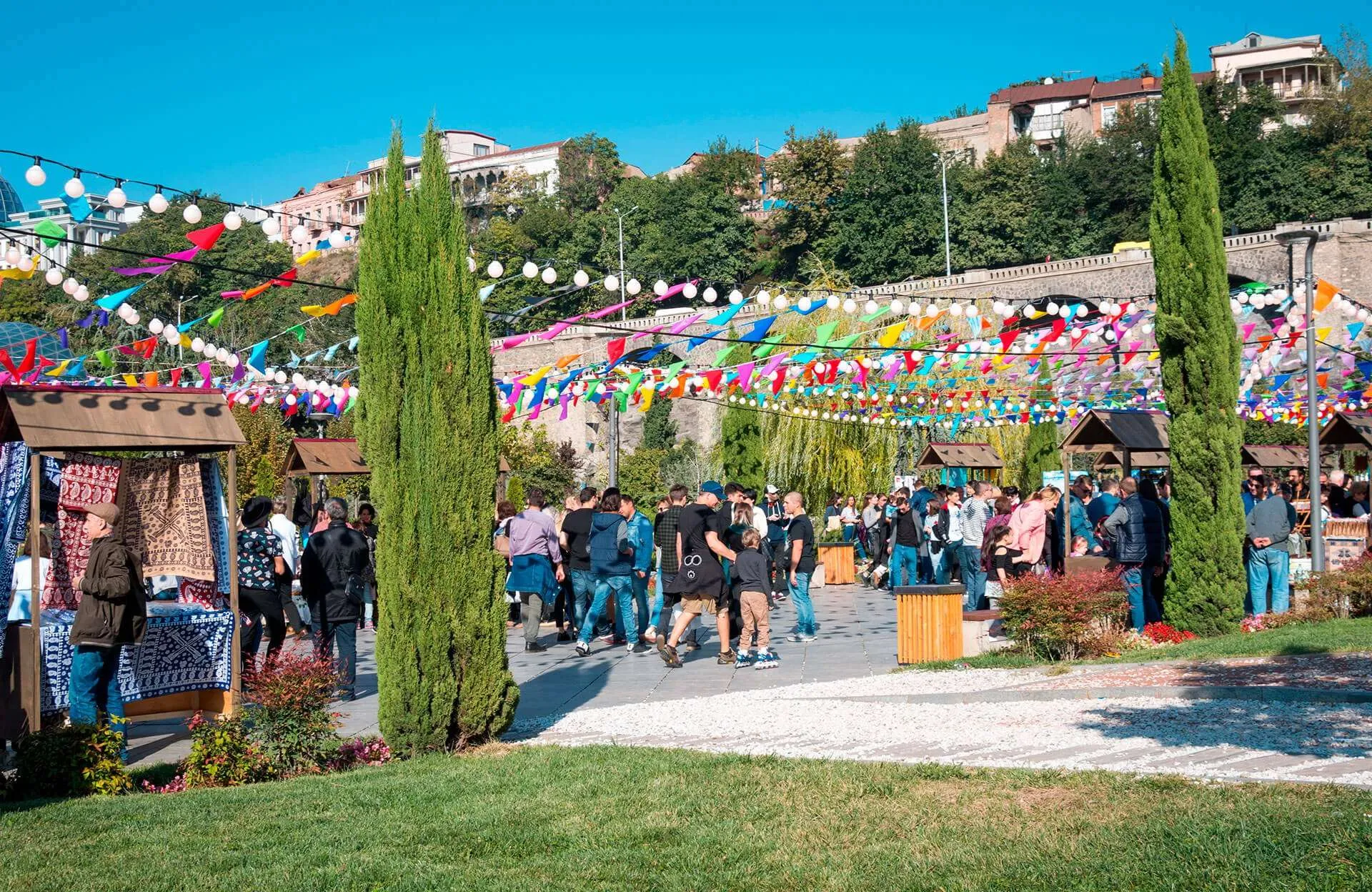
Craft rows. Ceramics, ironwork, textiles, woodwork. Some of the makers work on the spot.
Mtsvadi and street food. Grills across all the venues, and the smell of smoke through the quarter. Plus everything else: khachapuri, churchkhela, pickles.
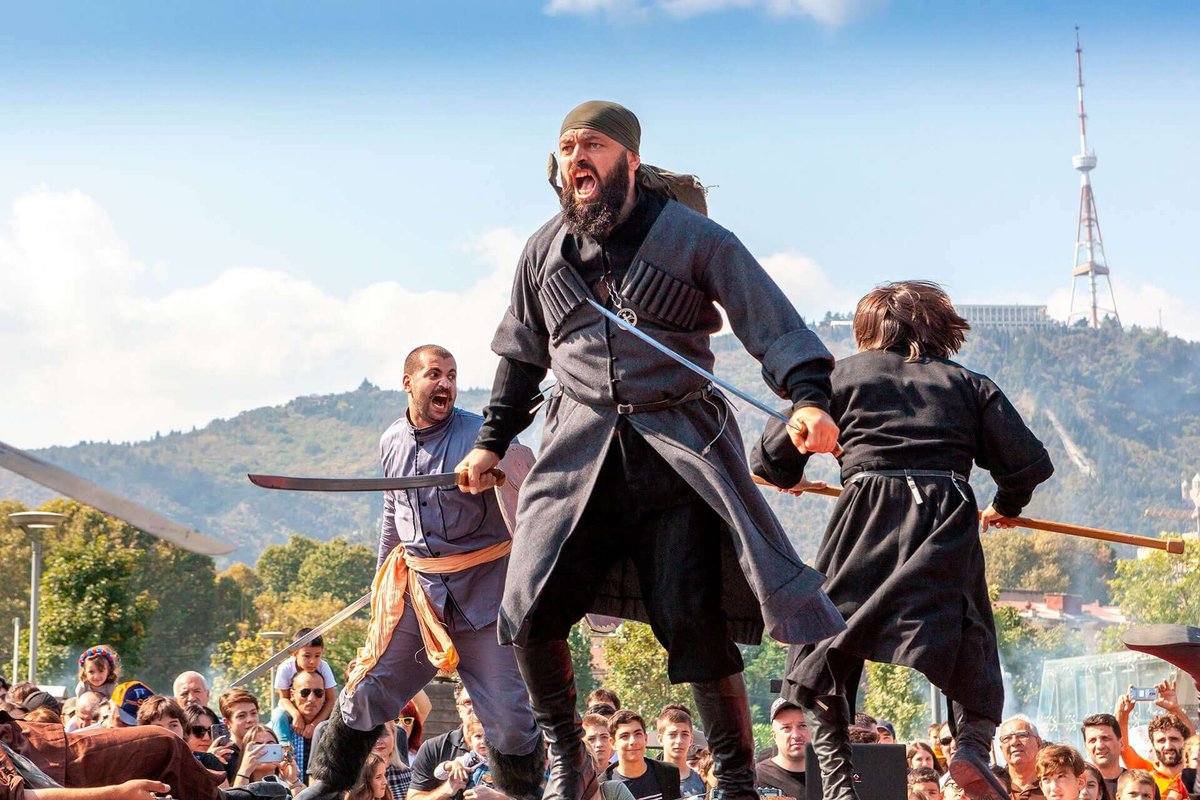
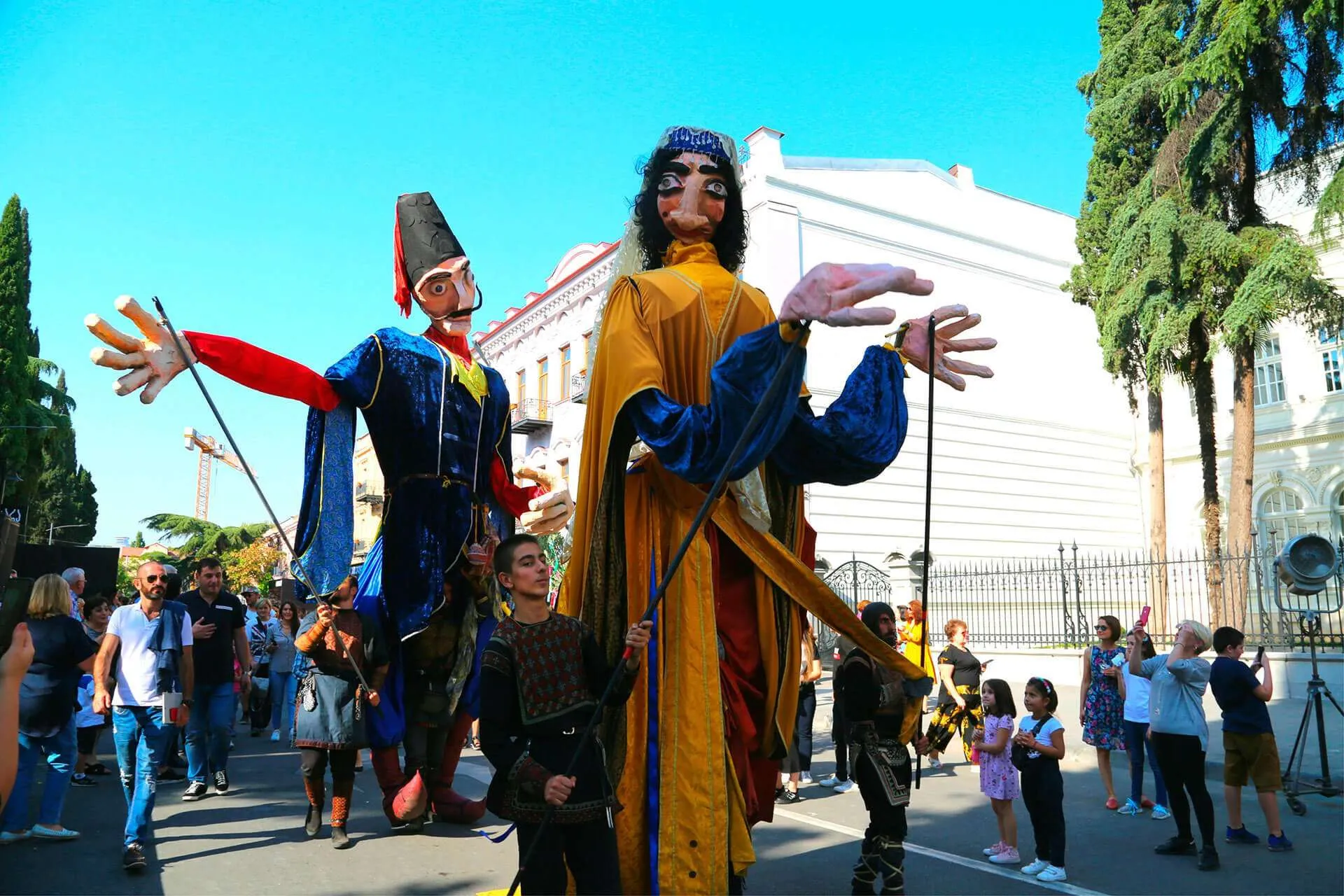
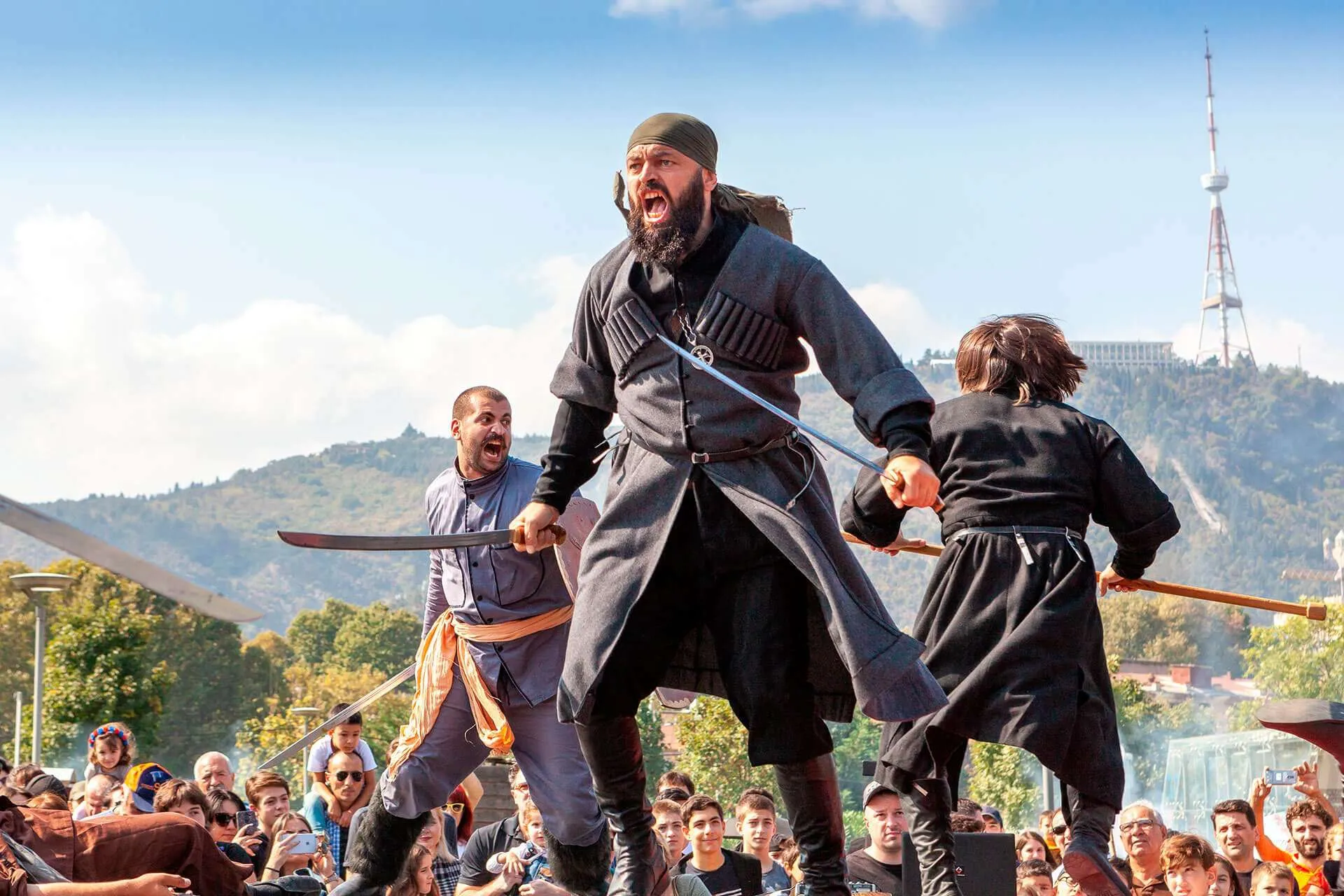
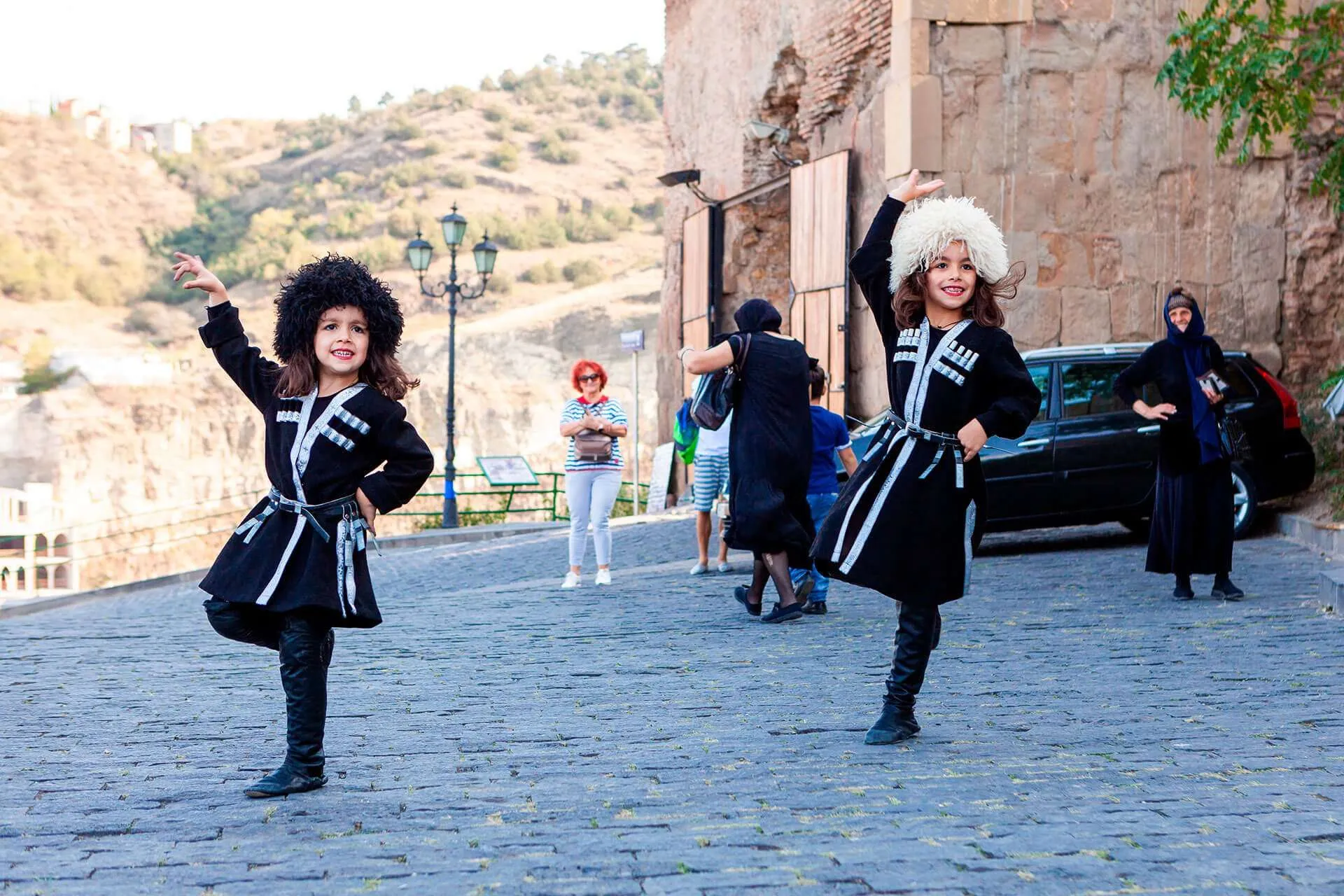
Concerts. Stages with folk music, dance ensembles and contemporary performers. The schedule is published with the programme.
Children's areas. In recent years these have been set out separately, usually nearer Rike Park.
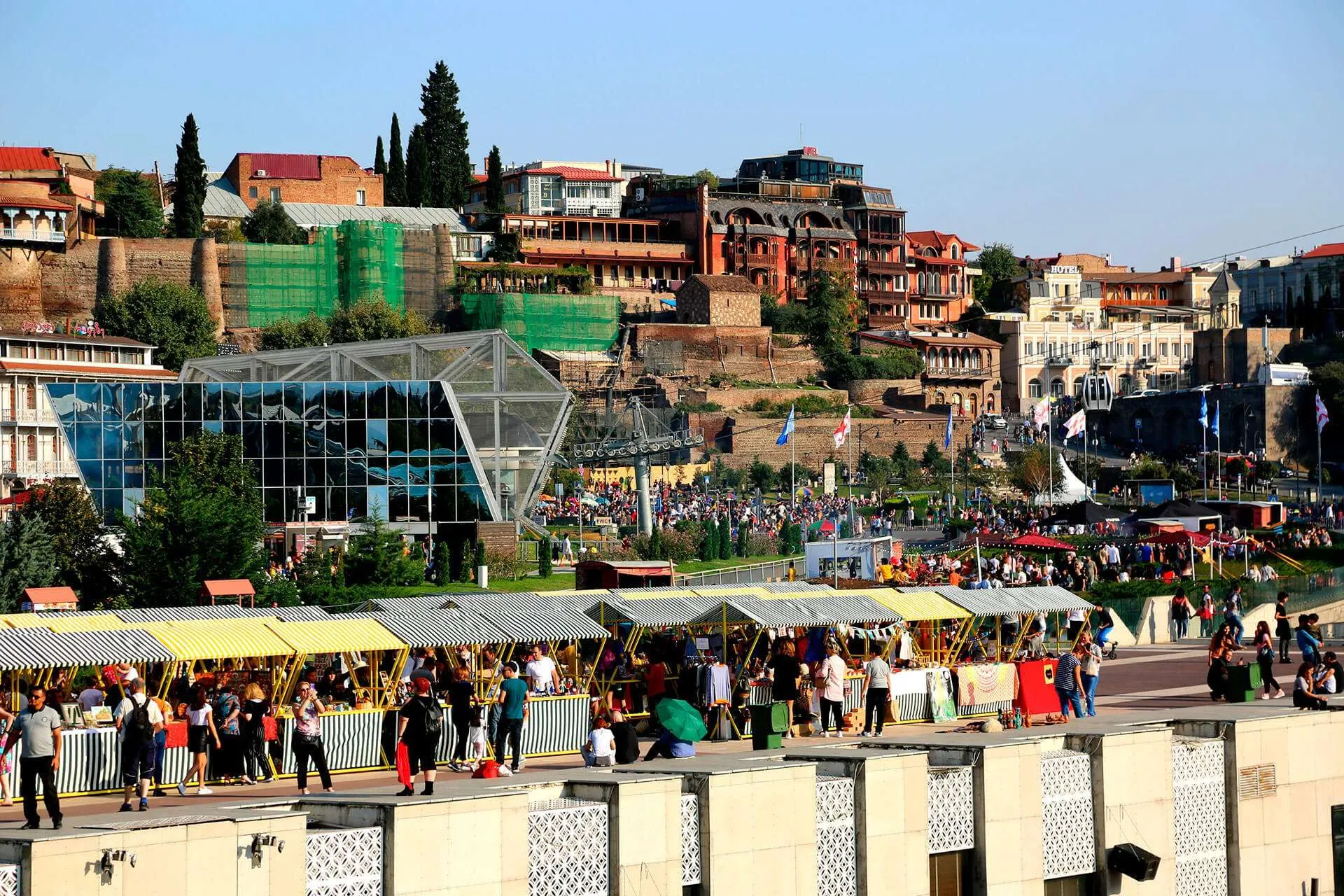
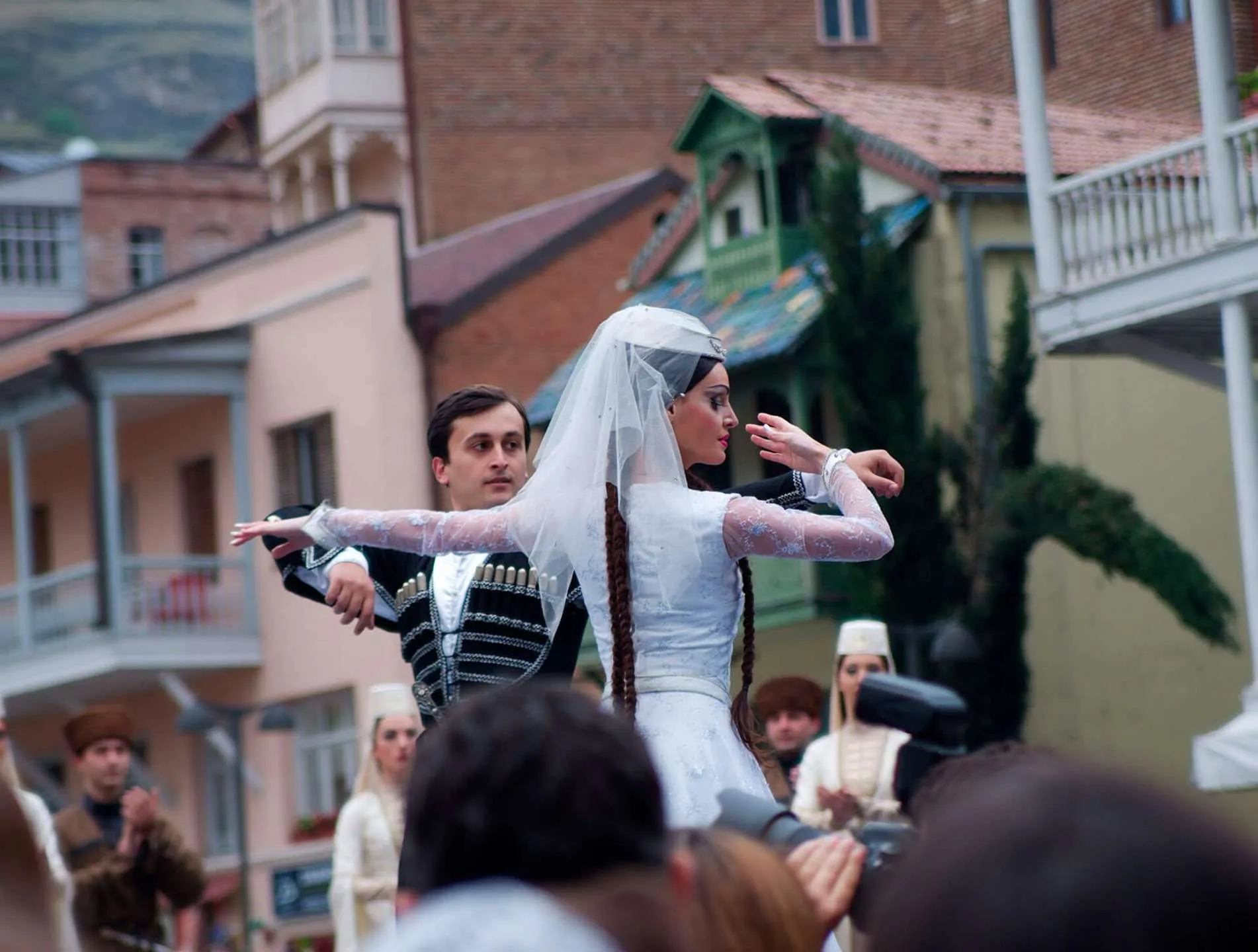
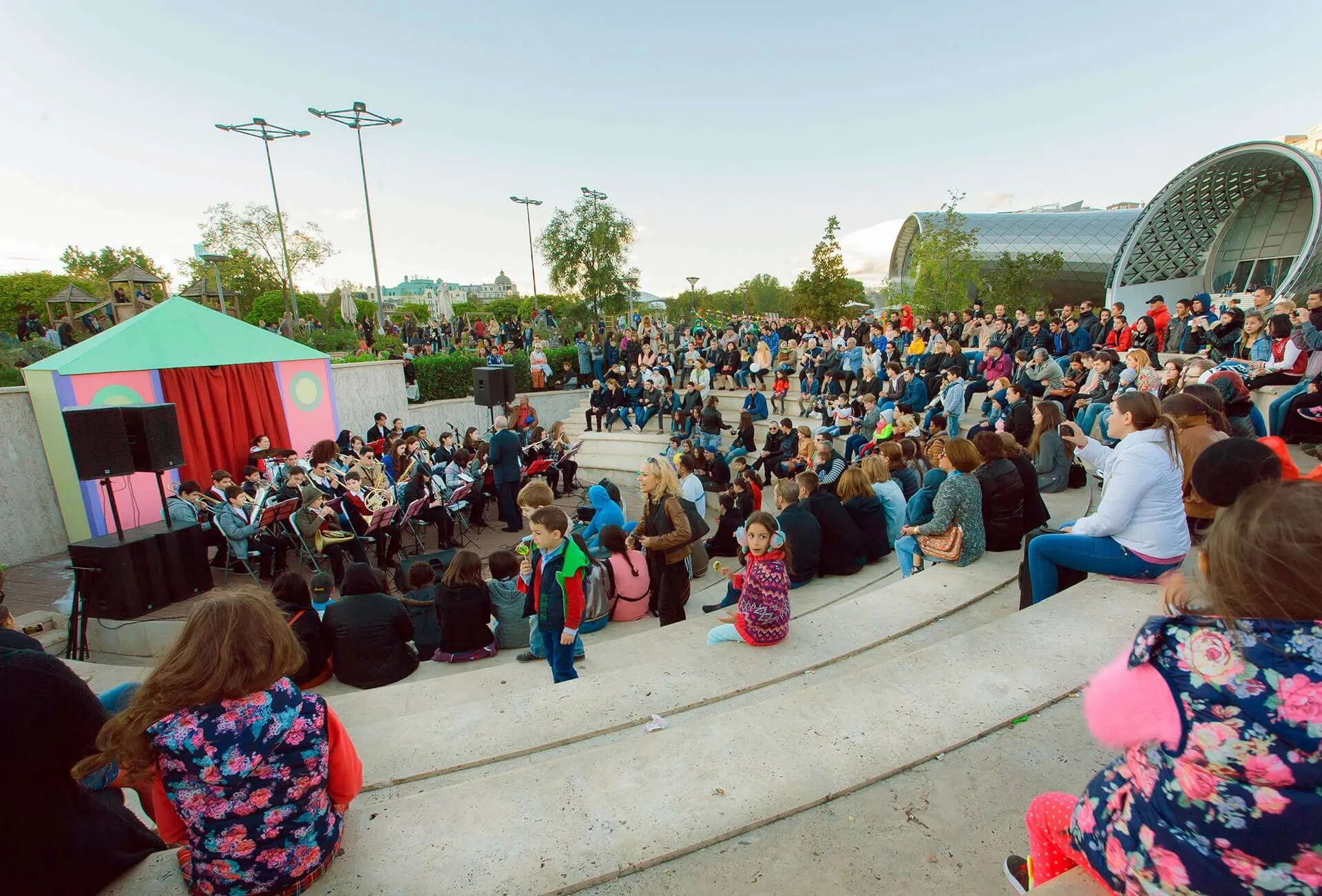
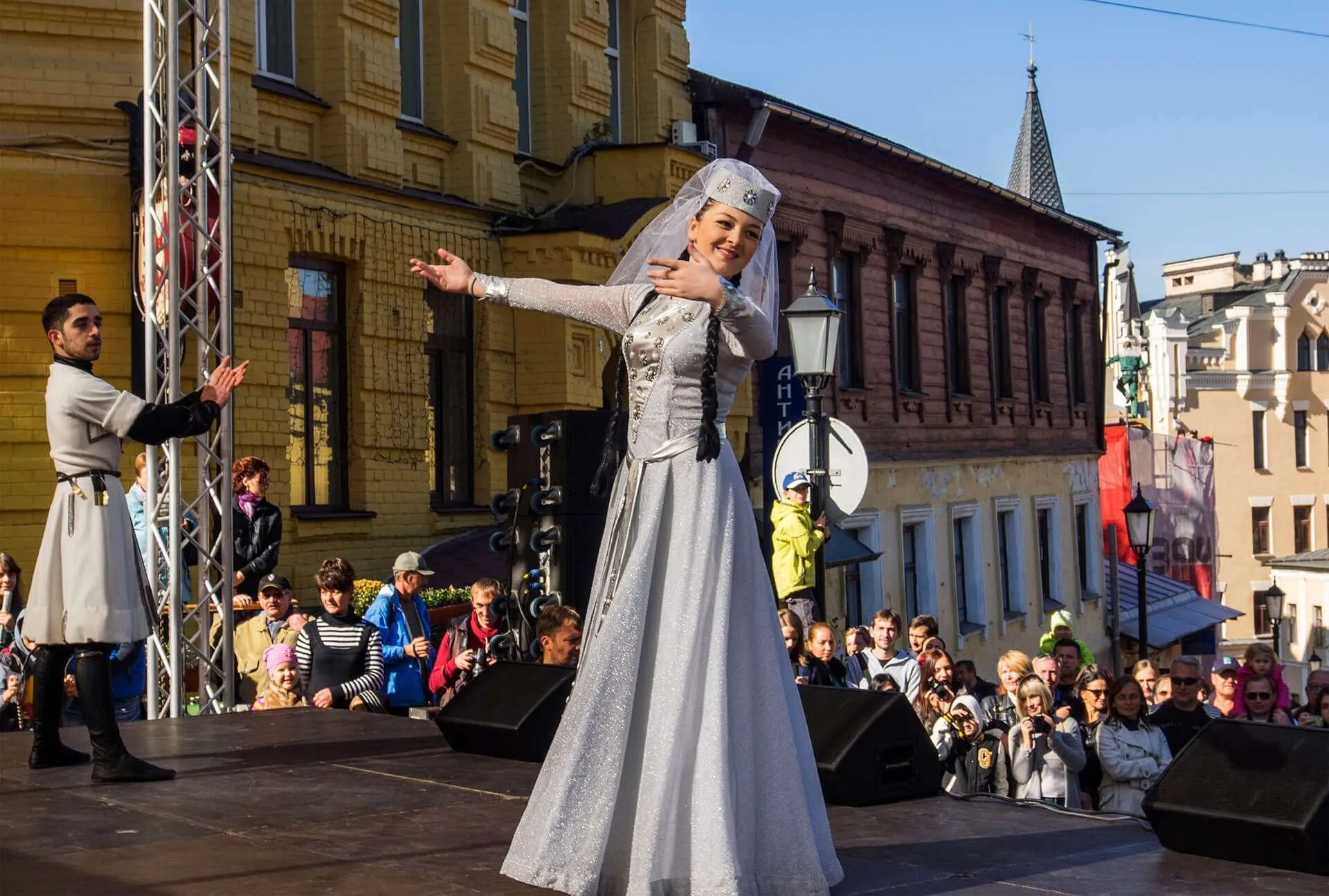
📍 Where it happens and how to get there
The main venues are traditionally in and around the historic centre.
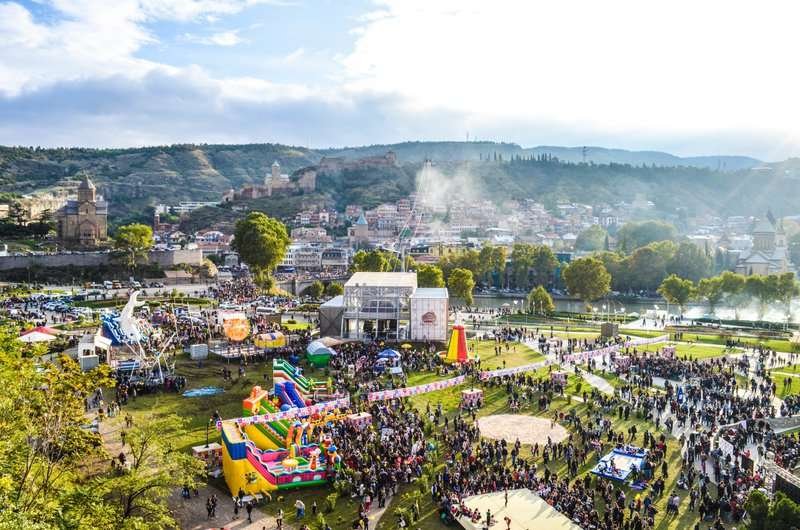
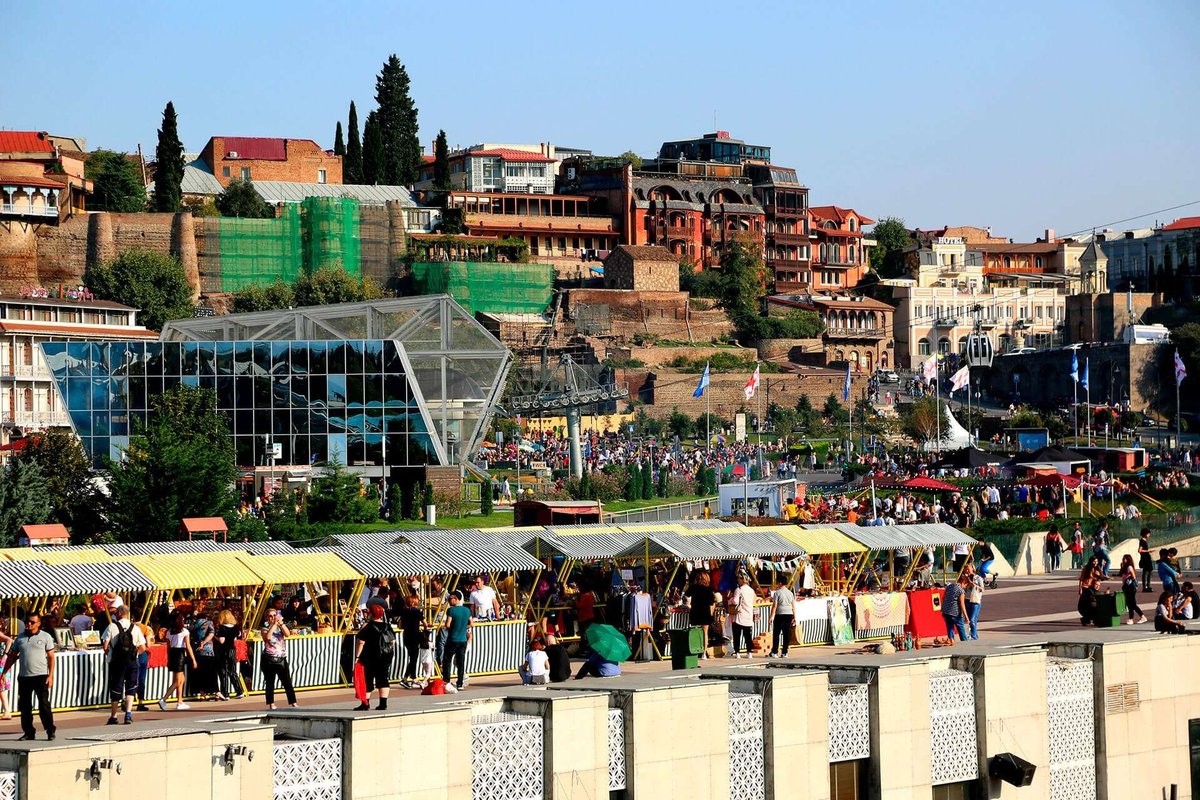
Rike Park on the left bank of the Mtkvari, the principal venue in recent years. The main stage and the children's areas usually go here.
The old town, the quarters around Meidan and Abanotubani. This is where the first Tbilisobas were held, and where the craft rows are densest.
The embankment and the Bridge of Peace link the two sides, and in festival days the main flow of people runs across them.
Exact addresses and a venue map are published by city hall with the programme, usually one to two weeks ahead.
On transport. Some central streets are closed during the festival, and a car becomes a liability. The metro runs, and for the old town the easiest stations are Avlabari or Liberty Square, then on foot.
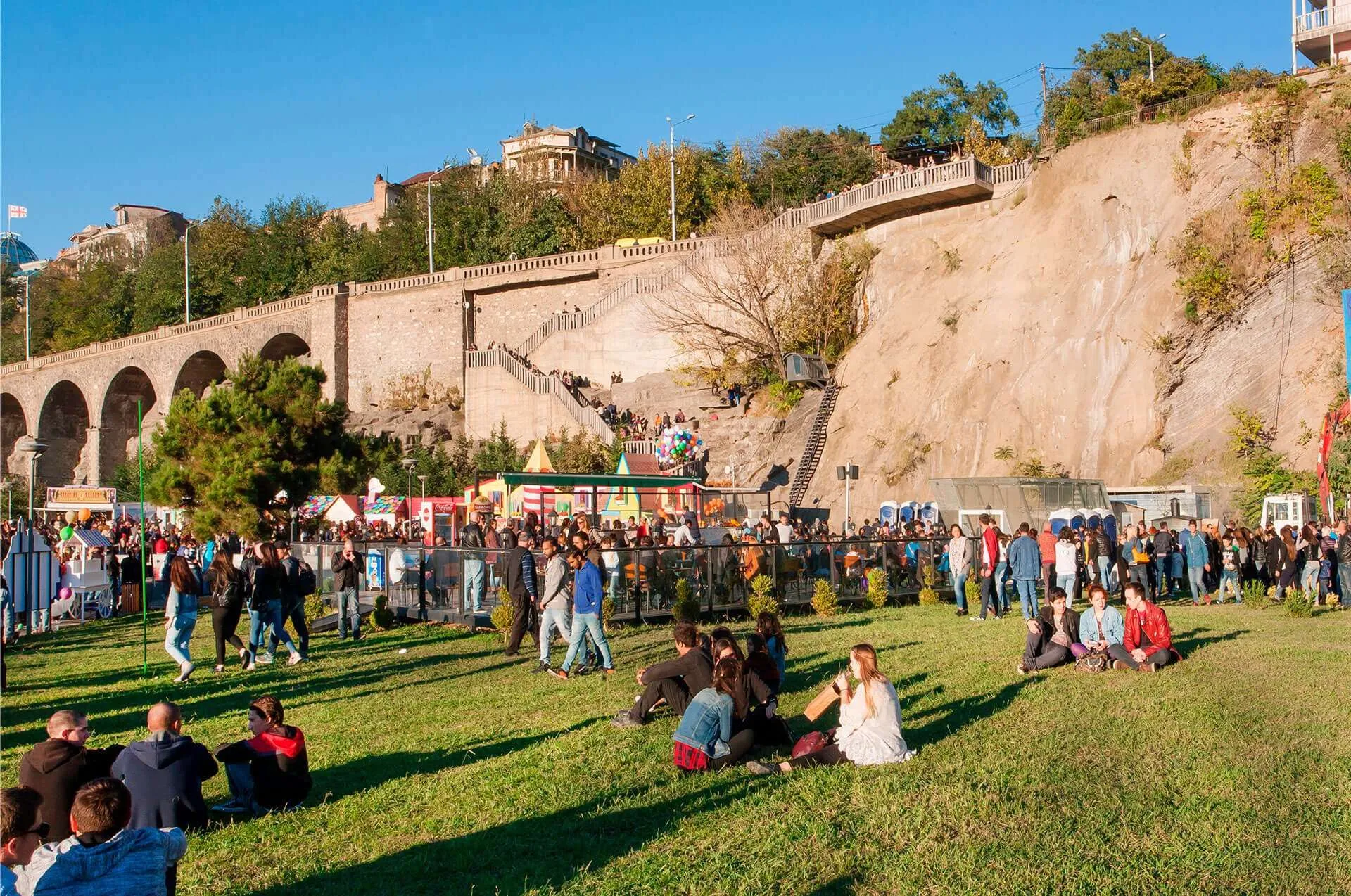
On crowds. This is the busiest city event of the year. The centre is tight on Saturday evening, so with small children come during the day.
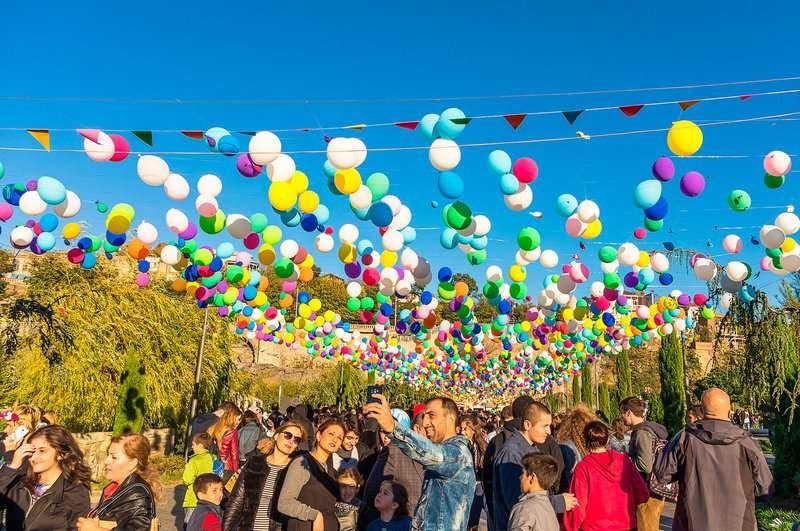
🛏️ What to know if you are coming for it
A few practical things that usually surface too late.
Accommodation gets more expensive. The city fills up over the Tbilisoba weekend and prices for those two nights run above the usual October rate. Book as soon as the date is announced, or before it with free cancellation.
Do not stay in the thick of it. The quarter with the venues is loud until late and no car will get you in. Sololaki, Vera or Vake give you both proximity and quiet.
One day or two. The programme is built for both, but repeats by around seventy per cent. If time is short, take Saturday: it is the fuller day.
What is around. Tbilisoba combines well with a trip out of the city: Mtskheta is half an hour away, Kakheti two hours. How to build that into a route is in autumn routes in Georgia.
And the weather. October is the best month of the year for walking in Tbilisi: around 19-22°C by day, sunny, with little rain. More in an October trip to Georgia, and the autumn city itself in autumn Tbilisi.
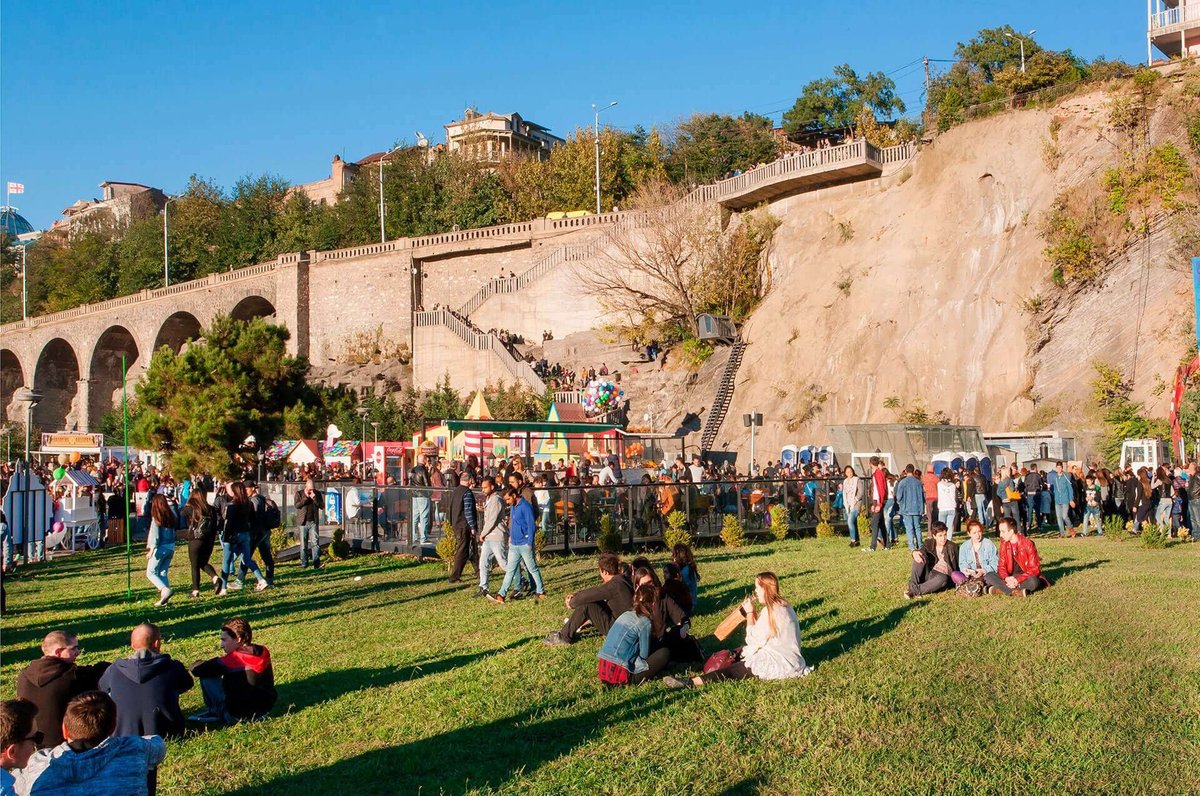
If you are coming for Tbilisoba, plan nothing else for those two days. The temptation is real: the city is right there, Mtskheta is half an hour off, the museums are open. But over the festival weekend the centre is closed to traffic, transport moves slowly, and you will end up back at the venues anyway.
The pattern that works. Saturday entirely for the festival, Sunday for an unhurried walk through the same quarters once the crowd has thinned, and Monday for leaving the city. That way you see both Tbilisoba and Tbilisi, rather than the backs of people's heads.
Been to Tbilisoba? Leave a review on Madloba: tell us which year, which venues you liked and whether both days are worth it.
Information is current as of September 2026. The date, programme and venue addresses are announced by Tbilisi city hall, usually in September. Check the official notice before booking flights or accommodation.
❓ Frequently asked questions
💬 The date is set by Tbilisi city hall and changes from year to year. Historically the festival was held on the last weekend of October; in recent years it has moved to the start of the month. The official announcement usually comes in September, and we will update this article as soon as it does.
💬 Two days, Saturday and Sunday. The programme is built for both but repeats by around seventy per cent. If time is short, take Saturday: it is the fuller day.
💬 The main venues are traditionally around Rike Park on the left bank of the Mtkvari and in the old town, in the quarters near Meidan and Abanotubani. City hall publishes the exact venue map with the programme, usually one to two weeks ahead.
💬 No, entry is free: this is a city festival, not a ticketed event. You only pay for food, wine and anything you buy from the craft stalls.
💬 Grapes are trodden in wooden troughs in the street, winemakers from the regions pour young wine, craft rows and grills run across the venues, and concerts play on several stages. In recent years separate children's areas have been set out.
💬 The first was held on 28 October 1979. The idea was proposed by journalist and geographer Gvanji Mania in the newspaper Tbilisi on 5 November 1976, and the festival's founding is credited to Eduard Shevardnadze. Celebrations paused for several years in the late 1980s and resumed in the mid-1990s.
💬 By metro, to Avlabari or Liberty Square, then on foot. Some central streets are closed during the festival, so a car is more hindrance than help.
💬 Yes, noticeably: the city fills up and prices for those two nights run above the usual October rate. Book early with free cancellation rather than waiting for the official date.
💬 Yes, separate children's areas have been set out in recent years, usually nearer Rike Park. But the centre is very tight on Saturday evening, so with small children it is better to come during the day.
💬 Tbilisoba combines well with a trip out of the city: Mtskheta is half an hour away, Kakheti two hours. But leave the festival weekend itself for the festival, since the centre is closed to traffic and moving around is slow.

45 comments
Log in to leave a comment
Pamiętam, jak próbowałem chaczapuri i popijałem je winem. Aż serce rośnie, prawda? Co mnie zaskoczyło najbardziej, to otwartość ludzi - każdy uśmiechał się i zapraszał do spróbowania lokalnych specjałów. Ale jest jedno pytanie, które mnie dręczy: która potrawa na Tbilisobie jest moim zdaniem absolutnym „must try”? Pamiętacie coś wyjątkowego?
Автор так живо описывает атмосферу праздника: это не просто фестиваль, а целое городское торжество с музыкой, уличными ярмарками, вином и танцами. Но самое классное — как отмечают местные: Тбилисоба — это про любовь к городу, про друзей и встречи с людьми, которых давно не видел.
Я уже добавила в список место, которое обязательно хочу посетить — улицу Шарден, где на Тбилисобу всегда особенно красиво и многолюдно, с живой музыкой, уличными артистами и уютными кафе. Впечатления от прошлых гостей в рейтинге подсказывают: надо приходить заранее, чтобы успеть посмотреть и фестиваль винных дворов, и гастрономические ярмарки.
Особенно вдохновили советы от жителей Тбилиси — они помогли понять, где лучше всего поймать праздничное настроение и куда заглянуть за лучшими тостами и хинкали.
А вы уже были на Тбилисобе? Какие события или места в этот день вам запомнились сильнее всего — ярмарки, уличные концерты или грузинские тосты за дружбу? 🎶🍷✨
Этот праздник абсолютное отражение грузинского гостеприимства, дегустация вина и национальных блюд.
Очень бы хотелось побывать на этом мероприятии.
Тбилисоба - это не только праздник для местных жителей, но и замечательная возможность для туристов познакомиться с богатой культурой и кухней Грузии.
Остались ещё вопросы?)))
Подскажите, а будет ли он проходить в 2023 году? Наслышана, что в период коронавируса ярмарка не проходила...