



Mariamoba in Georgia: 28 August, Traditions and Opening Hours
Mariamoba at a glance: date and public holiday
Georgia celebrates Mariamoba on 28 August. The feast marks the Dormition of the Mother of God and is a public holiday under Article 30 of Georgia’s Labour Code. Check the opening hours of any bank, shop, museum or other organisation you plan to visit separately.
| Question | Answer |
|---|---|
| Date | 28 August every year |
| The occasion | The Dormition of the Mother of God, known in Georgian as მარიამობა |
| Public holiday status | A public holiday under Article 30 of the Labour Code |
| Next calendar date | Saturday, 28 August 2027 |
| Church service | Ask the parish you have chosen about times and visitor access |
| What visitors should check | The hours of the particular branch or attraction, travel and the journey back |
Information checked on 20 October 2026. Georgia Travel also lists the holiday’s date. Check institutional opening hours and church service schedules for 2027 closer to your trip.
Plan your day in four steps
Step 1. Check the date and public holiday status
Open the Labour Code on Matsne. In the English version, find Article 30, then “August 28”. The entry names Mariamoba. Put 28 August in your travel calendar; do not try to add days to this date yourself.
If you are planning leave or a work shift, check your own schedule too. A statutory public holiday and an organisation’s opening hours are different matters. Additional days off may be set separately.
Step 2. Check the branch or place you need
Make a short list of your plans: a bank visit, collecting a document, a museum or grocery shopping. Open each organisation’s official website and find the exact branch or address. Compare its usual weekly hours with any separate holiday notice.
For example, TBC’s website has a “მისამართები” (“Addresses”) link to its branches and ATMs page. Check both the address and the type of location: an ATM cannot replace a bank branch for every transaction. If holiday hours are not listed, ask the bank through its official contact channel.
| What you need | Where to check | What to establish |
|---|---|---|
| Banking or collecting a document | The organisation’s official website and contact channel | Whether the chosen branch is open on 28 August and the service you need is available |
| A shop, café or shopping centre | The page for the particular address and its holiday notice | The hours for that location, rather than the chain’s usual schedule |
| A museum or tour | The attraction’s or organiser’s official page | Access on the date, session time and booking conditions |
| A church | The parish or diocese responsible for the church | Service time, visitor access and photography rules |
| A trip outside the city | The transport operator and your destination | Departure, return service and meeting time |
Step 3. Choose a church and ask about the service
If you would like to attend a service, start with a church you can reach conveniently. You can check its name and location on the official tourism portal: Sioni in Tbilisi or Bagrati in Kutaisi. Both are dedicated to the Dormition of the Mother of God, but each has its own schedule.
Ask the parish about service times, visitor access and how to behave. A tourist attraction’s opening time is not necessarily the start of the liturgy. If the information is not online, enquire in person beforehand.
Step 4. Confirm your plans the day before
Save the address, confirmed time, contact details and return route. If you are travelling with children or leaving the city, agree on a meeting point and the journey back. Check separately whether the organisation’s hours have changed.
Example question: “Hello. We are planning to visit on 28 August. What time does the service begin, and may we visit the church afterwards? Are there any restrictions on photography?” For a bank enquiry, give the transaction you need and the exact branch address instead.
What does Mariamoba mean?
Mariamoba marks the Dormition of the Mother of God. In Orthodox tradition, “dormition” means her death or falling asleep; the feast is part of the Church’s veneration of Mary. Georgia Travel includes it among the country’s national holidays, while an Orthodox church source explains its religious meaning.
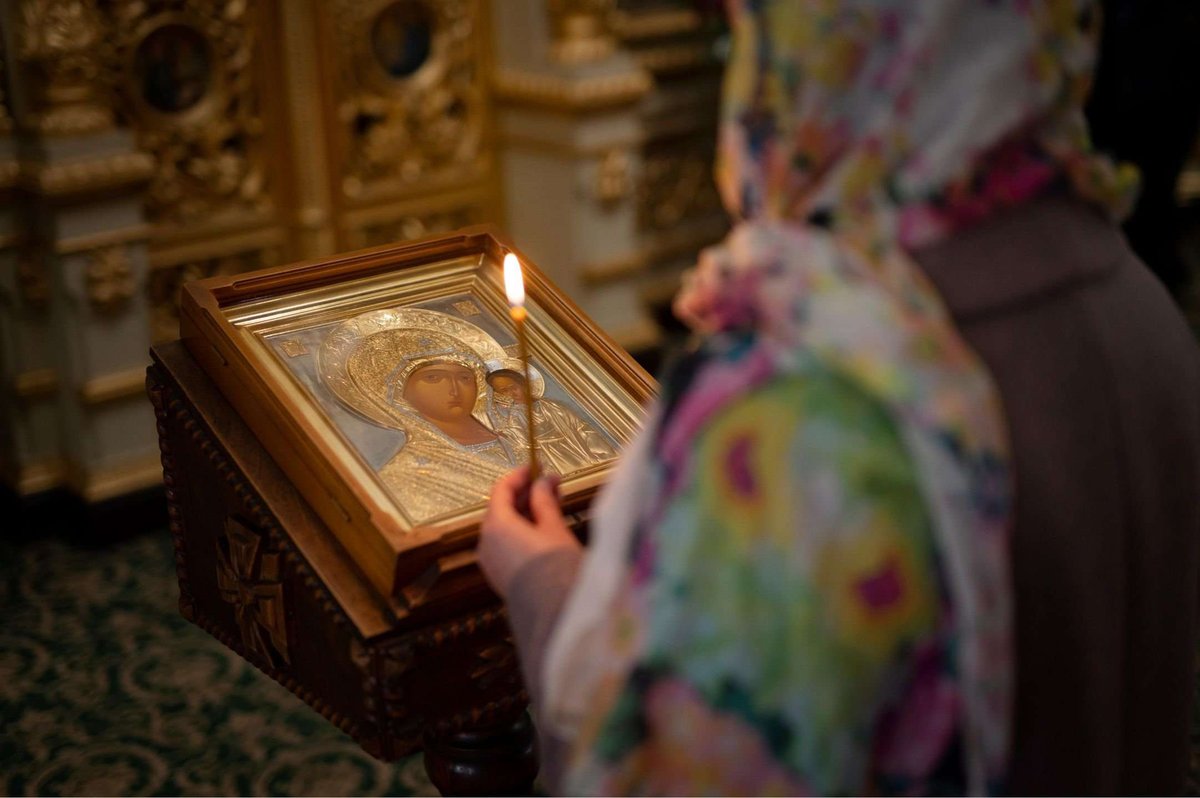
For a believer, this is first and foremost a church feast. As a visitor, treat worship as a religious practice: keep quiet, avoid disturbing parishioners and ask about photography in advance.
The fast before Mariamoba
Mariamoba is preceded by the Dormition Fast. Georgia’s State Agency for Religious Issues gives its starting date as 14 August. Check your parish calendar for the end of the fast and the rules for meals on the feast day itself.
If you have been invited to a family gathering or are booking a festive meal, ask your hosts what to expect. Do not assume that everyone in Georgia follows the same rules or prepares a compulsory set of dishes.
Churches dedicated to the Dormition
| Church | Location | What to check before visiting |
|---|---|---|
| Sioni | Old Tbilisi | Georgia Travel confirms its dedication to the Dormition. Our article on Sioni covers the cathedral’s history; ask the parish about service times |
| Bagrati | Kutaisi, Ukimerioni Hill | Georgia Travel lists its dedication to the Dormition; check access and the service on 28 August separately |
| Tsaishi | Near Zugdidi | Georgia Travel describes it as a Dormition cathedral; arrange your journey and visit time in advance |
These are examples of churches with a confirmed dedication, rather than a programme of services. You do not need to travel far: ask an active parish near you about Mariamoba and its schedule.
Visiting respectfully
Choose modest clothing and check the requirements of the particular church. Follow staff guidance, keep passageways clear and do not take close-up photographs of people without consent. Silence your phone during services.
If you are visiting only to see the architecture, ask when it would be convenient. For a family outing, agree beforehand on where to meet afterwards and how to return to your accommodation.
Your checklist for 28 August
| Check | Ready when… |
|---|---|
| Date | Your plan says 28 August and the correct year |
| Errands | You have checked holiday hours for the exact address |
| Church | You have confirmed the service, access and visitor rules |
| Travel | You have a route and confirmed arrangements for returning |
| Contact | You have saved official confirmation or the place’s phone number |
| Clothing and photography | You know the chosen church’s requirements |
| Alternative plan | You have a walk or another activity in case access changes |
Frequently asked questions
Every year on 28 August. The date is fixed.
28 August is listed as a public holiday in Article 30 of Georgia’s Labour Code. Check each organisation’s opening hours separately.
The next calendar date after October 2026 is Saturday, 28 August 2027. Check event announcements and schedules closer to your trip.
The Dormition of the Mother of God. For Orthodox believers, it is a church feast honouring her.
Church sources may use different calendars. For travel in Georgia, use 28 August, as listed in Georgian legislation and the official tourism calendar.
Check the particular branch and the transaction you need on the bank’s official website. Do not assume its usual weekly hours are its holiday schedule.
There is no single schedule for every place. Check the hours for the address you plan to visit and look for a holiday notice.
There is no single time for every church. Ask the parish or diocese responsible for the church you have chosen.
The Georgian official source gives 14 August. Ask your parish about the detailed rules and when the fast ends.
You do not need to plan a long journey just because of a church’s name. Choose an active parish you can reach conveniently and ask about its schedule.
Sioni in Tbilisi, Bagrati in Kutaisi and Tsaishi near Zugdidi. Their dedication is confirmed by the official tourism portal; check service times separately.
Ask permission at the particular church. Do not disturb the service or take close-up photographs of parishioners without consent.

Read also
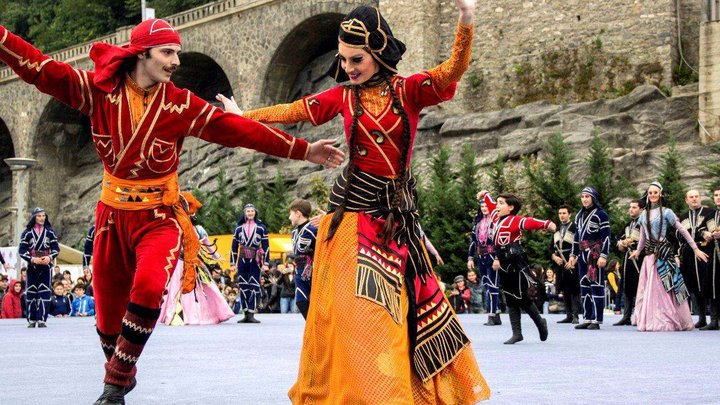
Gandagana: Adjarian Harvest Festival and Dance
🎉 Gandagana is a harvest festival and dance of the same name, which has become a symbol of Adjara's culture.
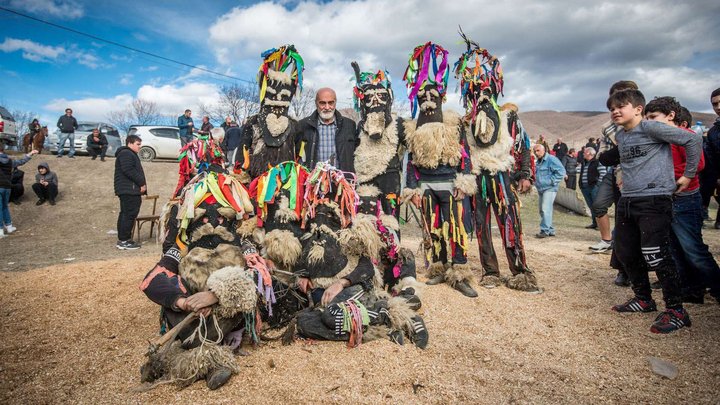
Maslenitsa in Georgia: Berikaoba — Traditions and History
🎉 Discover the unique traditions of Maslenitsa in Georgia - Berikaoba. Learn about the history of the holiday, ancient rituals, modern customs.
Constantineoba Holiday in Georgia
🎉 Constantineoba - learn all about the traditions, history and features of this unique event.
New Year in different regions of Georgia: Unique traditions and celebrations in each region
🎉 Find out how the New Year is celebrated in various regions of Georgia: from Kakheti to Svaneti.
New Year traditions in Georgia: Decorations, dishes and signs of the holiday
🎉 Immerse yourself in the atmosphere of New Year traditions of Georgia. Find out how houses are decorated, what dishes are prepared on the table.

Day of love in the country of mountain beauties and spiritual traditions
🎉 Read the unusual traditions of celebrating the Georgian Day of Love in the Madloba catalogue right now!
32 comments
Log in to leave a comment
Автор отлично объясняет исторические корни праздника: Мариамоба связана с почитанием Девы Марии как духовной покровительницы Грузии. Событие уходит в глубокую древность и за многие века превратилось не только в религиозный праздник, но и в мощный культурный символ, объединяющий поколения людей.
Особенно впечатляет, как показано отражение традиций в жизни людей:
📍 люди собираются в храмах на специальные богослужения,
📍 идут в паломничество к святым местам,
📍 приносят дары и молитвы за здоровье и благополучие,
📍 а вокруг звучат тосты и семейные рассказы о вере и любви.
Статья передаёт, что Мариамоба — это не только религиозное событие, но и глубокий культурный опыт, когда люди ощущают принадлежность к истории, духовности и общине. Обычно в этот день семьи устраивают застолья, приглашают родственников и друзей, что делает праздник ещё более тёплым и семейным по атмосфере.
Мне особенно понравилось, как автор связывает традиции прошлого с современными обычаями: ведь, несмотря на изменение времени, суть остаётся прежней — чувство благодарности, духовного света и общности ценностей.
Спасибо за насыщенный и вдохновляющий материал!
А вы когда‑нибудь участвовали в праздновании Мариамобы? Что вам кажется самым трогательным — молитвенные службы, семейные встречи или ощущение единства с другими людьми? 💫🇬🇪
This annual celebration takes place on August 28th and is observed throughout Georgia with great enthusiasm. The festivities often include religious processions, traditional music and dance performances, colorful parades, and various culinary delights.
Mariamoba holds deep historical roots, tracing back to the Christianization of Georgia in the 4th century. The holiday became particularly prominent during the reign of Queen Tamar, one of the most influential rulers in Georgian history. Queen Tamar was known for her devout faith in the Virgin Mary, and Mariamoba became a symbol of her reign.
During the celebrations, Georgian Orthodox Christians attend special church services dedicated to the Virgin Mary. Many people also make pilgrimages to significant religious sites such as the Svetitskhoveli Cathedral in Mtskheta or the Ghvtismshobeli Church in Kutaisi.
The festivities extend beyond religious activities, as Georgians embrace their cultural heritage. Traditional Georgian dances, such as the lively Kartuli and graceful Acharuli, are performed in the streets, accompanied by the melodious sounds of folk music played on traditional instruments like the panduri and chonguri.
Food also plays a central role during Mariamoba. Families and friends gather for lavish feasts, where traditional Georgian dishes like khachapuri (cheese-filled bread) and khinkali (dumplings) are served. These feasts foster a sense of togetherness and celebration among the community.
Mariamoba is a cherished holiday that unites Georgians in their devotion to the Virgin Mary and their cultural identity. It serves as a reminder of the country's Christian heritage and offers an opportunity to celebrate its rich traditions through joyous festivities that continue to thrive in modern-day Georgia.