




🏰 Vejini: a Kakheti Village with the Ascension Complex, Churches and a Fortress
🏰 What to Know About Vejini
Vejini is a village in Kakheti about 7 km from Gurjaani, at the foot of the Gombori ridge. Known since the 10th century, it still holds over a dozen monuments: the Ascension monastery complex, an old bell tower, several churches, and the remains of a medieval fortress on a hill.
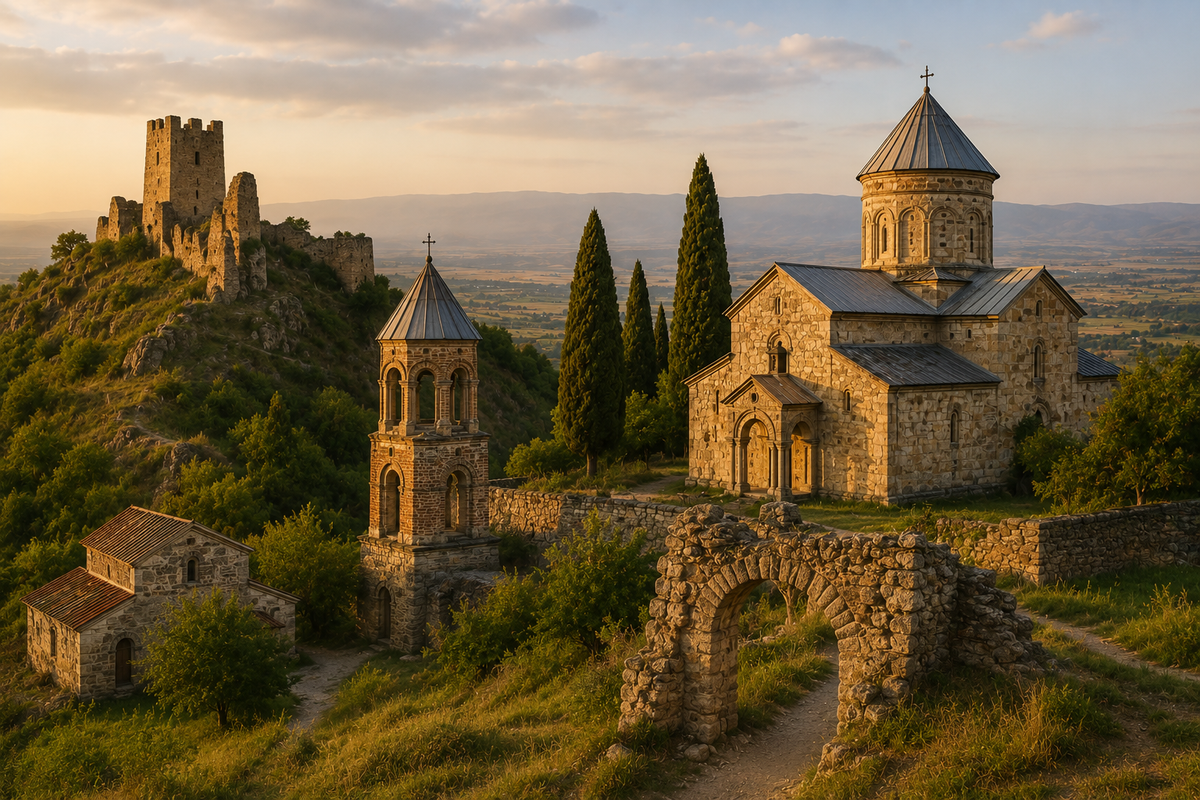
Kakheti is usually visited for wine and its grand monasteries, like Bodbe or Alaverdi, but between Telavi and Sighnaghi hides a village where almost a thousand years of Georgian history sit on a single hillside. Vejini lies off the main tourist routes, about 7 km from Gurjaani, and few passing travellers turn off to see it, even though it holds more monuments than some towns.
The village has been known since the 10th century, when it was an important point on the border between Hereti and Kakheti, and its fortress repeatedly changed hands in the political struggles of the time. Over the centuries an entire ensemble grew up around Vejini: the Ascension monastery complex, individual churches from different eras, an old bell tower, and the remains of a fortress on the hill. The full list of churches in the area, with coordinates, is gathered in the churches section of Kakheti in the catalogue.
🗺️ Vejini's Five Sites
Open a site to jump to its description.
⛪ Churches and monastery 4
🗼 Fortress 1
🗺️ Vejini's Five Sites on the Map
Open in Google Maps⛪ The Ascension Complex (Amagleba): the Heart of Vejini
The Ascension Complex, known locally as Amagleba, and sometimes as Tskhrasakdari, is Vejini's principal monument and one of the oldest monastery ensembles in this part of Kakheti. Its history goes back to the 10th and 11th centuries, when Vejini was a fortified centre on the border between Hereti and Kakheti.
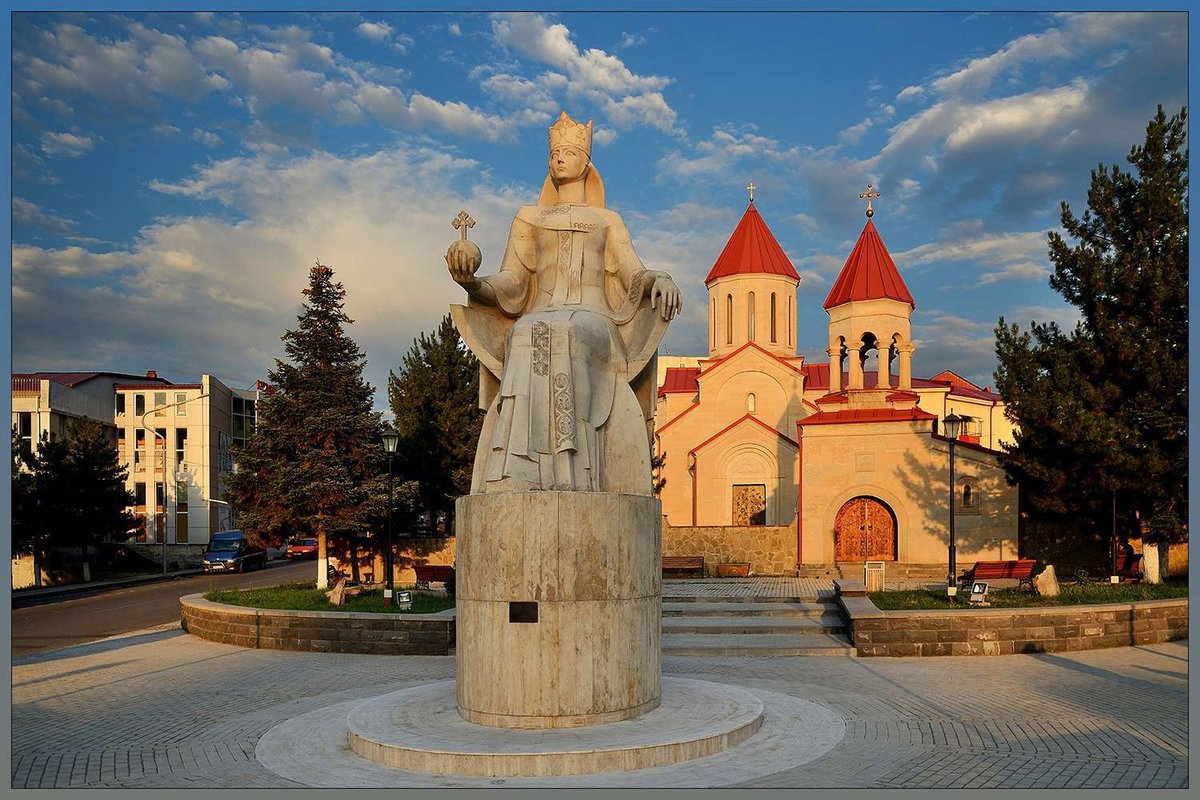
The ensemble is enclosed by fortress walls and includes several buildings from different periods: the Church of the Ascension, the Church of St. Mary, and a two-storey bell tower considered one of the oldest in Kakheti. The tower rises to the north of the church, its forms dated to the 15th century. Ancient burials survive inside the church, and legend holds that underground passages once ran beneath the site, linking the monastery to the watchtower further down the slope. Today the complex is split in two: a lower convent with a well-tended garden, and an upper monastery, Amagleba proper.
Standing on the monastery grounds, it's worth turning towards the valley: from here the Alazani plain opens up, with the old stone tower visible on the opposite slope. For more on the ensemble, with photos and coordinates, see the churches section of Kakheti.
⛓️ Church of St. George: One of the Village's Oldest Churches
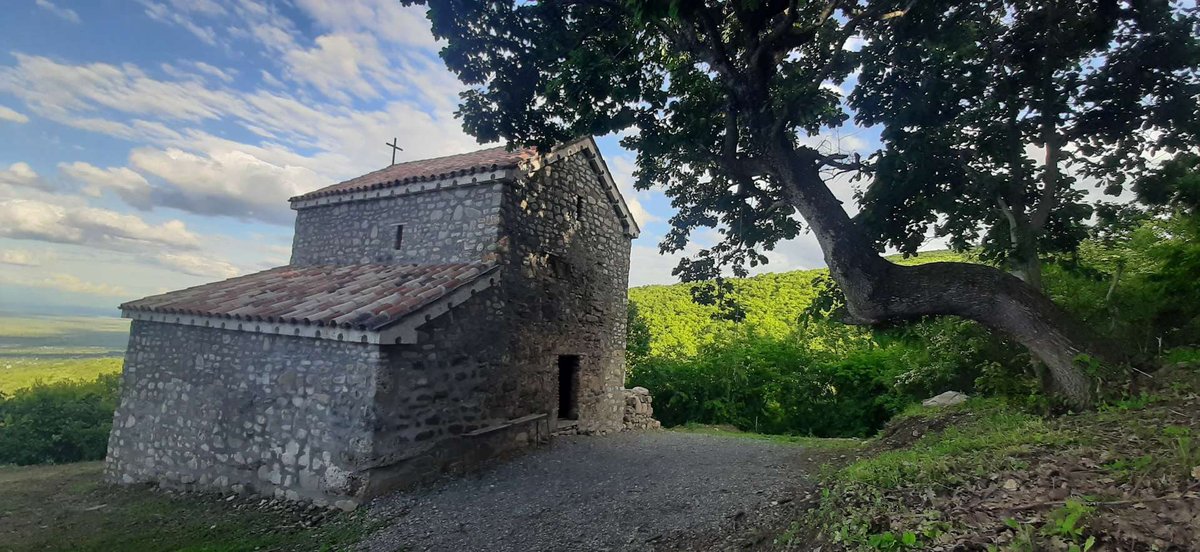
The Church of St. George is one of the oldest in Vejini. Various sources place it in the early medieval period, making it roughly contemporary with the village's earliest surviving structures. Like most of Vejini's churches, it stands off the main road, amid the rural landscape of the Gombori foothills.
The church is dedicated to St. George, one of the most venerated saints in Georgia, whose name is shared by hundreds of churches across the country. Little detailed information on its construction history exists in open sources, so no specific dates are given here, they're worth confirming on the ground. The easiest way to find the church is to ask locals for directions, they generally know exactly where each of the village's churches stands.
🕊️ Church of the Apostle Peter
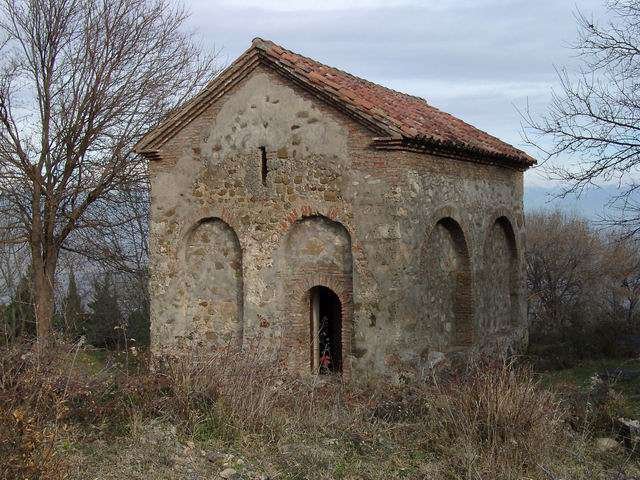
The Church of the Apostle Peter is a small church in Vejini dedicated to the Apostle Peter. Available information places it in the late medieval period, though, as with the village's other churches, the exact dating is worth confirming locally.
Like the neighbouring churches, the Church of Peter reflects Vejini's layered religious history: over the centuries, new churches kept appearing on this small stretch of land, some surviving intact, others reaching us as ruins. The Church of the Apostle Peter is one of those sites that rarely makes it into guidebooks but forms part of the living fabric of a Kakhetian village.
🌿 Gurgval Church (Lomisa)
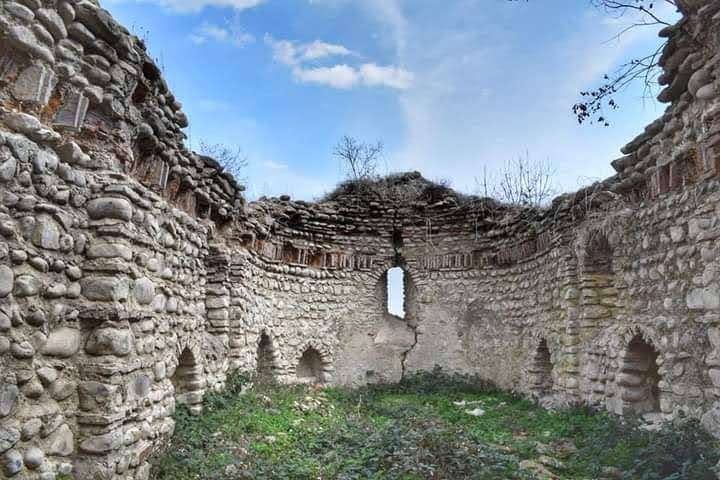
The Gurgval Church, also known by the name Lomisa, is another church in the outskirts of Vejini. The name Lomisa ties it to a form of veneration widespread in mountainous Georgia, where Lomisa is a folk religious cult blending Christian and older traditions.
Like the village's other small churches, Gurgval lies off the beaten path. There isn't enough information in open sources to give a firm date or detailed history, so none is offered here. For a traveller, Gurgval matters mainly as part of Vejini's larger ensemble: the village's value lies not in any single monument but in the sum of them, churches, tower and monastery gathered on one hillside.
🗼 The Watchtower and Vejini's Fortress
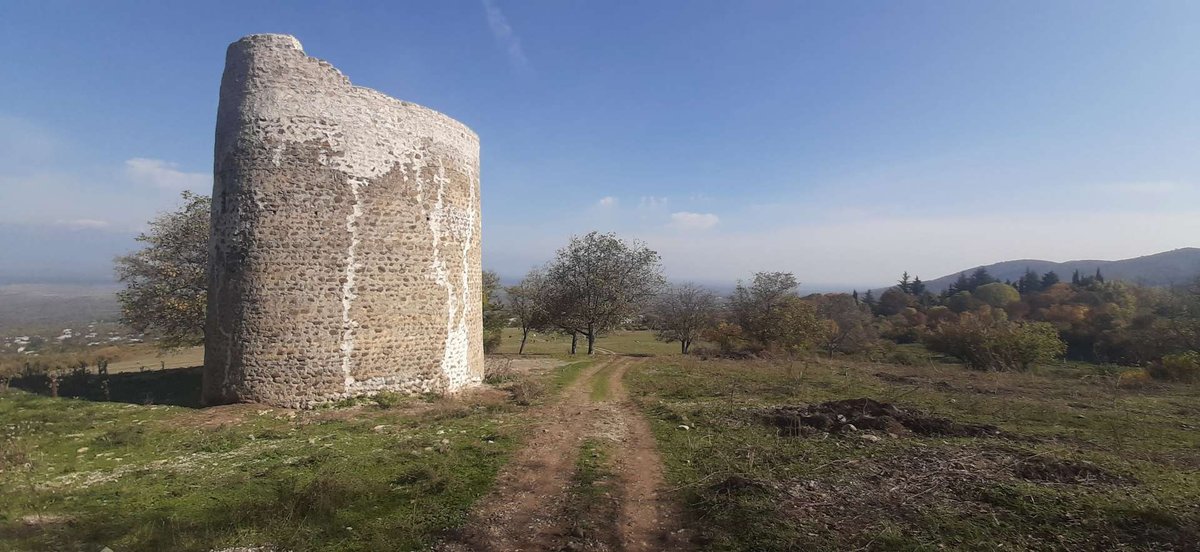
The Watchtower, part of Vejini's medieval fortress, stands on a hill above the village, south of the main cluster of churches, overlooking a ravine. The fortress is mentioned in sources from the 10th century as a key stronghold on the border between Hereti and Kakheti, one that princes and kings fought over for centuries. In the 1080s, the Georgian king George II tried to take Vejini's fortress and failed, a measure of how formidable its defences were.
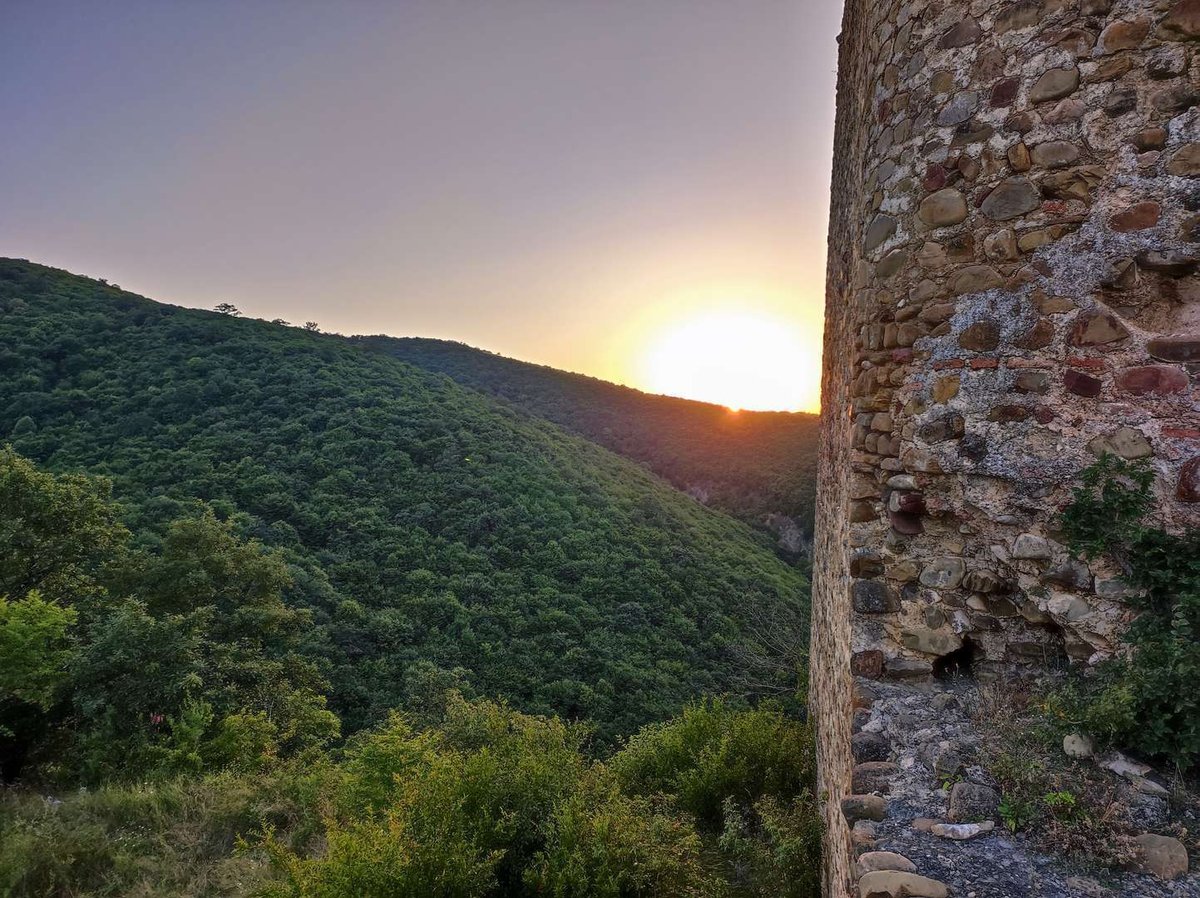
The tower served as a lookout point: from the hill, the whole surrounding area and the approaches to the village were visible. According to legend, underground passages once connected the fortress to the Ascension monastery, allowing defenders to communicate during a siege. Today only the tower and fragments of the walls survive, but even these convey how strategically important Vejini once was in medieval Kakheti. The view of the Alazani valley from the tower's hill is worth seeing in its own right, one of the best vantage points in the area.
🚶 A Walking Route Through Vejini
📌 Before You Go
Have you been to Vejini? Tell us which sites you reached, whether you climbed to the fortress, and what view of the Alazani valley opened up. Your experience is especially valuable for anyone only just planning to turn off Kakheti's main road.
Information is current as of June 2026. Access to individual churches and the monastery may change, check locally before you go.
❓ Frequently asked questions
💬 A village in Kakheti, in Gurjaani municipality, about 7 km from Gurjaani. Known since the 10th century, it's notable for the number of historical monuments it holds: the Ascension monastery complex, several churches, and a medieval fortress.
💬 Five main ones: the Ascension complex (Amagleba), a watchtower, the Church of St. George, the Church of the Apostle Peter, and the Gurgval Church. The village and its surroundings hold considerably more monuments overall, more than thirty.
💬 It's the village's main monastery ensemble, dating to the 10th and 11th centuries and enclosed by fortress walls. It includes the Church of the Ascension, the Church of St. Mary, and a two-storey 15th-century bell tower, one of the oldest in Kakheti. Locals call the complex Tskhrasakdari.
💬 The easiest way is by car from Gurjaani (about 7 km) or along the highway between Telavi and Sighnaghi. Public transport here is infrequent, so it's best to plan the trip with your own car or a guide.
💬 Yes. The five main sites lie within a compact area on the village slope. A leisurely walk including the climb to the fortress takes a few hours.
💬 According to legend, the Ascension monastery was linked by underground passages to the watchtower further down the slope, and possibly to the neighbouring Kvelatsminda Monastery about 6 km away. This is part of local legend rather than a maintained tourist route.
💬 The town of Gurjaani, 7 km away, with its museums and mosaics; Kvelatsminda Monastery nearby; and the wine routes of the Alazani valley all around. Vejini pairs well with a trip through Kakheti between Telavi and Sighnaghi.

2 comments
Log in to leave a comment