




🏰 Sighnaghi: the City of Love with a Fortress Wall, Churches and Museums above the Alazani Valley
🏰 What to Know About Sighnaghi
Sighnaghi is a small town in south-eastern Kakheti known as the "city of love": a round-the-clock registry office, cobblestone streets and views over the Alazani Valley. Behind the romance, though, is an 18th-century fortress town with one of the largest surviving walls in Georgia, historic churches and a museum holding works by Niko Pirosmani.
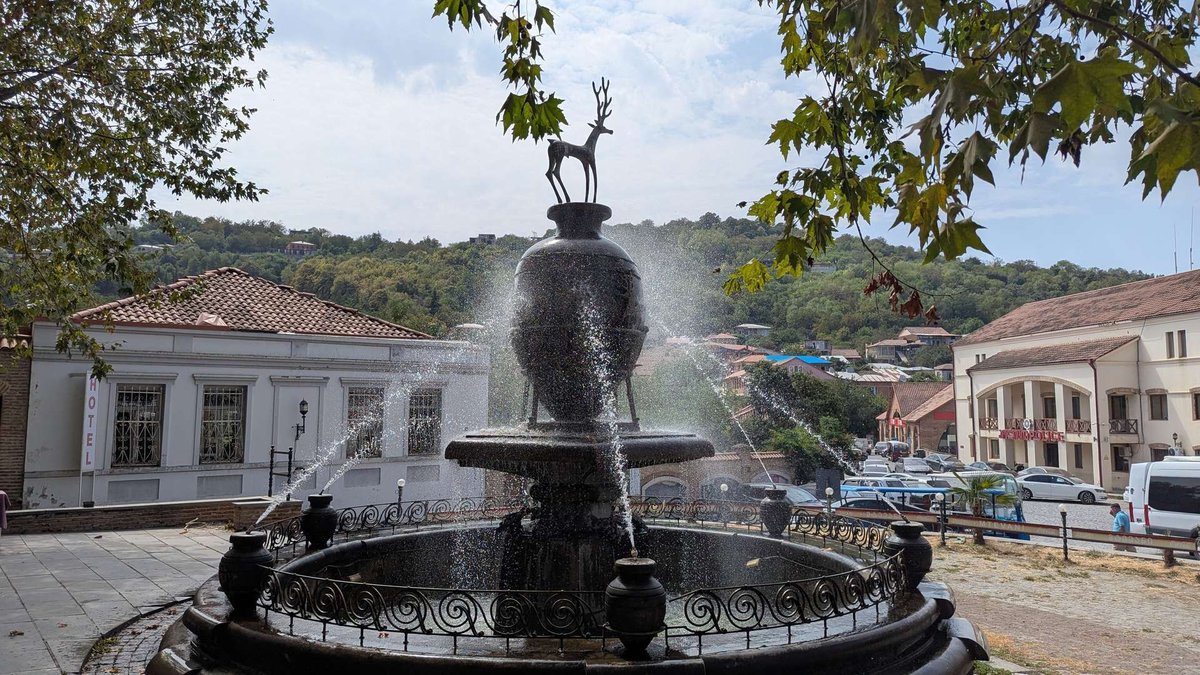
Sighnaghi is best known as the "city of love", and it earned the title fairly: a round-the-clock wedding registry, narrow cobblestone streets, tiled roofs and a view over the Alazani Valley make it Georgia's most romantic small town. But there's a second layer behind the postcard image. Sighnaghi is a town born of war: its name comes from the Turkic word for "shelter", and the town itself grew up around a powerful fortress built to protect the population from raids.
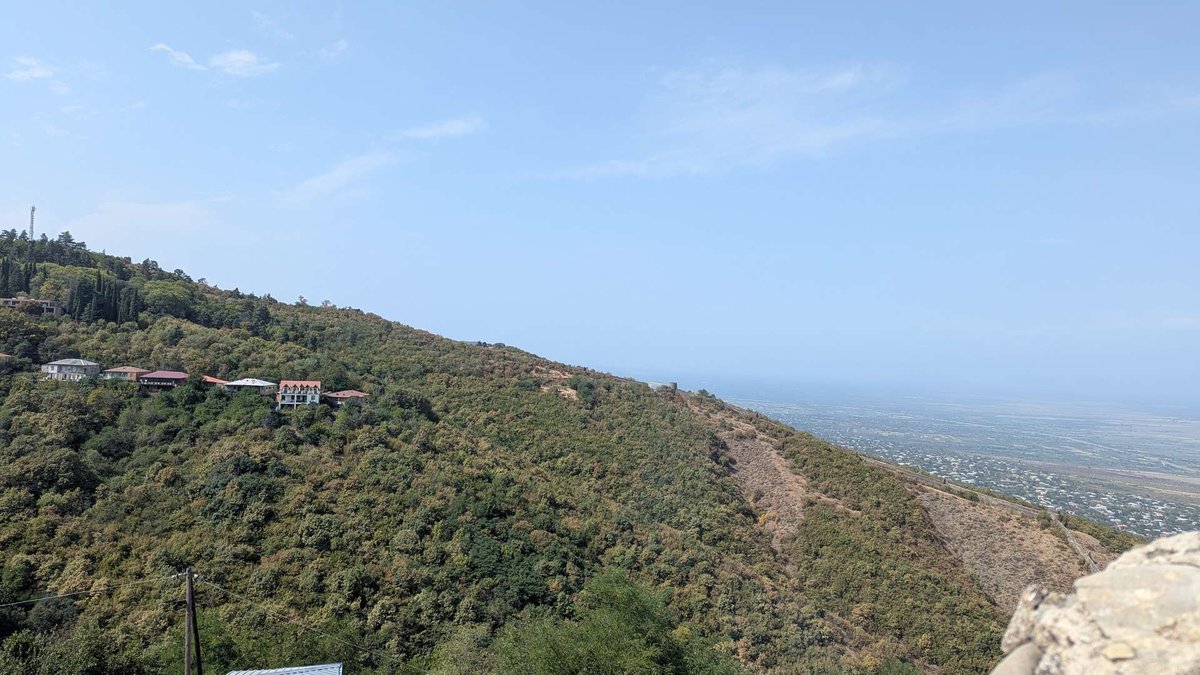
The town sits on the south-eastern slope of the Tsivgombori Range, at about 790 metres, looking down over the Alazani plain, the heart of Georgian winemaking. This guide brings together Sighnaghi's main sites: the fortress wall, two historic churches, a museum holding works by Niko Pirosmani, and two house museums. The full list, with photos and coordinates, is gathered in the Sighnaghi section of the catalogue.
🗺️ Sighnaghi's Main Sites
Open a group to jump to its description.
🧱 Fortress 1
⛪ Churches 2
🎨 Museums 3
🗺️ Sighnaghi's Sites on the Map
Open in Google Maps🧱 The Fortress Wall: Erekle II's Walled Town
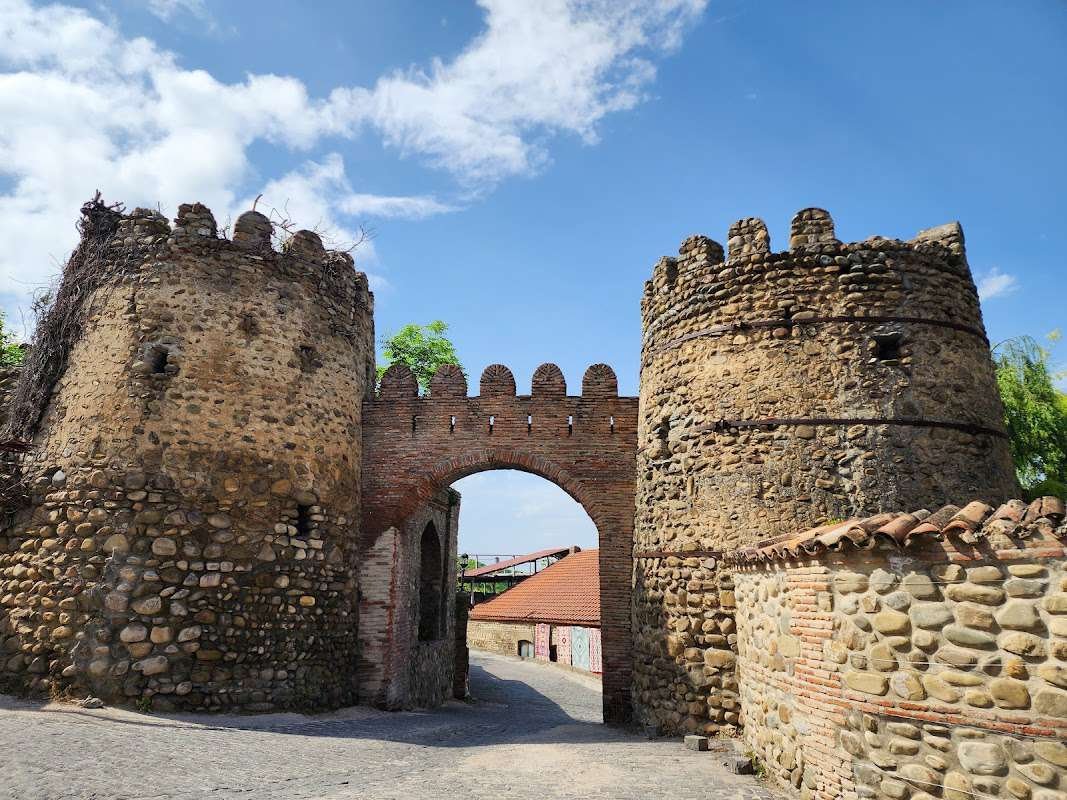
The Sighnaghi Fortress Wall is the town's chief historic landmark and one of the largest surviving fortifications in Georgia. It was built in 1762 by King Erekle II of Kartli-Kakheti to protect the population of the Kiziqi region from lekianoba, devastating raids by Dagestani tribesmen who came down from the mountains to plunder villages and take people into slavery. When the alarm sounded, residents of the surrounding villages would take shelter behind the town walls along with their livestock.
The wall runs for approximately 4 kilometres (some sources put it at up to 4.5 km) and encircles the historic core of the town, enclosing an area of about 40 hectares. It follows the complex terrain of the hills, rising and dipping along the slopes, which is why it's sometimes likened to a miniature Great Wall of China. The wall holds 23 watchtowers, most of them two storeys, and 6 arched gates. Each tower was named after a specific village and served as that village's designated refuge. The largest tower, the "King's Bulwark", has the Church of St. Stephen built into it.
Today a restored stretch of the wall is open for walking: a path runs along the upper tier, offering sweeping views of Sighnaghi, the Alazani Valley and the Caucasus Mountains. A major restoration took place in the 2000s, the same period when the town took on its "city of love" branding. For a fuller account of the wall's history and architecture, with photos, see the separate feature on the Sighnaghi Wall.
⛪ Cathedral of St. George: the Town's Largest Church
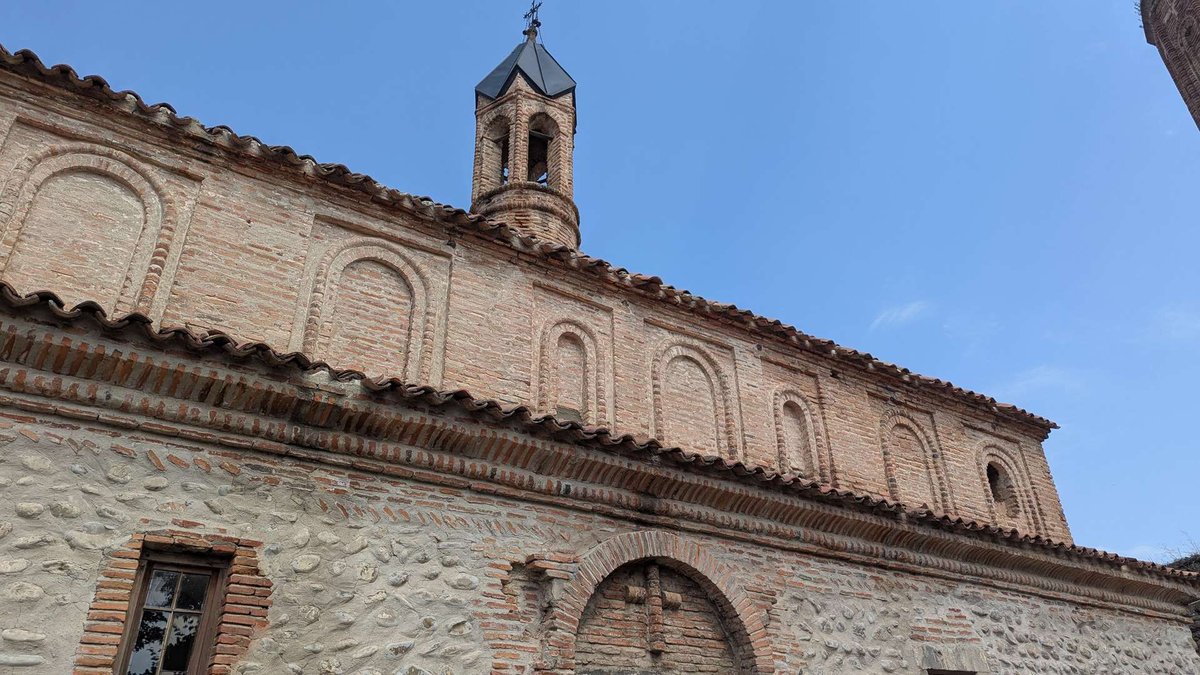
The Cathedral of St. George is Sighnaghi's largest religious building and one of the town's symbols. Built of brick and rough-hewn stone in the late 18th century (probably around 1793), it stands almost flush against the fortress wall, making it part of a single defensive-religious ensemble. One of the wall's towers was rebuilt into a tall bell tower that rises over the town and is visible from almost anywhere within it.
The church was originally an Armenian Apostolic church (Surb Gevorg). After Georgia regained independence, it was transferred to the Georgian Orthodox Church. The cathedral is fairly austere in appearance: minimal decoration, just elegant arches and brick relief crosses. In the second half of the 19th century a school for boys and girls operated at the church. The best view of the cathedral is from the town's entrance road, and a path along the fortress wall begins right beside it.
Note that this is a different building from the identically named St. George's Church at Bodbe Monastery, 2 km from town, where St. Nino is buried, the two shouldn't be confused.
🔭 Church of St. Stephen: a Church Inside a Fortress Tower
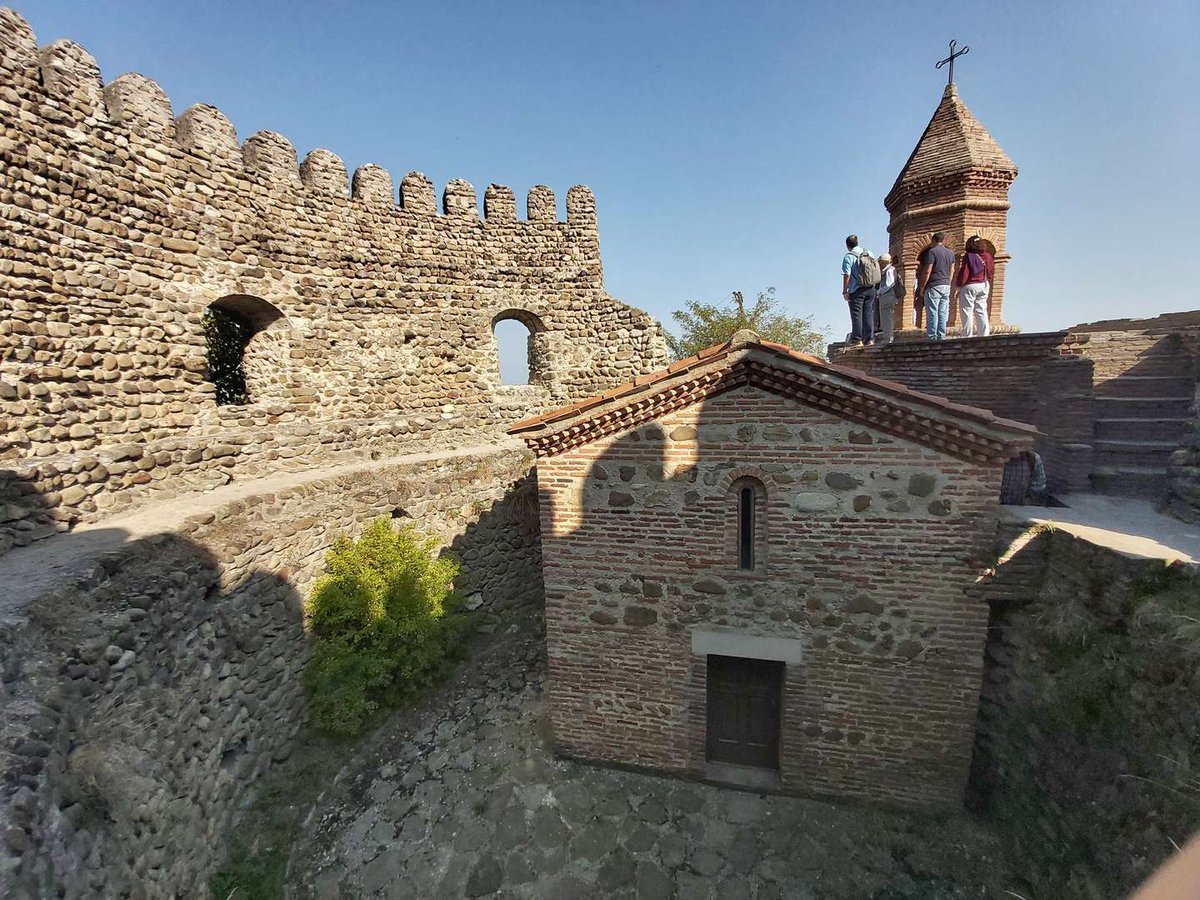
The Church of St. Stephen is perhaps Sighnaghi's most unusual church. It was built directly inside the fortress's largest tower, the "King's Bulwark", turning the tower into a kind of impregnable chapel. That's the source of its unconventional architecture: a hall-type building with a single arched window, built of rough cobblestone. The exact construction date is unknown, historians place it in the late 18th or early 19th century, roughly the same period as the wall.
The church stands on Chavchavadze Street, at the town's highest point. That's precisely why its bell tower serves as Sighnaghi's best lookout: from here a sweeping panorama of the Alazani Valley and the Caucasus range opens up, and a pair of binoculars has even been installed for visitors' convenience. The church remains active. Nearby are cafés with some of the best views over the valley, making the area around the church a pleasant stop during a walk through town.
🎨 Sighnaghi's Museums: Pirosmani, Mirianashvili and Sarajishvili
Beyond its architecture, Sighnaghi preserves the memory of notable Georgians in three museums within its historic centre.
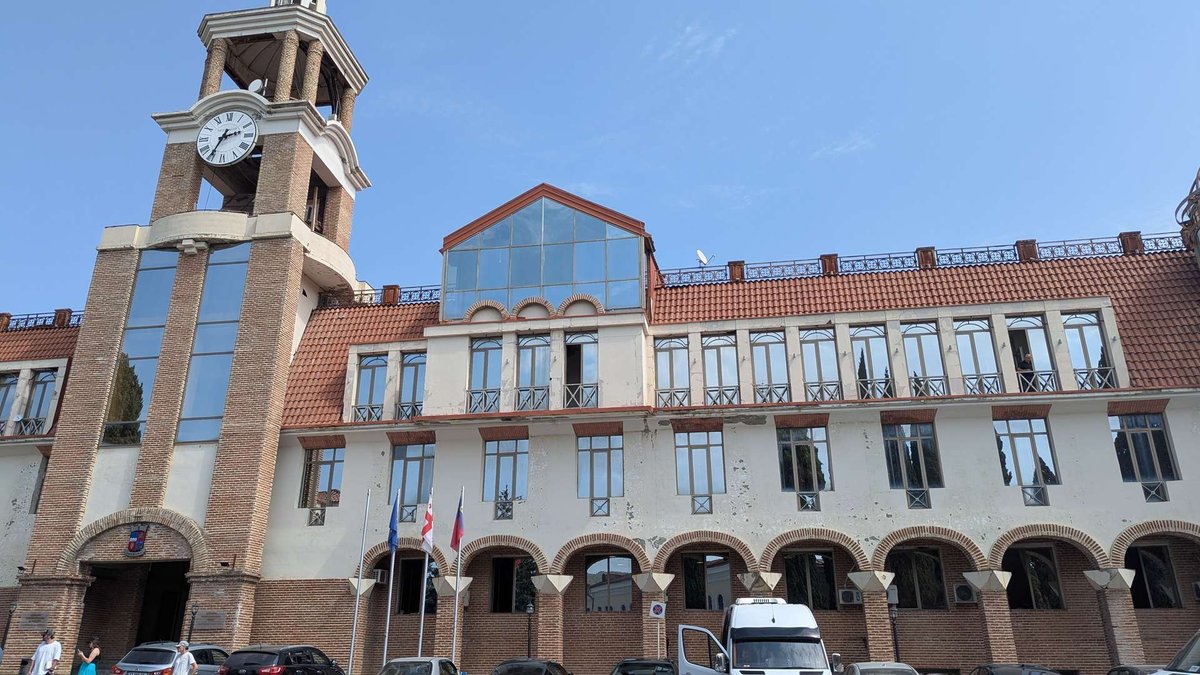
The Museum of History and Ethnography, the town's main museum, is one of the country's best regional museums. Since its 2010 renovation, it occupies two floors: the ground floor holds archaeological finds reflecting the region's centuries-long history, while the upper floor houses a gallery of works by Niko Pirosmani, the self-taught painter of genius whose name is inseparable from Sighnaghi and the legend of the "million red roses".
The Sandro Mirianashvili House Museum is a memorial museum dedicated to a notable Georgian figure, offering a glimpse into old Sighnaghi. A fuller account is available in a separate blog feature. Not far away is the Vano Sarajishvili House Museum, dedicated to one of the founders of Georgia's national vocal school and one of its leading opera singers. Both house museums sit in the southern part of the historic centre, close to each other.
🚶 A Walking Route Through Sighnaghi
📌 Before You Go
Have you been to Sighnaghi? Tell us whether you climbed the fortress wall, what view opened up from the bell tower of St. Stephen's Church, and whether you caught the sunset over the Alazani Valley. Your experience helps others who are only just planning a trip to the city of love.
Information is current as of July 2026. Museum hours, church access and transport schedules can change, check before you go.
❓ FAQ
💬 The main reason is a round-the-clock wedding registry office in the town centre, where couples can marry at any hour. Add to that the romantic setting of narrow cobblestone streets, tiled roofs and views over the Alazani Valley. The name is also linked to the story of painter Niko Pirosmani and his "million red roses".
💬 It's one of the largest surviving fortresses in Georgia: about 4 km of walls, 23 towers and 6 gates. It was built in 1762 by King Erekle II as a refuge for the population of Kiziqi during raids. Today a restored stretch can be walked, with views over the Alazani Valley.
💬 Two main ones: the Cathedral of St. George, the town's largest church, adjoining the fortress wall, originally a late 18th-century Armenian church; and the Church of St. Stephen, built inside a fortress tower, with a bell-tower lookout at the town's highest point.
💬 At the Museum of History and Ethnography in the town centre. Since its 2010 renovation, the upper floor houses a gallery of works by Niko Pirosmani, while the ground floor holds an archaeological collection.
💬 Minibuses leave from Samgori metro station every two hours, the trip takes about two hours, covering 110 km. A car is faster and makes it easier to combine with nearby Bodbe Monastery and the village of Mirzaani.
💬 Yes, that's the Church of St. Stephen. It was built directly inside the fortress's largest tower, the "King's Bulwark", turning it into an impregnable-looking chapel. Its bell tower serves as the town's best lookout point.
💬 The town itself is compact, and all the main sites can be covered on foot in half a day. But to walk the wall at leisure, visit the museums and catch sunset over the valley, it's better to allow a full day, and two if you're adding the surroundings.

32 comments
Log in to leave a comment
Every corner seems to have a little magic, but does it live up to the hype? If someone’s been there recently, is there a must-see spot that’s off the beaten path?