




🍑 Where Kobuleti's market is, when it opens and what to buy there
The town has one market, it is right in the centre, and in an hour you can buy everything Adjara is producing this season. The best produce is gone by midday, and cash makes it easier to agree on a price.
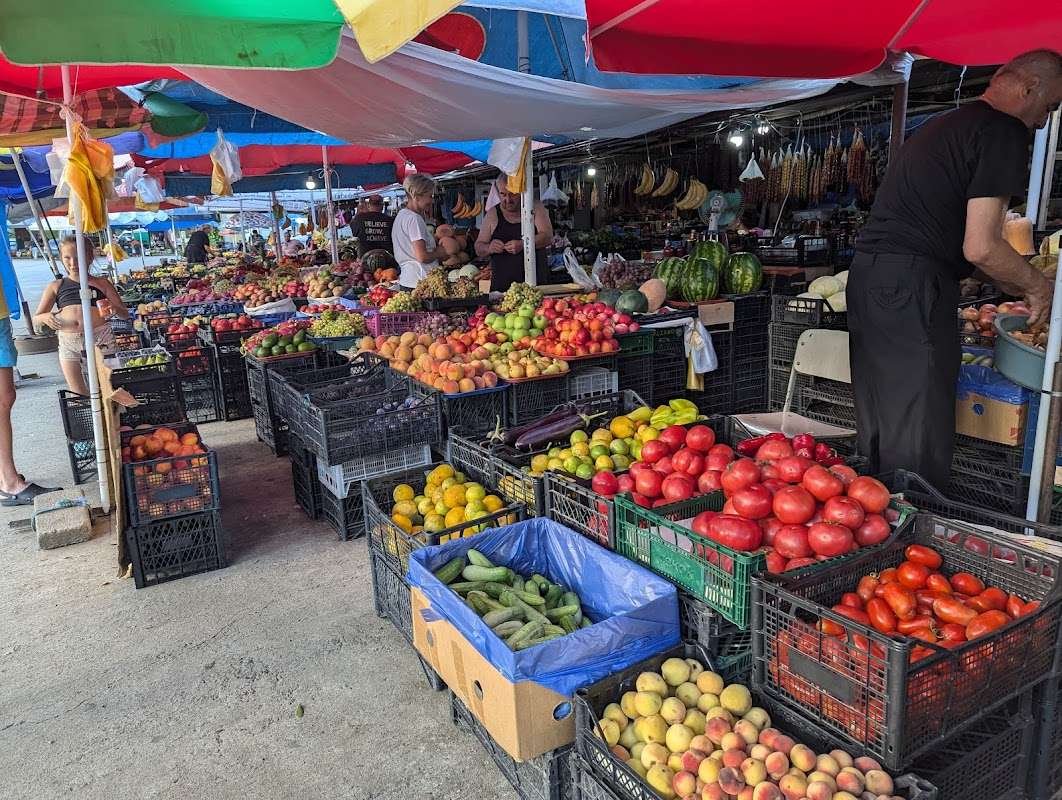
Kobuleti is a small town with one market. The Central Market in Kobuleti stands on Tavisuflebis Street, a few minutes on foot from the central fountain, and locals often call it the agrarian market. People come here for Adjaran mandarins, homemade cheese, freshly ground spices and churchkhela. Meat and fish are sold here too, and the nearby rows carry clothes and household odds and ends. Below you will find how to get there, the best time to go, what to buy by season and what it all costs in autumn 2026.
📍 Where the Kobuleti market is and how to get there
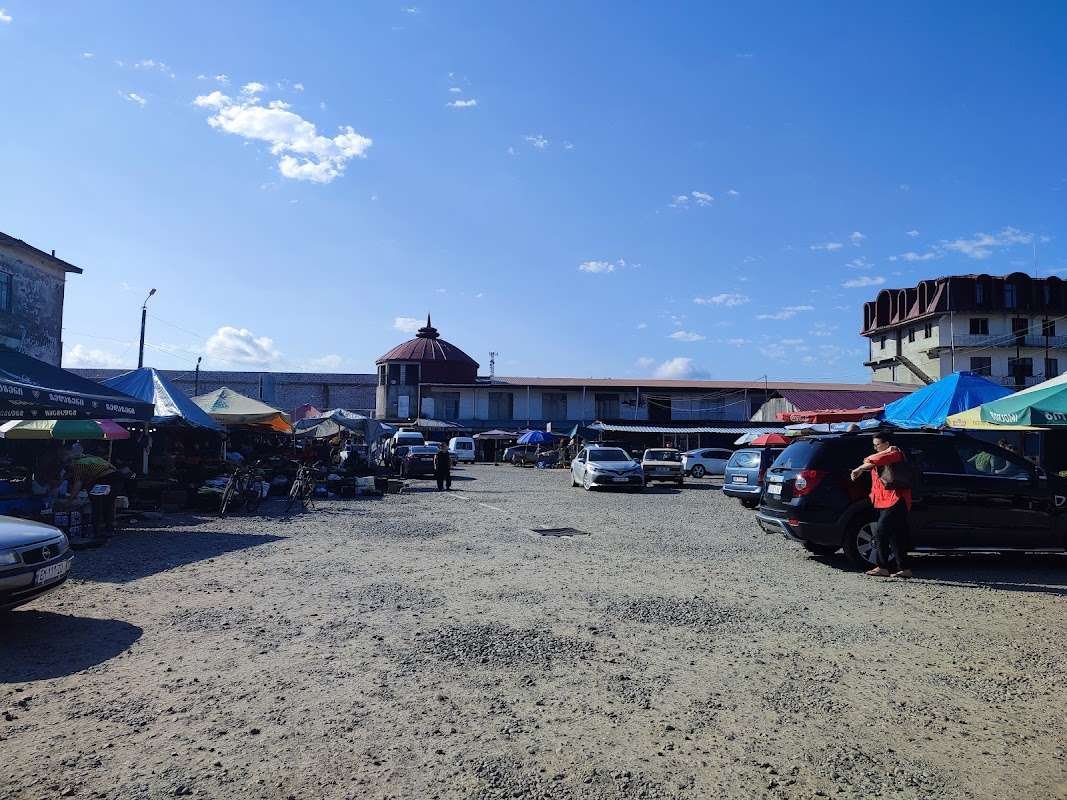
The market is at 19 Tavisuflebis Street, in the central part of town. It is a few minutes on foot from the central fountain and the main square, and not far from the Kobuleti railway station. If you stay in the southern part of the resort or in Tsikhisdziri, it is easiest to take a taxi or any minibus going to the centre.
From Batumi, people come by the Batumi to Kobuleti minibus: ask the driver to drop you at the bazaar, everyone knows the stop. If you come by car, you can park on the market grounds and pay 50 tetri at the exit.
The market covers a whole block. The food rows sell fruit, vegetables, cheese, meat, fish, spices, honey, wine and chacha. Along the edges are the clothes rows: clothing, shoes, dishes and household goods, even building materials. So if you are looking for a clothes market in Kobuleti, it is the same market, just different rows.
⏰ Kobuleti market opening hours
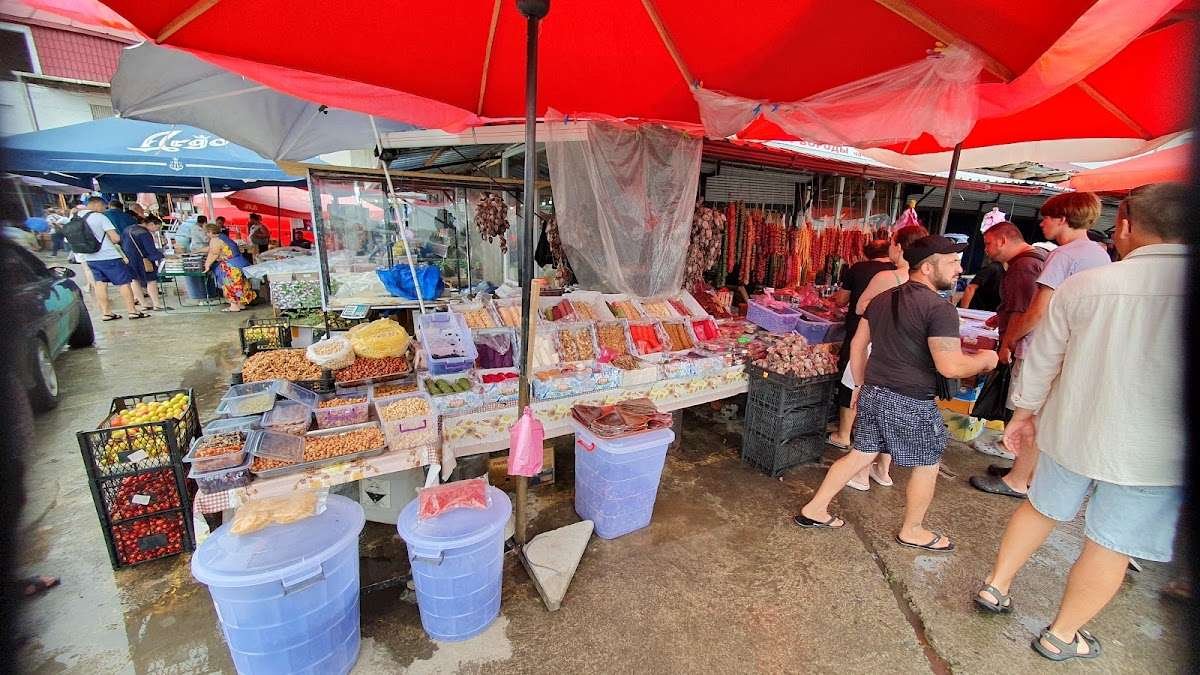
The market is open every day, but life here follows the sun. Sellers set up early in the morning, trading is liveliest from morning to midday, and shoppers peak at around 1 p.m. Towards evening the farmers who come in from the villages head home and the counters empty out. Shops and kiosks around the edge of the market stay open into the evening.
The practical takeaway is simple: for fresh fruit, herbs and fish, come before noon. If you only need cheese, spices or souvenirs, you can come later, because those stalls stay open longer. On Sundays and big church holidays some sellers do not show up, so the choice can be smaller.
🛒 What to buy at the Kobuleti market
Kobuleti is in the subtropics, and you see it at the market straight away: citrus, feijoa, kiwi and persimmon are local here, not imported. Here is what is worth picking up.
Cheese. Adjaran sulguni, smoked sulguni and imeruli. Smoked cheese survives a journey better, so it is the one people most often take home. Look separately for Adjaran chechili, the braided cheese: it is sold by weight and in bundles. If you want to explore the local cheese cuisine, our article on traditional Adjaran dishes will help.
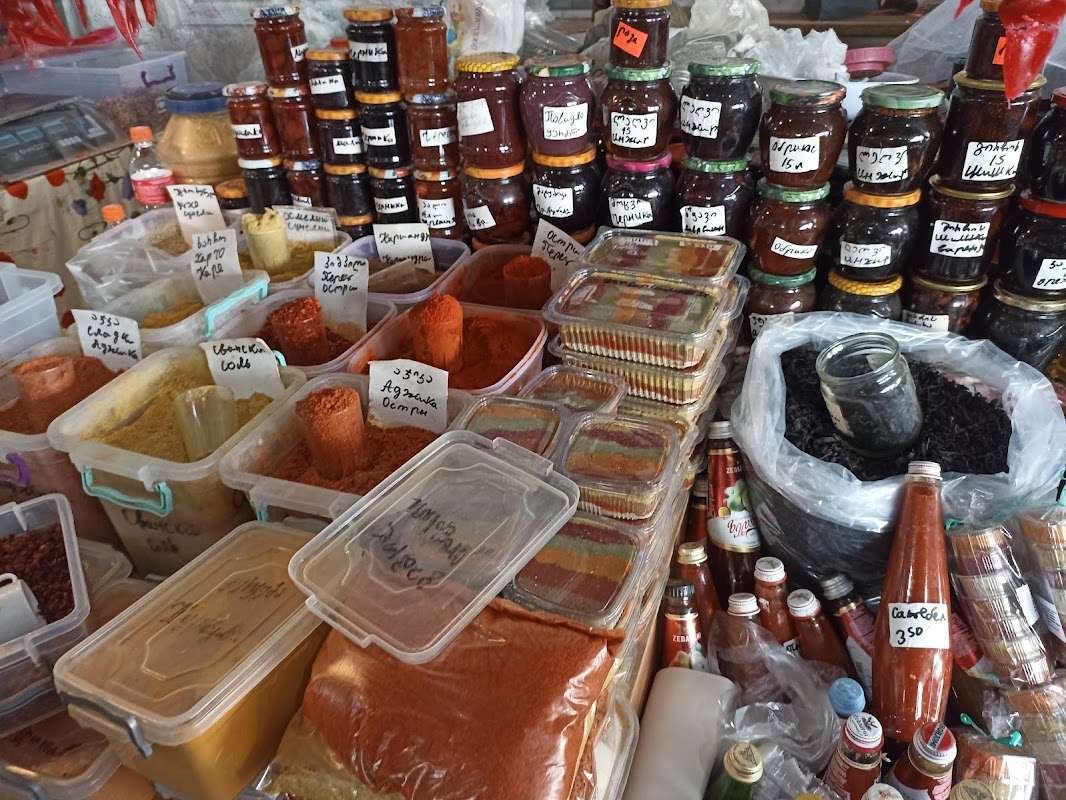
Spices. At the Kobuleti market they are ground and mixed in front of you and packed in bags of whatever size you need. Good choices are khmeli-suneli, utskho-suneli, Svan salt, dry adjika and ground red pepper. Spices are sold by the measuring cup or by weight.
Churchkhela and tklapi. Churchkhela comes with walnuts or hazelnuts, made with grape or pomegranate juice. Tklapi, the dried fruit leather in thin sheets, goes into soups and sauces, and children simply eat it as a sweet.
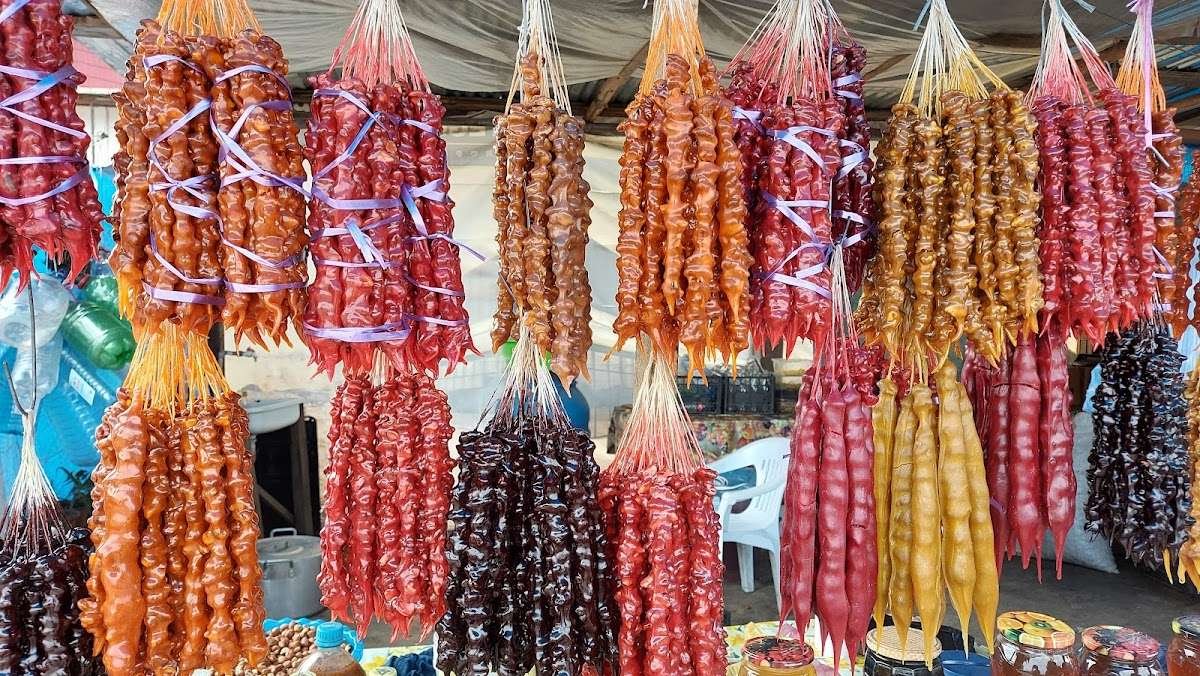
Honey and nuts. Mountain Adjaran honey, hazelnuts (Adjara grows them in large quantities), and walnuts both shelled and in the shell.
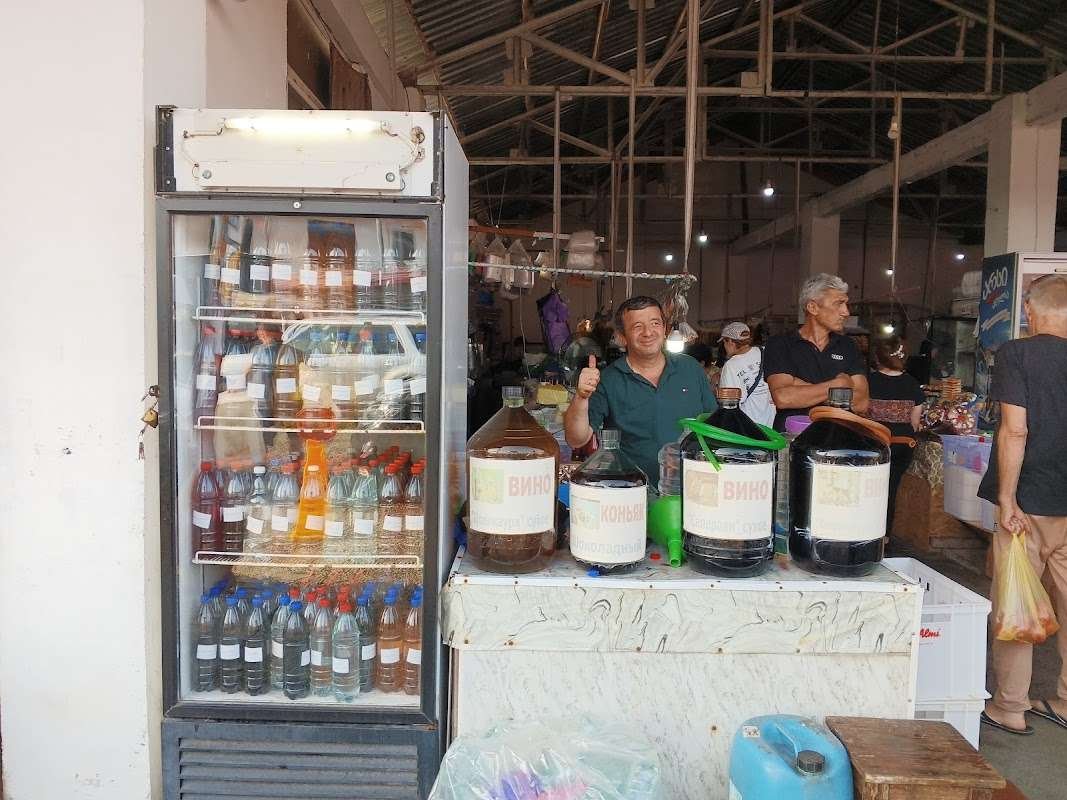
Wine and chacha. Homemade wine is poured from the barrel into plastic bottles, and chacha is sold the same way. Ask to taste before you buy.
Meat and fish. The meat rows answer the question of where to buy meat in Kobuleti: supermarkets carry almost no fresh meat. The fish is from the Black Sea, and the selection depends on the catch and the season. If you want fish already cooked rather than raw, there are fish restaurants, for example Kobuleti Fish.
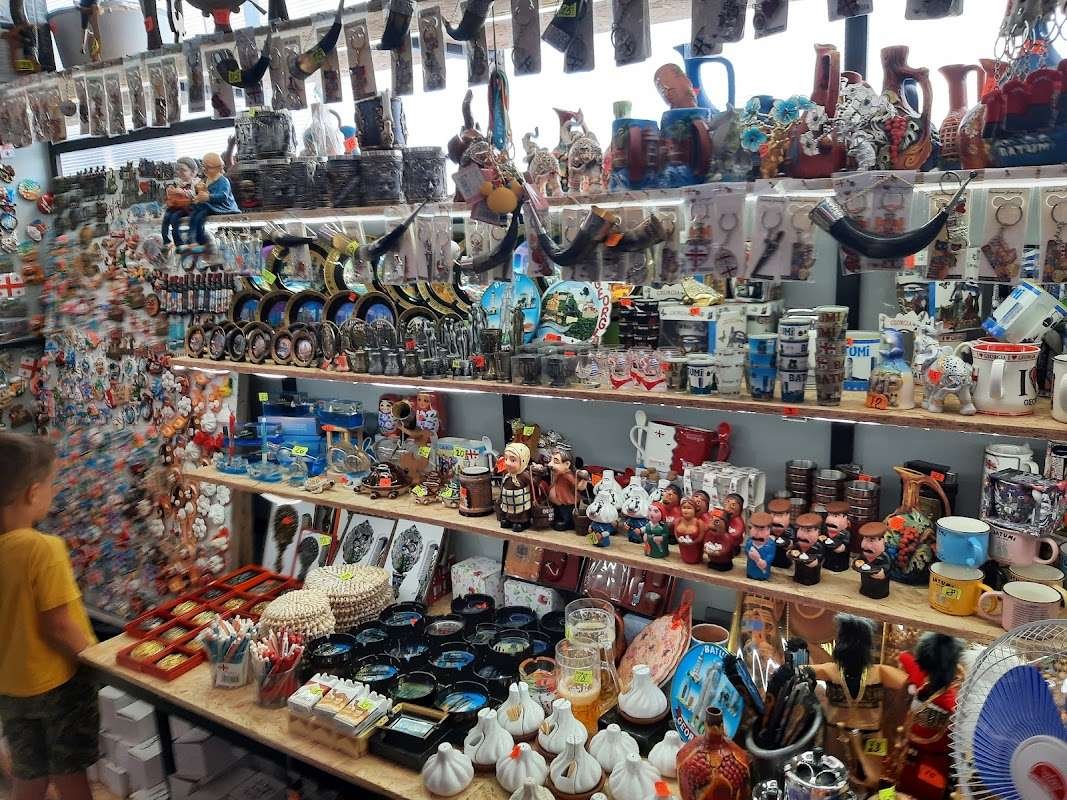
Souvenirs. Magnets, clay dishes, wine horns, knitted socks and handicrafts. The selection is more modest than in Batumi, but the prices are lower.
💰 Kobuleti market prices in autumn 2026
We have put together approximate prices from Adjara's markets. At the Kobuleti market they are about the same as in town, but the selection is wider. Local seasonal fruit is cheaper, imported fruit costs more.
| Item | Unit | Price, GEL |
|---|---|---|
| Autumn seasonal fruit | ||
| Local mandarins | 1 kg | 2–4 |
| Feijoa | 1 kg | 3–5 |
| Persimmon | 1 kg | 3–5 |
| Kiwi | 1 kg | 5–7 |
| Grapes | 1 kg | 4–7 |
| Pomegranates | 1 kg | from 8 |
| Cheese | ||
| Imeruli | 1 kg | 18–25 |
| Sulguni, including smoked | 1 kg | 22–30 |
| Sweets, spices, drinks | ||
| Churchkhela | 1 piece | 3–6 |
| Spices, blends | measuring cup | 2–5 |
| Honey | 1 kg | 25–35 |
| Hazelnuts in the shell | 1 kg | from 4 |
| Homemade wine | 1 l | 10–15 |
| Homemade chacha | 1 l | 15–20 |
To get a sense of scale: for 50 lari you can carry away a bag of seasonal fruit, a kilo of cheese, a few pieces of churchkhela and a set of spices. More examples of what different amounts buy are collected in the article what you can buy for 10, 50 and 100 lari in Georgia, and supermarket prices for comparison are in our piece on food prices in Georgia.
🍊 Seasonal calendar: what to buy in Adjara and when
The main rule at the Kobuleti market is to buy what grows here right now. That produce is cheaper, fresher and almost always tastier.
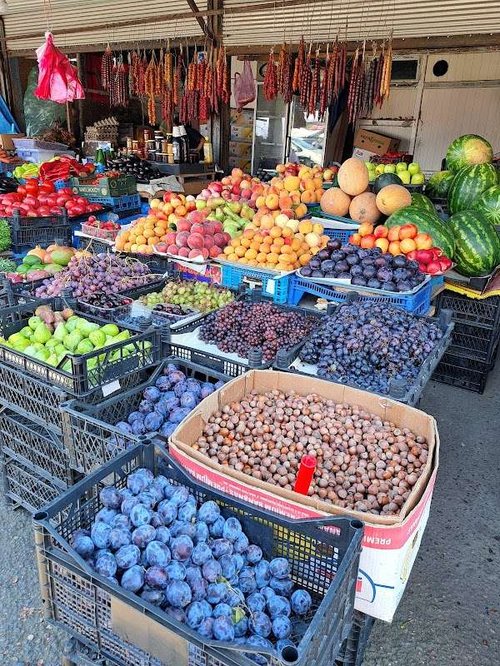
The mandarin season in Adjara starts in November and runs all winter. At that time mandarins are sold by the crate, and it is easy to agree on a discount for a larger quantity. In autumn, look at feijoa: in Russia and Europe it is an expensive exotic, but here it grows in almost every yard.
🤝 How not to overpay at the Kobuleti market
The Kobuleti market is calm, there are fewer tourists than in Batumi, and prices are usually not inflated. A few habits still save money.
Walk all the rows before you buy. The same cheese or honey can have a different price at neighbouring stalls, and you only see the quality when you compare.
Taste first. Cheese, churchkhela, honey, wine and chacha are given for tasting without any fuss. If a seller refuses, that is already a reason to move on.
Bargain on quantity. Haggling over a single peach is not done here, but for a crate of mandarins, a few kilos of cheese or five pieces of churchkhela sellers usually offer a discount themselves.
Watch the scales. Ask for the item to be weighed in front of you and the weight called out, especially for expensive goods such as cheese, honey and nuts.
Carry cash in lari. Not everyone takes cards. There is a currency exchange on the market grounds, and its rate is better than at many exchange points in town.
Buy cheese and spices for the journey on your last day, and if the seller can vacuum-pack them, ask for it. Smoked sulguni and dry spices will easily survive a flight in checked luggage, while fresh imeruli is better eaten on the spot.
🏪 Where else to buy food in Kobuleti
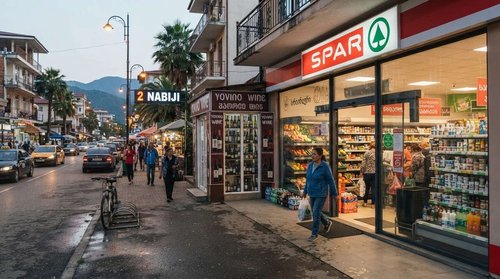
If the market is far away or already closed, basic groceries are available in the supermarket chains. For example, 2 Nabiji on Tavisuflebis Street is on the same street as the market, and Spar on Memed Abashidze Street is handy if you stay closer to the sea. Bottled wine with clear labelling is sold in wine shops, for example Yovino. The full list of the town's shops is in the section shops in Kobuleti.
Fruit and cheese in supermarkets usually cost more than at the market, and the fruit is often from Turkey. For seasonal produce, the market is still the better choice.
Have you been to the Kobuleti market this autumn? Tell us in the comments how much you paid for mandarins, cheese or churchkhela: fresh prices from readers help us keep this article accurate.
Last updated: October 2026. We check prices and seasonality twice a year, in spring and autumn.
❓ Kobuleti market FAQ
💬 At 19 Tavisuflebis Street, in the town centre, a few minutes on foot from the central fountain and the main square.
💬 Main trading starts early in the morning and lasts until midday, and by evening the farmers leave. Kiosks and shops around the edge of the market stay open into the evening.
💬 Yes, the market is open every day. On Sundays and church holidays some sellers do not come, so the selection can be smaller.
💬 No, it is the same market on Tavisuflebis Street. Locals call it the central market, the agrarian market or simply the bazaar.
💬 Only some sellers accept cards. It is better to bring cash in lari, and there is a currency exchange on the market grounds.
💬 At the market, in the meat rows. Supermarkets carry little fresh meat, mostly frozen products and semi-prepared food.
💬 Yes, Black Sea fish is sold there. The selection depends on the catch and the season, so it is best to come in the morning.
💬 Smoked sulguni, freshly ground spices, churchkhela, tklapi, Adjaran honey and hazelnuts. All of them travel well.
💬 From November through the whole winter. At that time local mandarins are at their cheapest and are sold by the crate.
💬 Yes, the clothes rows sell clothing, shoes, dishes and household goods. Kobuleti has no separate clothes market.

0 comments
Log in to leave a comment