




Lomisa: an Ancient Shrine in the Mountains of Georgia
The Church of St. George in Lomisa (7th-9th centuries) and its chapel are located on the watershed ridge of the Ksani and Aragvi rivers.
The structure is a simple three-church basilica. The remains of buildings of various purposes remain around the church. During pagan times, Lomisa (the name refers to the bull, whose cult was likened to the cult of the moon—the bull's horns and crescent moon) was the main religious temple for rulers. A Christian church was later built on the site of the pagan temple. Lomisa served as the main temple for the population of Mtiuleti and the Ksani Gorge. Political and legal matters were resolved here at the council of elders.
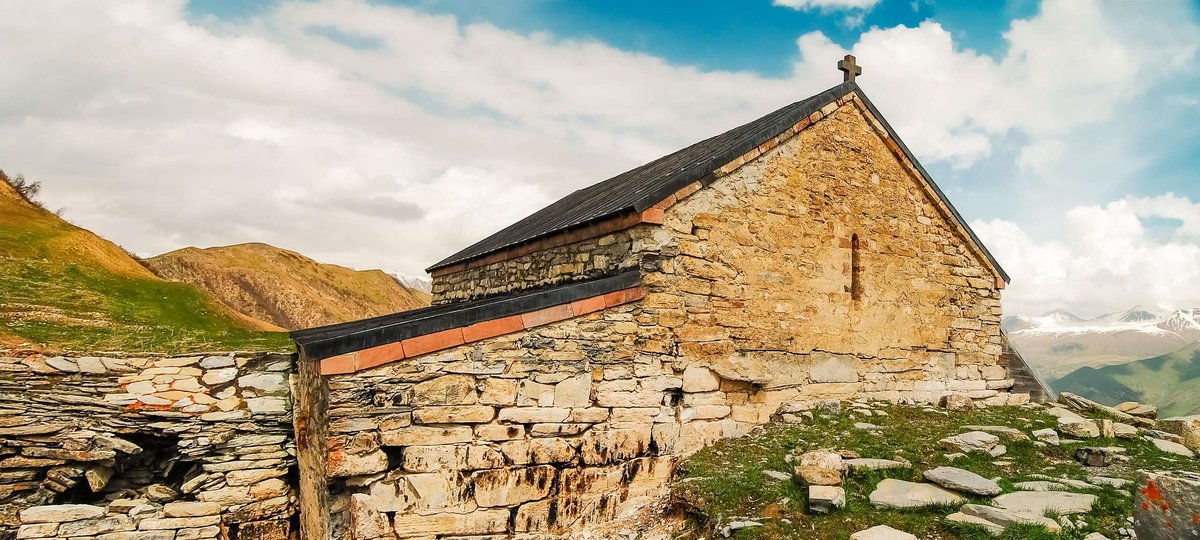
The feast of the Lomisoba Temple is held seven weeks after Easter. Pilgrims from all over eastern Georgia gather in the village of Mleta. Clergymen carry banners and, singing the song "Perkhisa," lift them to a high mountain, where a sacrificial feast is held. Before the icon of St. George Lomisa, people pray for the continuation of the family line, the restoration of sight to the blind, and a bountiful harvest. Lomisa is venerated as a cross attached to a handle, with spheres (a solar symbol) attached to all four ends. According to legend, Lomisa is a warrior seated on a fiery horse, wielding a whip, with the swing of which he eradicates evil. The cult of Lomisa was widespread in Georgia as early as the Bronze Age. During the Christian era, this cult was associated with St. George.

43 comments
Log in to leave a comment
After my visit, I found myself thinking about the spirituality of the place-was it really a hub for ancient rituals, or just a scenic pit stop for weary travellers? It left me with more questions than answers.
Has anyone else felt a strange connection to a place like this?