




Sioni Cathedral and Kashveti Church in Tbilisi
The Dormition Cathedral of the Blessed Virgin Mary (Sioni) was built at the turn of the 6th and 7th centuries. It is the main Christian church in Tbilisi. Due to the destructive raids of conquerors, the cathedral underwent numerous modifications.
In 1226, the Khorezmshah Jalaluddin, having conquered Tbilisi, ordered the dome of Sioni to be removed and his throne installed in the cathedral. From his throne, he watched over those Georgians who had not desecrated the icons of the Savior and the Virgin Mary, which had been removed from the cathedral and placed on the Metekhi Bridge. That day, 100,000 Christians were beheaded. In 1522, the Sioni Cathedral was sacked by the Iranian Shah Ismail.
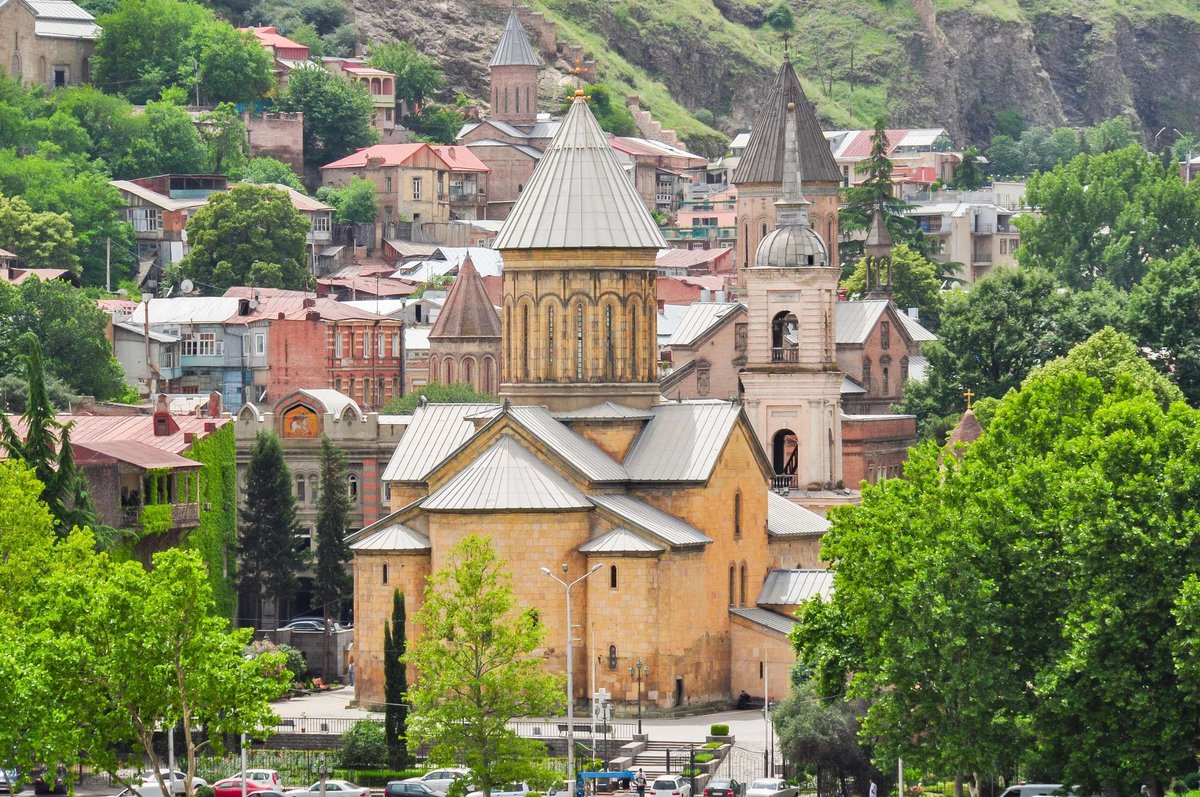
In 1675, Bishop Elisse Saginashvili, by order of King Rostock, added a small chapel to the southern part of the cathedral and covered the Sioni with a new dome. In 1710, Vakhtang VI faced the Sioni building with Bolnisi tuff. It was during this restoration that the carved ornaments that adorn the cathedral to this day were carved into its walls.
During the Russian rule, the Sioni underwent further changes. In the 1850s, Grigory Gagarin redid the frescoes. In 1867, the cathedral was again renovated. The last restoration work on the cathedral was carried out in 1983. The Church of St. Michael the Archangel was established in the southern annex, and the Church of Vakhtang Gorgasali in the northern annex. A new cross was installed on the dome.
The Sioni Cathedral has two bell towers. The bell tower, located inside the fence at the northern part of the cathedral, dates back to 1725, and the three-tiered bell tower located at the western part of the cathedral, on the other side of the street, was erected in 1812.
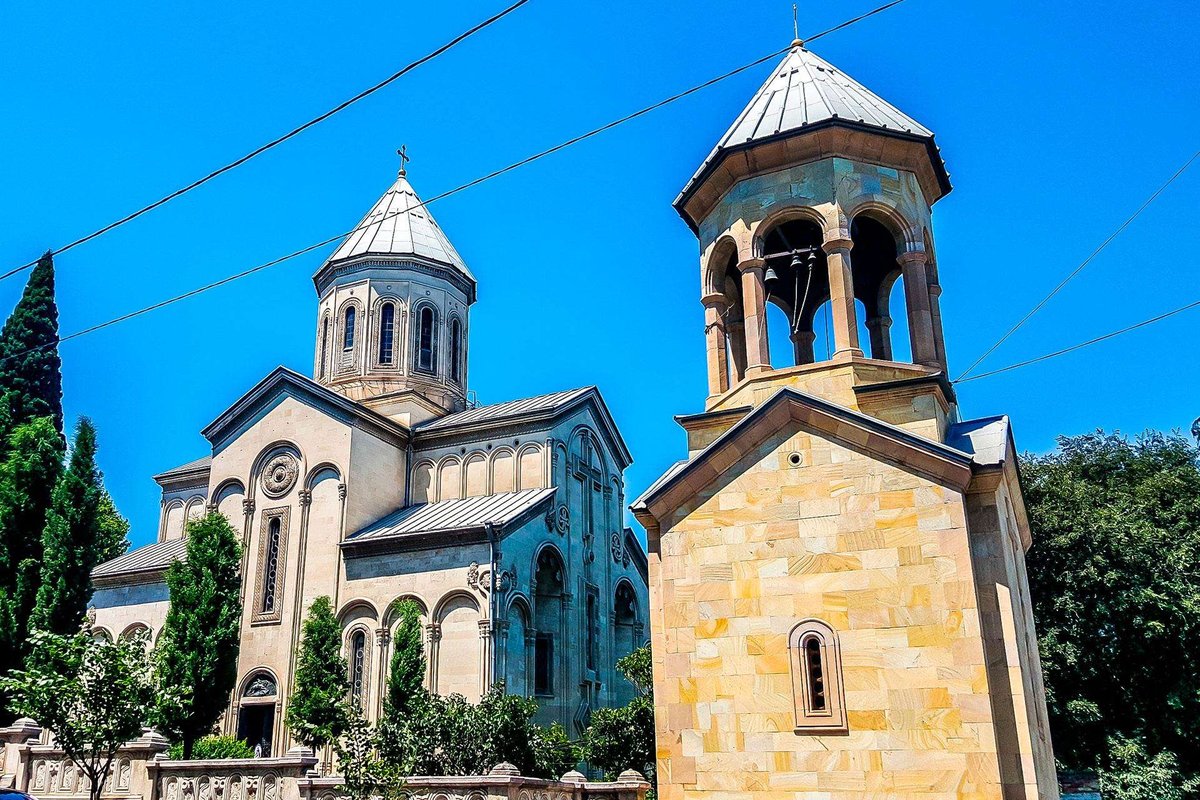
The Kashveti Church was originally a small chapel built by Father David Gareja. In 1753, due to damage, the cathedral was rebuilt a second time using bricks by Givi Amilakhvari, commander of the Shida Kartli military district (sadrosho). An inscription preserved on the left wall of the lower cathedral portal attests to this construction. Construction of the current Kashveti Church began on November 12, 1904. The architects were L.P. Bielfeld, E.L. Andreoletti, and the Agladze brothers. David Sarajishvili financed the construction primarily.
The current Kashveti Church is based on the design of the Samtavisi Cathedral. Its architectural peculiarity lies in the unconventional placement of the iconostasis: to leave more space for the clergy than for the congregation, the iconostasis is located not between the front columns, but behind them. Algeti stone, white Dzageti stone, and Italian marble were used in the construction. The cathedral is not overloaded with carved decorations. The carved ornaments echo those found in various Georgian churches and blend harmoniously with one another. The cathedral's altar is painted by the renowned Georgian artist Lado Gudiashvili.

35 comments
Log in to leave a comment