



🏔️ Monument to Vazha Pshavela in Kutaisi: the poet of the mountains and myths of Georgia
📋 What You Need to Know Before Your Visit
| 📍 Location | Vazha-Pshavela Street, Kutaisi |
| 🕐 Access | Open 24/7, free to visit |
| ✒️ Who Is Depicted | Vazha-Pshavela (born Luka Razikashvili, 1861–1915), poet and prose writer |
| ⚠️ Not to Be Confused With | the Tbilisi monument to Vazha-Pshavela — these are two different monuments |
| 📖 Birthplace | Chargali village, Pshavi region — home to his house museum |
🧭 What This Article Is About
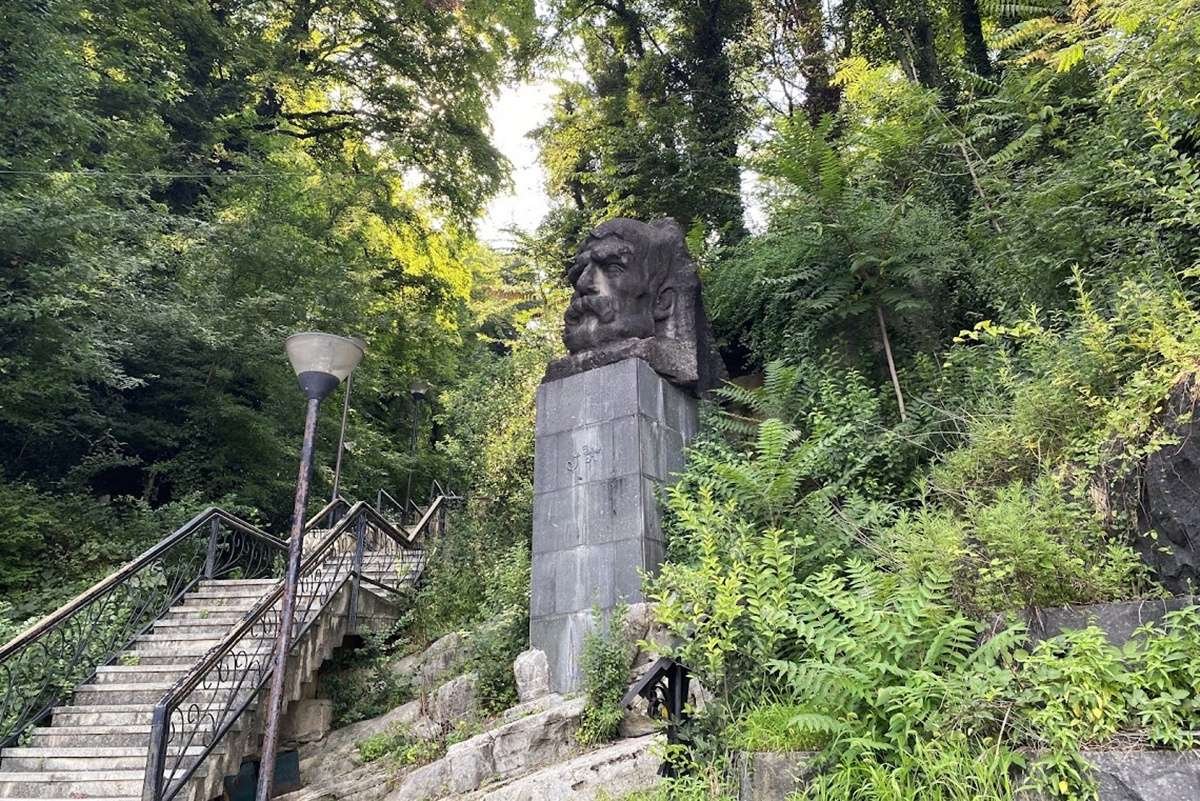
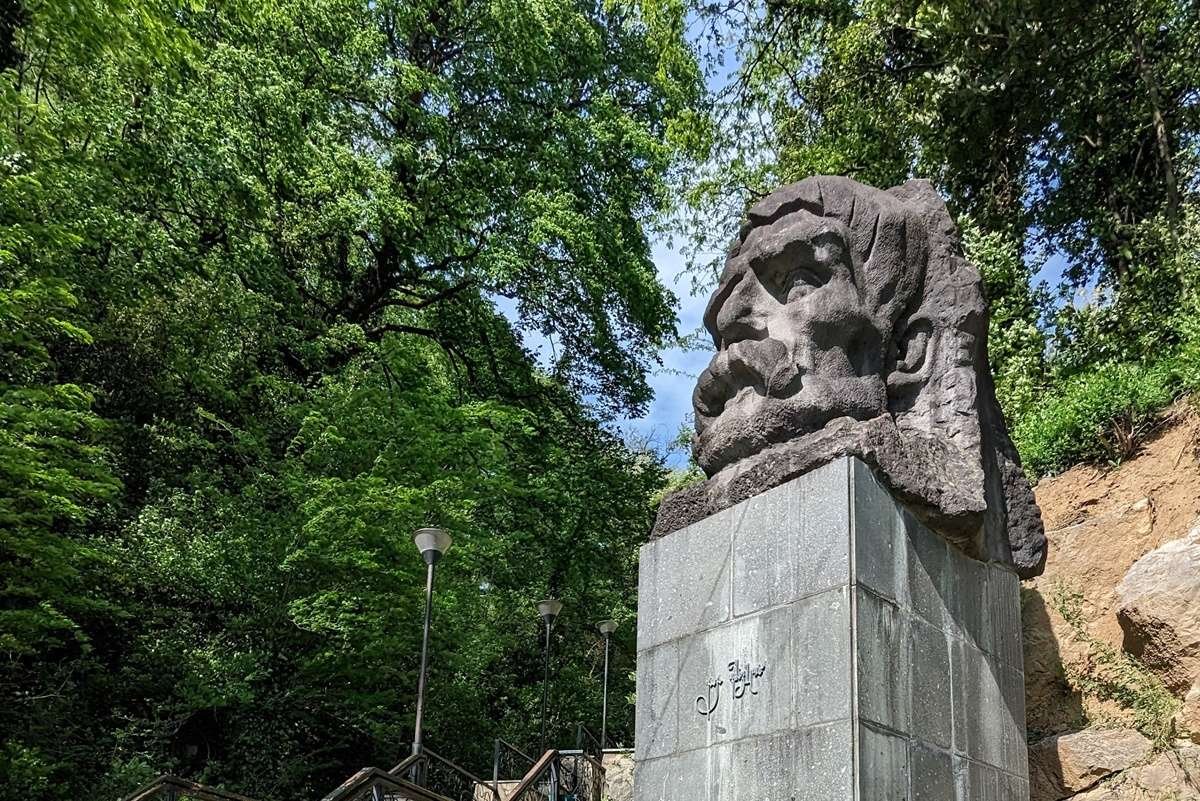
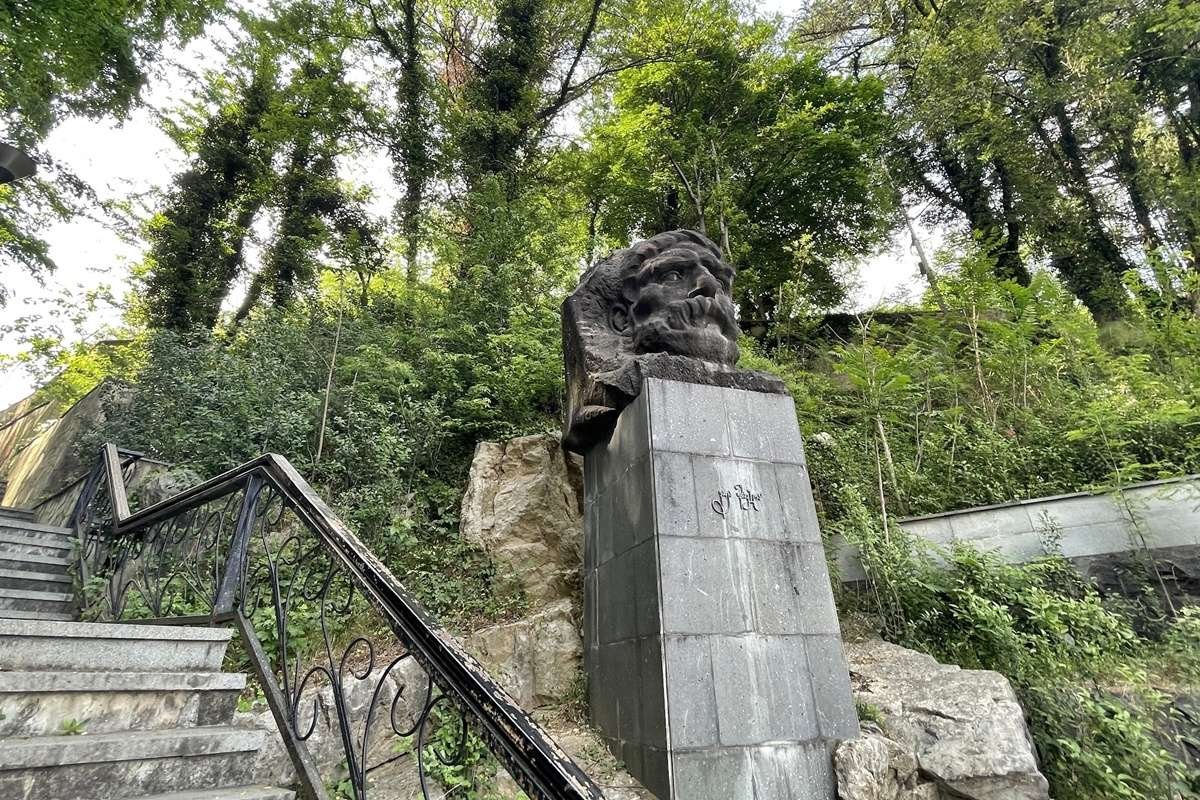
Kutaisi is home to a monument dedicated to Vazha-Pshavela, one of Georgia's greatest poets, whose works were deeply inspired by the mountain folklore of Pshavi. This article is for anyone who has seen the monument and wants to learn who he was—while also avoiding confusion with the monument of the same poet in Tbilisi.
🧱 History in a nutshell
Vazha Pshavela is the pen name of poet and novelist Luka Razikashvili: "vazha" translates as "brave man, warrior," and "pshavela" refers to his homeland, the mountainous region of Pshavi. He grew up in a family of farmers, spent part of his life plowing the land and herding livestock, and in the evenings wrote poems and verses rooted in mountain folklore and mythology. Today, he is recognized as one of the pinnacles of 19th-century Georgian literature, and monuments to him stand in several Georgian cities, including Kutaisi and Tbilisi.
🏔️ From Pshavi to Great Literature
Luka Razikashvili was born on July 14 (July 27, new style), 1861, in the village of Chargali, the son of a self-taught village priest, Pavle Razikashvili, and his mother, Barbale (Gulkan) Pkhikelashvili. He grew up in his native village until the age of eight; his two brothers, Bachana and Tedo, also became renowned writers.
He received his education in several places:
- Telavi Theological School, a two-year civil school affiliated with the Tiflis Teachers' Institute (1877–1879).
- Gori Teachers' Seminary, from which he graduated in 1882.
- From 1883–1884, he studied law at St. Petersburg University as an auditor.
The first publication, “Letter from Khevsureti,” was published in 1879, and the first poem, “Warrior,” was published in 1881.
💡 Editor's Tip
If you'd like to learn more about the poet after visiting the monument in Kutaisi, the Vazha-Pshavela House Museum in the village of Chargali is a much more rewarding destination. It preserves his personal desk and chair, the bag he used to carry manuscripts to the editorial office of the newspaper "Iveria", and graphic works dedicated to his life and legacy. We also have a separate article about the museum.
🕯️A confession that came in pieces
Vazha Pshavela died on July 27 (August 8, new style), 1915, in Tbilisi, in a hospital, weakened by hard life and poverty. According to legend, before his death, he asked for freshly cut grass and water from a mountain spring—a detail that speaks volumes about his native mountains. He is buried in the Mtatsminda Pantheon.
True recognition came posthumously: in 1961, by decision of the World Peace Council, the entire world celebrated the 100th anniversary of his birth. That same year, a house-museum dedicated to him opened in Chargali. Today, his works have been translated into Russian (translators include V. Derzhavin and N. Zabolotsky), and monuments to him stand in several Georgian cities.
🌍 Discover nearby places


ℹ️ Precise information about the sculptor and the installation date of the Kutaisi monument was not available in open sources at the time of publication. If such information is available, it should be added. Do not confuse this monument with the Vazha Pshavela monument in Tbilisi, designed by sculptor G. Ochiauri and located on the avenue named after him—they are two different objects.
💬 Tell Us
Had you read the works of Vazha-Pshavela before seeing the monument? Share in the comments which of his works impressed you the most.
💡 What's worth remembering
Vazha Pshavela never visited Kutaisi, but his monument here is part of a larger picture: the city honors Georgia's national literary heroes, not just those who were personally connected to it.
🧡 Read More About Kutaisi
- 🏛️ Vazha-Pshavela House Museum: The Life and Work of the Poet
- 🏛️ Solomon II Palace in Kutaisi: The Residence of the Last King of Imereti
- 🏛️ Royal Residences of Imereti: Geguti Palace and Solomon II Palace
💾 Save this article so you can return to it before your trip to Kutaisi.
❓ Frequently asked questions about the Vazha Pshavela monument
💬 The pen name of poet and novelist Luka Razikashvili (1861–1915), one of the greatest Georgian writers of the 19th century, whose work grew out of the folklore of the mountainous Pshavi region.
💬 No, he had no direct connection to the city—he lived in his native village of Chargali and in Tbilisi. The monument in Kutaisi is the city's tribute to the national poet.
💬 No, they are two different monuments. The monument stands on Vazha Pshavela Avenue in Tbilisi; its author is sculptor G. Ochiauri.
💬 Chavchavadze considered him a genius, increased his salary for publications in the Iveria newspaper, and then paid him a monthly salary to support the poet in need.
💬 In his native village of Chargali, where he spent his childhood and returned to live in 1888. The museum opened in 1961, on the poet's 100th birthday.

1 comment
Log in to leave a comment