




🏰 The Dormition Church at Itria: What Stands in Surami and How the Monastery Changed
🏰 Itria Monastery: The Essentials
A working monastery in the town of Surami, Khashuri Municipality, on the site of the former village of Itria. The main church is dedicated to the Dormition of the Virgin and dates to the sixteenth century. The house has operated since 1997, and in that time it has been a convent of nuns and, since 2017, a monastery of monks.
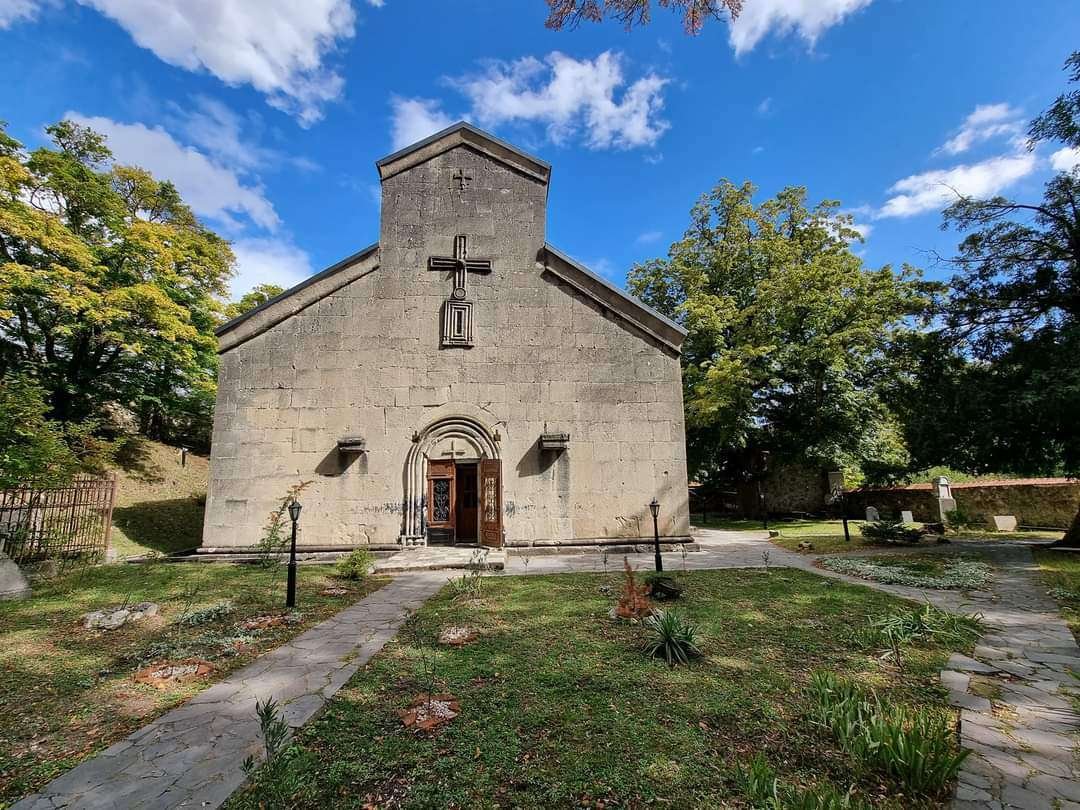
Itria Monastery is a monastic complex in the town of Surami, Khashuri Municipality, standing on the site of the former village of Itria. That is where the name comes from.
The place is known mainly to locals and pilgrims, and the Georgian-language internet searches for it considerably harder than any other. Yet the site still has no clear description anywhere, even though a detailed one has existed since 1889.
📖 How Takaishvili Described the Monastery
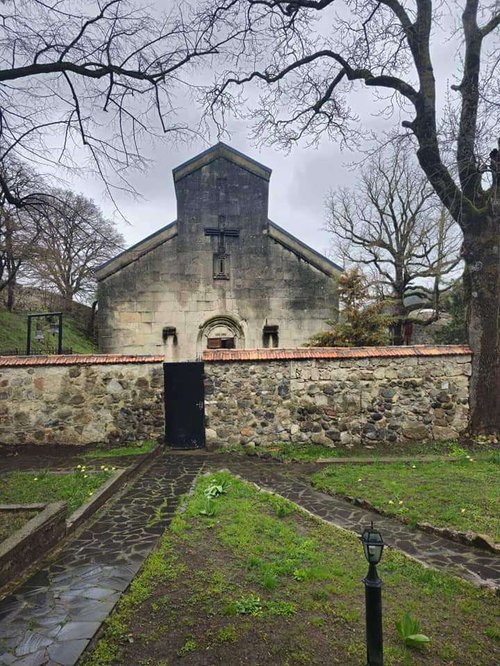
In the summer of 1889 the historian Ekvtime Takaishvili came to Surami and visited Itria Monastery. A year later, in 1890, his book Three Historical Chronicles appeared, describing the complex at length.
For a small monastery that is a rare piece of luck. Takaishvili worked in an era when much of what he saw was later rebuilt or lost, and his descriptions are often the only evidence of how a site looked at the end of the nineteenth century.
That fact alone explains why the monastery is worth attention. Not for its size or its splendour, but because it has a documented biography.
⛪ What the Church Is Like
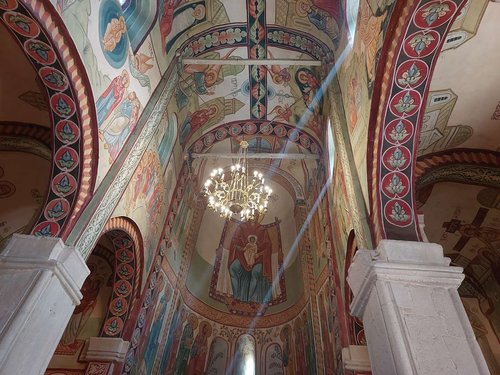
The main church is dedicated to the Dormition of the Virgin and dated to the sixteenth century, or more broadly to the late feudal period.
Sources note one particular quality of its appearance: the monastery is not overloaded with ornament. The treatment of windows, doors and walls is restrained, working towards the coherence of the building rather than competing with it. For Georgian church architecture, where carving is usually generous, that stands out.
There is also a local tradition. It holds that the church was originally much larger and, before the motor road was laid, occupied almost the whole of what is now the carriageway. This cannot be verified, so it stays here as a story rather than a fact.
🔄 Why the Community Changed
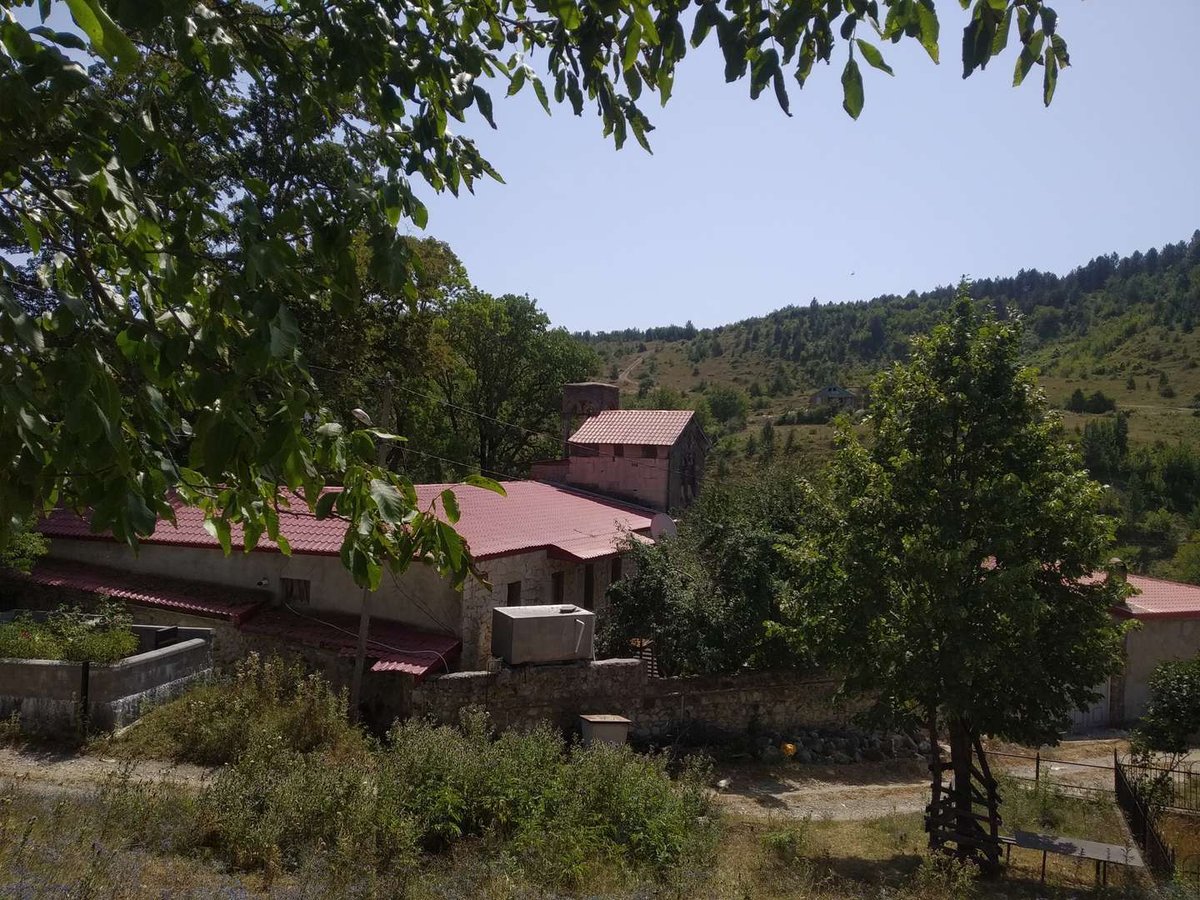
This is the most unusual thing in its biography, and it is worth explaining what happened.
From 1997, when the house was revived, a community of nuns lived here: the Itria Monastery of the Dormition of the Virgin. In 2017 it became a monastery of monks.
No reasons are given in open sources; decisions of this kind are taken at diocesan and Patriarchate level and are rarely commented on publicly. Usually something practical lies behind them: a shrinking sisterhood, a need to house brethren, a redistribution within the diocese.
For a visitor the difference is real. The rhythm changes, the manner of dealing with people who turn up changes, and any description or photograph online made before 2017 belongs to a different community. If you read an older review that talks about the sisters, that is not the writer's error, only the site's earlier state.
🏗️ The Find of 1997
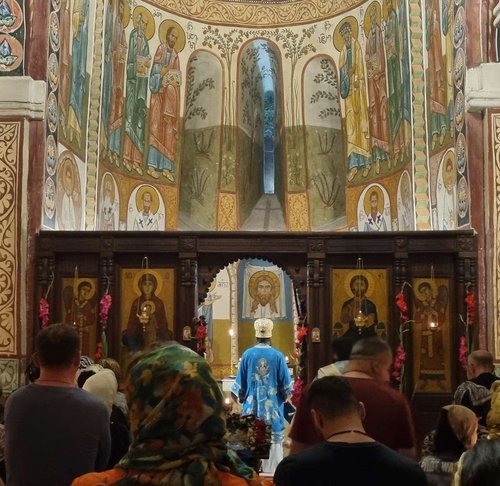
One detail that surfaced during restoration deserves separate mention.
In the sanctuary they uncovered the altar stone, the base on which the liturgy is served. For a building that stood through the Soviet decades without services, finding the original altar stone confirms the continuity of the place: the church was restored on what had been there from the beginning, not on a new foundation.
That same year the church was consecrated by Metropolitan Ioba. This is the same hierarch whose blessing later established the convent at Ortubani, in neighbouring Kareli Municipality.
🚗 Getting There and What to Expect
Surami sits on the Tbilisi to Kutaisi highway, between Khashuri and the Surami pass, so reaching it is straightforward: this is a town on one of the country's main roads, not a remote corner.
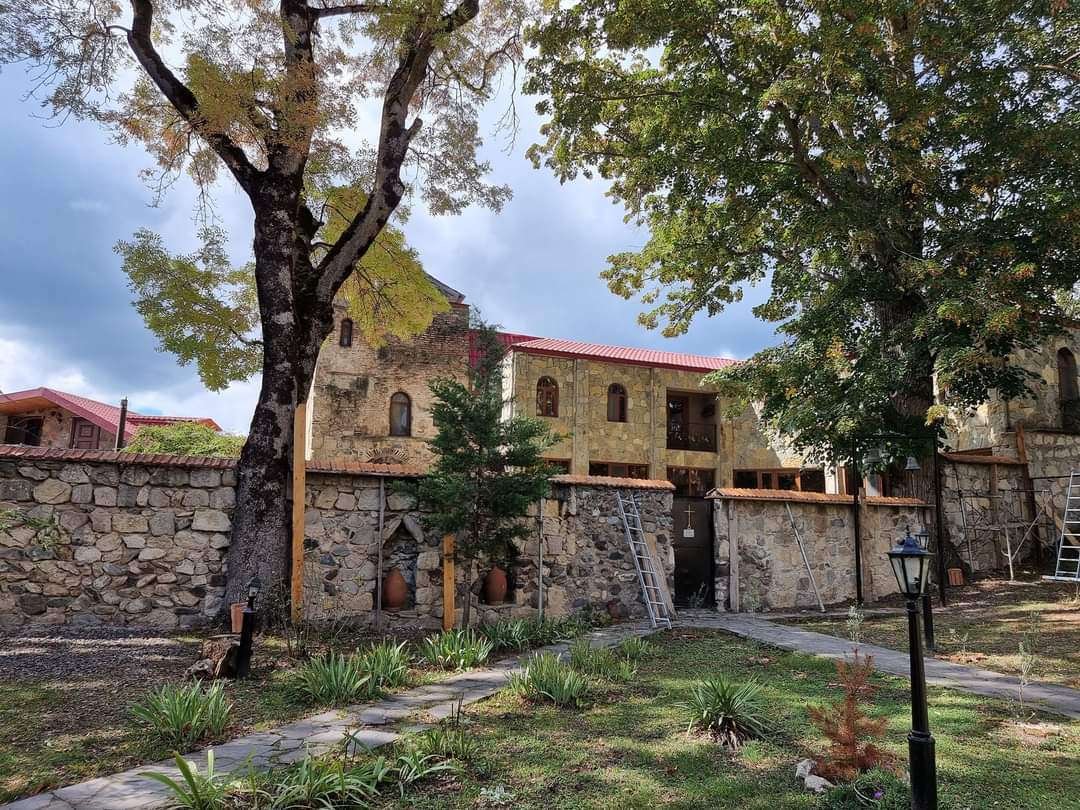
It is about two hours from Tbilisi by car. Marshrutkas and trains run to Khashuri, and Surami is a short hop from there.
The monastery stands within the town, with no mountain paths to climb, unlike most of the Shida Kartli sites we have written about.
The conventions are the usual ones for a working house: covered clothing, a headscarf for women, photography by agreement. Visiting arrangements may have shifted with the change to a community of monks, so it is worth checking locally.
🧭 Where to Stay and What Is Nearby
Surami is a spa town in its own right, known for its climate, so there is accommodation here.
Been to Itria Monastery? Leave a review on Madloba: tell us whether you got inside the church, whether anyone showed you around, and how visiting works now that the community has changed.
Information is current as of August 2026. Visiting arrangements at a working monastery change, so check conditions locally before you travel.
❓ FAQ
💬 In Georgia, Shida Kartli region, Khashuri Municipality, in the town of Surami, on the site of the former village of Itria. Surami lies on the Tbilisi to Kutaisi highway, about two hours from the capital.
💬 The Dormition of the Virgin. The building is dated to the sixteenth century, or more broadly to the late feudal period.
💬 A monastery of monks since 2017. Before that, from the revival of the house in 1997, a community of nuns lived here. If you come across an older description mentioning sisters, it refers to the period before 2017.
💬 The historian Ekvtime Takaishvili, who was in Surami in the summer of 1889. He published a full description of the complex in his book Three Historical Chronicles, which appeared in 1890.
💬 In 1997 the altar stone was uncovered in the sanctuary, the original base for the liturgy. The church was consecrated the same year by Metropolitan Ioba, and a monastic community opened.
💬 Part of it collapsed in 1960-61. It was rebuilt in 1964.
💬 The monastery is not overloaded with ornament. The treatment of windows, doors and walls is restrained and works towards the coherence of the building. For Georgian church architecture, with its generous carving, that stands out.
💬 Surami sits on the Tbilisi to Kutaisi highway, between Khashuri and the Surami pass. It is about two hours from Tbilisi by car, and marshrutkas and trains run to Khashuri. The monastery is within the town, with no climb involved.
💬 The usual ones for a working house: covered clothing, a headscarf for women, photography by agreement. Arrangements may have shifted with the change to a community of monks, so check locally.

5 comments
Log in to leave a comment