




🏰 Bebristsikhe: Where a Fortress Got Its Name and a Georgian King Died
🏰 Bebristsikhe Fortress Near Mtskheta
Ruins of a 9th-century fortress on a rocky outcrop above the Aragvi River, about 1.5 km north of central Mtskheta. The name translates as "Fortress of the Elder," and it comes with its own legend. A 2010 landslide badly damaged the site, but the remains of a tower and walls still stand, and the view over the Aragvi valley alone is worth the walk.
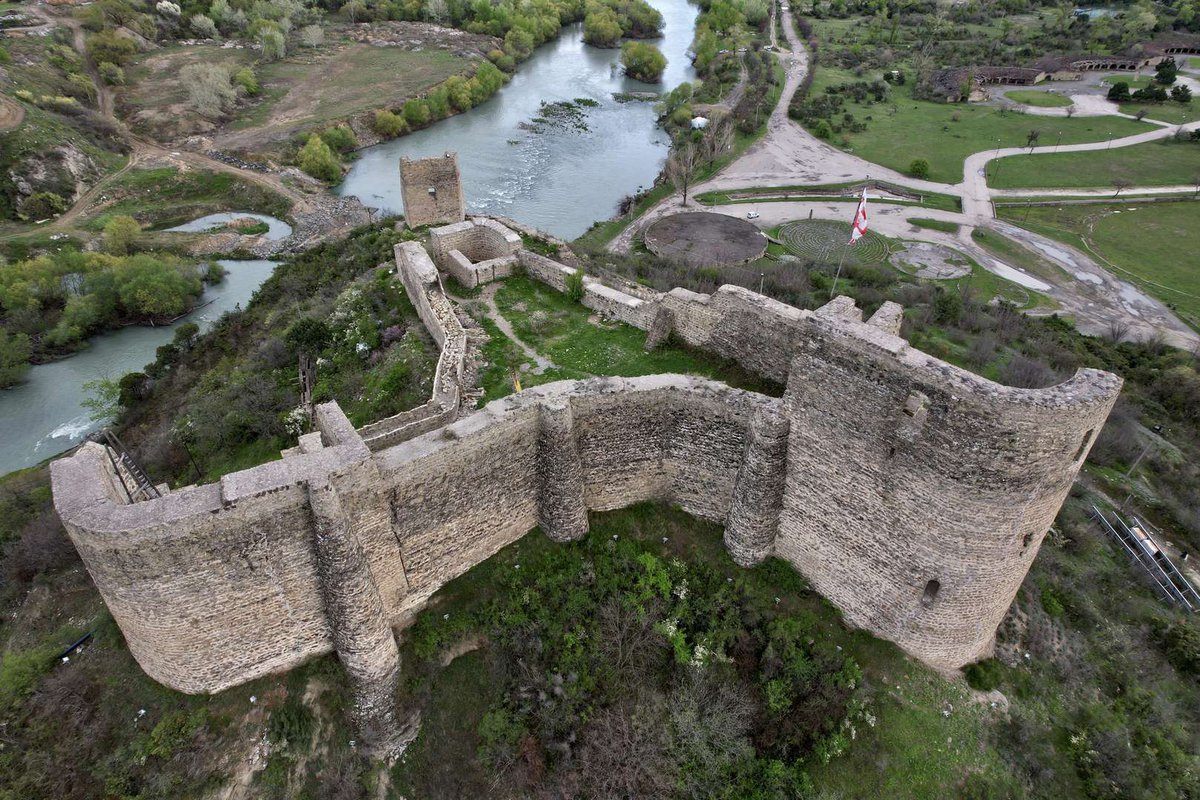
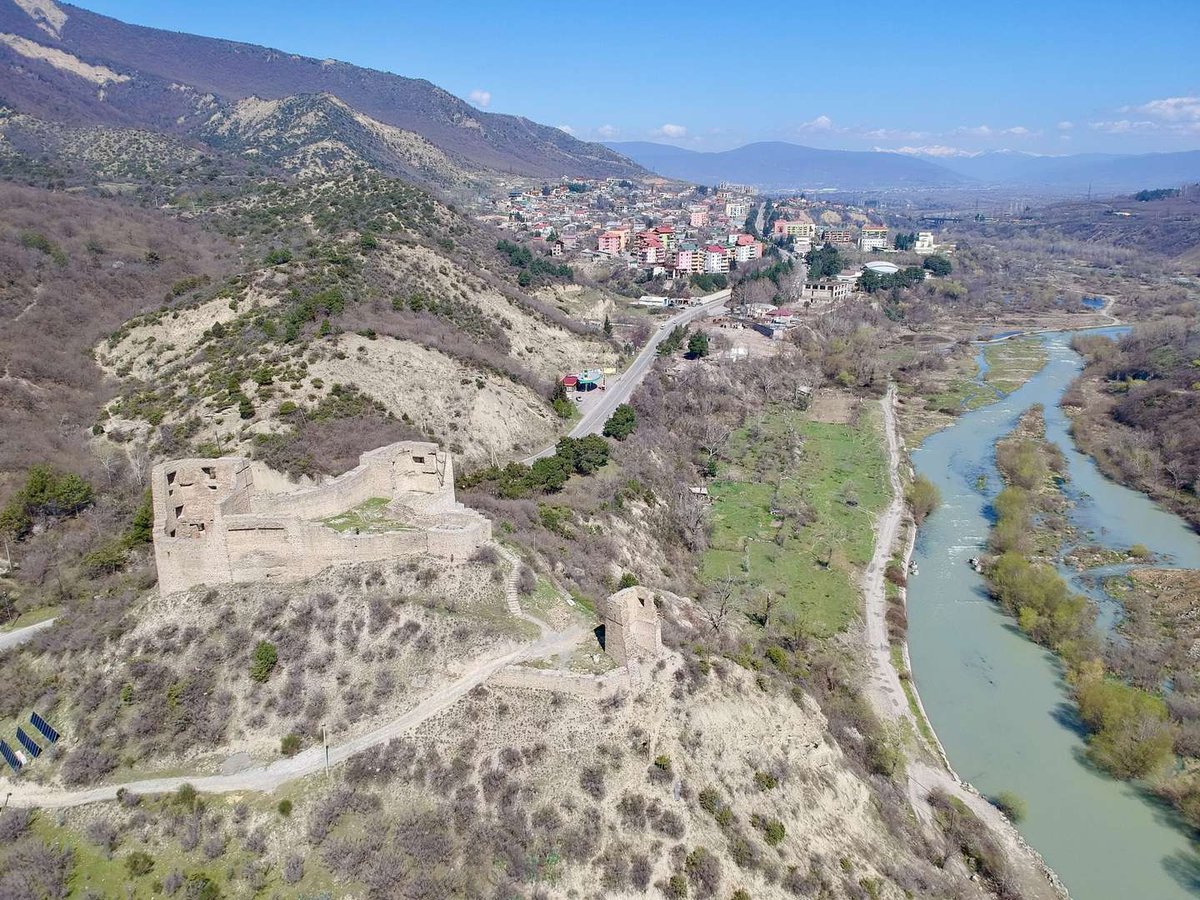
Bebristsikhe is a fortress on a steep rocky outcrop on the right bank of the Aragvi River, on the northern edge of Mtskheta, Georgia's ancient capital. The name translates as "Fortress of the Elder," and it's also known as Natsikhari, meaning "site of a fortress." Today it's a ruin, but a recognisable one: part of the citadel tower, a western wall, and fragments of other fortifications still stand.
The fortress has never been one of Mtskheta's must-see monuments, but it offers something the cathedrals in town don't: quiet, a view over the Aragvi valley, and the feel of an abandoned place that tour groups rarely reach.
📍 Where the Fortress Stands and Why Here
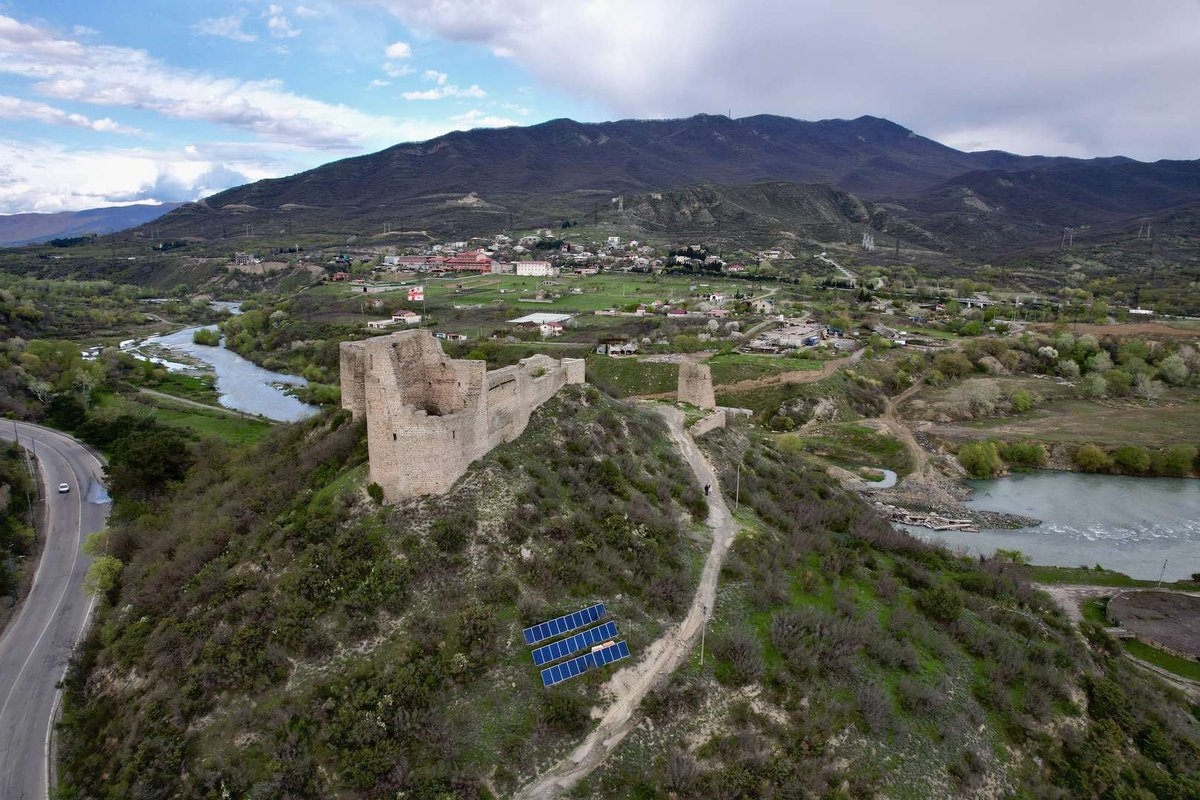
Bebristsikhe sits about 1.5 km north of central Mtskheta, on the right bank of the Aragvi, above the Georgian Military Highway. The location wasn't chosen at random: this is where the river gorge narrows and the current runs fastest, making it nearly impossible to bypass the fortress without a fight. It controlled the only practical route into the city from the north, and if a siege began, by some accounts, Mtskheta's population was evacuated to Gori.
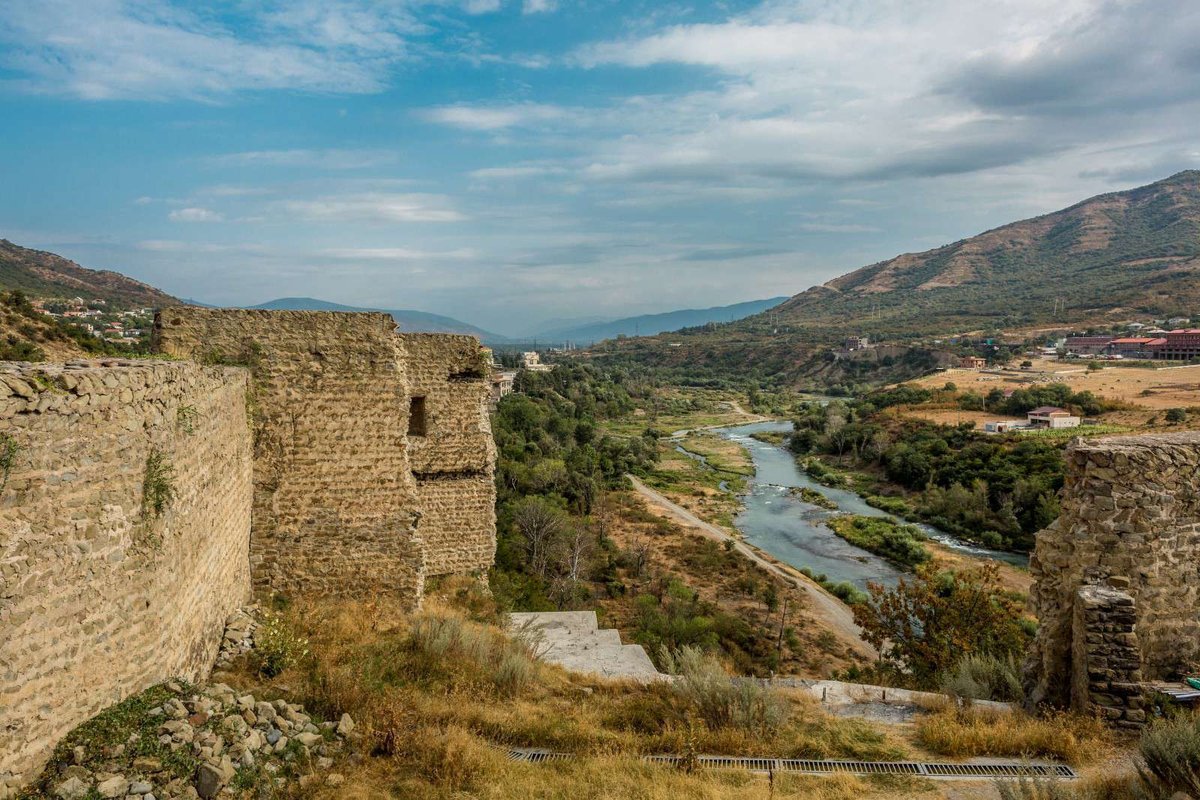
From the outcrop where the fortress stands, there's a view over the valley, the surrounding mountains, and, in clear weather, Jvari Monastery on a neighbouring peak in the distance.
📜 The Legend of the Elder
The fortress's name comes from a story still told in Mtskheta today. A certain prince, Simon, had two children, a son named Mamuka and a daughter named Makrine. By legend, Mamuka committed a grave sin and, as punishment, found himself bound by snakes. Frightened, he repented, promised to give away everything he owned, and set off to wander and beg for money to build a church. His sister Makrine took monastic vows and prayed for him from her tower.
Their prayers were answered: the snakes fell from Mamuka's legs like withered roots, and he went out into the world. Makrine lived another seventy years, and at her funeral an unknown elder appeared. He kissed the deceased on the forehead, said, "My sister, I too have fulfilled my vow," and died on the spot. By legend, that elder was her brother Mamuka. From then on, the place was called Bebristsikhe, the Fortress of the Elder.
👑 The Fortress and the Death of King Demetre I
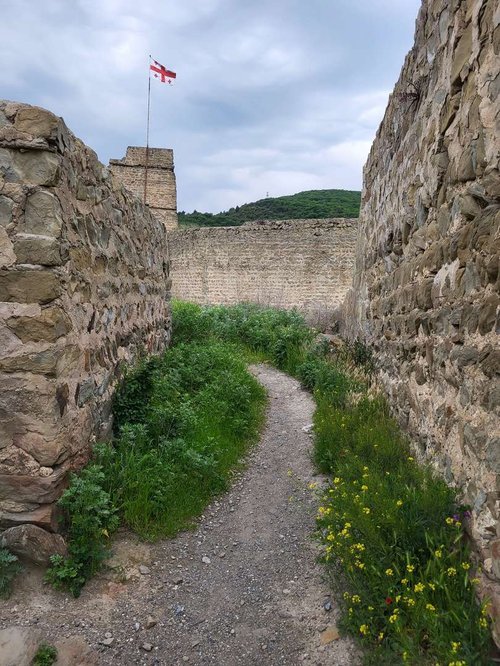
The exact date of the first structure on this site isn't known. Excavations uncovered older walls, dated to around the 1st century BC, meaning fortifications existed here long before the ruins visible today. The walls and towers that survive are attributed to the 9th century AD.
The fortress barely appears in written records, except for one significant event. In 1156, the Georgian king Demetre I of the Bagrationi dynasty, who reigned for only about a year, died at Bebristsikhe. What exactly the king was doing at the fortress and what caused his death isn't recorded. Later, by some accounts, the citadel became the residence of the eristavi of Mtskheta, a role roughly equivalent to a regional governor, and the fortress remained in use until the 18th century.
🏗️ What Remains of the Fortress Today
By some accounts, the fortress had a triangular plan: a central stronghold with an outer courtyard, with towers and watchtowers capping all three corners of the citadel. Its total area is estimated at around 1,500 square metres, with the inner courtyard covering roughly 600 square metres.
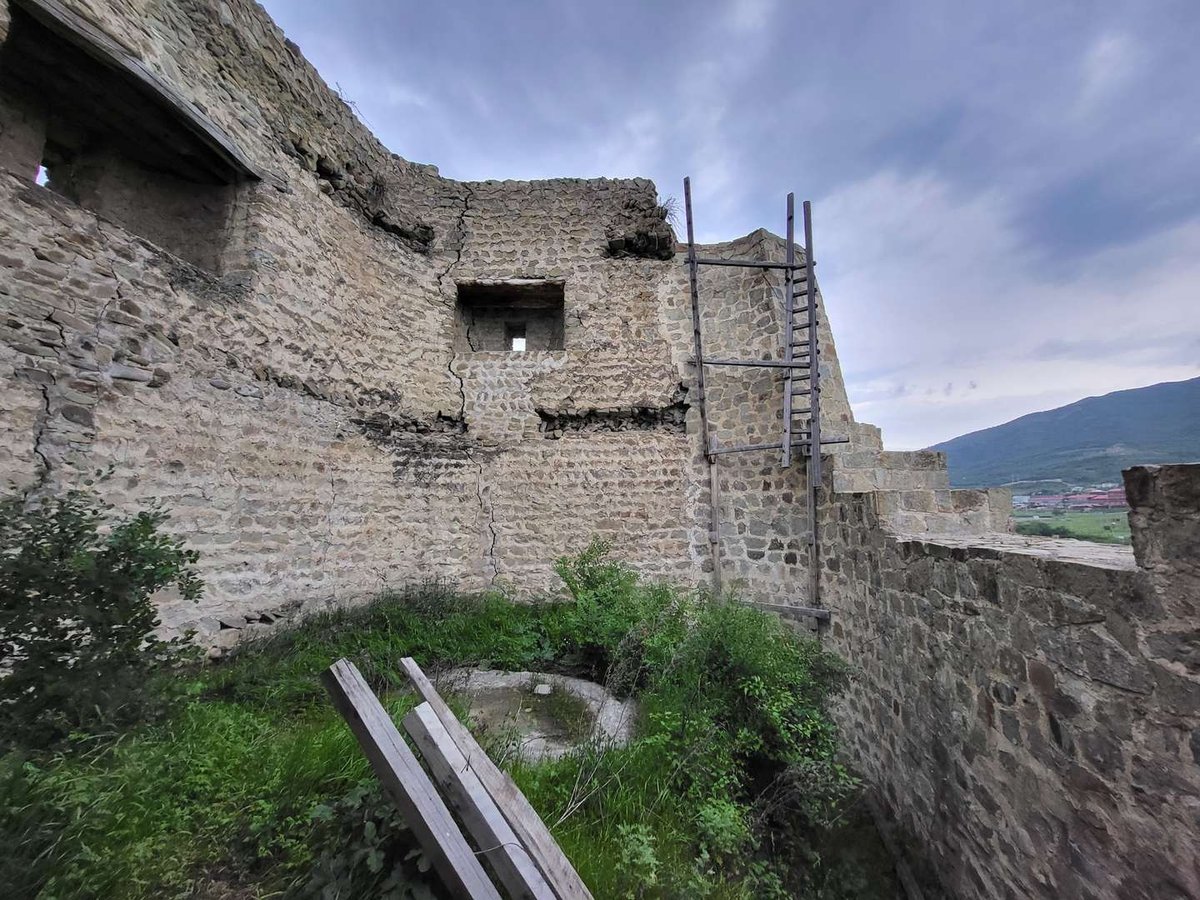
The best-preserved section is the southwestern tower, where three floors and deep archer's niches in the walls are still visible. The western wall also survives. Other structures, a palace, service buildings, sections of the fortifications, remain only as fragments, but they're enough to show that the fortress was once considerably larger than it appears today.
📋 Bebristsikhe Fortress in Facts
🌧️ The 2010 Landslide and Restoration
Restoration work took place in 2007–2008, reinforcing sections at risk of collapse. But in the spring of 2010, after a week of continuous rain, the ground gave way: a landslide brought down the northeastern wall and cracked other sections of masonry. Scaffolding and signs of interrupted work on site are reminders that restoration has started more than once. By some accounts, work resumed in the summer of 2020.
Today, Bebristsikhe remains an active archaeological monument under the protection of Georgia's cultural heritage authority. Before visiting, it's worth checking whether restoration work is underway, since it can restrict access to parts of the site.
🚶 Getting There and How Much Time to Allow
On foot from central Mtskheta, it's about a half-hour walk at an easy pace, uphill in places, with the final stretch of the trail rocky and unfenced, so sturdy shoes matter. By car or taxi, you can cover most of the distance in a few minutes, but the last section still has to be done on foot. The fortress is visible from a distance and can be seen clearly from the grounds of Samtavro Monastery.
Visiting the fortress itself usually takes 15–20 minutes: it's a compact site, not a long route. It works best as an add-on to a Mtskheta walk, once the main churches are covered and you're after something quieter.
🗺️ Bebristsikhe Fortress on the Map
Open in Google Maps🗿 What's Nearby
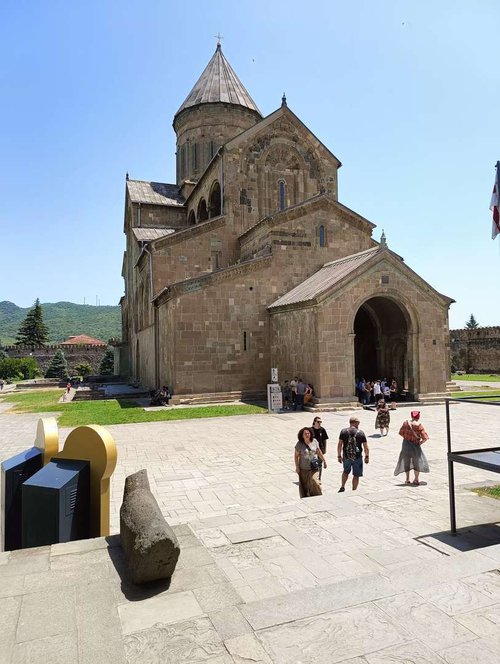
Bebristsikhe pairs naturally with a walk through Mtskheta itself. Nearby is Samtavro Monastery, the resting place of St. Nino and King Mirian, from where, incidentally, the fortress is clearly visible. In the town centre stands Svetitskhoveli Cathedral, Mtskheta's main church, and on a mountain across the valley, on the far side of the river confluence, stands Jvari Monastery, Georgia's first UNESCO World Heritage site, visible even from Bebristsikhe itself on a clear day.
All of these fit into a single day in Mtskheta, and Bebristsikhe works well as the last stop, for the quiet and the view after a day spent among churches.
Bebristsikhe doesn't claim to be Mtskheta's headline sight, and that's exactly why it's worth the detour. There are no queues and no souvenir stalls here, just ruins on a cliff, a legend about an elder, and the site where a Georgian king died under mysterious circumstances. Twenty minutes off the main route often stick in memory longer than one more cathedral.
Have you been to Bebristsikhe Fortress? Share in the comments on Madloba: whether you made it up to the tower, and what state the restoration is in now.
Information is current as of June 2026. The fortress is undergoing restoration on and off, and access to some areas may be restricted, so check before your trip.
📚 Read Next Mtskheta and its monuments
❓Frequently Asked Questions
On the right bank of the Aragvi River, about 1.5 km north of central Mtskheta, above the Georgian Military Highway.
"Fortress of the Elder." By legend, the name comes from the story of a brother and sister, Mamuka and Makrine, children of a prince named Simon: an unknown elder appeared at the sister's funeral, said to have been her repentant brother.
The surviving walls and towers date to the 9th century AD. Excavations also found older fortifications on the site, dated to around the 1st century BC.
In 1156, the Georgian king Demetre I of the Bagrationi dynasty died here. The exact circumstances of his death at the fortress aren't recorded.
In the spring of 2010, after a week of heavy rain, a landslide struck the outcrop, bringing down the northeastern wall and damaging other sections. Restoration has taken place both before and after, with interruptions.
Yes, entry is free. But the site is protected, with periodic restoration work, so parts of it may be temporarily inaccessible.
Usually 15–20 minutes: it's a compact ruin, not a long route. It works well as an add-on to a Mtskheta walk.
The Aragvi valley, the surrounding mountains, and, in clear weather, Jvari Monastery on a neighbouring peak in the distance.
About half an hour from central Mtskheta at an easy pace. The final stretch of the trail is rocky and unfenced, so sturdy, closed shoes matter.

1 comment
Log in to leave a comment