




Leghvtakhevi Waterfall in Tbilisi: 22 m in the Botanical Garden
💧 Waterfall · ⏱️ 1–2 hours · 📍 Old Town, Abanotubani district, Botanical Garden, Tbilisi
💧 What you need to know before visiting
| 📍 Location | Old Tbilisi, Abanotubani district, in the Botanical Garden. 5 minutes from the sulfur baths |
| 📏 Waterfall height | 22 meters. Modest by Georgian standards, but the location is unique |
| 🌡️ Water | +10...+12 °C all year round. Swimming is forbidden |
| 🥾 Route | ~1.5 km, elevation gain ~100 m. Marked trail, suspension bridge, observation deck |
| 📅 History | First mentioned in 1429. Neighboring Botanical Garden dates to the 19th century, reconstruction — 2012 |
| 🏆 Best season | April–May — high water. Summer — quiet and cool. Winter — an ice column |
| 💰 Entrance | Free, all year round |
🧭 Who is this article for
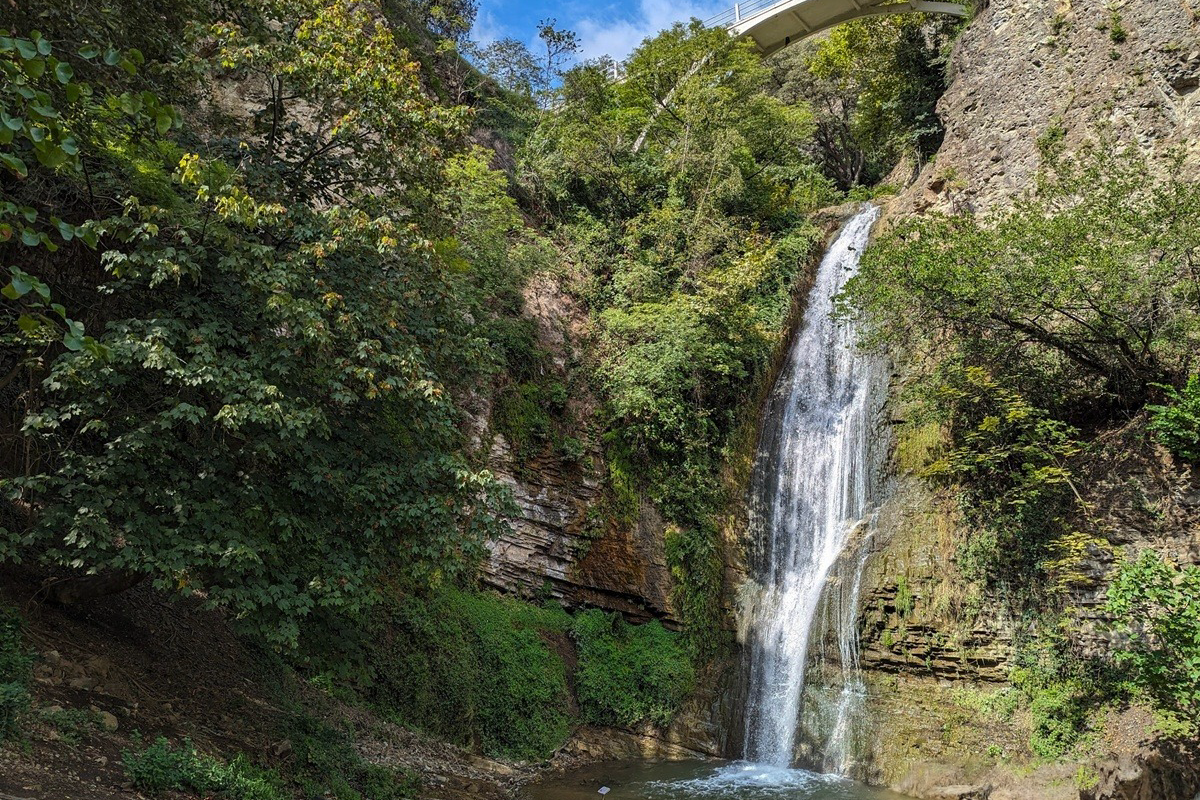
Leghvtakhevi Waterfall is a part of Tbilisi routes through the Botanical Garden and Abanotubani. It is neither the highest nor the most powerful. However, it is located in a gorge right in the center of the old town — a marked trail leads there, featuring a suspension bridge and an observation deck. It roars in spring, refreshes in summer, and freezes into a column of ice in winter. This article is for those who want to understand how to get there and what awaits inside.
📖 Why the gorge is named "Leghvtakhevi"
The name speaks for itself if you know Georgian: "leghva" (ლეგვი) means fig, and "khevi" means gorge or mountain valley. Leghvtakhevi gorge is literally the "fig gorge": numerous fig trees grow in the surrounding area.
The first written mention of the gorge and the waterfall dates back to 1429. Historically, the Leghvtakhevi valley served as a natural border: it separated the oldest district of Tbilisi, Kala, from Abanotubani — the very bathhouse quarter with sulfur domes.
In old sources of the late feudal period, the gorge appears under other names: Tsavkisis-khevi and Salalakis-khevi. The rapid Tsavkisis River once flowed through the entire valley — now only a stream remains.
🌿 The Dabakhana River and healing waters
The Dabakhana River also flows through the valley. Its name is associated with the silver content in the water: in the past, this water was used to treat skin diseases and heal wounds. Dabakhana literally means "tannery", a place where leather was tanned and healed. This is part of the same natural logic as the nearby sulfur baths: the water here has always been more than just water.
In the 19th century, the neighboring Botanical Garden was established — it is preserved and open to visitors today. In 2012, the valley and the gorge underwent a complete reconstruction.
💧 The waterfall through the seasons
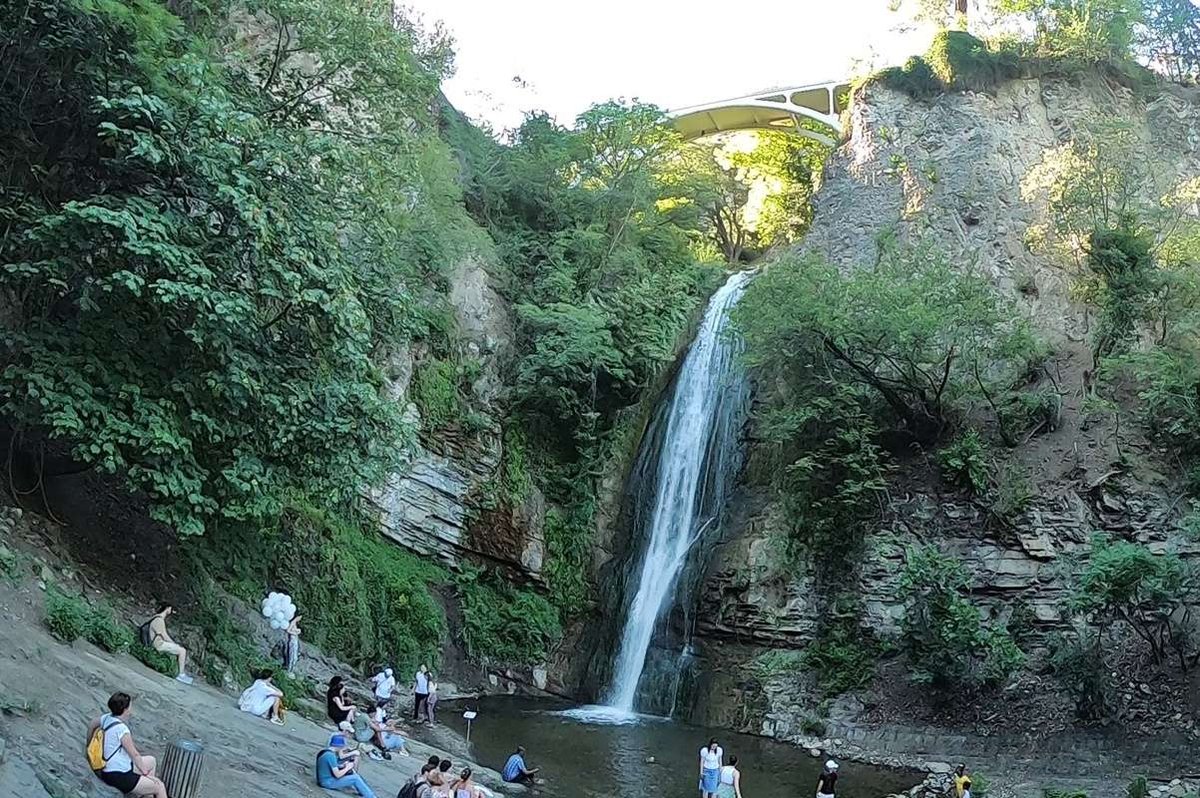
- In spring (April–May) — the water level is at its maximum. The flow is turbulent, the waterfall is full, and the spray flies far. This is exactly how it looks in most impressive photographs. Visitors recommend April as the optimal time.
- In summer — the water is low, and the current is calm. However, the gorge is cooler than the city. On a hot Tbilisi day, this is the most noticeable advantage: the water temperature stays stable around +10...+12 °C, the air is humid, and the shade is dense.
- In winter — the waterfall freezes into an ice column. Sheltered from the wind by the gorge walls, it turns into a natural ice sculpture. It is not often that you see a frozen waterfall right within the city limits.
- In autumn — the subtropical vegetation changes its colors. According to visitors, the view at this time is different, but no less beautiful.
Depending on the lighting throughout the day, the waterfall looks different — which is why some people return to it several times.
Go on a weekday morning — fewer tourists, best light in the gorge. April and May provide the most full-flowing waterfall. If you visit in summer, come during the peak heat: it is truly a few degrees cooler in the gorge. Take something to snack on — there are benches near the observation deck. The suspension bridge offers the best photo opportunities — especially if you stand in the middle of the span. And don't be afraid of winter: a frozen waterfall is a distinct impression that few get to see.
🗺️ How to get to the waterfall
1️⃣ Approach from the side of the Abanotubani sulfur baths — from there to the entrance of the gorge is literally a 5-minute walk.
2️⃣ The second option is through the main entrance of the Botanical Garden: walk through the garden territory, following the signs to the waterfall.
3️⃣ The route is well-marked: signs are everywhere, making it hard to get lost. The trail is about 1.5 km, with an elevation difference of about 100 meters.
4️⃣ Along the way, you will encounter subtropical vegetation, rocky walls, and humid air. It feels like an urban canyon.
5️⃣ Cross the pedestrian suspension bridge — it leads directly to the observation point above the waterfall.
6️⃣ There are benches on the observation deck. You can stop, have lunch, and take pictures.
💬 What those who have been here say
"Visited the waterfall in spring — unforgettable impressions. The cascades are truly impressive, especially in April. The path is easy, although there is a slight elevation gain. The bridge makes beautiful photos."
"We looked at the waterfall in early summer — it was quite calm, but the atmosphere around was fresh and cool. Literally a 5-minute walk from the sulfur baths. On hot days, it is a must-visit."
"The pedestrian suspension bridge only adds to the desire to visit this place. Unlike other waterfalls, which take several hours to reach, everything here is designed for convenience. In any weather, you can admire it while standing on the bridge."
"True, waterfalls can be magical in winter — a frozen ice column. It's worth remembering and visiting precisely in winter if you find yourself in Tbilisi at that time."
🏁 Why go
Leghvtakhevi Waterfall is not a mountain hike. It is 1.5 km along a city gorge, a suspension bridge, an observation deck with benches, and 22 meters of water that freezes in winter, roars in spring, and cools in summer. For free. Five minutes from the sulfur baths. For tourists who have already seen everything in the center and want something different — this is the right next spot.
ℹ️ Entrance to the gorge and the waterfall is free all year round. Swimming is not permitted. The trail is marked and suitable for families with children. Best time: April–May (high water). The information is up to date at the time of publication.
Have you been to Leghvtakhevi Waterfall? What time of year — and what did you like most: the suspension bridge, the observation deck, the mist from the water, or the special coolness in the gorge? Tell us — we read all comments ❤️
❓ Frequently Asked Questions
💬 Two convenient ways. The first is from the Abanotubani sulfur baths: about a 5-minute walk. The second is through the main entrance of the Botanical Garden at 1 Botanikuri St. The route inside is well-marked, so it's hard to get lost.
💬 Entrance to the gorge and the waterfall is free at any time of the year. A separate small fee may apply for visiting the Botanical Garden — please check at the garden's ticket office.
💬 No, swimming is forbidden. The water temperature stays around +10...+12 °C all year round. The ban is related both to safety (strong current in season) and the environmental protection status of the territory.
💬 Yes. The trail, about 1.5 km long with an elevation difference of about 100 meters, is well-marked and well-equipped. Visitors with children describe it as easy. The suspension bridge is of great interest to children.
💬 April–May — the waterfall is full-flowing, and the current is turbulent. Winter — during severe frosts, the waterfall partially or completely freezes, turning into an ice column — a rare sight within the city limits. Summer is quiet and cool inside the gorge.
💬 "Leghva" (ლეგვი) in Georgian means fig (fig tree). "Khevi" means gorge. Historically, many fig trees grew in the vicinity — hence the name: "fig gorge". The first written mention of the gorge dates back to 1429.
💬 There are no cafes directly by the waterfall. However, in the Abanotubani district — a 5-minute walk away — there are several cafes and restaurants with good food. It is convenient to visit them after a walk through the gorge.
💬 It is best to check specific rules with the administration of the Botanical Garden. In general, the territory of the garden is a protected natural area, and the use of drones may require permission.

33 comments
Log in to leave a comment
I did feel a bit of a letdown at first, but then the surroundings really pulled me in - the lush greenery of the botanical garden gives it a serene vibe, almost like nature crafted a little sanctuary just for us. And being so close to the sulphur baths is a bonus; you can dive from the heat straight into the coolness of the waterfall. Crazy how one spot can be both relaxing and invigorating.
So, do you think it’s best to visit during midday when the sunlight catches the water just right, or is the evening a more magical time with the shadows playing tricks?