




Districts of Tbilisi: Old Quarters and Historical Centre
Tbilisi is one of the oldest cities in the world. It has traveled a difficult path, being destroyed by conquerors many times. But it has been rebuilt and transformed over the centuries. The city's charm is defined by the character of its old neighborhoods. Unique streets with carved overhanging balconies, spiral staircases, and open courtyards—all this is old Tbilisi.
The city is constantly evolving and being built. Contemporary architects strive to integrate new buildings into the surrounding environment without destroying the charm of ancient Tbilisi. Here, the past successfully intertwines with the present.
Old District - Abanotubani
Tbilisi means "warm spring." According to an old legend, the Iberian king Vakhtang Gorgasali was hunting in the forests on the site of present-day Tbilisi. A pheasant, shot by the king, fell into the spring and was boiled.
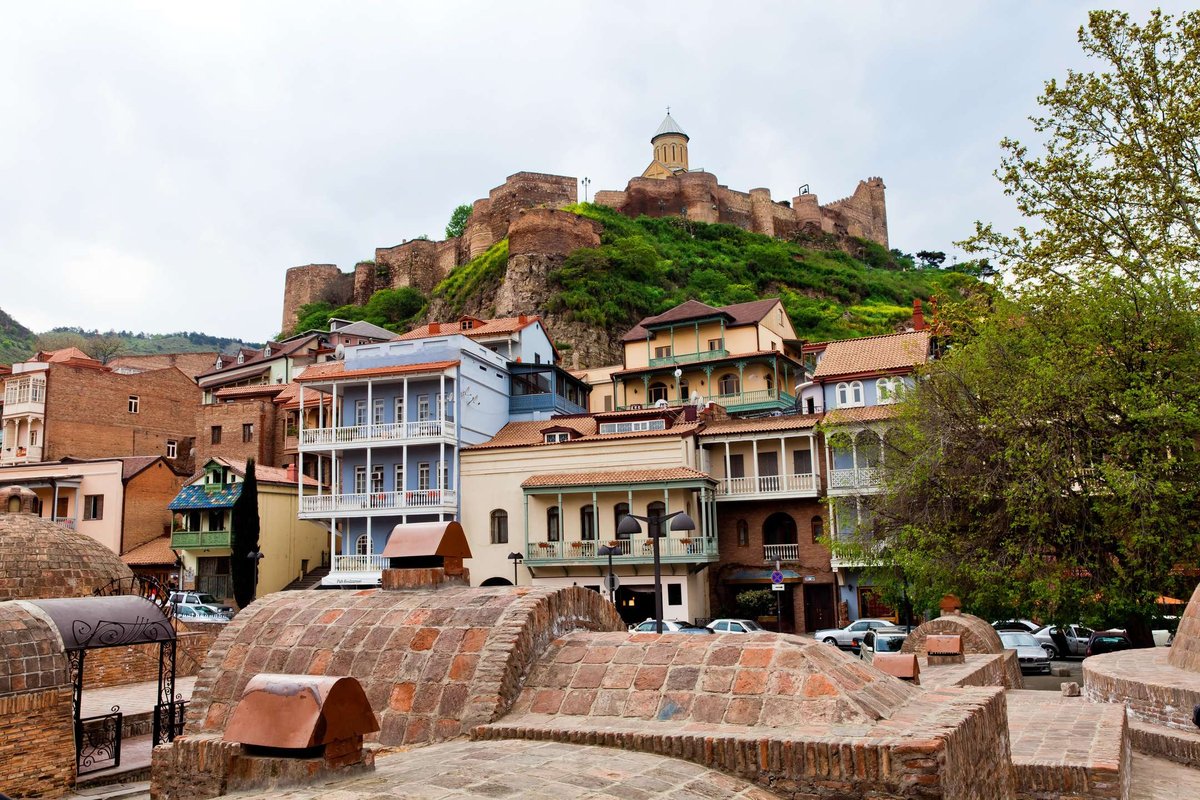
The king liked the location and the springs, and Vakhtang ordered a city to be founded here (5th century). Later, baths were built at the sulfur springs, and the district was named Abanotubani, or Bathhouse.
The baths were built in the Persian style, and these motifs are also reflected in the interior decoration. Almost all the baths are underground, and the buildings are topped with semicircular roofs.
The Old Quarter of Tbilisi is very attractive to tourists and locals, primarily due to its large number of sulfur baths. Like the Roman baths, the baths were not simply used for their intended purpose but also served as places for friendly and business meetings, as well as social gatherings. This tradition is partially maintained today. Famous people who visited Tbilisi, including A.S. Pushkin, A. Dumas père, and others, visited these baths. A plaque on the wall of one of the baths bears the words of Alexander Sergeyevich: "Never in my life have I encountered anything more luxurious than the Tiflis baths."

Avlabari and the Metekhi Temple
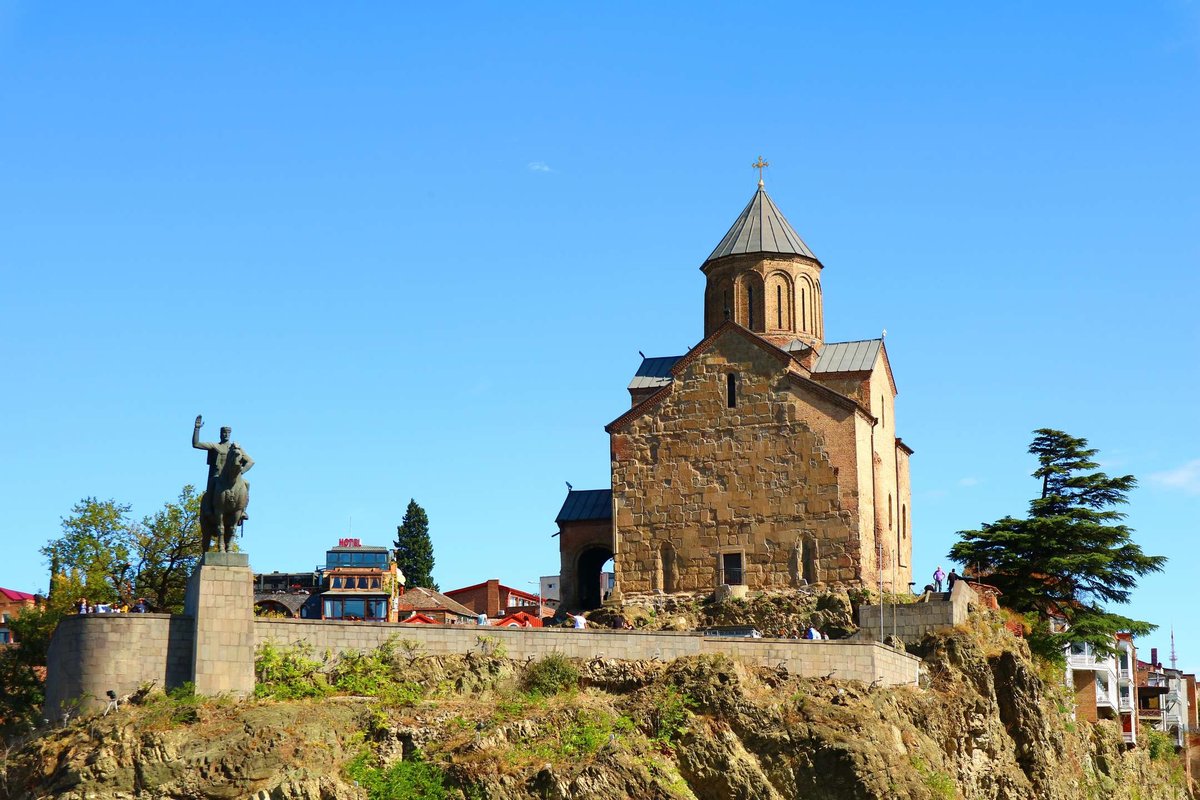
Walking along the embankment from the bathhouse district to the Metekhi Bridge, on the opposite bank of the Kura River, we'll see a monument to the city's founder, Vakhtang Gorgasali. And a little higher up is the Metekhi Temple.
Here begins another historical district of the city – Avlabari, where people of different nationalities and faiths have lived peacefully since ancient times.
The Georgian people adopted Christianity in the 4th century. Since then, churches have been built and cherished. Many churches are as old as the city, such as the Metekhi Temple – a symbol of Tbilisi and its calling card.
The temple was built along with the city in the 5th century. The royal palace stood nearby. Unfortunately, time and wars have not spared the temple, and it was destroyed. What we see today dates back to the 13th century.
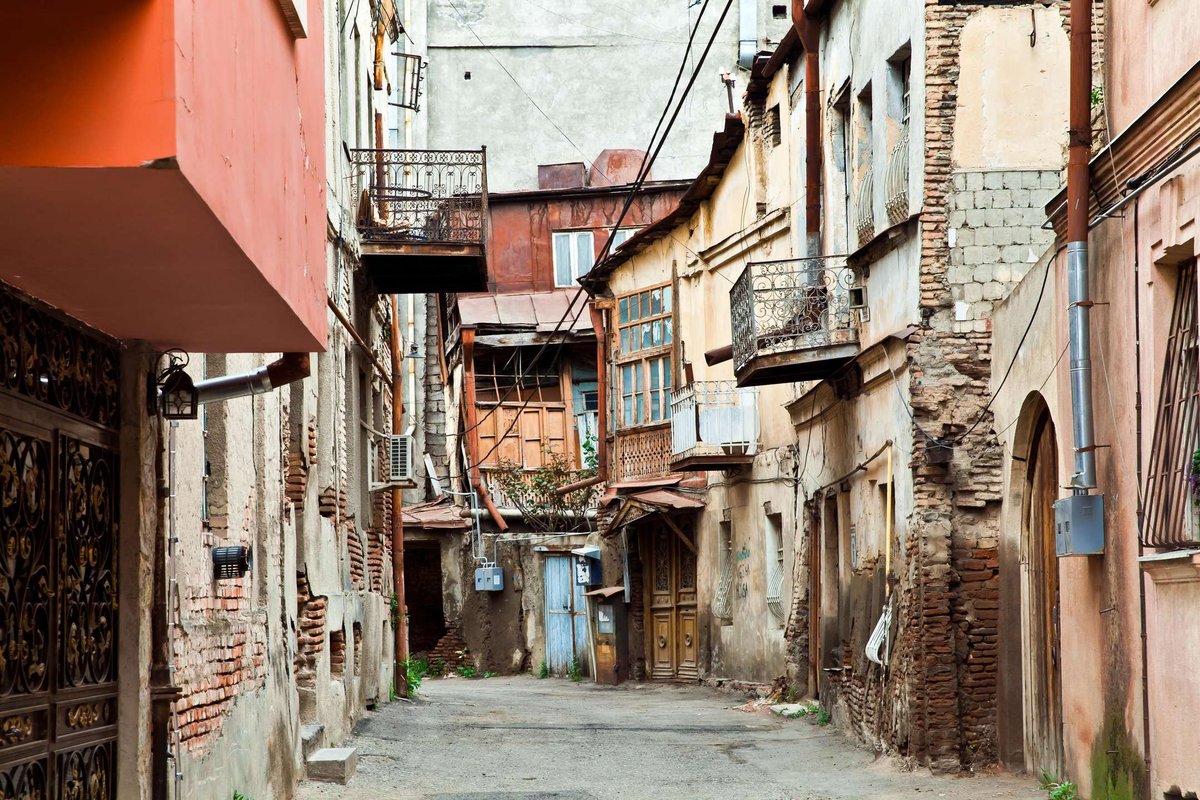
The observation deck near the church offers breathtaking views of the Old Town, its narrow streets lined with ancient houses, shops, and cafes.
Directly across the street is the popular tourist café "Samikitno" ("I Love Tbilisi").
A little to the right, the pedestrian Bridge of Peace, a steel structure covered in glass, "hangs" over the Kura River.
To the left, St. George's Cathedral and the walls of the Narikala Fortress are visible. Beyond and above all the buildings is Mount Mtatsminda with its Ferris wheel and TV tower.
Multicolored illumination allows you to admire the Old Town even at night.
Besides the Metekhi Church and the Vakhtang Gorgasali sculpture, the Avlabari district is home to:
- Rike Park, also home to the lower station of the cable car to Narikala Fortress;
- Presidential Palace;
- Holy Trinity Cathedral (cathedral);
- The dilapidated Church of the Red Gospel (the ruins of the large Armenian cathedral, Avetaran).
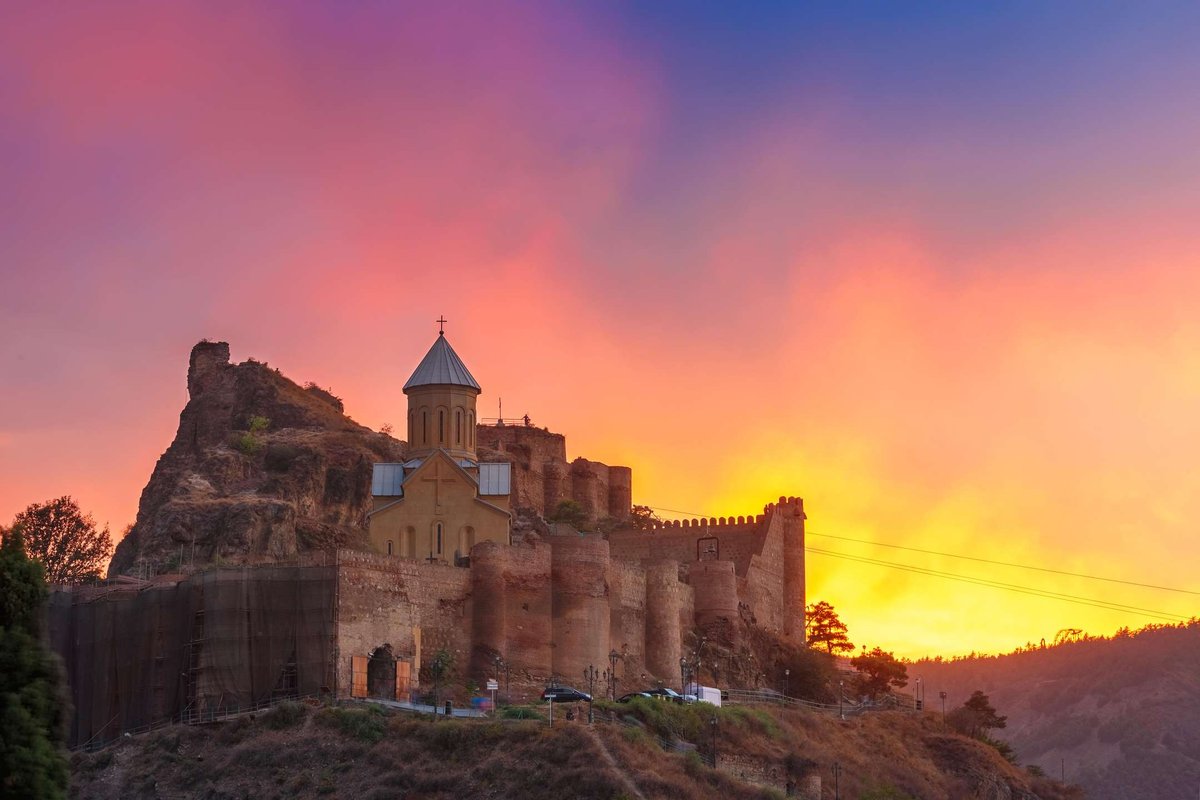
Narikala Fortress
The exact date of the stone fortress's construction is unknown. However, a fort on the hill existed as early as the 4th century. At that time, the fortress was called Shuris Tsikhe, or the Enviable Fortress. It was the most impregnable fortification on the Silk Road.
The name Narikala (Small Fortress) appeared in the 11th-12th centuries, during the Mongol invasion. The fortress walls adjoined the city wall and served as protection from invaders. Watchtowers were located along the entire perimeter of the walls.
Only fragments of the fortress walls remain. They seem to grow out of the hillsides between the Botanical Garden and the sulfur baths.
This area is always crowded with tourists who ascend to the fortress by cable car from Rike Park. Walkers who enjoy steep climbs choose to walk to the fortress.
From the observation deck, the Old Tbilisi districts and the Botanical Garden are clearly visible.
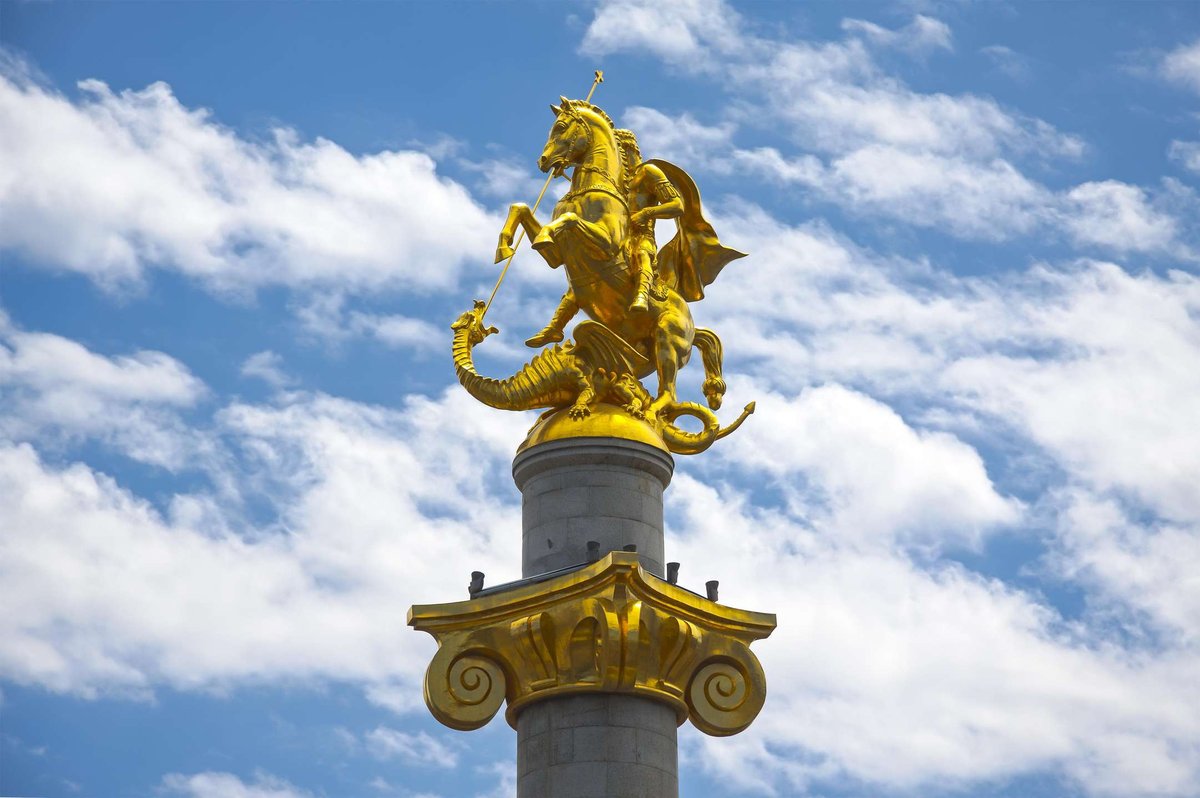
Freedom Square
Freedom Square is located in the city center. Its central section is dominated by a column topped by a statue of St. George, the patron saint of Georgia, piercing a dragon with a spear.
The large street that practically flows into the square is Rustaveli Avenue. Nearby is the metro station of the same name. The square is also connected to G. Tabidze, A.S. Pushkin, Shalva Dadiani, and other streets.
Administrative buildings and large hotels are located in Freedom Square, making it always crowded.
This is the starting point for strolls through the Old Town. The surrounding streets offer interesting sights. There are also numerous cozy cafes and restaurants, small shops, public gardens, and monuments to A. Pushkin, S. Chiaureli, and S. Parajanov.
On Sololaki Hill stands the monument to Mother Georgia (Kartlis Deda), clearly visible from Freedom Square. In one hand, a woman holds a cup of wine for her friends. And in the other hand there is a sword - for those who came with war.
The Tamada Monument
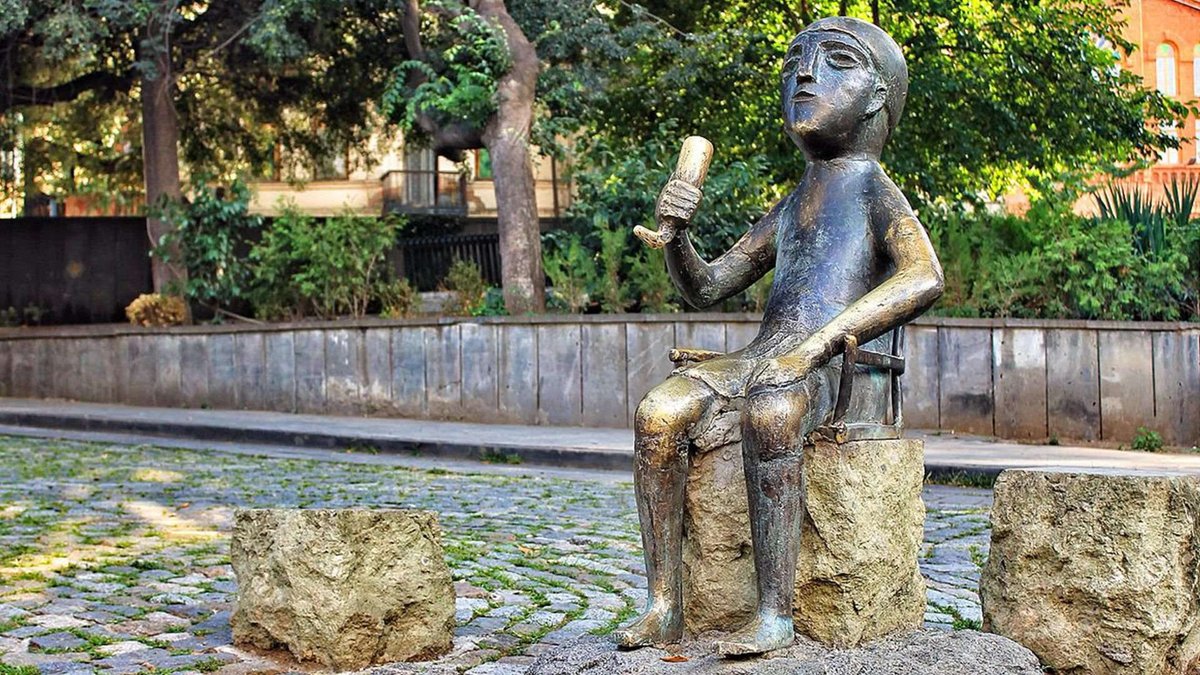
One of the most interesting monuments in Tbilisi, symbolizing hospitality and the traditions of the Georgian national feast, is the Tamada Monument.
It is an enlarged copy of a ceramic figurine discovered by archaeologists in Georgia. The find dates back to the 7th century BC, meaning even in those ancient times, people raised cups and made toasts, and the tamada was always an important figure at the feast. The artifact is housed in the Georgian National Museum.
The Tamada Monument stands at the intersection of Sioni and Shardeni, two of the most picturesque streets in the Old Town, always crowded with tourists. It's simply impossible to miss it.
The Wadded and Iron Rows (Bambis Rigi and Rkinis Rigi) run nearby.
Old Tbilisi is a treasure chest, each wonder of which must be explored gradually. It's worth exploring it thoroughly, unhurriedly, or staying in an old hotel or house with carved balconies.
Tbilisi has a special charm,
It contains sisters—both today and the past.
To the whisper of "Indi, mindi, perad shindi"
Eternity pours tears into the chalice on Mtatsminda.
Yevgeny Yevtushenko

34 comments
Log in to leave a comment