



Add organization

🏰 The Cave Monastery of Vardzia in Javakheti: Five Phases of Building, Frescoes and Life Inside the Rock

🏰 Straight to the point

🏰 Vardzia: What to Know Before You Go

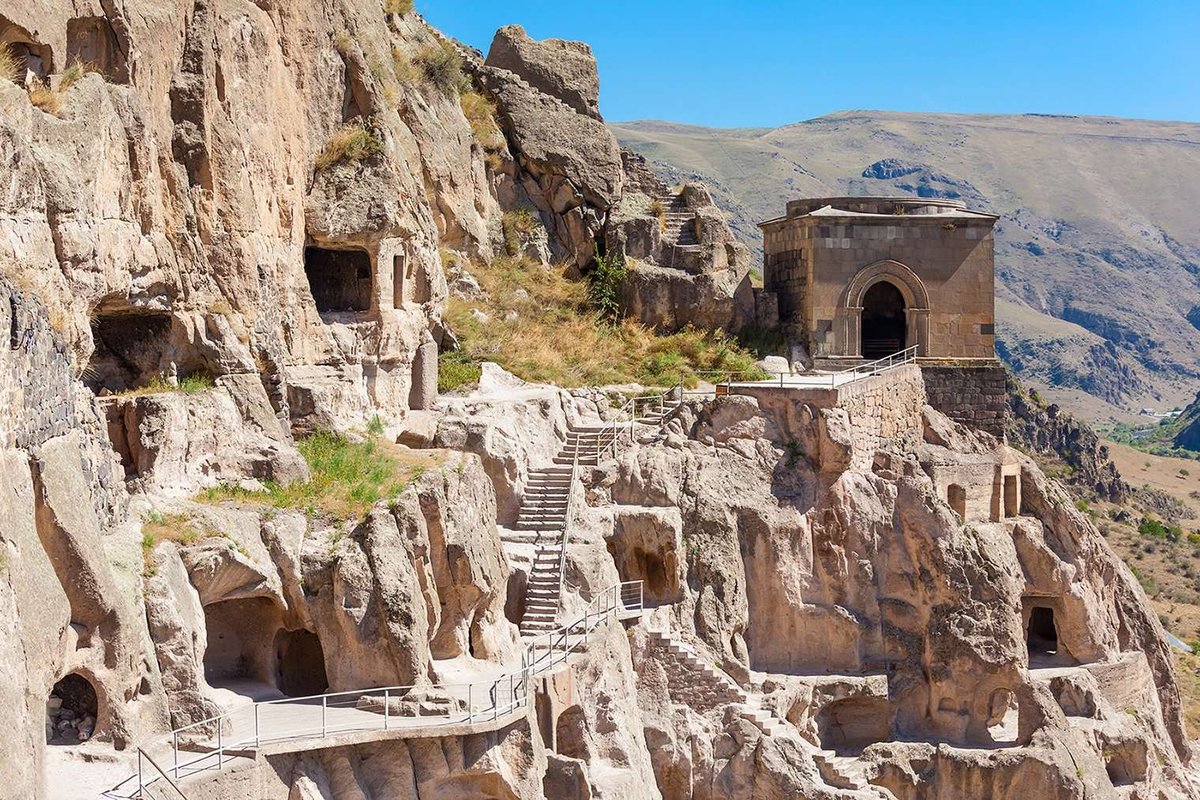
A monastic complex cut into a monolithic cliff on the eastern spur of the Erusheti range, in Javakheti, on the left bank of the Mtkvari. It was built over half a century under George III and his daughter Tamar, conceived as a fortress and ending up a city-monastery.
📍
Where30 km from Aspindza, Samtskhe-Javakheti
⛰️
Elevation1,300 m, upper caves to 1,462 m
🏛️
What survivesAround 420 chambers, 12 chapels
🕯️
StatusMuseum reserve and a working monastery
ℹ️ Vardzia is on the tentative list of UNESCO World Heritage, not the inscribed list. The phrase "UNESCO site" is common but inaccurate. The address, coordinates and reviews are on the Vardzia Caves page.

vardziya-01

Vardzia is a monastic complex hewn into a monolithic cliff on the eastern spur of the Erusheti range, in Javakheti, on the left bank of the Mtkvari, at 1,300 metres above sea level. The uppermost cave sits at 1,462 metres.

The place is well known but usually described in passing. In fact Vardzia has a detailed building history in five phases, the names of its patrons and its painter are recorded, and inside are wine cellars, an aqueduct and a chamber known as Tamar's room.

🎫 Tickets and entry Rates and hours change, so this is the sequence rather than the figures
🏛️
Where to buyThe ticket office at the entrance to the museum reserve; tickets are sold on site
🚌
Getting upThere is a climb from the office to the caves; a shuttle runs and is paid for separately
🎟️
ConcessionsDiscounts for schoolchildren and students; check at the office
👟
FootwearNarrow passages, steps and tunnels inside; heels will not do
💡 Current rates and timings are published by the Agency of Protected Areas. The reserve closes earlier in winter, so check before setting out.

🏗️ Five phases: who built what

Vardzia did not appear all at once, and each phase belongs to a particular ruler.

The first, under George III (1156-1184). The first cells and a church were cut. The original idea was a fortress.

The second (1184-1185), under Tamar. A hall-type Church of the Dormition with a gallery was built. It was painted by the artist Giorgi at the expense of Rati Surameli, eristavi of Kartli. It was under Tamar that the purpose changed: from a fortress the complex became a fortified monastery.

The third (1185-1203). Service rooms, cells, defensive works and irrigation systems were completed. By 1205 the half-century of building was over.

The fourth, after the earthquake of 1283. Beka Jaqeli (1285-1306), ruler of Samtskhe, ordered a two-storey bell tower with carved ornament.

The fifth, under Atabeg Ivane. The large refectory was cut.

The complex divides into two parts: the rock village of Anauri of the tenth to twelfth centuries, and the monastery proper. The paintings in the church at Anauri date from the sixteenth century, several hundred years later than the main ones.

🏠 How the city inside the rock was arranged

General view of the cave church of Vardzia

This is the most interesting part, and it is usually left out.

The complex runs about a kilometre along the river, and the caves reach several dozen metres into the rock. Sources disagree on the number of levels: both eight and thirteen are cited. The total number of caves is estimated at six hundred, while the surviving chambers of the monastery number around 420. The difference lies in what is being counted: every hewn cavity, or the rooms the community actually used.

The cells have two, three or four rooms, with a vestibule, a living room and a store. Wide niches cut into the walls served as benches, smaller ones held crockery, books and lamps. The layout of an ordinary dwelling, only in stone.

They made a great deal of wine here. The complex holds 25 marani, wine cellars, with 185 kvevri. For a monastery that is industrial scale: nobody keeps that many vessels for their own use.

Water came from a natural spring deep in the rock behind the main church, along conduits totalling three and a half kilometres. This is the site's great feat of engineering: a city inside a cliff that depended on no outside source, and could therefore withstand a siege.

The eastern part survives best, with 242 rock chambers. Among them are a hall measuring eight by five and a half metres, a council hall, Tamar's chamber and a room for rest. The refectory is in the western part, and rooms used as refuges in the centre. Twelve chapels are spread across the complex.

🏠 Vardzia in numbers What researchers have managed to count
420
chambers
surviving in the monastery
242
in the eastern part
the best preserved zone
185
kvevri
in 25 wine cellars
12
chapels
across the complex
3.5
km of conduits
from the spring behind the church
1
km along the river
the length of the complex
📐 Figures for the surviving monastery. The total number of hewn caves, ruined ones included, is estimated at around six hundred.

🎨 The frescoes and who appears in them

In the twelfth-century Church of the Dormition the images of the ktetors, the patrons of the building, survive: George III, Queen Tamar and Rati Surameli. Tamar's portrait here is one of the few made in her lifetime, and some visitors come specifically for it.

Alongside them are scenes from the New Testament.

✍️ Ioane Shavteli and the Hymn to the Virgin of Vardzia

Ioane Shavteli worked at Vardzia, and his career explains what this monastery meant to the state.

Shavteli headed the community and at the same time held high office at the royal court: he was first deputy to the mtsignobartukhutsesi, in effect deputy head of government. The abbot of a remote cave monastery sat in the country's senior leadership.

The Hymn to the Virgin of Vardzia is his, and it survives to this day. It is not merely a literary monument but evidence that Vardzia was a centre of power and culture rather than a refuge.
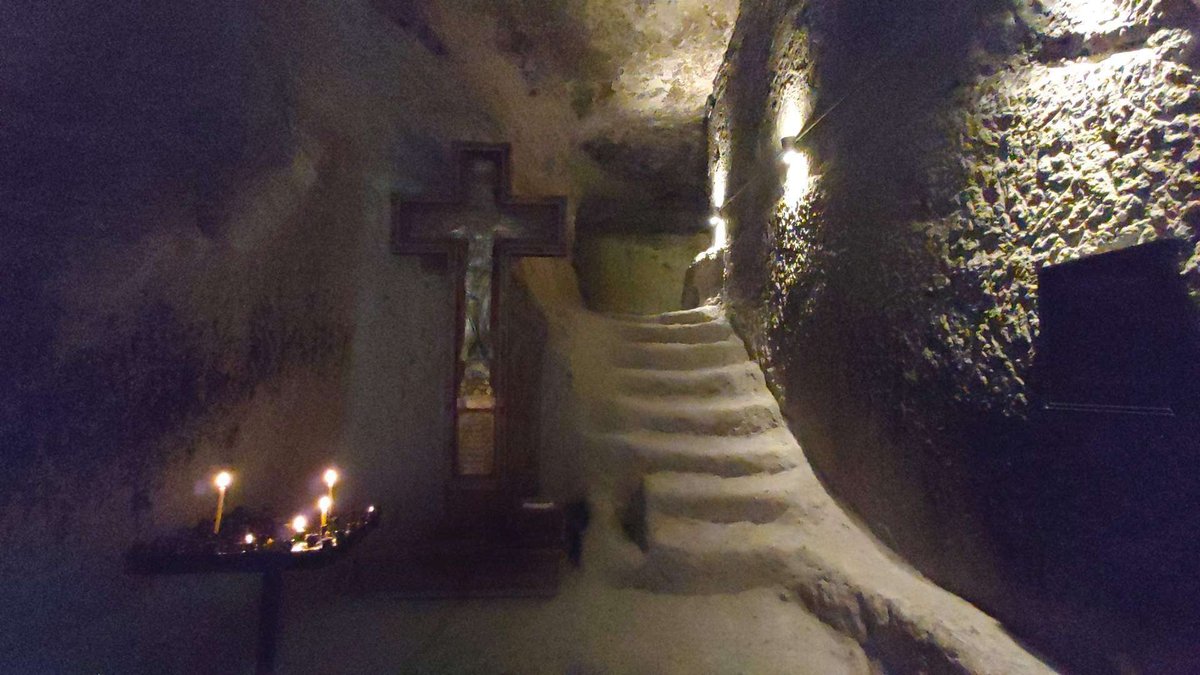
Пещеры Вардзия

⚔️ What happened afterwards

The half-century of building ended in the early thirteenth century, and the story then runs downhill.

Vardzia had no artificial defences. The cliff itself served as the wall, and the city was securely hidden from outside eyes. That is precisely why the earthquake of 1283 was so devastating: the outer rock collapsed, more than two thirds of the complex was destroyed, and what remained lay exposed. The site lost its principal protection.

In 1551 the army of the Iranian Shah Tahmasp I, known in Georgian sources as Tamaz, arrived. The icon of the Virgin, gold and steel doors and a great many ornaments were carried off.

In 1578 the Ottomans took the monastery. Many monks were killed, the survivors scattered, and the house stood empty.

Under Soviet rule the site first served as a tourist base, and in 1938 Vardzia was given the status of a museum reserve. In 1989, with the blessing of Catholicos-Patriarch Ilia II, services resumed, and by 1999 monastic life was re-established.

Today Vardzia is both a museum reserve and a working monastery, which is why part of the complex is closed to visitors.

⚔️ Eight centuries after the building From the earthquake to the return of the monks
1283
An earthquake destroys more than two thirds of the complex
1551
Tahmasp I's army carries off the icon of the Virgin, the doors and the ornaments
1578
The Ottomans take the site and the house empties
1938
Museum reserve status replaces the tourist base
1989
Services resume with the blessing of Ilia II
1999
Monastic life is re-established
2007
Vardzia enters the tentative list of UNESCO World Heritage
🕯️ The monastery is active today, so visitors are not admitted to some of the chambers.

🗺️ What to see nearby

Vardzia is almost never visited on its own: a whole string of sites stands along the Mtkvari valley, all within half an hour's drive.
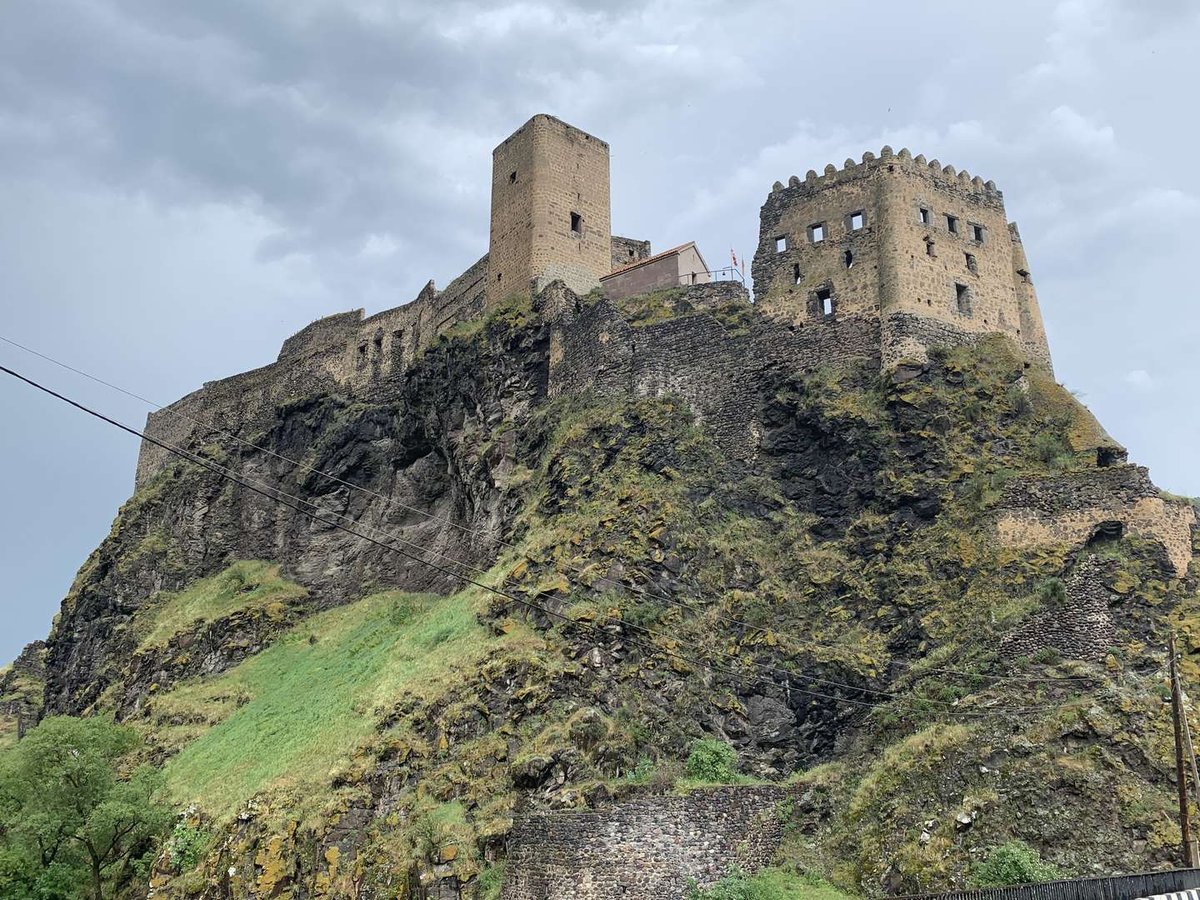
Крепость Хертвиси

Khertvisi Fortress, one of the oldest and best preserved fortresses of medieval Georgia. It stands where two rivers meet, about eleven kilometres to the north. Together with Vardzia it sits on the UNESCO tentative list.

Tmogvi Fortress on the bank of the Mtkvari, with the foundations of ancient settlements visible from it. About three kilometres away.

Vanis Kvabebi, a cave monastery in the cliffs two kilometres from Vardzia. Quiet and almost deserted, which after crowded Vardzia is a noticeable contrast.

🗺️ Vardzia and its neighbours The Mtkvari valley, Aspindza Municipality.
🗺️ Open map data from OpenStreetMap. The dark marker is Vardzia, the lighter ones its neighbours in the valley. All three lie along the same road, so no detour is needed.

🚗 Getting there

The nearest town is Aspindza, thirty kilometres from Vardzia. The main base is Akhaltsikhe, about an hour away. Borjomi is some seventy kilometres to the north, Tbilisi about four hours.

Public transport does reach Vardzia, but rarely and with a change at Akhaltsikhe. Most people come by car or on a tour: the standard day trip from Tbilisi takes in Borjomi, Rabati and Vardzia.

The road from Akhaltsikhe follows the Mtkvari and is worth the drive in itself, so allow time for stops at Khertvisi and Tmogvi.

🧭 Where to stay and what is nearby

You can sleep right by Vardzia: there are guesthouses and small hotels in the area. Akhaltsikhe offers a wider choice.
Find the best hotels, guesthouses, restaurants and cafés across Georgia. Discover comfortable places to stay, authentic Georgian cuisine and useful travel recommendations for every region.

Been to Vardzia? Leave a review on Madloba: tell us how long the walk through the caves took, whether you took a guide, and whether you managed to see Tamar's chamber.

Information is current as of August 2026. Ticket prices, opening hours and access to individual chambers all change, so check the current conditions before you travel.
📚 Read next
Monuments cut into rock: the tradition of cave architecture in Georgia.
Atskuri Fortress: a stronghold on the road from Borjomi.
Akhalkalaki: the town on the Javakheti plateau to the south.
Uznariani Fortress: a watchtower in the Borjomi gorge.

❓ Frequently asked questions

❓ 📍 Where is Vardzia?

💬 In Georgia, Samtskhe-Javakheti region, the historical province of Javakheti, on the left bank of the Mtkvari, thirty kilometres from Aspindza. The complex is cut into the cliff on the eastern spur of the Erusheti range at 1,300 metres, with the upper caves reaching 1,462 metres.

❓ 🎫 How much does it cost to enter Vardzia?

💬 Rates are set by the Agency of Protected Areas and revised periodically, so the current figure is best checked on their website or at the ticket office. Tickets are bought on site, and the shuttle to the caves is paid for separately. Discounts apply for schoolchildren and students.

❓ 🕰️ Who built Vardzia and when?

💬 George III began the work in 1156 and his daughter Tamar continued it. The main construction ran to 1203 and the whole was finished by 1205. The bell tower under Beka Jaqeli and the refectory under Atabeg Ivane came later.

❓ 🏠 How many chambers does Vardzia have?

💬 Around 420 chambers of the monastery survive, 242 of them in the better preserved eastern part. The total number of hewn caves, including those destroyed, is estimated at around six hundred.

❓ 🍷 Did they really make wine at Vardzia?

💬 Yes, and in significant quantity. The complex holds 25 wine cellars with 185 kvevri. For a monastery that is industrial scale; nobody keeps that many vessels for their own use.

❓ 💧 Where did the water in the caves come from?

💬 From a natural spring deep in the rock behind the main church. It ran along conduits totalling three and a half kilometres, so the city depended on no outside source and could withstand a siege.

❓ 🧱 Why did Vardzia have no fortress walls?

💬 The cliff itself served as the wall: the city was cut inside it and invisible from outside. That is exactly why the earthquake of 1283 was so devastating, exposing the complex and stripping away its defence.

❓ 🎨 Which frescoes survive?

💬 In the twelfth-century Church of the Dormition the ktetors are depicted: George III, Queen Tamar and Rati Surameli. The painting was executed by the artist Giorgi at Rati Surameli's expense. Tamar's portrait here is one of the few made in her lifetime. The paintings at Anauri church date from the sixteenth century.

❓ 🏛️ Is Vardzia a UNESCO site?

💬 Since 2007 it has been on the tentative list of World Heritage, not the inscribed list. The phrase "UNESCO site" is common but inaccurate.

❓ 🚗 How do I get to Vardzia?

💬 About an hour by car from Akhaltsikhe, thirty kilometres from Aspindza, roughly four hours from Tbilisi. Public transport is infrequent and requires a change, so most people drive or join a tour, usually the Borjomi, Rabati and Vardzia combination.

Anastasia Berezhkova
By:

Anastasia Berezhkova

Post: Head of Development Direction

Hello! I am a traveler with a rich experience of living in various parts of the world. For many years, my passion for travel has led me to different destinatio…

Visit author

31 comments


Log in to leave a comment


  • M
    Mustafa Demir
    Vardzia'nın içinde kayaların arasına gizlenmiş bir manastır var, öyle değil mi? Okurken, o yerin mistik atmosferini hissettim. Ama bir şey beni düşündürüyor; o medya tasvirlerindeki gibi mavi gökyüzü ve güneş ışığı gerçek mi orada? Soğuk ve sessiz gibi görünen taşlar bir zamanlar hayat doluymuş, Tamar’ın odasındaki fresco’lar beni büyüledi. O dönemin yaşamına dair neler yarım kalmış? İnanılmaz bir miras ama keşke daha fazla bilgi olsaydı, yaşamın sırları hakkında… Bu kadar etkileyici bir yerin neden daha fazla ziyaretçisi yok? Oraya bir gün gitmeyi umuyorum, ama öncelikle ulaşım hakkında bir ipucu var mı?
  • Т
    Татьяна
    Друзья-путешественники по Грузии, какая классная находка — статья на Мадлоба про пещерный город Вардзия! 😍 В Тбилиси уже неделю, фанатею от средневековых комплексов Самцхе-Джавахети, но с моей тягой к доступным экскурсиям без сложного треккинга, эта свежая подборка 2026 года просто огонь. Уже съездила в Вардзию — XII век царицы Тамары у реки Кура, 600 пещер на 13 ярусах с церквями, кельями, винными погребами, храм Успения Богородицы с фресками Георгия III, землетрясение 1283-го обнажило лабиринт — как "Властелин колец" живьем! Для девчонок вроде меня это комфорт: 4 часа от Ахалцихе, канатка или пешком 20 мин, экскурсия с гидом 15 лари.

    Мадлоба делится советами от месхетинцев: май–октябрь без жары, скромная одежда в монастырскую зону, фото без вспышки. Отзывы подсказали тайные туннели, FAQ — билет 10 лари, с детьми ок. Планирую повторить с ночёвкой у реки!

    А вы бродили по Вардзии — что круче, фрески Тамары или виды на Кура? Расскажите! 🤔
  • E
    Ed Nash
    The intricate water supply system for such a vast network of rooms in the monastery is fascinating. I'm curious about how it was maintained over the centuries, especially after the 1283 earthquake. Were there any specific techniques or methods used to restore or preserve the water system during those challenging times?
  • L
    Leon
    ვარდზია მართლაც უნიკალური ადგილია ჩვენი ქვეყნისთვის. საინტერესოა, როგორ შეძლეს ძველმა ქართველებმა ამხელა სისტემა ჩასანახად და გასამაგრებლად მიწისძვრების შემდეგ, განსაკუთრებით მდინარის წყლის ქარხნის შემდეგ. ასევე, მაინტერესებს, არსებობს თუ არა რაიმე ამბავი იმის შესახებ, როგორ გაუმკლავდნენ ისინი თურქეთის მტრობას და როგორი იყო ცხოვრება იქ მაშინ, როდესაც მონასტერში კვლავ დაიწყეს ცხოვრება?
  • О
    Олег
    Интересно узнать о Вардзии. Пещерный монастырь, вырезанный в скале, захватывает воображение своими масштабами и историей. Впечатляет, как строители XII века смогли создать систему водоснабжения длиной 3,5 км. Фрески в Успенской церкви, сохранившиеся с тех времён, – это настоящая находка для ценителей искусства. Несмотря на землетрясение и разграбления, Вардзия продолжает жить и возрождаться.
  • n
    nikitak1985
    Впечатляет, как в средние века смогли создать такой масштабный и сложный архитектурный комплекс. Интересно, как функционировала водопроводная система на протяжении веков, и не потребовалась ли её реставрация после землетрясений и разрушений? Захватывающая история с многими поворотами, от расцвета до упадка. Хотелось бы побольше узнать о современной монашеской жизни в Вардзии.
  • რ
    რევაზი
    სამხრეთ საქართველოში ვარძიის გამოქვაბული მონასტერი საოცარი ისტორიული ძეგლია. მაინც ერთი კითხვა მაქვს: წყლის გაყვანილობის სიგრძე 3,5 კმ ნამდვილად სწორია? ეს საზოგადოებისთვისაც საინტერესო იქნება. შესაძლოა, წყლის ხელშეწყობა ასეთი შორიდან რთული ყოფილიყო იმ დროისთვის.
  • E
    Earl
    I wonder if the water supply system mentioned, which spanned 3.5 km and drew from a spring behind the main temple, is still functional or has parts of it been restored. Considering how crucial water would have been for such a large settlement, it's fascinating to think about the engineering skills required during that era.
  • ნ
    ნანა ჩხიკვაძე
    მართლაც საოცარი ადგილია. ვარდზიაში წასვლა რამდენიმე წლის წინ მოვახერხე, და საზოგადოებასთან ერთად პატარა გამოკვლევაც ჩავატარე. იქაური ფრესკები ნამდვილი შედევრებია. განსაკუთრებით შთამბეჭდავდა ის, როგორ მორგებულია ეს ქუჩები და ოთახები ბუნებრივ ქვიან ლანდშაფტზე. წყაროს წყლის სისტემა კი განსაკუთრებით გამორჩეული ინჟინერული გადაწყვეტილებაა იმ პერიოდისთვის. ვარდზიას სტუმრობა ნამდვილად ღირს, თუ ისტორიაში ჩაიზრდილი და სპეციფიკური შეგრძნებები გაინტერესებთ.
  • K
    Kim
    Visiting Vardzia was an incredible experience. The sheer scale of the cliffside monastery, with its 13 levels and 420 rooms, left me in awe. Walking through the ancient chambers and seeing the frescoes in the Dormition Church was like stepping back in time. I was amazed by the advanced water system that once brought spring water to the complex. Learning about its turbulent history, from the earthquake damage to the invasions, gave me a deeper appreciation of its resilience. It's fascinating how it's been revived as a museum and monastery after being dormant for so long. Truly a testament to human ingenuity and endurance.
  • Т
    Татьяна Субботина
    Какой удивительный пещерный город! Особенно впечатляет, как они смогли обеспечить водоснабжение с помощью водопровода в 3,5 км. Интересно, сохранились ли какие-то элементы этого водопровода до наших дней?
  • ე
    ელგუჯა თათარაშვილი
    არაფერი არ აქვს გასაკვირი, რომ ვარდზია დიდი ტრაგედიების მიუხედავად ახლაც გვაოცებს თავისი მშვენიერებითა და სირთულით. მაინტერესებს, არსებობს თუ არა რაიმე აქტიური სამეცნიერო გამოკვლევა ამ ისტორიულ ძეგლზე, განსაკუთრებით ვარდზიის წყალკანალის სისტემაზე, თუ როგორ მუშაობდა იგი შუა საუკუნეებში?
  • v
    victoriagreen1986
    Visiting Vardzia was a captivating experience. The scale and ingenuity of this cave monastery are truly impressive, with its 13 levels and hundreds of rooms carved into the rock. The Uspensky Church, adorned with ancient frescoes, felt like a portal to another era. I was amazed to learn about the 3.5 km water conduit, a testament to the advanced engineering of that time. The history of survival and transformation through events like the 1283 earthquake and later invasions only adds depth to the visit. Knowing that it functions as both a museum-reserve and a revived monastic site today adds to its living history appeal.
  • А
    Анна Б.
    В статье не упоминается, в каких условиях проживают современные монахи, вернувшиеся в Вардзию. Интересно было бы узнать больше о текущем состоянии пещер и какая часть монастыря доступна для посещения туристами.
  • Л
    Лена
    Интересно, как точно восстановили водопровод в Вардзии после землетрясения? Это была сложная задача, особенно в те времена. Хотелось бы больше узнать о технологиях, которые использовались для этого.
  • h
    harpers
    The article mentions a water supply system that brought water from a spring located behind the main church. Is it still functional today, and is it possible to see it during a visit?
  • N
    Nana Davitashvili
    გულწრფელად მაინტერესებს, როგორ აღადგინეს წყალსადენი ურთულეს ისტორიულ და არქიტექტურულ გარემოში? როდესაც ადგილზე ვიყავი, ვიხილე, როგორ გამოკვეთილია კლდე და რა დიდებულია ფრესკები. მართლა შესანიშნავი გამოცდილებაა!
  • G
    Gr1g0r13v4
    Статья упоминает, что в комплекс был добавлен водопровод длиной 3,5 км. Интересно было бы узнать, как именно он функционировал и сохранились ли какие-то его части до наших дней?
  • P
    Pax Valiere
    I have a question about the earthquake mentioned in the article. Did it really happen in 1283 and not at another time? Just want to make sure the date is accurate, as the impact of such events can significantly alter historical sites.
  • О
    Ольга Николаевна
    Впечатляет, как в древности люди умели создавать грандиозные сооружения. Вардзия – это не просто монастырь, а настоящая крепость в скале. Интересно было узнать про сложную систему водоснабжения, учитывая, что это XII век. Масштабы и история этого места поражают! Жаль, что землетрясение и войны так повлияли на его судьбу.
  • b
    bakhmetyev88
    Какой был основной мотив для строительства такого большого комплекса, как этот пещерный монастырь, именно в этом месте? Учитывалось ли стратегическое значение или исключительно религиозные цели?
  • G
    G_elel
    Мне всегда хотелось побывать в Вардзии, и эта статья только укрепила моё желание. Удивительно, как в 12-13 веках можно было создать такой масштабный комплекс в скалах. 600 пещер, множество этажей, храмы, комнаты, винные хранилища — всё это звучит как что-то нереальное. Особенно интересно узнать, что Вардзия сочетала в себе и крепость, и монастырь. А история о том, как царица Тамара завершала строительство, делает это место ещё более значимым. Обязательно добавлю Вардзию в список мест, которые стоит посетить в Грузии.
  • Е
    Елена
    Пещерный монастырский комплекс Вардзия, высеченный в скале в 12-13 веках, находится примерно в сотне километров от Боржоми, на берегу реки Кура. В составе комплекса можно насчитать около 600 пещер искусственного и естественного происхождения. Вардзия является знаковой достопримечательностью Грузии, привлекающей туристов своей уникальной историей и архитектурой.
  • А
    Анастасия
    Вардзия — это настоящее приключение. Представьте себе целый город, высеченный в скалах. Невероятно, что там когда-то жили люди!

    Этот уникальный пещерный комплекс в южной Грузии поражает своей грандиозностью и сложностью. Вардзия была построена в XII веке во времена правления царицы Тамары и служила как монастырь, так и укрепленный город.

    Прогуливаясь по этим древним туннелям и залам, невозможно не восхищаться мастерством и упорством тех, кто создал этот удивительный город в скалах. Каждая комната, каждая ниша рассказывают свою историю, и находясь там, чувствуешь себя частью этого далекого прошлого. Вардзия — это место, которое стоит посетить, чтобы ощутить дух древности и прикоснуться к истории Грузии.
  • А
    Аделина
    Очаровательное место! Пешерный город Вардзия — настоящая жемчужина Грузии, которая впечатляет своими масштабами и историческим наследием. Прогулка по этим древним пещерам наполнена магией и загадками прошлого. Каждый уголок Вардзии пронизан богатой историей и духом древности, что делает его по-настоящему уникальным местом для посещения. Спасибо за замечательную статью, которая подробно описывает этот великолепный культурный и исторический объект!
  • К
    Клара
    Это всё выглядит как в фантастических фильмах! Статья о пещерном городе Вардзия переносит вас в мир волшебства и приключений. Извилистые пещеры, вырезанные в скалах, кажутся словно из другого измерения, словно из фильмов фэнтези. Смотрю на фотографии этого удивительного места и чувствую, как будто оказываюсь в сказке, где каждый уголок скрывает в себе тайны и загадки. Путешествие в Вардзию - это не просто осмотр достопримечательности, это истинное приключение, которое заставляет вас восхищаться силой и величием природы, а также человеческим великодушием и находчивостью.
  • A
    Anno
    Пещерный город Вардзия один из загадочных и интригующих туристических объектов в Боржоми, благодаря своей несравнимой архитектуре и своей истории. Там вы увидите огромное количество высеченных в скалах храмов, залов, комнат, а также полуразрушенные крепостные стены. Там можно попробовать местные вкусности, такие как жареные пирожки, медовые пряники и свежие овощи. Путешествие будет очень вкусным, интересным и захватывающим!
  • b
    bikteeva94
    Очень интересный комплекс, который не оставит никого равнодушным! Вардзия — монастырский комплекс, который отображает историю «золотого» века Грузии. В нем находится примерно 600 пещер, часть из них искусственные, созданные человеком. А высота некоторых сооружений достигает размеров 8 этажного дома!
  • d
    design-ga.gen
    Вардзия - настоящая живая легенда, которая для многих находится лишь на страницах книг. А приехав в Грузию, вдруг понимаешь, что страницы тех книг вот они, перед тобой. Они существуют. Восемь этажей! Шестьсот пещер! Это просто не укладывается в голове, если честно. И, вероятно, не уложится, пока лично не прикоснешься к этим столько вынесшим за века стенам.
  • И
    Иван
    Пещерный монастырский комплекс Вардзии действительно великолепный грузинский монастырь, с необычной историей. Очень грустно, что монастырь больше не действует. Я бы с удовольствием посетил пещерный монастырь и осмотрел, поспрашивал местных о историях и легендах связанных с этим местом, поскольку я историк и интересуюсь такими штуками.
  • И
    Ира
    Это так необычно, что монастырский комплекс Вардзия построен внутри скал как пещеры. Средневековья строили необычное места и это прекрасно, что они продолжают стоять до наших времен благодаря чему можем увидеть их. Ведь не зря монастырский комплекс Вардзия находится в списке объектов Всемирного наследия Юнеско в Грузии, такие места нужно оберегать, чтобы не только мы, но и наши потомки могли увидеть.