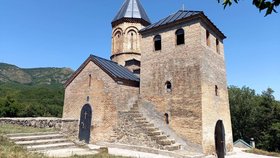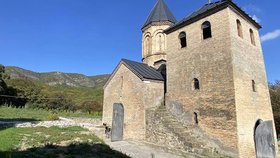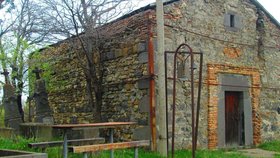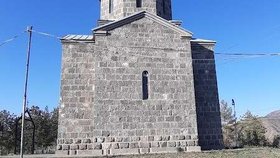






The building type is named outright: this is a hall church, a single space without division into naves by rows of supports. Such precision is rare in this part of the region: usually the type has to be judged on the spot.
No dedication is given for the church; it is known simply by the name of the village. Ghoubani lies between Marneuli and Tetri Tskaro, in the hilly part of Kvemo Kartli, and in this neighbourhood the villages stand far apart with winding roads between them.
There is no fixed schedule of services and the site can be approached at any time. The rules are those of any working church: covered shoulders and knees, quiet inside and in the yard. The drive here takes longer than the distance suggests, so it is better to set out in daylight.
📌 In brief
- The building type is named outright: a hall church without division into naves
- Ghoubani between Marneuli and Tetri Tskaro, the hilly part of Kvemo Kartli
- No dedication is given; the church is known by the name of the village
🚗 Getting there
- Landmark: Ghoubani village, Marneuli municipality; about nineteen kilometres to Marneuli
- For navigation tap Build Route
✍️ Have you visited this place? Share your impressions on Madloba: your reviews help other travellers.