



Georgia in winter: monthly weather, places to visit and what to pack
At a glance
Georgia can work well for a winter city break, time by the Black Sea or a skiing holiday. Each of those trips needs its own clothing, transport plan and allowance for delays. Tbilisi and Kutaisi make useful urban bases; in Batumi, leave room to rearrange outdoor plans around rain; in Gudauri, check road access and lift operations as well as the weather forecast. Georgia's National Environmental Agency explains the country's varied climate through the influence of the Black Sea and its complex mountain terrain. [4]
The Mountain Trails Agency, MTA, has announced 20 December as the opening date for the 2026/27 winter season in Gudauri, Bakuriani, Goderdzi and Mestia. The announcement was published on 28 October 2026. An opening date does not establish that every slope will be available that morning: you still need the operating status of the particular lift and run you intend to use. [5, 6]
For January, the 1991-2020 WMO climate normals give a monthly mean of 2.7°C in Tbilisi and 6.1°C in Kutaisi. These figures combine days and nights over many years. They are not promised daytime temperatures. The table below clearly identifies the older reference figures used for Batumi and Gudauri. [1, 2, 3]
January 1, 2, 7 and 19 are statutory public holidays. Confirm the arrangements of the actual museum, bathhouse, restaurant or transport operator you plan to use; there is no single opening timetable covering every organisation. Information and published fares in this article were checked on 11 November 2026. [11]
What is the weather like in December, January and February?
Start with the stops on your itinerary rather than an average labelled simply “Georgia”. The conditions relevant to a coastal city cannot be applied to a mountain resort. Even a city weather station represents a particular location and elevation, rather than every neighbourhood, exposed hill or sheltered street. [1, 4]
The figures in the table are mean monthly air temperatures. Tbilisi and Kutaisi use station climate normals for 1991-2020 submitted within the WMO system and held in NOAA's official archive. Batumi and Gudauri use Georgia's official climate reference adopted on 25 August 2008. The averaging period for those two series is not identified in the reference table, so they should not be described as 1991-2020 normals. Use the figures to understand the broad differences between destinations, not as a forecast for winter 2026/27. [1, 2, 3]
| Location | December, °C | January, °C | February, °C | Data behind the figures |
|---|---|---|---|---|
| Tbilisi | 3.9 | 2.7 | 3.8 | Tbilisi station, 432 m; WMO 1991-2020 [1] |
| Kutaisi | 8.0 | 6.1 | 6.5 | Qutaisi station, 109 m; WMO 1991-2020 [2] |
| Batumi | 8.6 | 7.1 | 7.2 | “Batumi, city” entry in the official 2008 reference [3] |
| Gudauri | -4.4 | -6.7 | -6.1 | Station at 2,197 m in the official 2008 reference [3] |
Averages smooth out both unusually warm spells and sharp cold snaps. For January in Tbilisi, the mean daily minimum is -0.4°C and the mean daily maximum is 7.1°C. In Kutaisi, the corresponding values are 3.7°C and 9.7°C. These are averages of daily lows and highs, not the coldest and warmest conditions that can occur. A pleasant afternoon does not tell you what the pavement or temperature will be like later that night. [1, 2]
Rainfall is another useful part of the comparison. Under the same 1991-2020 normals, Tbilisi receives 20.8 mm in December, 16.4 mm in January and 18.2 mm in February. Kutaisi's figures are 142.8, 138.2 and 117.0 mm. For a walking holiday, waterproof footwear and a place to dry it can matter as much as an extra thick jumper. [1, 2]
Do not assume that a winter visit to Batumi rules out snow. The National Environmental Agency's February 2025 bulletin records heavy snow and a blizzard there on 24 February. It also reports 62 cm of snow cover in Kutaisi during the 24-28 February period. These observations describe a particular winter event. They are neither normal snow depths nor a forecast for your next trip. [17]
Should you choose December, January or February?
At the beginning of December, a city itinerary is easier to tie to fixed bookings than a holiday that depends on ski lifts. If skiing is the main reason for travelling, work around the announced 20 December opening and then check which areas have actually started operating. A photograph of snow on a resort hillside does not establish that a piste has been prepared or a lift has opened. [5, 6]
December can suit a combination of city time and several nights in the mountains. Keep the bookings sufficiently independent that postponing the mountain section will not unravel the entire trip. After a late flight, consider sleeping in the arrival city and discussing a morning departure with your driver. This is a planning suggestion, not a statement that a particular road will be passable.
For a January trip, pay attention to the holiday calendar. Avoid making essential administrative appointments for 1, 2, 7 or 19 January. Ask about the precise date when booking a museum visit, guided activity or bathhouse room. The law identifies public holidays; individual service providers explain whether and how they will receive visitors. A timetable for an ordinary weekday may not settle that question. [11]
February is an option for travellers who want a holiday centred on winter activities without tying it to New Year's Eve. It is still a winter month. A small rise in a monthly temperature average cannot establish that mountain access will be straightforward. Check weather warnings for cities and the coast as well as for the resort itself, particularly before a long transfer. [1, 2, 15]
“Winter is cheaper” is too broad a claim to build a budget around. Compare complete offers for your own dates: heated accommodation, travel to the property, food, equipment and cancellation terms. Without a quote from the hotel or transport provider, a single advertised figure for a winter holiday says little about what you will actually spend.
Where can you go if you do not ski?
Think first about how much time you want to spend outdoors. A short city break benefits from a convenient place to stay and a few indoor activities chosen in advance. A coastal visit needs a timetable that can change with the weather. In the mountains, a non-skier should confirm pedestrian lift tickets and the return journey separately rather than assuming that access is the same as for skiers.
| Your main base | A practical shape for the day | Details to arrange beforehand |
|---|---|---|
| Tbilisi | A short old-town walk, lunch, then a bathhouse visit or another indoor activity | Admission times, a private bath room if wanted, holiday opening arrangements |
| Batumi | Time by the sea in suitable weather, city activities, and a separate garden visit on a suitable day | Wind and rain forecast, return transport and the site's visitor conditions |
| Kutaisi | City walks with manageable distances and indoor breaks | Guide meeting point, the opening times of chosen stops and your return time |
| Gudauri | Walks in accessible areas and a lift ride only when passenger access is allowed | Pedestrian ticket, last downward departure and conditions on the approach |
These are suggested ways to organise a day. They do not confirm that every mentioned service operates every day of winter. Check the date with the provider, particularly if the visit requires a separate journey or is the main reason for choosing that base.
Tbilisi works well as a base when you prefer not to change hotels every night. The historic Abanotubani district is known for its sulfur bathhouses. Georgia's official tourism website lists Chreli Abano, Bath No. 5, Bohema and other establishments there. Choose an actual bathhouse and agree on the room, length of the session and what the booking includes, rather than booking a generic “bath experience” with unclear conditions. [13]
For an initial comparison, use the Tbilisi bathhouses and saunas directory and the Tbilisi bathhouse ranking. Look at addresses, photographs and reviews, then confirm the price and available time directly with the chosen bathhouse. A directory listing is useful for finding a business; it is not a reservation.
In Batumi, you do not have to commit the whole day to an exposed seafront walk. Rearrange outdoor plans when wind conditions are poor, and leave the botanical garden for a suitable weather window. The official Ajara tourism portal places the garden at Mtsvane Kontskhi, approximately 9 km from Batumi. Treat getting there and returning to your accommodation as part of the outing, rather than adding the garden as an effortless final stop. [10]
Kutaisi can be a base in its own right if your plans focus on western Georgia. Its winter precipitation normals are substantially higher than Tbilisi's, so avoid filling every day with a distant excursion that cannot move. Keep a nearby indoor option and allow yourself to exchange the order of a walk and an indoor visit. That makes the itinerary usable when the weather changes without requiring a new hotel every night. [1, 2]
Where should you look for snow and how do you choose a resort?
MTA's season-opening announcement covers Gudauri, Bakuriani, Goderdzi and Mestia. Mestia has the Hatsvali and Tetnuldi ski areas. Check the information for the actual destination you are visiting: a headline announcing the start of the national ski season does not describe the operating conditions of every individual ski area. [5, 19]
Gudauri is a natural destination to consider alongside a Georgian Military Road itinerary. MTA describes it as approximately 120 km from Tbilisi, with the resort settlement at around 2,200 m. Road distance does not provide a reliable winter journey time. Snow, restrictions and necessary stops need their own allowance, and the distance from your accommodation to the relevant lift is a separate question. [6, 7]
For a family trip, the distance to a suitable learning area, somewhere to change clothes and an easy lunch break can be more useful selection criteria than the resort's highest point. Before reserving a lesson, ask about age requirements, the teaching language and the exact meeting place. Finding an instructor's listing does not confirm availability for your preferred session.
If only part of your group skis, discuss separate plans before booking the hotel. A skier's lift pass does not automatically resolve a pedestrian's ticket requirements. A lift operating in the morning can change its status because of weather, technical conditions or safety needs. MTA specifically advises checking live operations before heading onto the slopes. [16]
The Gudauri accommodation ranking can help you start comparing places to stay. Look at the relationship between the property and the lift you expect to use, as well as cancellation terms. For a broader comparison, continue with the guide to Georgia's ski resorts.
How should you organise winter transport?
Plan the main intercity journey and the final approach to the property separately. If you book a driver, provide the address, expected arrival time and details of large bags or ski equipment. Agree in advance on the arrangements for a flight delay, a road closure or a situation in which the vehicle cannot reach the building's entrance. A short final distance on a map can still affect how you handle luggage.
For a mountain journey, read the Roads Department announcement before relying on a navigation app. Identify the road section, direction, vehicle category and publication time. A restriction affecting trailers is not the same as a ban on passenger cars. Similarly, restored traffic on one section does not establish that your entire route is accessible. The separate Upper Lars road, camera and queue guide explains how to check that crossing and its approaches. [7]
In its guidance dated 22 November 2024, Georgia's Ministry of Internal Affairs explains the winter-equipment requirements that apply from 1 December to 1 March on designated road sections. Passenger-car winter tyres must have at least 3 mm of tread; chains can be required in the specified circumstances. Check the rules for the actual route and vehicle category, and ask the rental company to confirm the vehicle's equipment before collection. [8]
Leave room between a return from the mountains and an international departure. Extra time gives you more options for moving a hotel night or changing a transfer without rushing. It does not guarantee that delays will be short, which is why cancellation and rebooking terms are worth reading before payment. Avoid treating a driver's estimated travel time as an undertaking that weather cannot affect it.
For the Tbilisi part of the trip, there is a published fare you can use in your calculations. TTC's standard fare is GEL 1 for 90 minutes of travel within the covered network, with longer subscription products also available. The Rike-Narikala cable car is charged separately. Check the payment method as well as the fare, since the transfer conditions are not identical for every way of paying. [9]
Which published prices can you use in a budget?
The following are specific official fares checked on 11 November 2026. They are useful reference items, not the price of a complete holiday. Read the visitor category and product conditions before comparing them with a package that may include other services.
| Service | Published price | Conditions |
|---|---|---|
| Tbilisi municipal transport | GEL 1 for 90 minutes | Covered TTC network; transfer eligibility depends on payment method [9] |
| Tbilisi one-day subscription | GEL 3 | Loaded onto a subscription card [9] |
| Tbilisi one-week subscription | GEL 20 | Loaded onto a subscription card [9] |
| Metromoney or subscription card | GEL 2 | TTC standard tariff; retain the purchase receipt [9] |
| Batumi Botanical Garden, foreign citizen | GEL 25 | Standard admission listed by Visit Ajara [10] |
| Batumi Botanical Garden, Georgian citizen | GEL 10 | Concession categories are listed separately by the operator [10] |
The TTC page carries the date 3 June 2019; the amounts above were read on that page on 11 November 2026. For the garden, the source is the accessible entry on Ajara's official tourism portal, which does not display a publication date. The date on which a page was checked should not be confused with the date on which a fare originally took effect. [9, 10]
Calculate a ski pass, equipment rental, a lesson and a transfer as separate costs. At the time of checking, MTA's Prices & Rules page did not contain a price table for the 2026/27 season. Last season's figures should therefore not be presented as confirmed prices for the coming winter. When sales are announced, use the conditions of the actual ticket being offered. [18]
For accommodation, compare the full total for the same dates and occupancy. Include cleaning, breakfast, an extra bed if needed and the cancellation arrangement. The Tbilisi hotel directory is a starting point for finding a city base. Once you have a shortlist, ask about heating in the exact room or apartment and the availability of hot water.
A useful personal budget also leaves room for a change of plan. Estimate what one additional night or a rearranged transfer would mean for you, using actual quotes. This avoids an apparently inexpensive booking becoming awkward simply because every part of the trip has been prepaid under incompatible conditions.
What should you pack for a winter trip?
Pack for the coldest part of your route, while allowing for wet weather elsewhere. A trip combining Batumi and Gudauri asks different things of your clothing than a city-only weekend. Layers are practical because you can remove them indoors and add them for a longer outdoor stop without changing the whole outfit.
| Situation | Useful items to bring | Details to check before travelling |
|---|---|---|
| Walking around a city | Waterproof footwear with a secure sole, a warm layer and protection from wind | Evening conditions and the return journey |
| A wet day by the coast | A hooded outer layer, spare socks and protection for documents | A way to dry clothes at the accommodation |
| A day in the snow | Gloves, a hat, goggles or suitable glasses and appropriate outerwear | Rental contents, sizes and collection conditions |
| A transfer | Charger, water, necessary medication and documents available offline | Driver contact details and the full accommodation address |
| Travelling with a child | A change of clothes and familiar items for breaks | Somewhere to rest, food arrangements and transport requirements |
Find out where you will dry your boots. In an apartment, ask about the heating; in mountain accommodation, ask about storage for equipment. A photograph of a fireplace in a communal lounge does not describe the temperature of your bedroom. If the answer is vague, request practical details before confirming the reservation.
Keep essential documents available without a mobile connection. Since 1 January 2026, tourists entering Georgia have been required to hold health and accident insurance with at least GEL 30,000 of cover, subject to the stated exceptions. The Foreign Ministry's explanation dated 8 January 2026 sets out the requirements. If you intend to ski, confirm coverage for that activity with the insurer rather than assuming that the entry requirement settles it. [12]
Put the items needed during the journey in an accessible bag, rather than beneath all the luggage. Before leaving a warm building, check that gloves, documents and your phone are with you. This is particularly useful when collecting rental equipment or moving between a vehicle and accommodation, when it is easy to split belongings across several bags.
How can you plan a manageable trip over several days?
For a first winter visit, there is no need to combine the coast, the capital and multiple ski resorts in one itinerary. Choose a city base and, if wanted, one mountain destination. This leaves more scope to move an outdoor day when the forecast changes and reduces the number of transfers that must all run to schedule.
On a short trip, Tbilisi can remain your main base. Alternate walks, an indoor activity booked in advance and uncommitted time. Add a mountain excursion once road conditions have been checked. If skiing is the main purpose, give the resort several nights and place city errands on the arrival and return days instead of interrupting every ski day with travel.
For western Georgia, decide first whether being by the sea or staying in Kutaisi matters more to you. Do not automatically turn every rainy day into a long drive to another region: conditions at the destination may also be unsuitable. A nearby alternative and the option to postpone one walk can be more useful than a second distant backup destination.
Allow time for ordinary tasks that do not appear in distance calculations: collecting baggage, checking in, fitting boots, buying a pass and drying clothes. These can determine how much comfortably fits into a day. Keep the first day after arrival particularly straightforward if you need to organise equipment or meet a guide.
In an emergency in Georgia, call 112. Explain what has happened, give the precise location and say who needs help. Weather enquiries, booking changes and ordinary timetable questions belong with the relevant service provider; the emergency number is for situations threatening life, health or property. [14]
Frequently asked questions
Yes, if you want city time, walks and indoor activities rather than a holiday built entirely around snow sports. Choose a base that suits your interests and keep an alternative for wet weather. Abanotubani is an option in Tbilisi, while a botanical-garden outing from Batumi can be planned for a suitable day. [10, 13]
The WMO 1991-2020 normals give a monthly mean of 2.7°C, a mean daily minimum of -0.4°C and a mean daily maximum of 7.1°C. Those are long-term statistics, not a forecast for your dates. Before going out, look at the temperature, wind and precipitation expected over the next several hours. [1, 15]
Official climate information describes a milder winter on the western coast. However, wind and rain affect walking conditions, and snow is possible in Batumi too. Read the local forecast instead of using a single monthly temperature as a promise of comfortable outdoor weather. [3, 4, 17]
MTA has announced 20 December as the opening date for winter 2026/27. A trip before that date should not depend on an assumption that the lifts will already be running. After the opening, continue checking the exact area and run you intend to use. [5, 6]
Choose in relation to your available dates, the resort and how much flexibility you have. Monthly temperatures indicate winter conditions but cannot guarantee a particular snow depth or open lifts. Use current operator announcements and a short-term forecast for the final decision. [1, 2, 3, 16]
Discuss a day trip with the transport provider for the actual date and conditions. MTA places Gudauri around 120 km from Tbilisi, but that distance does not fix a winter travel time. If you want a first lesson, also allow for equipment fitting and the agreed meeting time with the instructor. [6, 7]
Winter-equipment requirements apply on designated sections from 1 December to 1 March. Check your route against the official rules and confirm the equipment supplied with a rental vehicle. Four-wheel drive does not replace appropriate tyres or compliance with a restriction imposed on the road. [8]
There is no universal timetable. The statutory dates are 1, 2, 7 and 19 January, while museums, bathhouses, restaurants and transport providers announce their own visitor arrangements. Confirm the exact date beforehand, especially if you must make a separate trip to reach the place. [11]
TTC's page, checked on 11 November 2026, lists GEL 1 for a 90-minute fare, GEL 3 for a one-day subscription and GEL 20 for a week. Check the required card and payment method. Transfer entitlement is not identical for every way of paying. [9]
Tourists entering Georgia have been subject to a minimum GEL 30,000 health and accident insurance requirement since 1 January 2026, with specified exceptions. Use the Foreign Ministry explanation to check your circumstances. For skiing, ask separately whether the intended activity is covered by the policy. [12]
Ask how the specific room is heated, whether heating is included, and whether hot water and a place to dry clothing are available. For a mountain property, add questions about vehicle access and equipment storage. Keep the owner's answer with your booking confirmation so that the agreed arrangements remain clear.
Use the National Environmental Agency's forecast and warnings for the relevant city or district. Add GeoRoad information for a mountain drive and MTA's operating information for lifts and pistes. Each source answers a different practical question, so none of the three should be treated as a substitute for the others. [7, 15, 16]
Sources
- [1] WMO / NOAA, Tbilisi: climatological standard normals 1991-2020. Date / period: 1991-2020; checked 11 November 2026.
- [2] WMO / NOAA, Qutaisi: climatological standard normals 1991-2020. Date / period: 1991-2020; checked 11 November 2026.
- [3] Matsne: სამშენებლო კლიმატოლოგია, order 1-1/1743. Date / period: 25.08.2008; checked 11 November 2026.
- [4] National Environmental Agency: climate of Georgia. Publication date not stated; checked 11 November 2026.
- [5] MTA: The winter season will officially open on December 20. Date / period: 28.10.2026; checked 11 November 2026.
- [6] MTA: Gudauri-Kobi, resort reference and operating status. Publication date not stated; checked 11 November 2026.
- [7] Roads Department of Georgia: road restrictions. Publication date not stated; checked 11 November 2026.
- [8] Ministry of Internal Affairs: winter tyres on designated roads. Date / period: 22.11.2024; checked 11 November 2026.
- [9] Tbilisi Transport Company: standard tariff. Date / period: 03.06.2019; checked 11 November 2026.
- [10] Visit Ajara: Batumi Botanical Garden. Publication date not stated; checked 11 November 2026.
- [11] Matsne: Labour Code of Georgia, Article 30. Publication date not stated; checked 11 November 2026.
- [12] Ministry of Foreign Affairs: mandatory health insurance for tourists. Date / period: 08.01.2026; checked 11 November 2026.
- [13] Georgia Travel: Tbilisi Sulfur Baths. Publication date not stated; checked 11 November 2026.
- [14] 112 Georgia: frequently asked questions. Publication date not stated; checked 11 November 2026.
- [15] National Environmental Agency: forecasts and warnings. Publication date not stated; checked 11 November 2026.
- [16] MTA: Questions and answers. Publication date not stated; checked 11 November 2026.
- [17] National Environmental Agency: climatic bulletin, February 2025. Date / period: 02.2025; checked 11 November 2026.
- [18] MTA: Prices & Rules. Publication date not stated; checked 11 November 2026.
- [19] MTA: Mestia, Hatsvali and Tetnuldi. Publication date not stated; checked 11 November 2026.

Read also
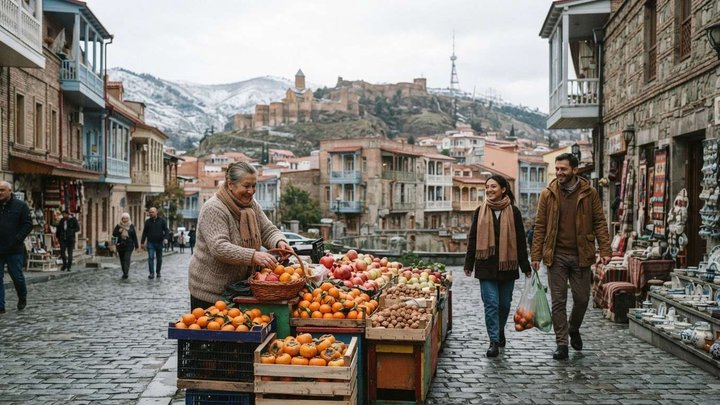
🗺️ A Trip to Georgia in November: Where to Go Before the Crowds
🗺️ How warm it gets in Tbilisi and Batumi, whether you can swim, where to go for wine, tangerines and hot springs.
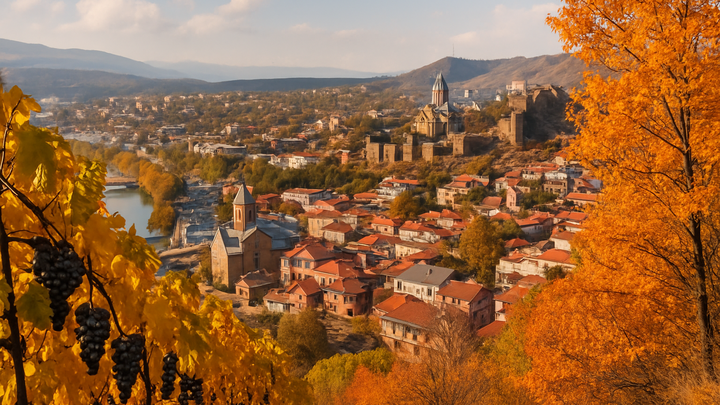
🍂 A Trip to Georgia in October: Weather, Where to Go and What to See
🍂 Weather region by region, the last swimmable days, the spas of Borjomi and Tskaltubo, the Vashlovani steppe and low-season prices.
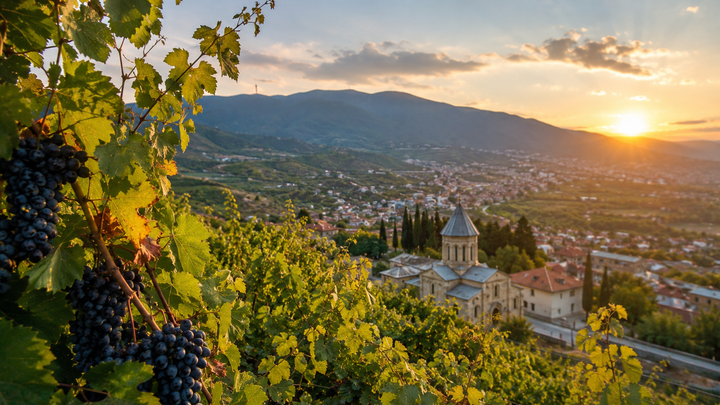
🍇 A September Trip to Georgia: Where It Is Warm, Where It Rains and Where to Go for the Grape Harvest
🍇 Where to go in the velvet season: dry Kakheti during the harvest, rainy Adjara, the last window for Tusheti and prices below August.
⚔️ Battle of Kakheti's Premium Resorts: Kvareli Lake Resort vs Radisson Collection
🍷 Comparing two premium resorts of the Alazani Valley: Kvareli Lake Resort and Radisson Collection Tsinandali. Pools, wine, service, route map and verdict.

Batumi From the 19th and 20th Floor: Umami at Clouds and 360 Sky Bar — Views, Dinner and Honest Reviews
🏙️ Umami at Clouds: reviews, prices and the view from Radisson's 19th floor; 360 Sky Bar - a 360° panorama at the Sheraton. What to order, when to book.

Hookah in Georgia: Guide to Top Spots, Tobacco & Care
🧳 Learn everything about hookahs in Georgia in our comprehensive guide! We'll help you understand the different types of hookahs and provide tips on choosing.
0 comments
Log in to leave a comment