




Ministry of Internal Affairs building in Tbilisi: modern architecture and glass cube
Share
Save
🏢 Architectural landmark · ⏱ 20–40 minutes · 📍 Kakhetian Highway, between the airport and central Tbilisi
🏢 Key facts about the building
| 📍 Location | Kakhetian Highway, Tbilisi. Between the airport and the city centre |
| 🏗️ Architect | Michele De Lucchi (Italy). Also designed the Bridge of Peace and the Presidential Palace in Georgia |
| 📐 Area | 49,652 m² total. Main building — 10,579 m². Underground spaces — 3,580 m² |
| 💧 Reflecting pool | 1,000 m², depth 30 cm. Reflects the façade and amplifies the visual effect |
| 🚗 Parking | Available on the north side. A helicopter landing pad is also provided |
| 🚇 Getting there | Isani metro station or bus along the Kakhetian Highway. By car — on the airport road |
| 💰 Entry | Outside — free. Inside — government business only |
🧭 Why it's worth knowing about
Most tourists drive past the MIA building on the way from the airport. Some stop — and initially have no idea what they're looking at. The glass wave on the Kakhetian Highway looks like nothing else they've seen in a government building. This article is for anyone who wants to understand what this place is, why it was built this way, and what idea lies behind floor-to-ceiling windows with no curtains.
🌊 A wave of glass
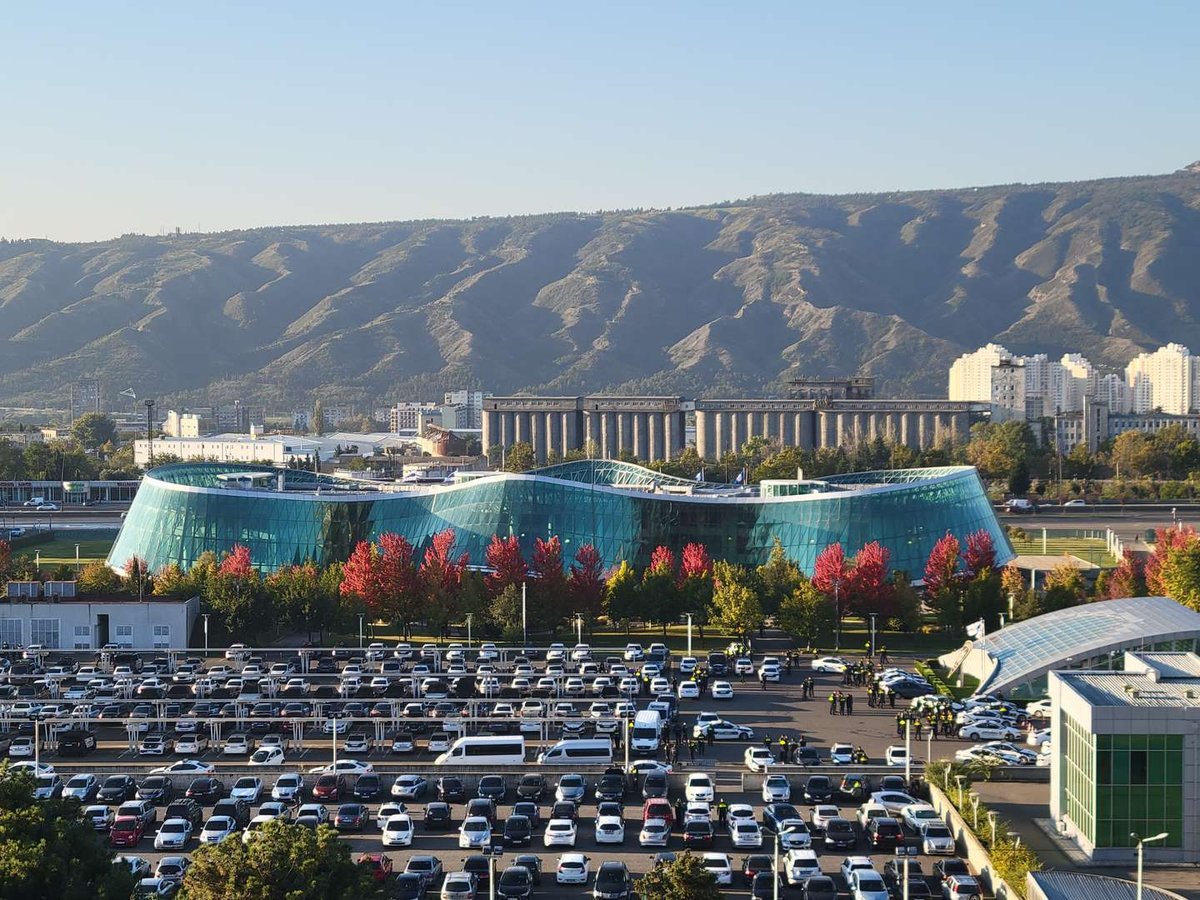
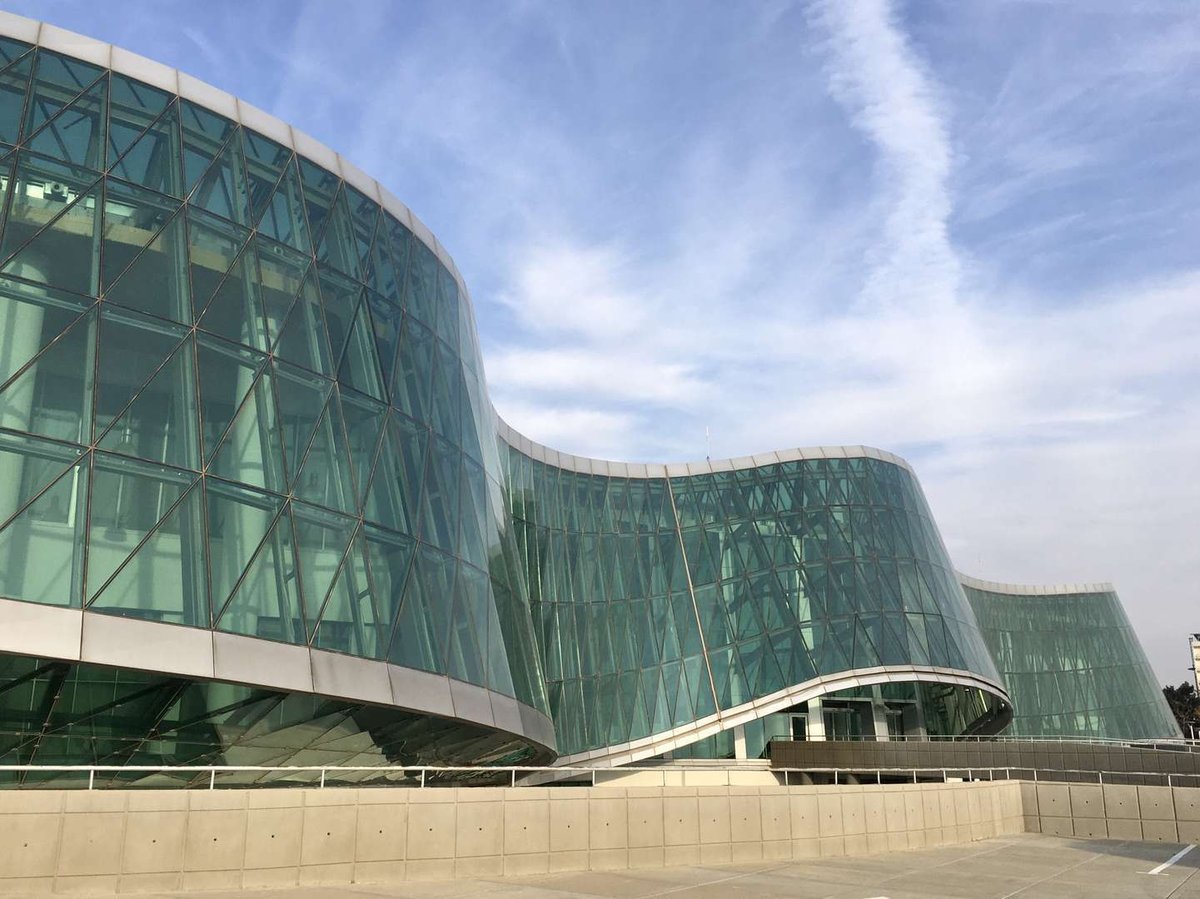
The building's façade resembles a sea wave — curved glass surfaces angled so that sunlight creates an illusion of water moving across them. This is not an accidental form or a purely decorative choice.
The designer is Italian architect Michele De Lucchi. In Georgia he is known for two other projects: the Bridge of Peace across the Mtkvari and the Presidential Palace in Tbilisi. All three are about glass, light and transparency — his signature.
The offices inside have enormous floor-to-ceiling windows with no curtains or blinds. From outside you can see what is happening within. This was intentional: the building was meant to show, literally, that police work in plain sight.
🔍 The story behind the reform
In the early 2000s Georgia carried out a large-scale police reform. The driving force was President Mikheil Saakashvili. The old corrupt police force was dissolved, new officers were recruited and working conditions and salaries were overhauled. Architecture became one of the symbols of the reform: if the work is honest, there is nothing to hide behind.
The MIA building on the Kakhetian Highway became the central expression of that idea. Other cities and towns across Georgia followed with their own police stations built in the same spirit — glass, openness, minimalism. Some of them remain striking today, especially the smaller district stations that look like architectural objects rather than Soviet-era offices.
🏗️ What the complex looks like
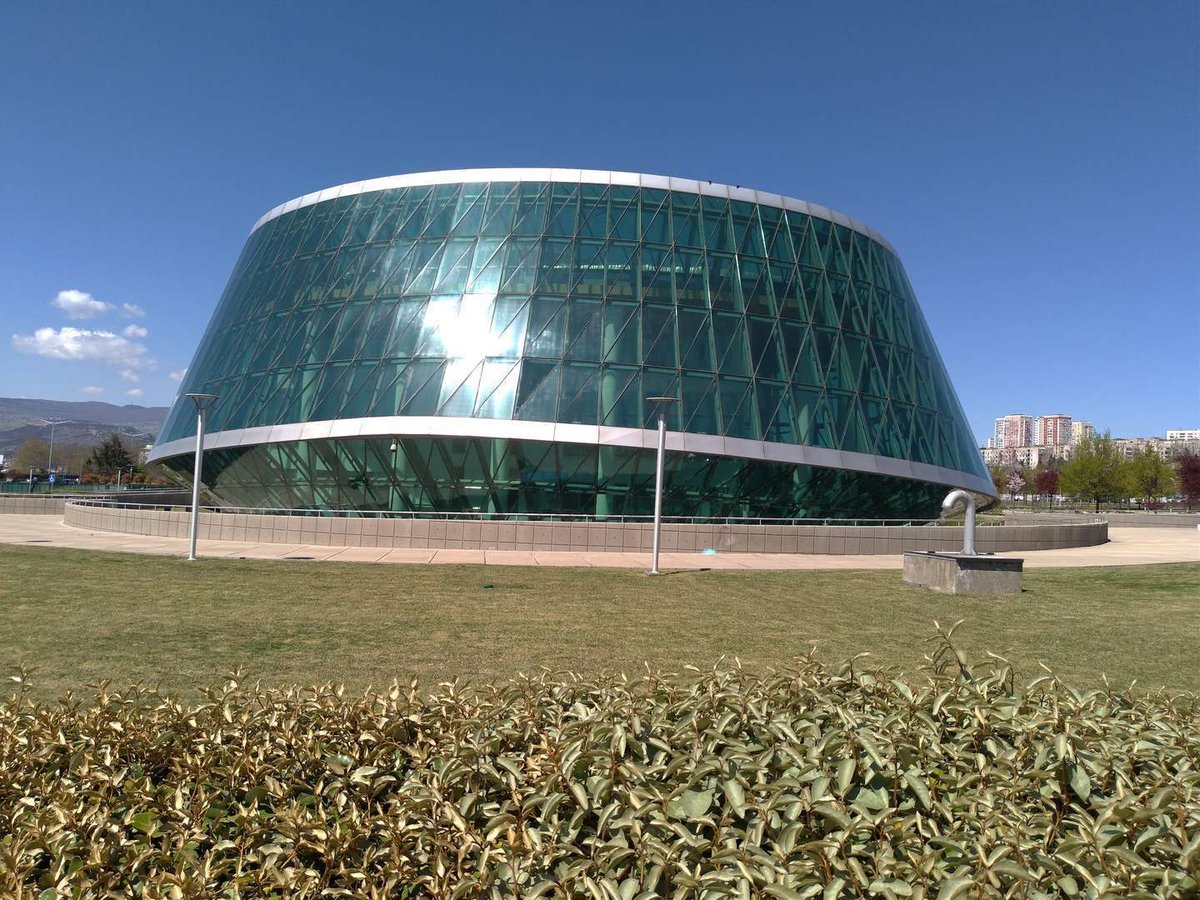
The main building sits in a depression below road level. Official ceremonies are typically held there. There are two entrances: one via a bridge, reserved for VIPs, leading directly to the first floor; the other from the north side, for civilian visitors.
The north side has a car park and a helicopter pad. To reach the main building, visitors walk through a long green zone: trees, grass and flowers. The internal road layout was designed to allow fire engine and ambulance access.
On the ground floor there is a kitchen with a café and a shared hall for staff and visitors. The eastern section houses an open-plan office. There are separate lifts for civilians, firefighters and VIPs.
In front of the main building is a reflecting pool covering 1,000 m² at a depth of just 30 centimetres. Pure aesthetics: the blue water mirrors the glass façade, and that doubled image works better than any render from a presentation.
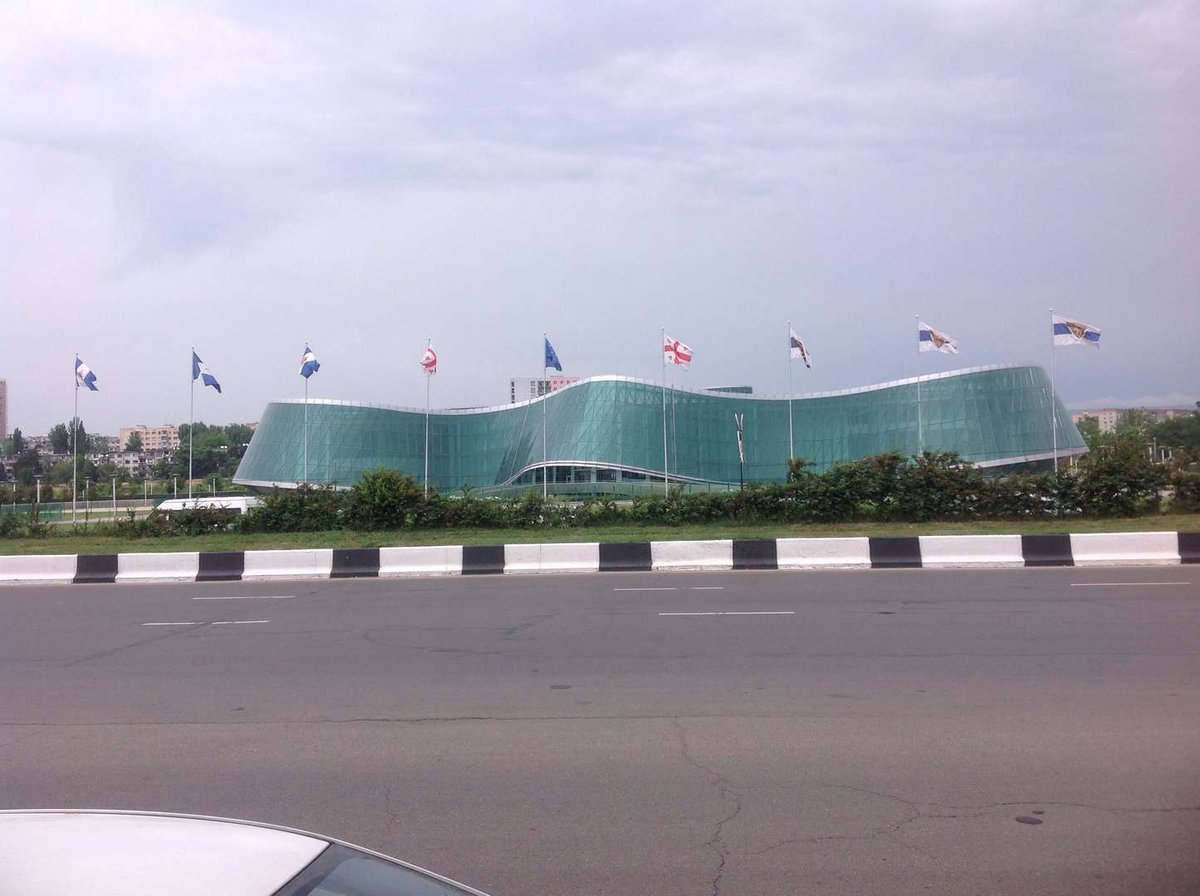
If you're driving from the airport into the centre, don't miss the moment. The building is clearly visible from the highway, but most tourists are looking at their phones. The best shot is from the opposite side of the road, slightly at an angle, with the façade and the reflecting pool in the same frame. In full sun this is particularly effective.
🗺️ How to plan your stop
1️⃣ Approach from the airport side — the wave façade is best seen from that direction.
2️⃣ Stop opposite the building and look at the pool with the façade reflected in the water.
3️⃣ Walk to the north entrance — from the civilian side you get a clear view of the green zone and the entrance to the complex.
4️⃣ For the best light when shooting — morning or evening, when the sun grazes the glass rather than hitting it straight on.
5️⃣ After your stop, the city centre and Tsminda Sameba Cathedral are 10–15 minutes away.
💬 What visitors say
"The first thing that struck me when I arrived in Georgia was a massive glass cube that looked like the office of some successful company. Turned out it was the Ministry of Internal Affairs. Sunlight through the glass façade creates an illusion of water. Incredible."
"I was in Tbilisi and saw this building. Very unusual feeling when the façade reminds you of a sea wave. The floor-to-ceiling windows especially impressed me — they really do create a transparent space. As a photographer, I can say the location is ideal for shots."
"I like the message — the MIA building hides nothing. That's beautiful and correct. Police work should be exactly like that."
Most reactions are surprise. Nobody expected a government building to look like this.
Have you seen the MIA building in person — or only in photos? What was your first thought when you realised it was a police building? And what do you think of the idea of 'transparent policing' through architecture? We read every comment ❤️
🏁 Is it worth stopping
Making a special trip across the city just for the MIA building is debatable. But if you're travelling to or from the airport — a 15-minute stop is worth it. This is one of the rare cases where government architecture actually says something meaningful, and that meaning is visible literally: through glass, without curtains, in broad daylight.
ℹ️ The building is an active government institution. Tourists are not admitted inside. Photography outside is unrestricted. Information is current at the time of publication.
🏛️ Nearby attractions


❓ Questions people ask most often
💬 On the Kakhetian Highway — the road between Tbilisi International Airport and the city centre. Coming from the airport, the building is clearly visible on the right side of the road.
💬 Italian architect Michele De Lucchi. He also designed the Bridge of Peace and the Presidential Palace in Tbilisi. All three share the use of glass and the idea of visual openness.
💬 The transparency of police work. Floor-to-ceiling windows with no curtains mean literally: look inside, we have nothing to hide. The idea is linked to President Saakashvili's police reform in the early 2000s, when the old corrupt force was dissolved and a new one recruited.
💬 No. It is an active government institution, entry is for official business only. The exterior is freely accessible and photography is unrestricted.
💬 It is purely aesthetic. The pool covers 1,000 m² at a depth of just 30 centimetres. The blue water reflects the glass façade, intensifying the visual experience. In sunlight the double-reflection effect is particularly striking.
💬 The total site is 49,652 m². The main building is 10,579 m². Underground spaces add another 3,580 m². For scale, that is roughly 7 football pitches.
💬 The reform was launched by President Saakashvili in the early 2000s: the old police was dissolved, new officers hired on different salaries and terms. Architecture became part of that signal — transparent buildings were meant to show that the new police worked openly. Other Georgian cities adopted the same idea and built similar stations.
💬 Yes. A car park for civilian visitors is on the north side of the building. A helicopter landing pad is provided there too.
Share
Save

Read also
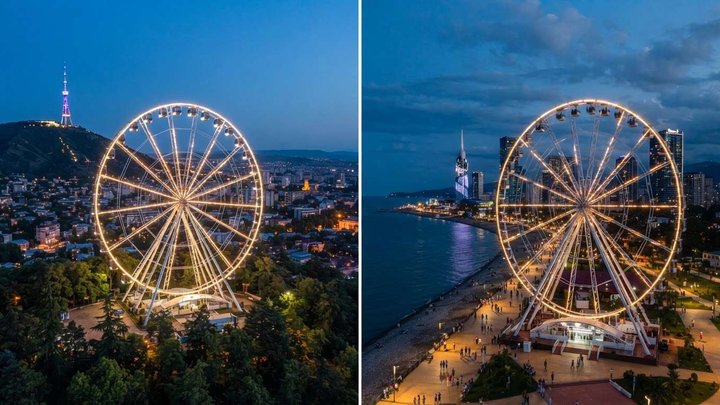
🎡 Two Ferris Wheels in Georgia You Can Ride: Mtatsminda in Tbilisi and the Batumi Boulevard
🎡 The devil's wheel on Mtatsminda and on the Batumi boulevard: 2026 prices, height, closed and open cabins, best time for sunset and how to get there.
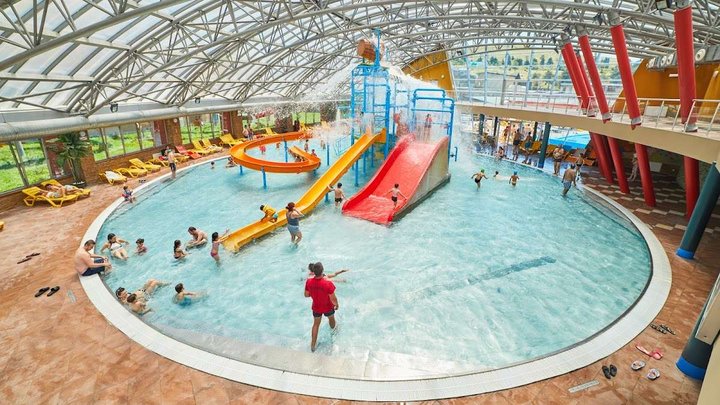
🌊 What Gino Paradise costs and what is inside Tbilisi's main water park
🌊 The water park by the Tbilisi Sea: 2026 weekday and weekend prices, a 31 m toboggan, a wave pool, a spa and ways to save on tickets.

🌲 Главный парк Боржоми: источники, канатка и первая ГЭС Закавказья
Borjomi Central Park: mineral springs, the cable car, the first hydroelectric plant in Transcaucasia and the path to the thermal pools.

♨️ The Royal Baths of Borjomi: Sulphur Pools at the Far End of the Park and the Walk There
♨️ Where to go and what to pack: a dirt track through pine forest, basins for children, swimming and warming up, three separate payments.
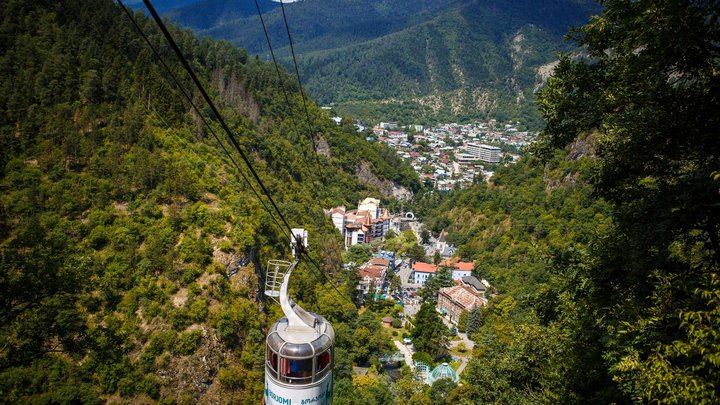
🚡 The Cable Car from Borjomi Park to Plateau: What It Costs and Whether the View Is Worth It
🚡 Bottle-shaped cabins running since 1962: three minutes up to Plateau, a Ferris wheel, a café and three separate payments.

🏛️ Romanov Residences in Georgia: Why There Are Four Palaces and Which One People Look For in Chakvi
🏛️ Chakvi, Makhinjauri, Abastumani, Likani: which residence is where, who built it and where to go for what.
35 comments
Log in to leave a comment
Сапраўды, цікава, як архітэктура можа адлюстраваць не толькі эстэтыку, але і дух краіны. Якія эмоцыі ў вас выклікаюць такія будынкі? Ці мяркуеце вы, што іх можна лічыць часткай культуры, як старая архітэктура?