




Architectural Tbilisi: Historic and Modern Landmarks
Share
Save
To say Georgia is rich in attractions is an understatement. In the very center, Tbilisi, there are a number of architectural landmarks that attract the attention of people from both Russia and around the world.
Here you can find both historical heritage buildings and modern, futuristic structures. From structures whose history stretches back centuries to those that amaze tourists with their visions of the city of the future, in this article we will tell you about the most striking and memorable examples of architectural art in this magnificent city.
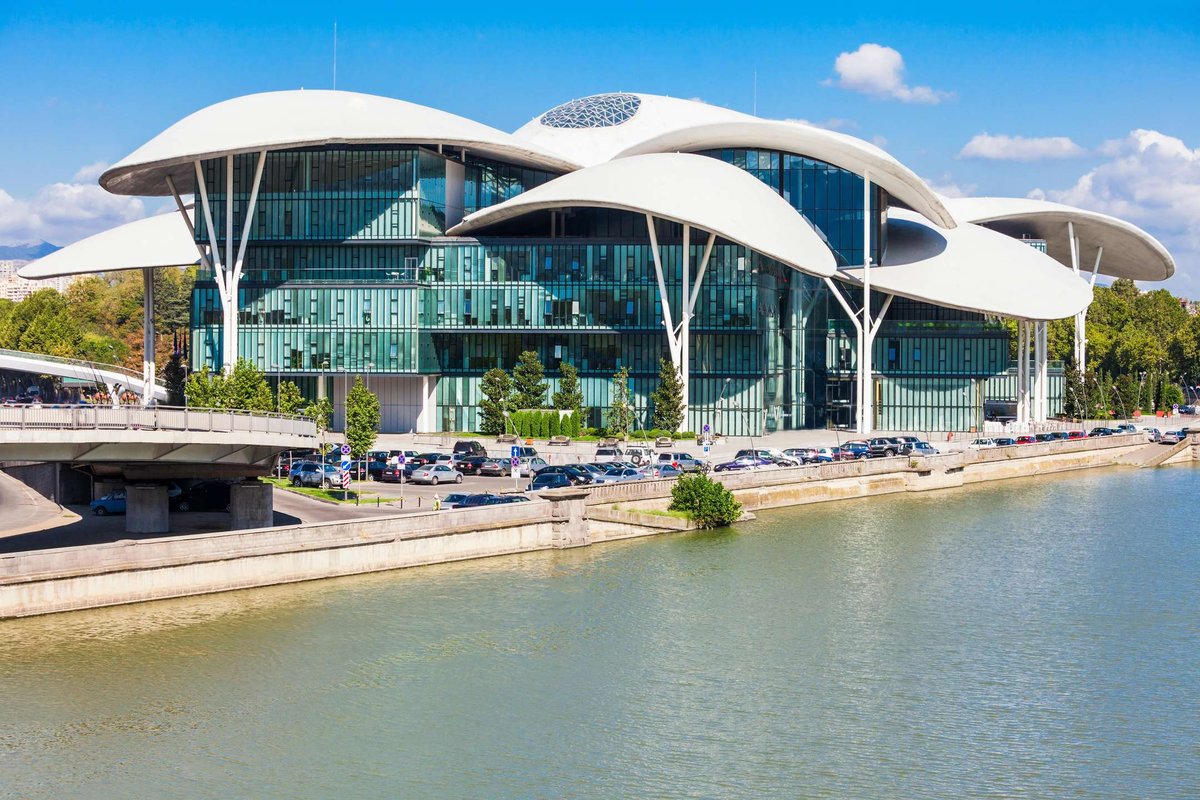
The House of Justice on Zviad Gamsakhurdia Street
We'll tell you about a building designed to make life easier for locals and others. It's located on the banks of the picturesque Kura River, near the Bridge of Peace. This branch of the House of Justice, Tbilisi, resembles a mushroom mushroom from the outside, but looks more like an anthill from the inside. Despite the daily influx of visitors, all services are handled quickly and without confusion.
Construction was supervised by the renowned Italian architect Massimiliano Fuksas and was completed in 2011. The following year, the building received an award from the United Nations for improving the provision of essential public services.
The exterior is designed in a contemporary art style—on the one hand, minimalist, using only metal, concrete, and glass. On the other, the whimsical roof shape can be seen from any high-rise building in the capital. Local residents are very proud not only of the building's visual appeal but also of the quality of its service. The interior is designed for versatility, thanks to the wide range of services offered, over three hundred of which are available. There's also a wide variety of services for those seeking solutions to their own needs. The space was divided into three sections. The first is a self-service area, the second is a quick service area, where service takes an average of a couple of minutes. And finally, the third is where the process takes over five minutes.
As can be seen from the timeframes listed, the level of service provided is so comprehensive that any document can be obtained within a single day. Once a client's request is processed, they are notified via text message when and at which window they can pick up their missing documents.
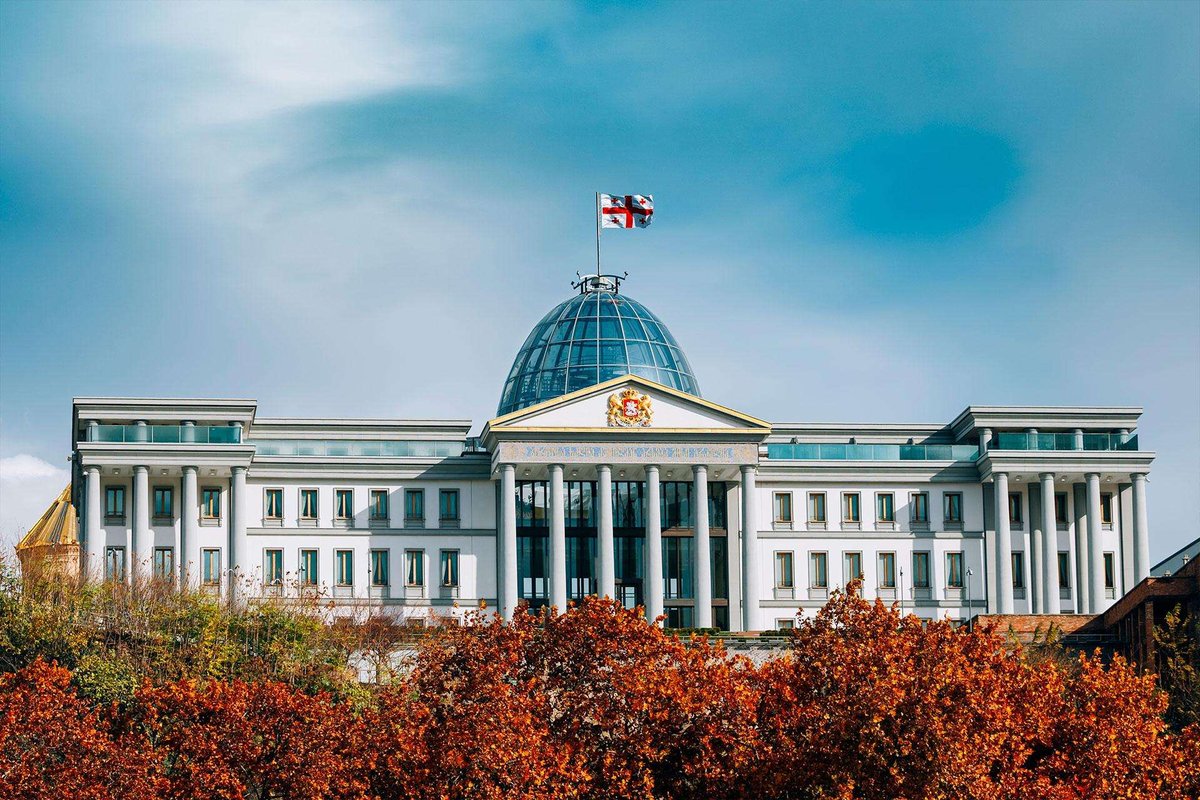
The Avlabari Residence is the presidential palace
It rises above the city along the country's main river, the Kura, and was also built during the reign of Mikheil Saakashvili. The style is classical, with neoclassical elements. It is not currently the residence of the head of state, but is heavily guarded. Despite the watchful presence of security, you can book a tour of the palace through a professional travel agency in advance—it's best to confirm the exact dates.
Its construction took five years and was not always smooth. This was due in part to the fact that the work was begun by Georgiy Iraklievich Batiashvili, a renowned Soviet architect, and completed by the Italian Michele De Lucchi. Each brought their own touch to the design, making it impossible to pinpoint the exact style.
Due to its location, the palace can be seen from virtually anywhere in Tbilisi. This is one of its main features and has become a source of joke among locals. The president's need to monitor his property 24/7.
Its appearance reminds many of the White House on Capitol Hill in Washington, D.C., with a similar massive glass dome in the center of the building and columns framing the main entrance.
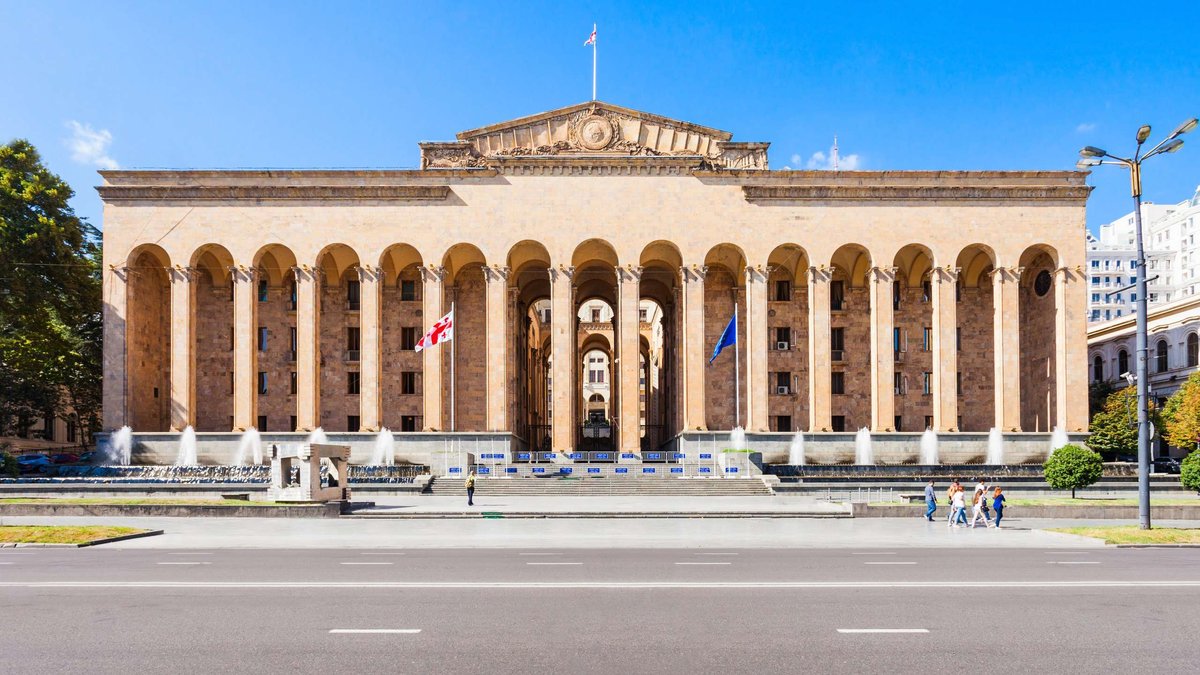
The Georgian Parliament Building on Shota Rustaveli Avenue
Unlike the former president's palace, this Georgian landmark has a far more important and profound historical significance. More specifically, the site on which it stands. Its history stretches back centuries and has far greater historical significance than previous tourist attractions. It dates back to the twelfth century and holds a lingering cultural value for Georgians.
It's essential to visit with a professional guide, as only they can fully explain the development of parliamentarism in this country, beginning in the twelfth century. They can also tell us about the challenges the Georgian people faced and the transformations the country has undergone since the time of Queen Tamar.
The building itself was constructed here during the Soviet era in the mid-twentieth century. Past decades have also seen their share of upheavals. The same is true today: the parliament only recently returned to the capital from Kutaisi, where it was moved by order of the former president. Architecturally, the building has a very imposing and respectable appearance—
the Soviet school building is immediately recognizable, with hints of Georgian national character. The majestic columns, combined with the nearby fountains, create a unique atmosphere. Its special, almost fundamental charm can be appreciated at night, when the building is illuminated from within.
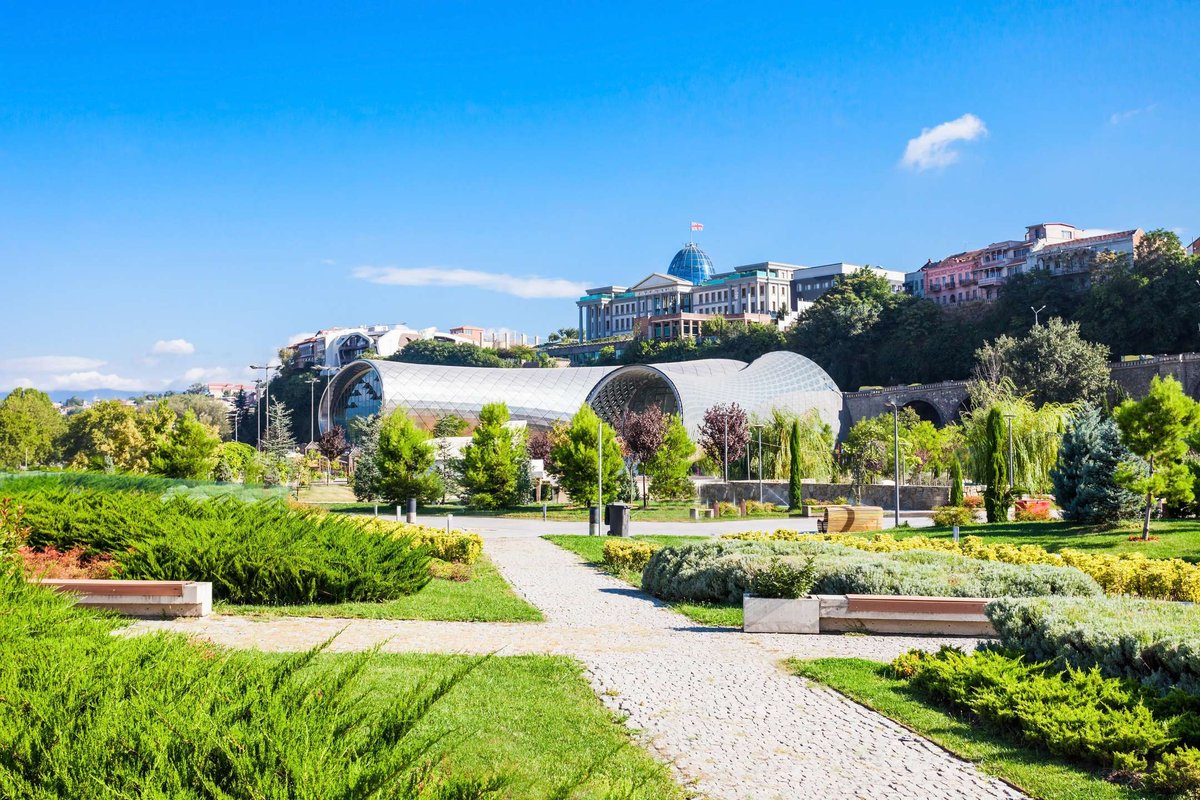
Musical and Drama Theater and Exhibition Hall in Rike Park
Like the House of Justice in Tbilisi, the building in Rike Park was designed by the Italian architect Massimiliano Fuksas. Like Fuksas, it has a cutting-edge, if somewhat controversial, appearance. Until recently, there were periodic debates among politicians and the public about the appropriateness of such futuristic buildings.
The debate has now subsided; residents have become accustomed to them, and tourists frankly love them. Especially since the surrounding area has been landscaped and improved.
The park itself is located in the old city center. Here, you can not only admire the buildings of the future but also spend time with children in a quiet, cozy family setting. The park has everything you need for both.
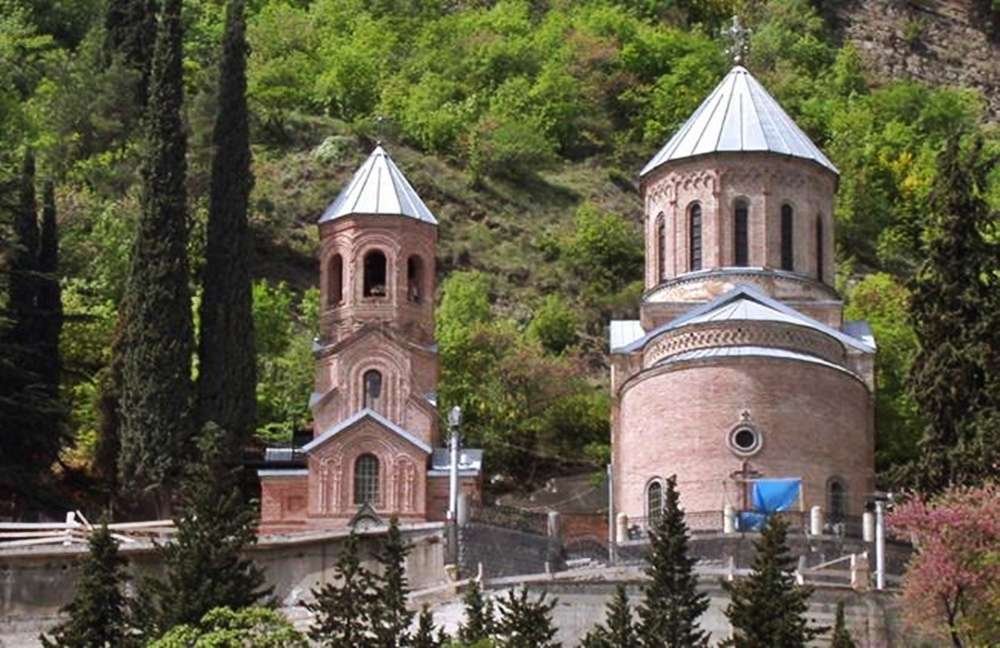
St. David's Church, Mount Mtatsminda
When talking about this mystical place, it's impossible not to mention its history. Its origins date back to the sixth century AD, when, according to legend, the ascetic David of Gareji settled in these parts. He is considered one of those who brought Christianity to Georgia. Not only this church, but also a monastery in the village of Akura, was built in his memory.
The interior and atmosphere are worth mentioning. Like any holy place, it has a uniquely calm, peaceful, and healing atmosphere. Ancient mosaic icons and a prayer service are present. In the chapel, you can see a holy spring and drink from it.
If you'd like to learn more about the history of these places, you can consult a priest or hire a guide. And from Mount Mtatsminda, enjoy the panoramic view of all of Tbilisi.
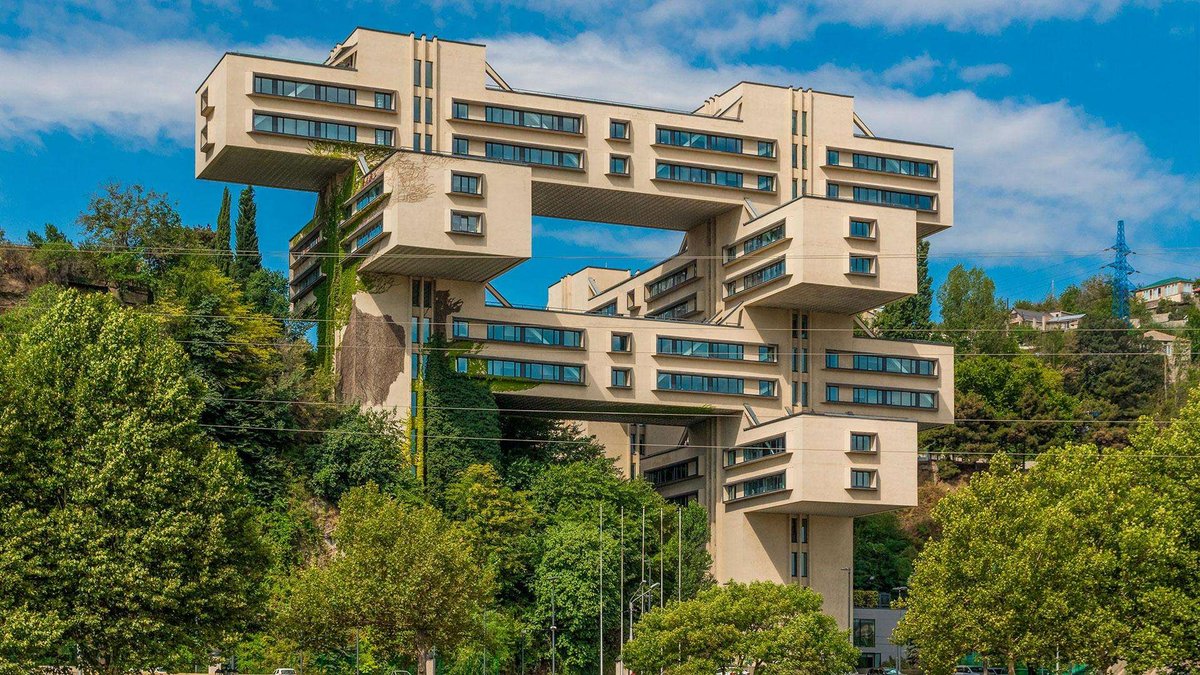
The block-type building of the Ministry of Highways of the Georgian USSR
In this case, the architectural style is absolutely clear and is called brutalism. True, this term wasn't always used—in the Soviet Union, it was called Soviet modernism. Regardless, this original structure can be seen on the banks of the Kura River as you leave Tbilisi, Georgia.
Interestingly, the building was constructed in 1975, and by 1981, the builders and designers who participated in its creation received an award from the Council of Ministers of the USSR. Even later, in 2007, the structure was recognized as a national architectural monument.
The very idea of this design, oddly enough, stems from the principles of harmony between man and nature. To ensure that buildings occupy as little ground space as possible, they exist vertically. This reduces the footprint of the foundation adjacent to the ground, allowing for greater opportunities for plant growth. This construction concept disturbs plants and shrubs to a much lesser extent. This idea was originally inspired by the analogy of trees, whose crowns occupy much more space than their trunks.
Currently, this unusual building is fully operational and occupied by the Bank of Georgia.
Apollon Kutateladze Tbilisi State Academy of Arts Museum
The next interesting place I'd like to tell you about is the Apollon Karamanovich Kutateladze Educational Institution. The history of this educational institution dates back to roughly the same time as the Georgian Parliament building, that is, to the early twentieth century.
This renowned Soviet artist of Georgian descent is known not only for his paintings but also for being a staunch defender of the aforementioned academy. He managed the seemingly impossible—not only to prevent the academy from losing its status, but even to expand it. His memory remains as a man with unique diplomatic and organizational skills. He opened new faculties and always defended the rights of his university with dignity.
Today, the academy not only successfully educates new generations of students, but also offers enjoyable tours. During these tours, you can admire not only the works of art, some of which are hundreds of years old. But you can also learn a little more about the academy's formative years, the turbulent times that preceded our relatively calm days.
Art lovers will definitely appreciate this visit.
Stay at the London Hotel, Tbilisi.
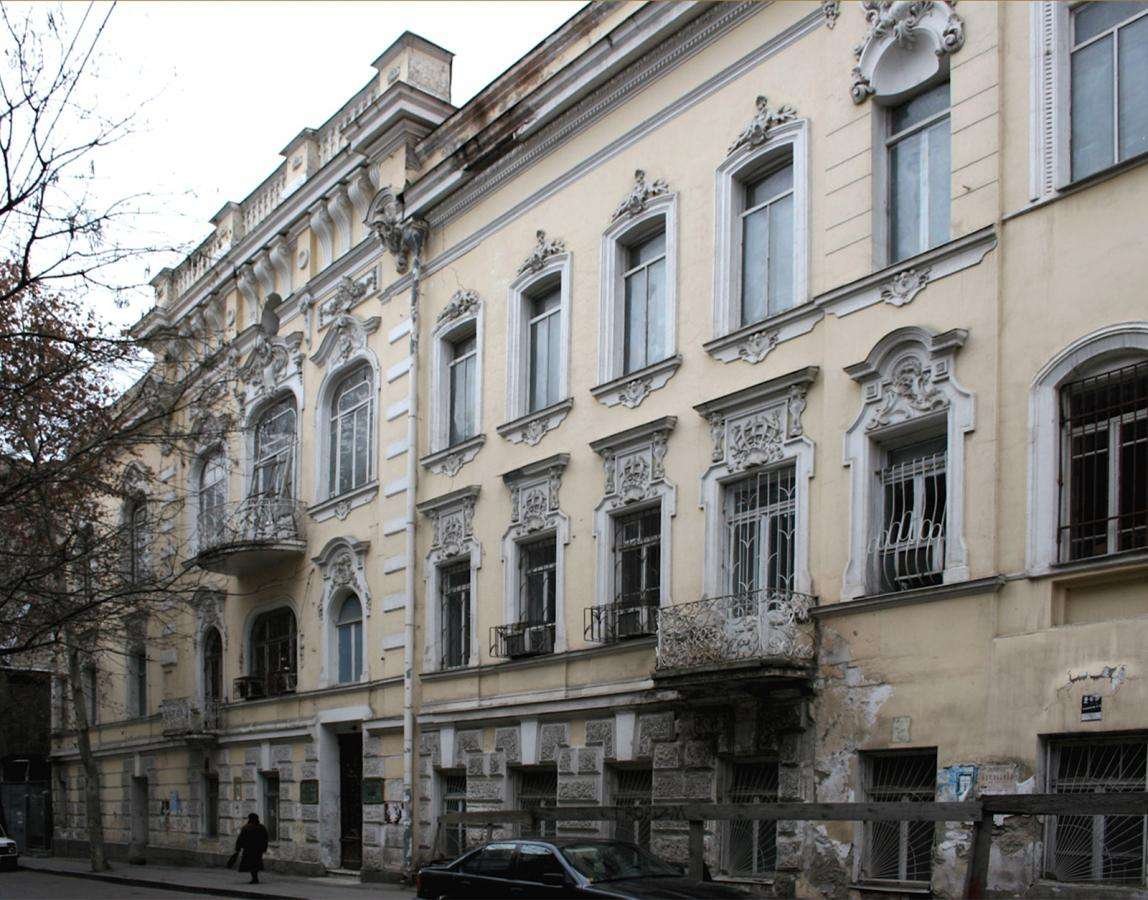
London Palace Hotel
Another landmark of Tbilisi, Georgia, is undoubtedly the once-famous London Hotel.
Its history begins in the late nineteenth century as a popular establishment for the bohemian and intellectual elite. Such prominent cultural figures as composer Pyotr Ilyich Tchaikovsky and the beloved writer Maxim Gorky enjoyed their stay within its walls.
Later, the Zubalashvili family, the building's legal owners, were forced to leave their homeland and emigrate. Nevertheless, the brothers are still remembered; one of Tbilisi's central streets bears their name. And the buildings they built still stand.
As for the once-popular London Hotel itself, it hasn't been used as a hotel since the first half of the twentieth century.
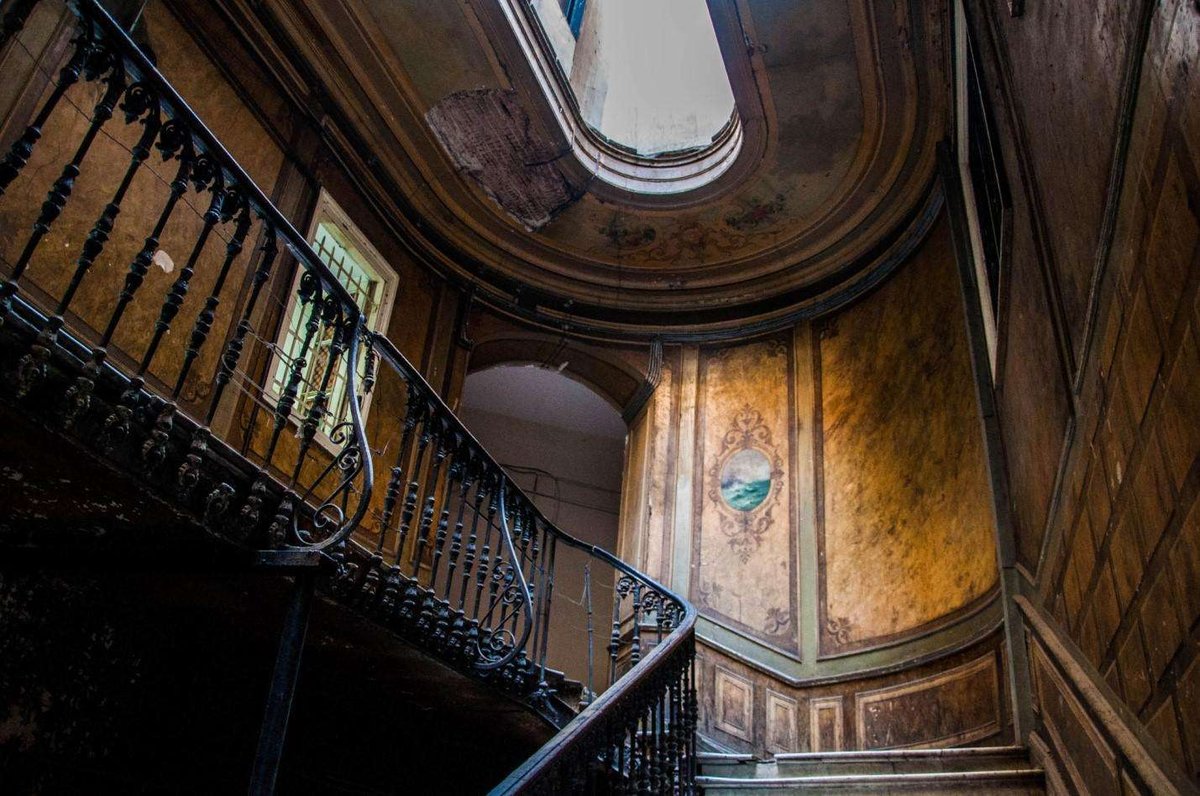
Over the years, the brothers' legacy has been greatly impacted. Now, as far as possible, it is an ordinary residential building, with its unique architecture, wooden staircases, and carved railings.
You can visit this house during the day. Perhaps the people who live there will have even more fascinating stories to tell.
Church of the Red Gospel
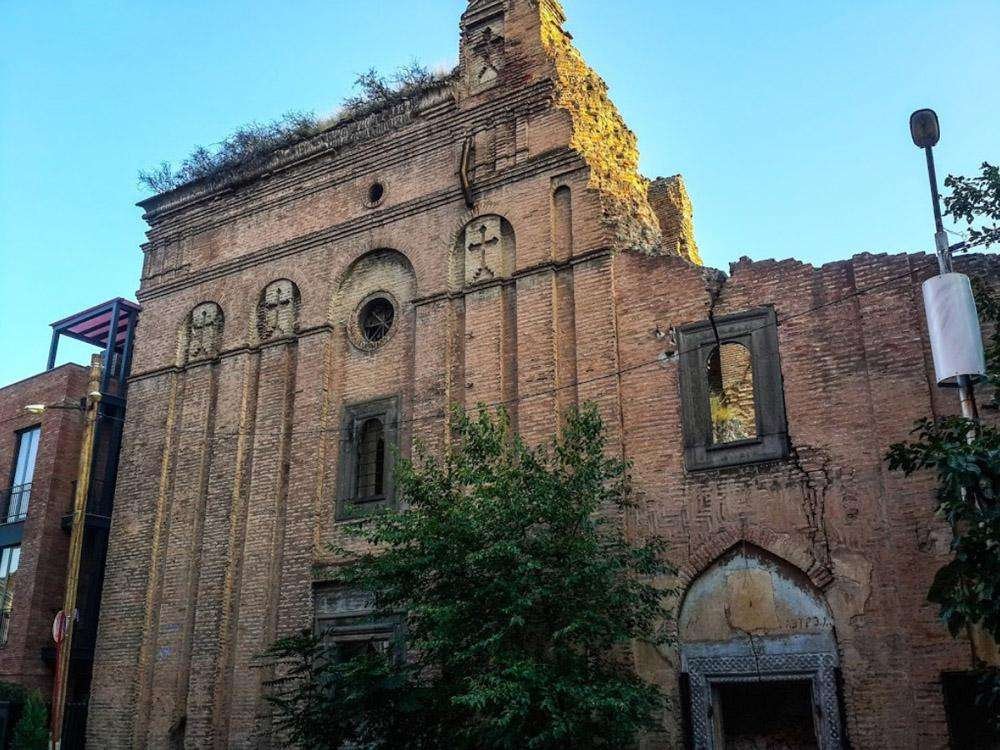
The Karmir Avetaran Church, or rather its remaining ruins, is rightfully considered one of the most mysterious landmarks of Tbilisi, and perhaps even of all of Georgia. Discrepancies begin already during the construction phase. According to some sources, construction began in the eighteenth century, while others say it was not until the nineteenth.
Its construction was undertaken by Shamkhor Armenians, who fled their lands from the Turkish threat, as early as the early eighteenth century. There are indications that its height reached forty meters, a record for buildings of this kind built by Armenians. What happened to the cathedral between now and the present day remains unknown.
One thing is clear: it was destroyed in the late twentieth century, and, unfortunately, there are no plans to restore it in the foreseeable future. But even the ruins of the church reveal just how majestic this structure once was.
Vorontsov Palace on Shota Rustaveli Avenue
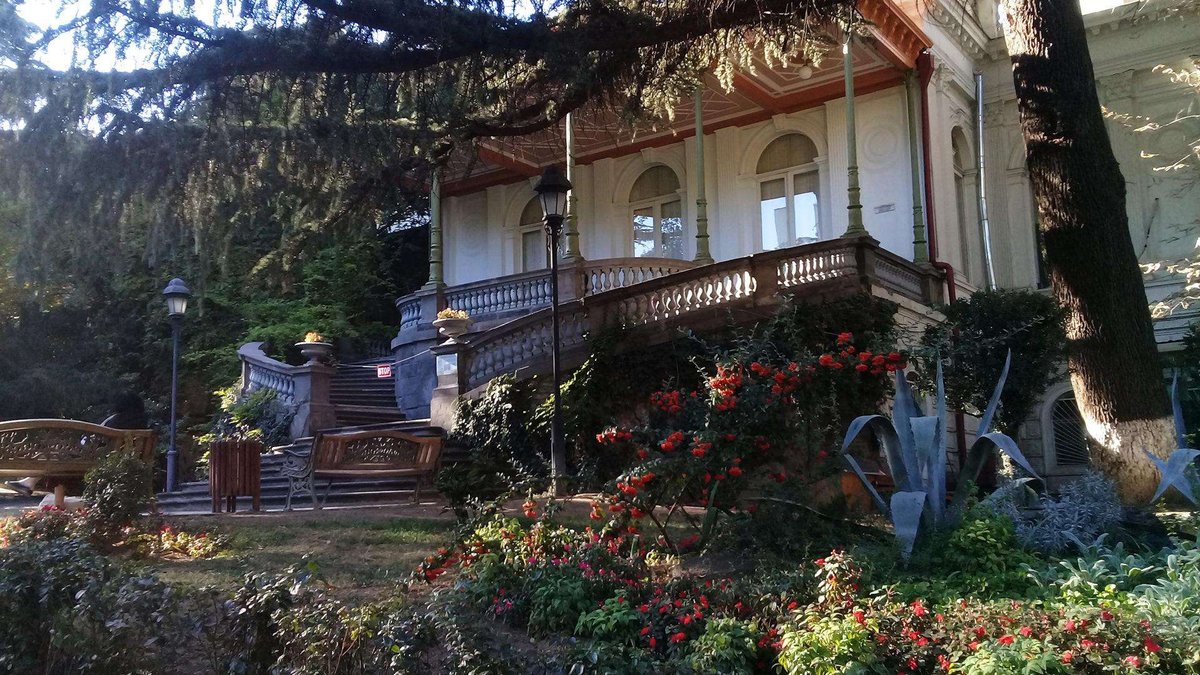
Experienced travelers who are not satisfied with the classic tourist destinations consider this palace an underrated attraction in Tbilisi, Georgia. It's rarely mentioned in advertising brochures, and when it is, it's often mentioned in passing, without much emphasis. And that's a shame.
This building is where the first Constitution of Georgia, the founding document of any country, was approved and adopted.
A guided tour through the many different halls—the mirrored, the marble, the white—and a visit to the parliamentary pulpit and the archaeology museum will reveal many new things. And not only about the palace and the events that often decided the fate of the nation, but also about individual historical figures. During the Tsarist era, when Count Mikhail Vorontsov owned these walls, Alexander Griboyedov, the Russian poet, playwright, and diplomat, was a frequent guest here. His marriage to Nina Chavchavadze was celebrated here with great pomp, attended by members of the aristocracy and cultural figures of the time. Whatever one may say, every era comes to an end. And it's valuable when the greatest possible preservation of the past's rarities is achieved, which is precisely what the palace's staff has accomplished. Therefore, visitors to this place are captivated by this atmospheric, intimate journey into the past.
Share
Save

Read also
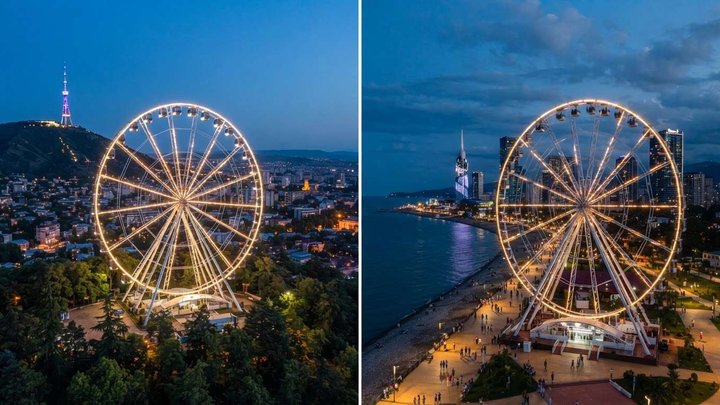
🎡 Two Ferris Wheels in Georgia You Can Ride: Mtatsminda in Tbilisi and the Batumi Boulevard
🎡 The devil's wheel on Mtatsminda and on the Batumi boulevard: 2026 prices, height, closed and open cabins, best time for sunset and how to get there.
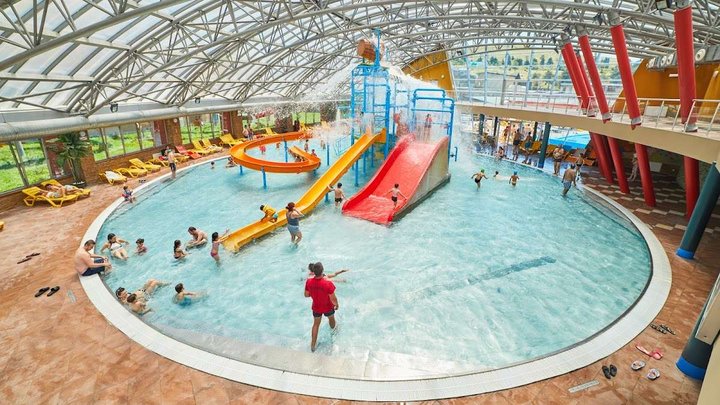
🌊 What Gino Paradise costs and what is inside Tbilisi's main water park
🌊 The water park by the Tbilisi Sea: 2026 weekday and weekend prices, a 31 m toboggan, a wave pool, a spa and ways to save on tickets.

🌲 Главный парк Боржоми: источники, канатка и первая ГЭС Закавказья
Borjomi Central Park: mineral springs, the cable car, the first hydroelectric plant in Transcaucasia and the path to the thermal pools.

♨️ The Royal Baths of Borjomi: Sulphur Pools at the Far End of the Park and the Walk There
♨️ Where to go and what to pack: a dirt track through pine forest, basins for children, swimming and warming up, three separate payments.
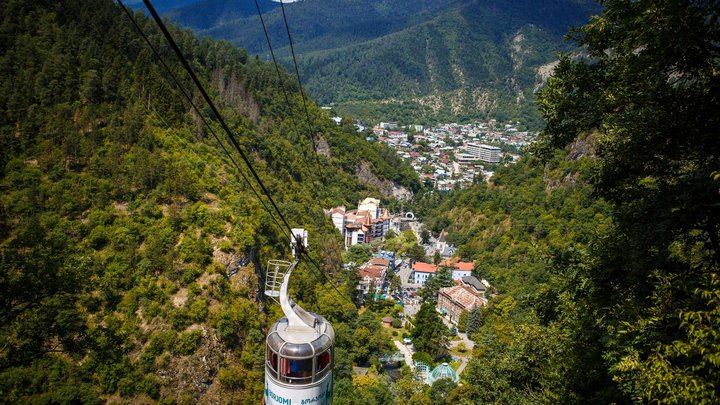
🚡 The Cable Car from Borjomi Park to Plateau: What It Costs and Whether the View Is Worth It
🚡 Bottle-shaped cabins running since 1962: three minutes up to Plateau, a Ferris wheel, a café and three separate payments.

🏛️ Romanov Residences in Georgia: Why There Are Four Palaces and Which One People Look For in Chakvi
🏛️ Chakvi, Makhinjauri, Abastumani, Likani: which residence is where, who built it and where to go for what.
36 comments
Log in to leave a comment
Статья даёт понятное объяснение, где искать примеры древней архитектуры — от старинных церквей и мощёных улочек Старого города до внушительных фасадов XIX века, а где стоит остановиться, чтобы почувствовать дыхание современного Тбилиси, его смелые фасады, арт‑пространства и футуристические точки обзора. Особенно ценными оказались советы местных жителей: где лучше сделать паузу с видом на город, какие смотровые площадки скрыты от основных туристических маршрутов и как сочетать осмотр классики с прогулкой по новым кварталам.
Я уже отметил для себя несколько мест, которые хочу посетить лично: от старинной крепости Нарикала и уютных двориков Шарден до знаменитого моста Мира и ультрасовременной архитектуры Рике. Читатели в отзывах очень живо описывают, как приятно именно сочетать «старое» и «новое» в одном дне, чтобы прочувствовать весь контраст и богатство Тбилиси.
После такого обзора начинаешь смотреть на город иначе: не как на музей под открытым небом, а как на пространство, в котором история разговаривает с современностью.
Как вы думаете, стоит ли начать знакомство с Тбилиси именно с исторических объектов, а затем переходить к современным архитектурным жемчужинам, или лучше сразу сочетать оба плана в одном маршруте?
Статья охватывает как современные, так и исторические архитектурные шедевры, что делает ее исключительно интересной и разнообразной. Я наслаждался увлекательными описаниями каждого здания, которые привлекали мое воображение и внимание.
Особенно произвёл впечатление Дом Юстиции, редко встретишь такой футуристический стиль. Словно в будещее попал. И к зданию министерства автомобильных дорог тоже это относится.
А в гостинице Лондон Палас я бы сама остановилась, если бы она ещё работала, но может кто-то сдаёт уже собственную квартиру и есть возможность провести там хотя бы сутки.