




Skhalta Monastery in Adjara: 13th Century Medieval Temple
The territory of Adjara has often been subject to raids by unfriendly neighbors. The church in Skhalta is unique in that it is the only religious building that managed to survive the raids and Ottoman rule, as well as the Soviet period, and reopened its doors to parishioners in 1990.
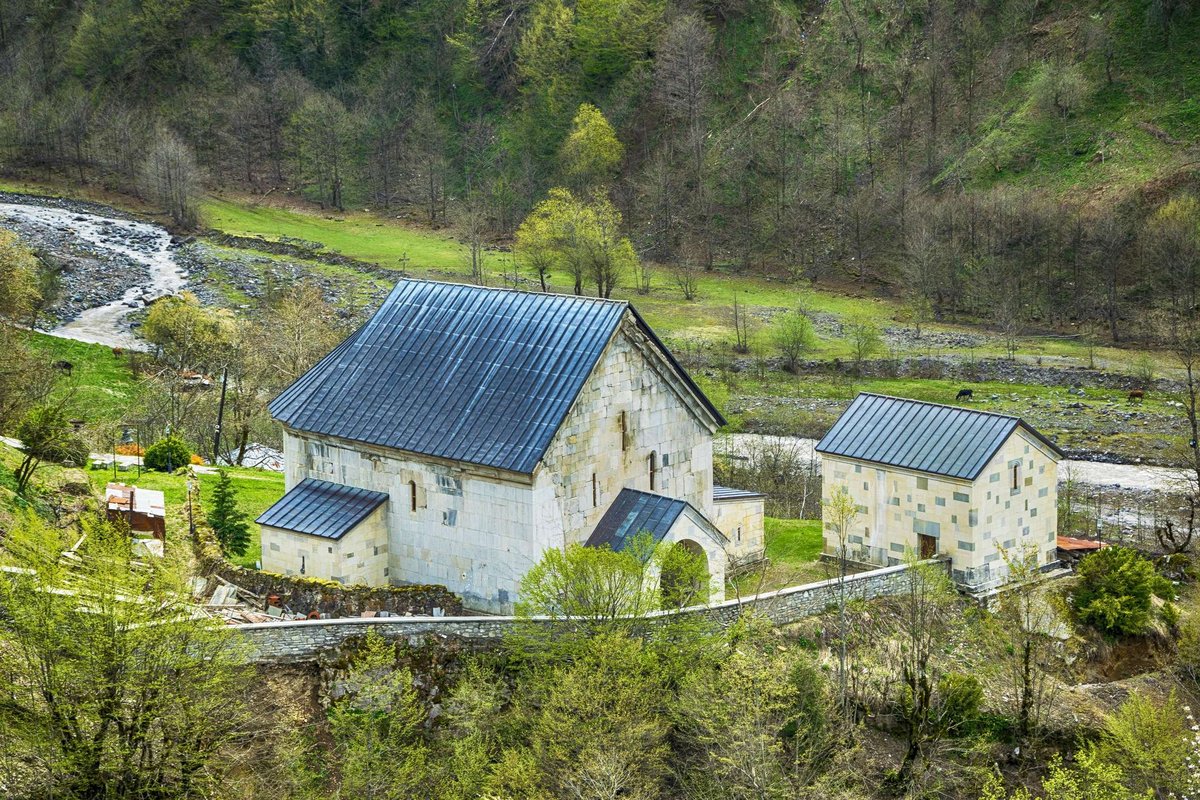
The monastery in Skhalta is a Byzantine-style structure, built approximately in the mid-13th century. As with the Khikhani fortress, there are discrepancies regarding the initiators of its construction. According to the documentary version, the Skhalta church was built by order of the Abuseridze princes.
A legend ascribes the initiative for the building's construction to Queen Tamar. Regardless of the truth, the church has a rich history, and it currently serves as the residence of the Georgian Orthodox Bishop of Skhalta. It's worth noting that the church can evoke mixed feelings when first viewed. Inside, it appears large and spacious.
However, from the outside, it may appear neat and small. This impression may be due to the Skhalta Monastery's location in the mountains. Regardless, the church in Skhalta survived the Ottoman conquests of the 16th century relatively well—it was simply "forgotten" and abandoned. In 1874, it was accidentally discovered by Giorgi Kazbegi, who was on a reconnaissance mission to Georgia.
Thus, the church was rediscovered, and in 1878, after Adjara became part of the Russian Empire, the church in Skhalta was visited by Georgian historian Dmitry Bakradze and archaeologist and ethnographer Countess Praskovya Uvarova.
Architectural Features
Architecturally, the church in Skhalta is unremarkable. It features a seven-sided apse, a pair of main southern portals, and a northern entrance. The material used for construction is white-gray stone. The construction process itself has its own eerie legend, which will be discussed below.
The interior is lined with white stone. Previously, the walls were decorated with frescoes, some of which were discovered by researchers in 1997. The frescoes are examples of Byzantine painting, dating back to the 14th-15th centuries.
Legends and Myths of the Skhalta Monastery
According to the first legend, which dates back to the monastery's construction period, the construction was overseen by a highly skilled mathematician, a master of his craft. Before construction began, he calculated everything down to the brick. The required number of stones was prepared, cut, and transported to the high mountain. However, at the end of construction, it became clear that one or more stones were missing.
This fact was a severe blow to the master's pride, and he chose death rather than disgrace. The second legend is connected with Queen Tamar and underground passages, one of which supposedly connected the church and the Khikhan fortress. During the siege of the fortress, Queen Tamar used the underground passage to pray in the church.
How to get to the monastery in Skhalta?
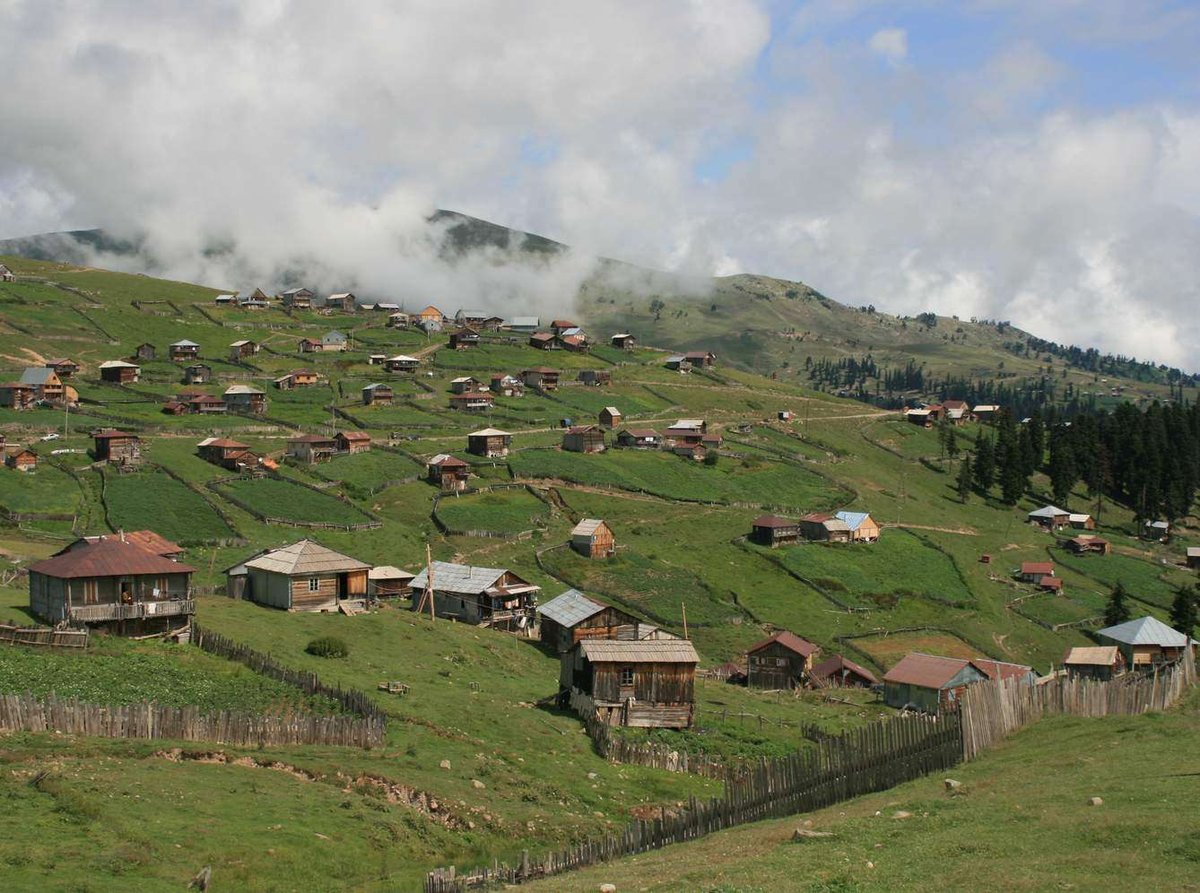
It's worth noting that a trip to the Skhalta Church may take a little longer than you plan—you'll encounter other worthwhile Georgian landmarks along the way. The church itself is located in the village of Kinchauri, 80 km from Batumi, in the Khulo Municipality.
The beauty of the winding mountain road that leads to the monastery is best admired from the window of a car driven by a local accustomed to such roads. Makhuntseti Waterfall and Queen Tamar Bridge—the very same Georgian landmarks mentioned above—will be encountered along the way, and exploring them may take much longer than you planned.
Once you reach Zamleti, approximately 70 km from Batumi, turn right and follow the Skhaltistskali River for about 10 km. The local road leaves much to be desired, but eventually we will find ourselves in Kinchauri.

38 comments
Log in to leave a comment
Мне особенно близко ощущение, которое создаёт рейтинг: автор не просто рассказывает о здании, а делится тем, как лучше добраться до монастыря, какие местные легенды и мифы окружают его, и как важно планировать поездку так, чтобы увидеть не только церковь, но и другие достопримечательности по дороге. Практичные советы и отзывы путешественников помогают лучше понять дорогу через горные хребты, где можно остановиться, чтобы сделать фото, и какие уютные местные кафе стоит посетить после прогулки.
Это место действительно особенное: внутри церковь кажется просторной и светлой, а снаружи, в окружении гор и зелени, она словно держит связь между прошлым и настоящим.
Как вы считаете, лучше всего посетить Схалтскую церковь в будний день, когда вокруг тишина и можно спокойно погрузиться в атмосферу, или выбрать выходные, чтобы совместить визит с экскурсиями по другим древним местам Аджарии?