




Sapara and Zarzma Monasteries: Medieval Churches
Located 12 km southeast of Akhaltsikhe is Sapara, a medieval Georgian monastery and one of the residences of the Jakeli (rulers of Samtskhe), as well as their burial vault.
The oldest building in the complex, the Assumption Church, dates back to the 10th century. The main part of the monastery (the main domed church of St. Saba, the bell tower, and the palace) was built at the turn of the 13th and 14th centuries, during the reign of Beka Jakeli, the lord of Samtskhe (1285-1309).

On the southern wall of the Church of St. Saba is a donor's portrait—a family portrait of the Jakeli family: Sargis I (1266-1285), who later became a monk and took the name Saba, his son Beka I—holding a model frame, and his sons Sargis II and Kvarkvare (1334-1360). To the west of the church, above the narthex window, is the inscription of the architect Parezasdze. Both the interior and exterior of the church are decorated with numerous decorations and carvings. The bell tower, located to the west of the main church, is the family burial vault of the chief steward of the Jakeli family, Lasurisdze. On the western side of the monastery rise the ruins of an old fortress. In the 16th century, during the Ottoman rule, the monks abandoned the monastery. Monastic life resumed here in the 19th century.
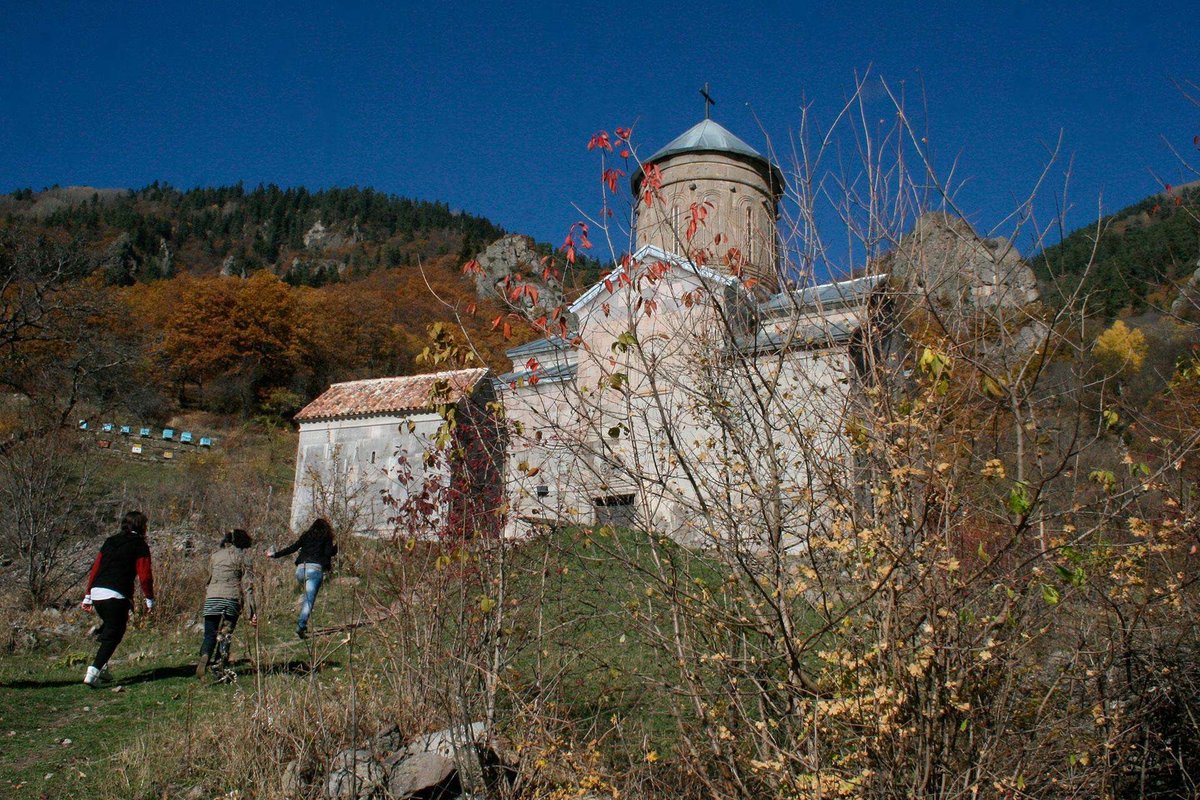
The Zarzma Monastery is located in the historic center of Samtskhe, 12 km from the town of Adigeni. The monastery consists of a domed church, a bell tower, and a single-nave chapel. The monastery was founded in the 9th century by a monk from Klarjeti, Serapion of Zarzma (his life was recounted by Basil of Zarzma in his hagiography, "The Life of Serapion of Zarzma"). Serapion was assisted in the construction of the monastery by a local nobleman, Giorgi Chorchaneli, who even donated a village for the new monastery. The church, which no longer exists, was built by the architect Garbaneli.
The current monastery complex was built in the early 14th century by the Mtavari of Samtskhe, Beka Jakeli (1285-1309). In the vault of the entrance part of the chapel there is a historical inscription from the 10th century (telling the story of the campaign of David III Kurapalates against Bardas Skleros), preserved from the old building.
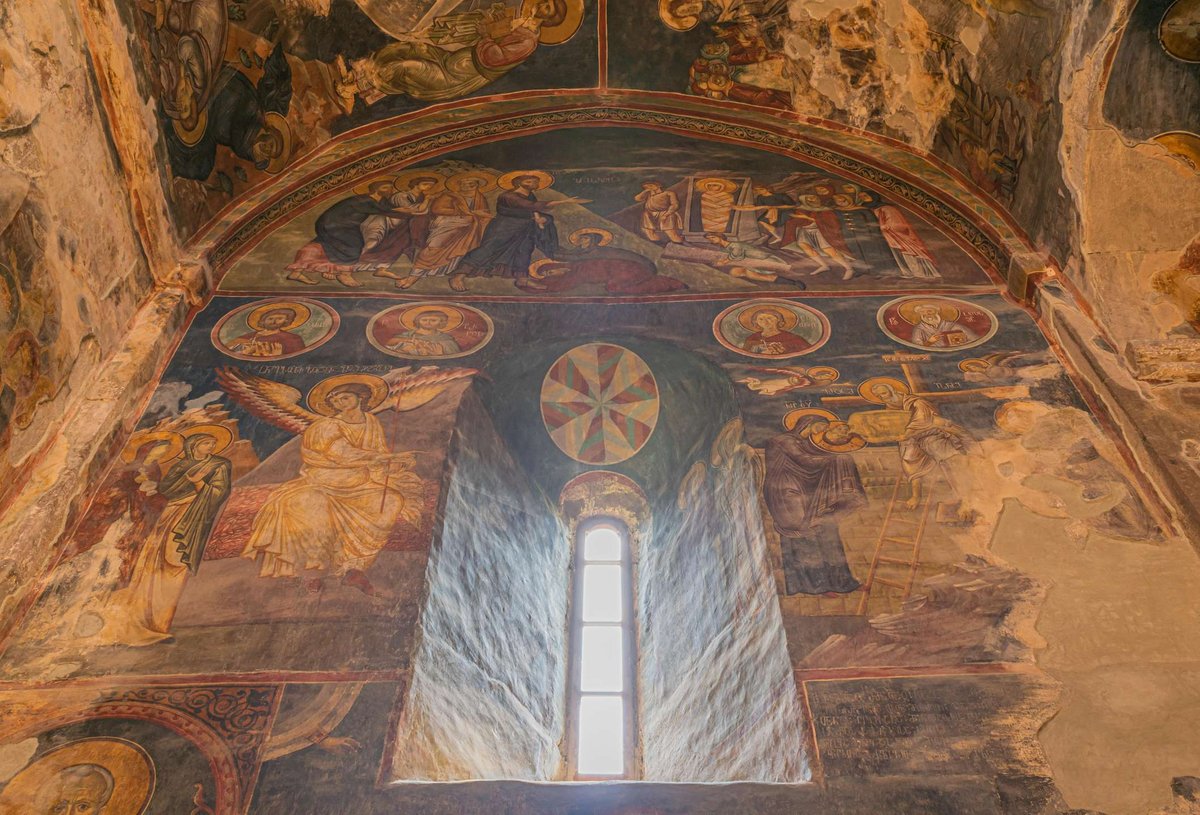
Zarzma boasts numerous carved ornaments and frescoes. The murals, along with religious scenes, also feature portraits of lay donors. On the south wall is a family portrait of the Samtskhe-Jakeli dynasty (Sargis I - 1266-1285; Beka I - 1285-1309; Sargis II - 1309-1334; Kvarkvare 1334-1360). The north wall contains 16th-century murals. The Zarzma bell tower is one of the largest in Georgia. On its first floor, Khurtsidze opened the 16th-century Church of St. John the Theologian. In the early 20th century, the Georgian Exarchate of the Russian Orthodox Church carried out restoration work in Zarzma. Some of the frescoes and iconostasis were erased during this period.

42 comments
Log in to leave a comment
Ещё нашла новое для себя понятие - ктиторское изображение. Оказывается, это портрет ктитора. А ктитор - человек, оплативший восстановление или украшение храма. В благодарность их изображали на стенах церквей, иконах, молились за них.
Одними из таких являются монастырь Сапара и Зарзма.
Сапара – средневековый грузинский монастырь. Он хранит в себе целую историю создания, очень красив как снаружи, так и внутри. Автор статьи смог нам донести все важнейшие детали из далекого прошлого.