

🌳Tbilisi Parks: A Complete List, Map, and Description of Each
🌳 Things to know before your walk
| 📍 Total parks | 34 parks, gardens, and squares in the Madloba catalog, divided into 6 categories by district |
| 💰 Entrance | Free everywhere, except for certain rides and parking at Lisi Lake |
| 🕐 When to go | Morning and evening in summer, any time in spring and autumn: Tbilisi parks are almost never empty |
| 🗺️ Catalog category | All Tbilisi parks and gardens on the map |
🧭 Who is this article for
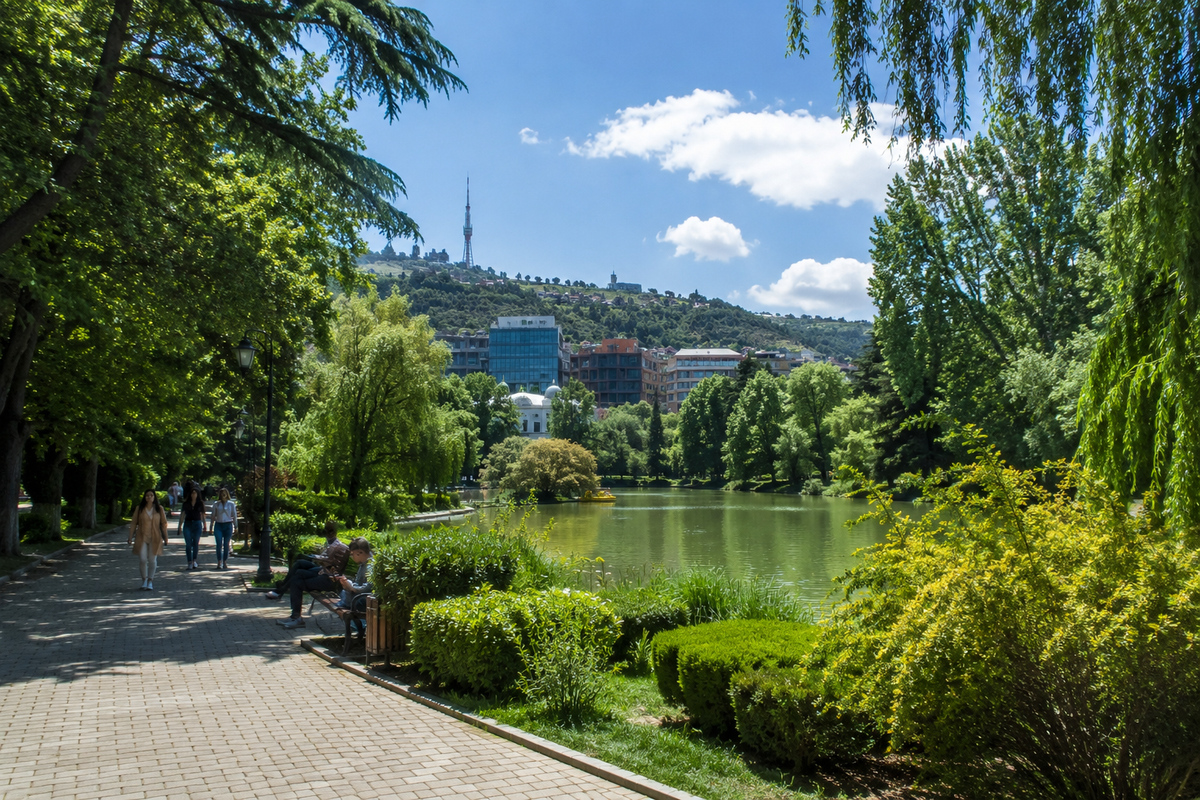
Tbilisi is a green city, but its parks vary greatly: some have Soviet fountains and cascading staircases, others a courtyard square with benches, and still others a mountain lake a half-hour walk from the center. This article is for those who want to understand the difference between a "main park" and a "neighborhood park" and choose a place that suits their mood, rather than following the crowd.
🗂️ How this collection is organized
The 34 locations in the Madloba directory are divided into six categories, and the division here is more geographical than thematic.
- The main city parks, like Vake and Rike, are large, multi-hectare spaces in the center, visited specifically.
- The nature category encompasses everything related to water and mountains: lakes, gorges, botanical and dendrological gardens.
- The historic squares of the center have grown around specific squares and monuments.
- Meanwhile, the green spaces of the left bank, the parks of Saburtalo and Vake, and the parks of the northern residential areas are more like neighborhood spots, visited by locals every day, and which tourists usually don't even visit.
- The rest of the list goes in that order: from the most touristy to the most local.
🗺️ Map of all parks
🌳 1. Main city parks
Tbilisi's most famous and visited green spaces: each has its own character, but they share a commonality in scale and the fact that people come here specifically, rather than just passing through.
Vake Park
📍Ilia Chavchavadze Avenue, Vake district
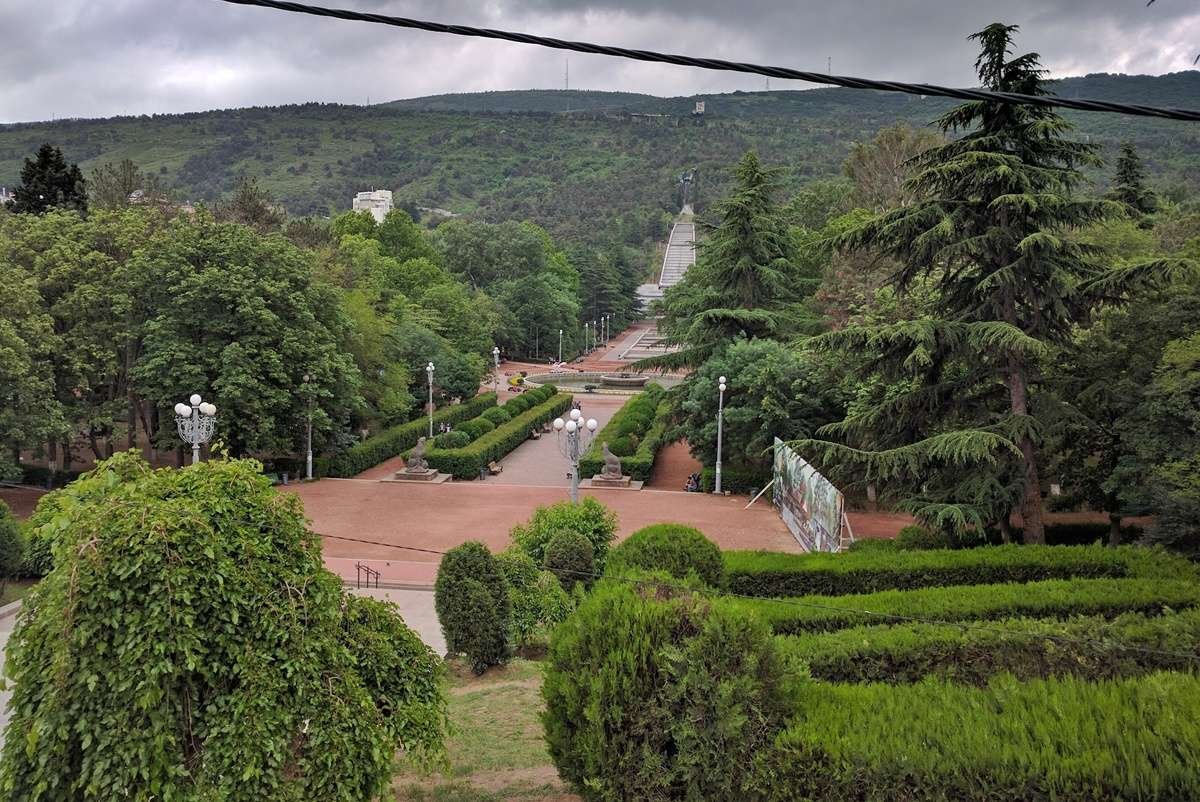
Vake Park covers over 200 hectares on the slope of the Trialeti Mountains and remains Tbilisi's largest landscaping project: it was established in 1946 on the site of a vacant lot, planting hundreds of thousands of trees and shrubs. A monumental staircase with a cascade of fountains leads to the park from Chavchavadze Avenue, and at the top of the hill stands a World War II memorial with an Eternal Flame.
During Soviet times, the park was called "Victory Park," a name still used by older generations. Today, it houses exercise equipment, basketball courts, electric car rentals for children, and the Mikheil Meskhi Stadium. It is from here that the cable car leads to Turtle Lake.
The park is divided into lower terraces closer to the residential areas of the district and an upper section, ascending the slope toward the forest. It's worth planning two to four hours for the walk if you want to not just walk through it, but also reach the memorial and stroll through the arboretum on the outskirts.
Rike Park
📍N. Jordan Embankment, left bank of the Kura River
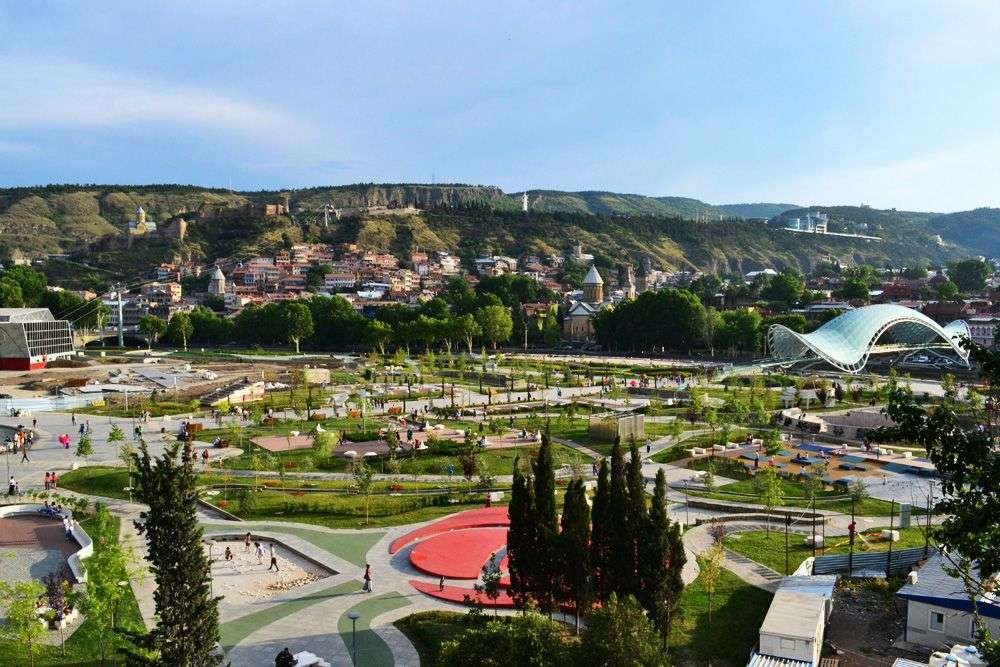
The city's newest major park, it was established in 2010 on the site of a former island and sandbank on the left bank of the Kura River, hence the name "Rike," or "on the sands." The park is accessed via the glass-domed Peace Bridge, and a cable car runs directly to the Narikala Fortress nearby.
The park's main controversial feature, a cultural center shaped like two glass "tubes," was originally conceived as a concert hall and exhibition space. The city's annual Tbilisoba festival and Independence Day concert are held here, and a Christmas market unfolds in winter.
Beyond architecture, the park offers a wealth of simpler attractions: a giant chessboard with meter-high pieces, a musical fountain, and monuments, among which, surprisingly, one to Ronald Reagan, the fortieth US President, is featured. Rike Park is the best starting point for a stroll through the Old Town across the Peace Bridge.
Red Garden (Vaso Godziashvili Park)
📍Kazbegi Avenue, Vake District, Tbilisi
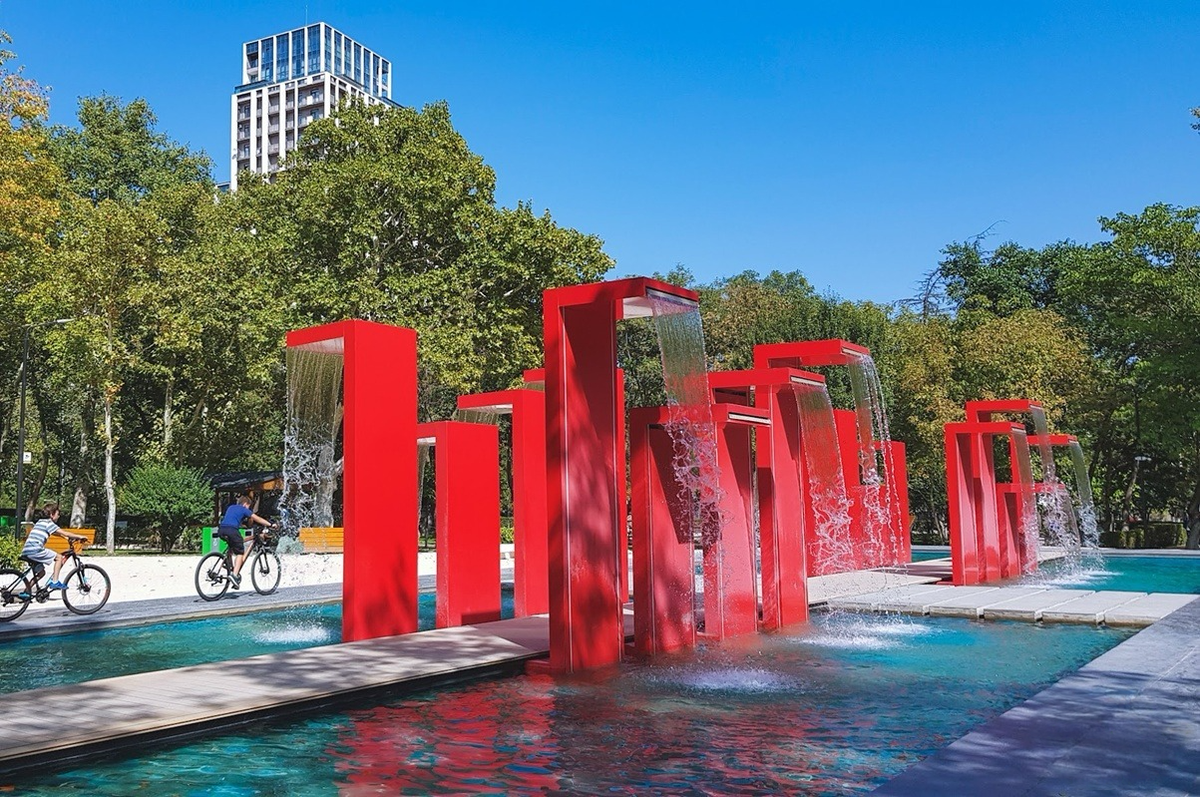
One of the city's most beloved parks in the center, named after the actor Vaso Godziashvili, although Tbilisi residents habitually call it the Red Garden. In 2019, the park underwent a major renovation: two playgrounds, picnic areas, jogging paths, and an open exhibition space were added, at a cost of approximately 2.5 million lari.
It is always crowded at any time of day: joggers, families with children, and groups of people sitting on benches by the pond with a fountain. Rose gardens and blooming flowerbeds gave the park its former popular name.
Before the 2019 renovation, this was a neglected, semi-wild space of approximately 35,000 square meters, and the renovation was part of the City Hall's broader program to improve city parks. It now also houses an indoor space for cultural and educational events, and the park is illuminated in the evenings.
| Park | Address | View Details |
|---|---|---|
| Mziuri Park | Mziuri Park, Tbilisi | Open → |
| Dedaena Park | Deda Ena Park, near Dry Bridge | Open → |
| Mushtaidi Park | Intersection of Baratashvili and Tsabadze streets | Open → |
| Vera Park | Merab Kostava St, Vera district | Open → |
| Kikvidze Park | Nadzaladevi district | Open → |
🌲 2. Nature, lakes, and attractions
Green areas outside dense development: mountains, water and forest, where people come for the air and the view, not the architecture.
National Botanical Garden
📍Botanicheskaya Street, 1, Tbilisi
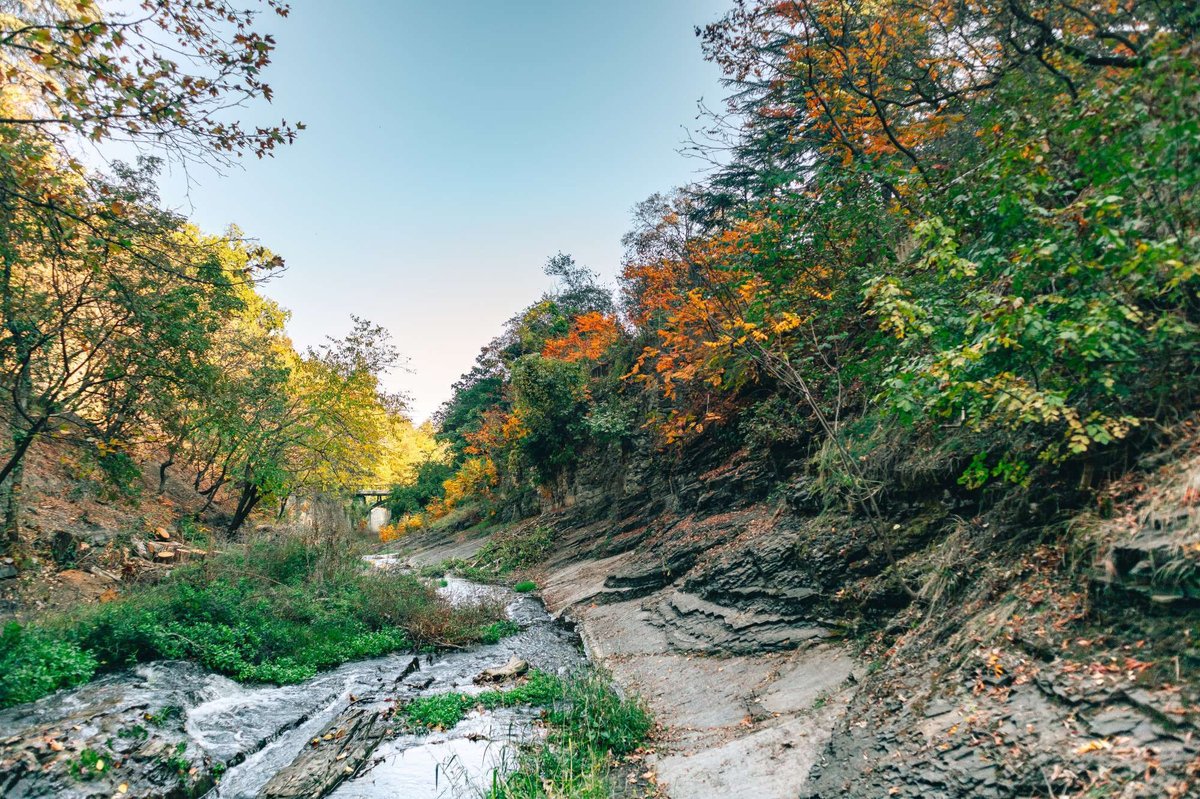
One of the oldest botanical gardens in the post-Soviet space, it is located on the terraced slopes of the Tsavkisistskali Gorge behind the Narikala Fortress. Since the 1860s, the garden has been developing as a scientific station and conducting plant exchanges with botanical gardens in Europe, including the Nikitsky Garden in Crimea.
Today, it boasts thousands of plant species from around the world, old irrigation canals, ponds, and waterfalls, and the upper terraces offer views of Old Tbilisi. Allow at least an hour and a half for a stroll: the garden is large and stretches along the gorge.
The terraces, created in the 19th century, are still used to distribute plant collections by climate zone, and some of the buildings and paths have remained virtually unchanged since then. For those planning to continue the ascent to the Narikala Fortress, the garden serves as a convenient connecting route between the Old Town and the observation decks at the top.
Lake Lisi
📍Northwest of the city, Tbilisi Basin
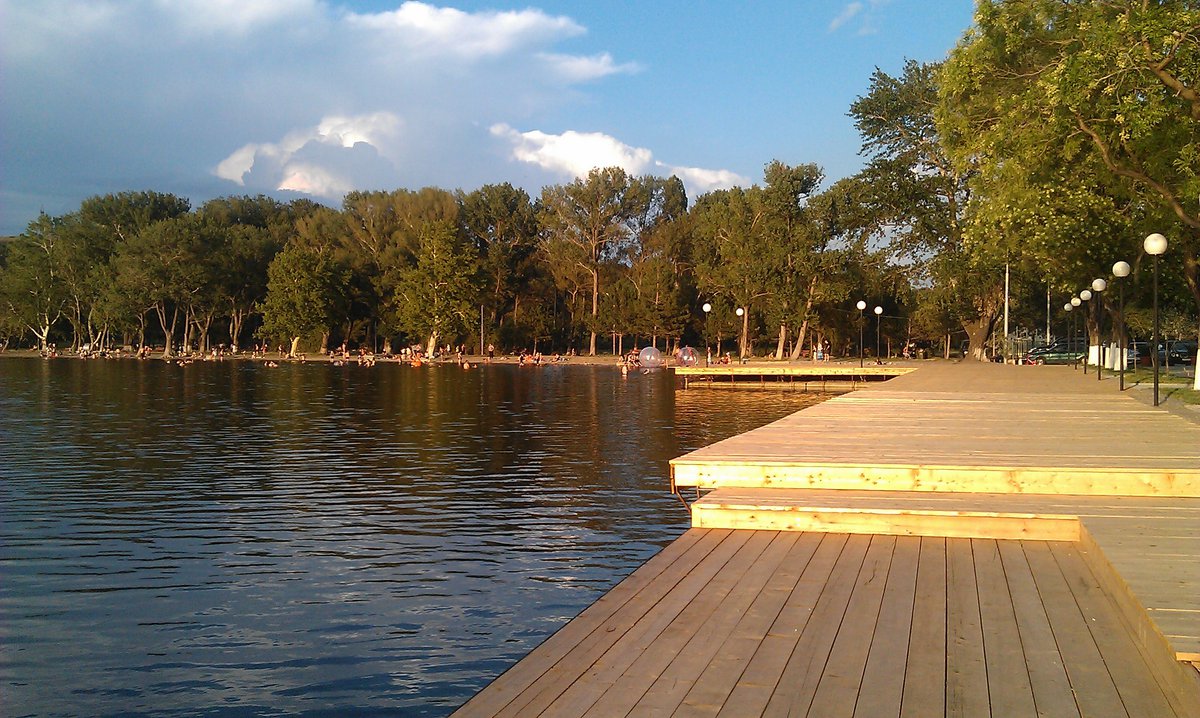
This small lake, nestled in a basin at an altitude of approximately 620 meters, is eight kilometers from the city center, yet feels like a gateway to the countryside. It's surrounded by a three-kilometer bike path, a beach with sun loungers, boat and bike rentals, a Nordic sulfur sauna, and several cafes right by the water.
From the lake, you can enjoy an easy hike through the surrounding hills with views of the city and mountain ranges. In the summer, it's crowded and noisy with boats and go-karts; in the winter, it's quiet and almost deserted.
Back in 2016, the area around the lake was much more modest: the circular embankment and bike path were added later, and the Nordic-style sulfur sauna opened in 2014. The easiest way to get there is by taxi or car, as walking would require following the highway. Three more points in this category - Mtatsminda Park, Turtle Lake, and Legvtakhevi Gorge -have already been discussed in detail in the article "Viewpoints of Tbilisi" as their value lies primarily in the view from above, not in the park itself.
Don't try to visit all 34 locations in a single trip, as they are scattered across different ends of the city. It is wiser to choose one park from each category depending on your day: Vake or Rike for a first walk, the Botanical Garden or Lisi Lake for a full day in nature, and the historic squares of the city center on the go, as you move between other sights.
🏛️ 3. Historic gardens and squares of the center
Small squares in the historic center: each with its own area, monument, or page from the city's history.
Garden of King Parnavaz
📍Noah Jordan Embankment, between buildings 29 and 29A
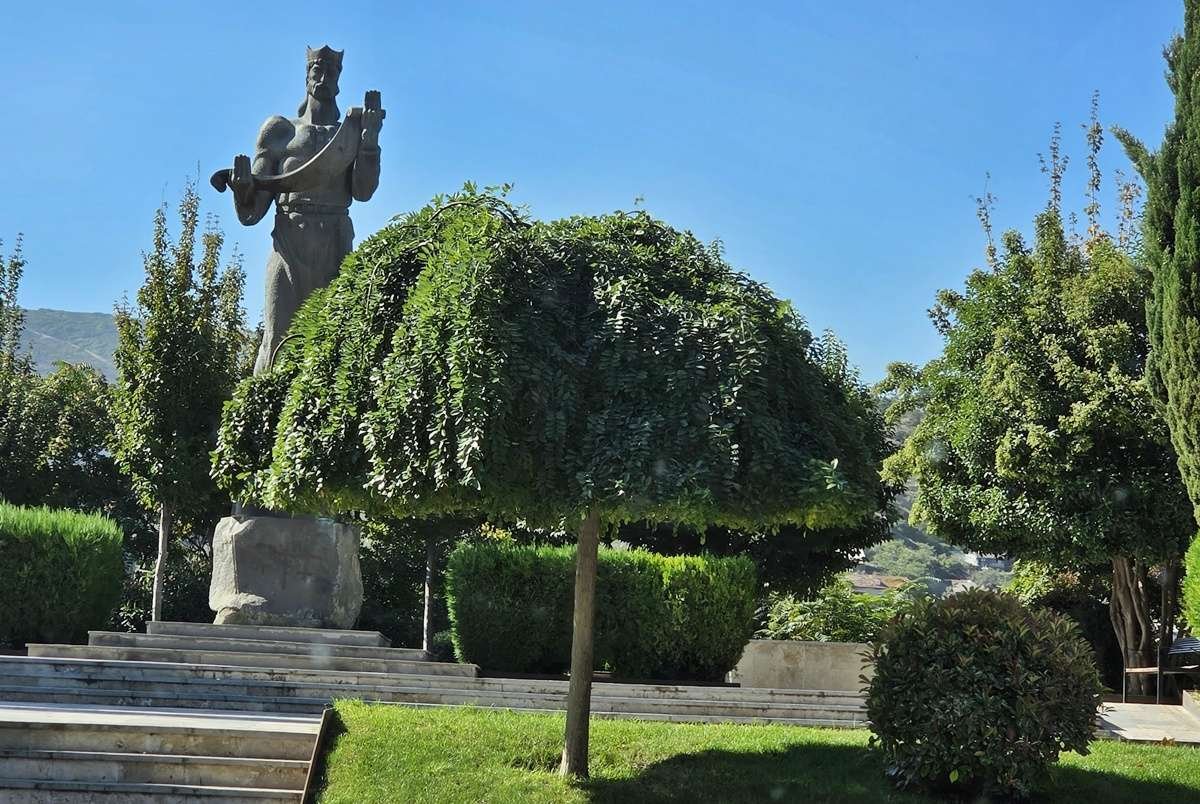
A compact memorial park on the Noah Jordan Embankment is dedicated to Parnavaz I, the legendary first king of the Iberian Kingdom, who, according to Georgian tradition, is credited with creating the alphabet. A statue of the king holding a scroll stands in the center of the park.
The area is quiet and almost deserted, but it offers an observation deck with a good view of the city and the river, especially spectacular in winter when the trees lose their leaves. Several currency exchange offices with decent rates are nearby.
Parnavaz I reigned, according to various dates, in the late 4th or early 3rd century BC, and his historicity is still debated by scholars: some researchers believe he was a real ruler, while others consider him more of a legendary figure. The park's very name commemorates this debate between history and myth, which hasn't prevented it from remaining one of the most tranquil corners of the embankment.
Orbeliani Park
📍 Orbeliani Square, between Tabukashvili and Purtseladze Streets
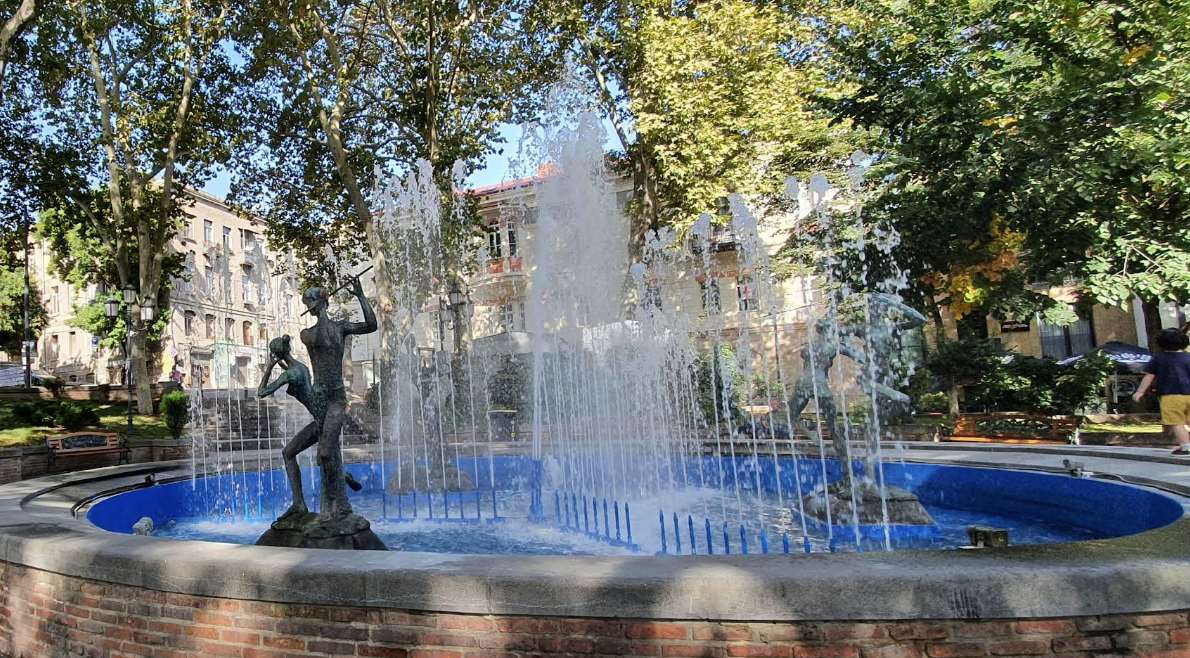
A small park with a fountain in the center of the square of the same name, which until 2019 was called Kolkhoznaya (Collective Farm) and served as a market for nearly two centuries: first for soldiers, then for flowers. The 2019 renovation transformed the dilapidated area into a showcase for the renewed center, preserving the historic facades.
Now it houses flower shops, cafes, and residential buildings, and the park itself has become a place to sit by the fountain, just steps from the Deserters' Market and the famous Orbeliani Bathhouse.
Before the Revolution, the square was known as the Soldiers' Bazaar: soldiers from the Tbilisi garrison would bring their goods here on weekends, and since 1876, it has been an official market. During Soviet times, it was called Kolkhoznaya (Collective Farm), and older residents still sometimes use this name instead of the official one.
First Republic Square
📍Western end of Rustaveli Avenue, Vera district
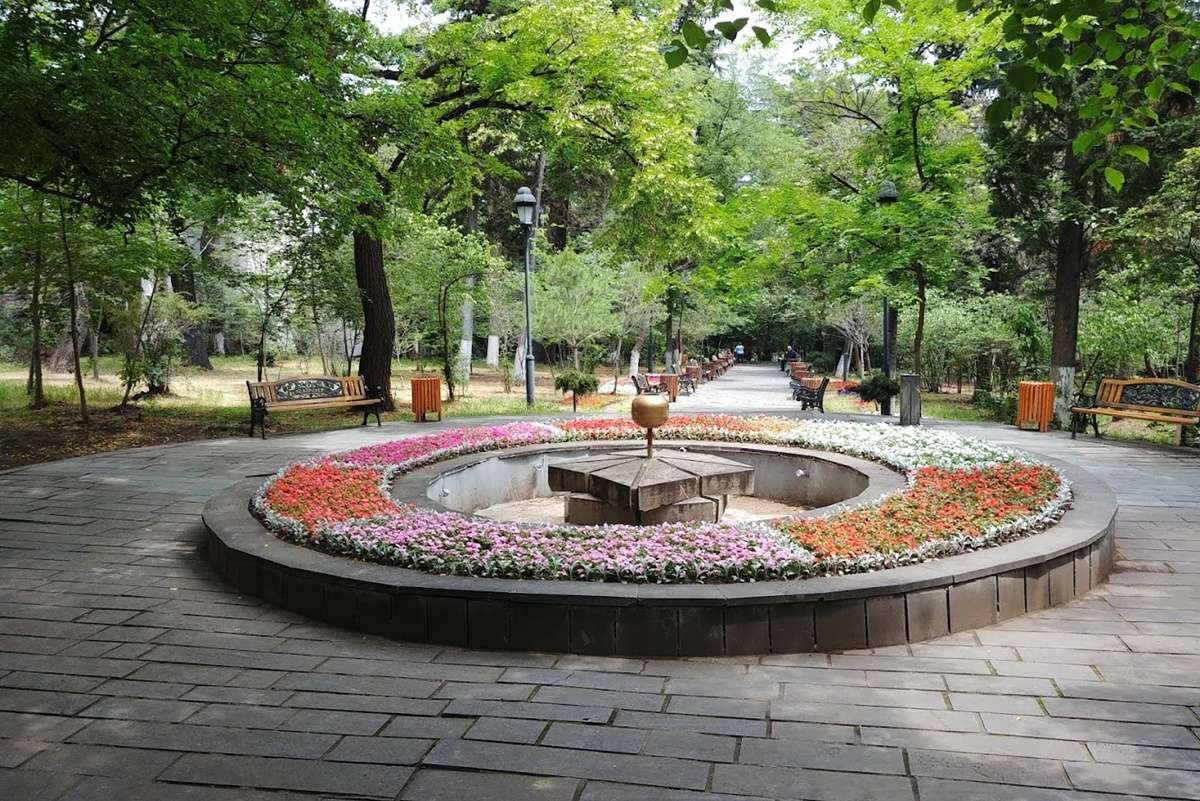
The square and park at the western end of Rustaveli Avenue have changed their name three times: it opened in 1983 as Republic Square, became Rose Revolution Square in 2005 in memory of the peaceful change of power in 2003, and received its current name in 2018 in honor of the centenary of Georgia's independence in 1918.
Today, the square's main symbol, an eight-meter-tall bicycle sculpture by French artist Jean Dupas, was installed in 2011. The park is compact but conveniently located: near the Rustaveli metro station and April 9th Park.
Originally, the square was adorned with a bust of Lenin, the last monument to the leader erected in Soviet Georgia; it has now been relocated to an airfield outside the city. The square's three renamings accurately reflect how Georgia's political history has changed over the past forty years.
| Square | Address | View Details |
|---|---|---|
| 9 April Park | Rustaveli Avenue, near the National Gallery | Open → |
| Lado Gudiashvili Square | Lado Gudiashvili Square, Old Tbilisi | Open → |
| Heydar Aliyev Square | Gorgasali Street, Abanotubani | Open → |
| Leonidze Square | Giorgi Leonidze Street, Sololaki | Open → |
🌆 4. Green areas of the Left Bank
Compact parks on the left bank of the Kura River, close to new districts and metro stations, rather than the tourist center.
London Park
📍Marjanishvili Metro Station, Tbilisi
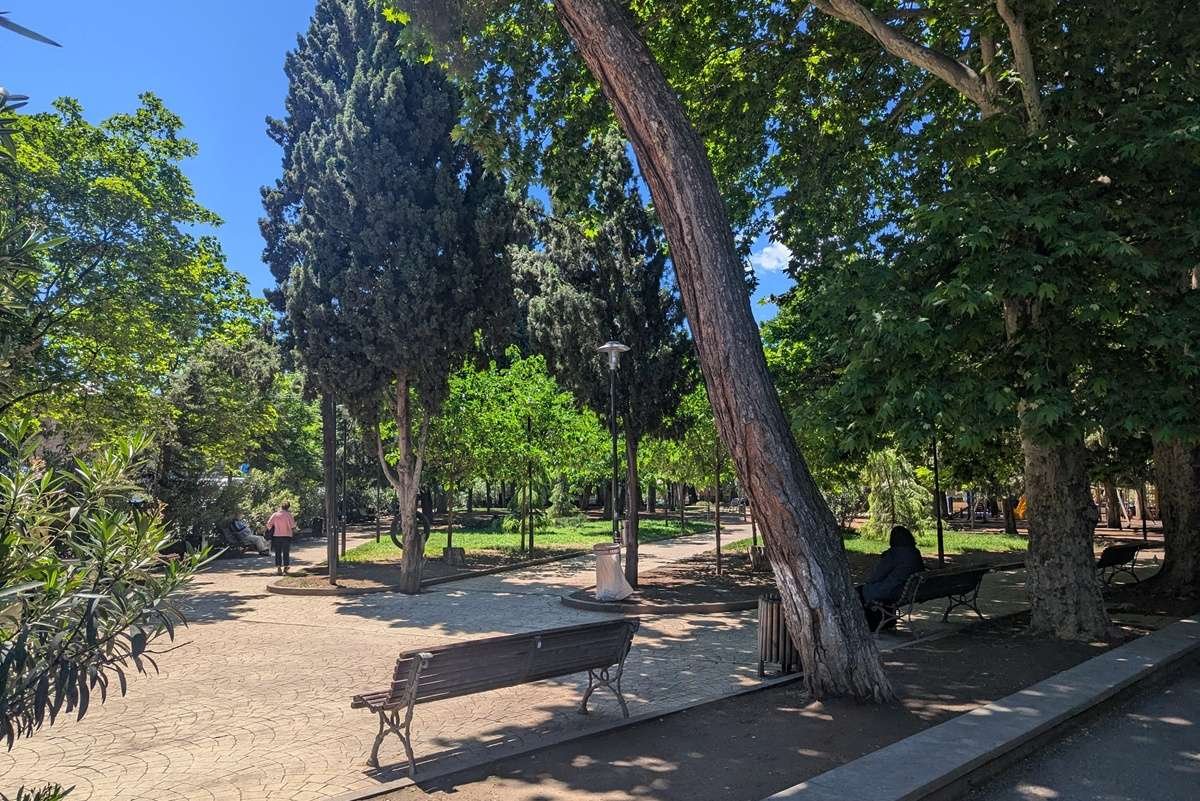
A small park near the Marjanishvili metro station, barely the size of a city block, boasts a fountain, a playground, and a bar right by the water. Despite its modest size, it's one of the most searched-for parks in Tbilisi: it's small, yet distinctly recognizable.
Surrounded by historic buildings from the late 19th century, it feels cozier and more intimate than its actual size suggests.
The park's name isn't directly connected to the British capital and, apparently, has become more of a colloquial name for the place. Next to the fountain, there's the Rosa bar serving signature cocktails, and the square itself near the metro station remains a popular gathering spot for locals in the evening, not just tourists waiting for trains. Despite its compact size, the park is among the most recognizable green spaces on the left bank, largely due to its convenient location near the metro station.
Rose Park
📍David Agmashenebeli Avenue, 73, Tbilisi
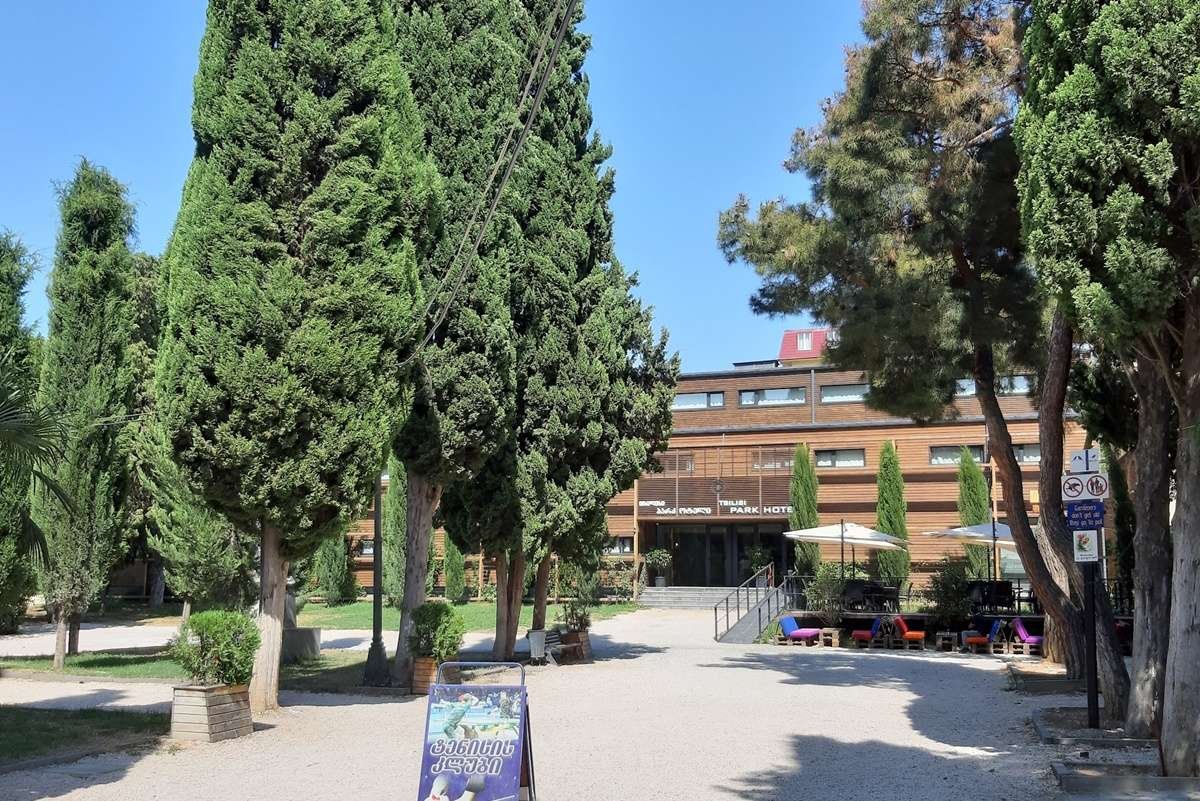
The former Gorky Park on David Agmashenebeli Avenue was renamed after the area was planted with rose bushes of various varieties. The grounds include a café, a hotel, a gym, a fountain with fish, and a drinking fountain.
Summer is especially pleasant: tall cypress trees provide shade, and the park is filled with photo opportunities, from unusual sculptures to flower-filled alleys. Admission is free, although some of the infrastructure belongs to the neighboring hotel.
Before its renaming, the park was named after Maxim Gorky for several decades, and the old name can still be heard among older Tbilisi residents. The easiest way to get there is from the Marjanishvili metro station: exit at Agmashenebeli Avenue and turn toward the park; it takes no more than a five-minute walk. The grounds are convenient for strollers: the paths are smooth, and the trees provide ample shade even in the height of summer.
🌳 5. Parks of the Saburtalo and Vake districts
Small neighborhood parks for those who live or stay in Saburtalo and Vake, and haven't come to Tbilisi specifically for them.
Round Garden
📍Intersection of Abashidze and Eristavi streets
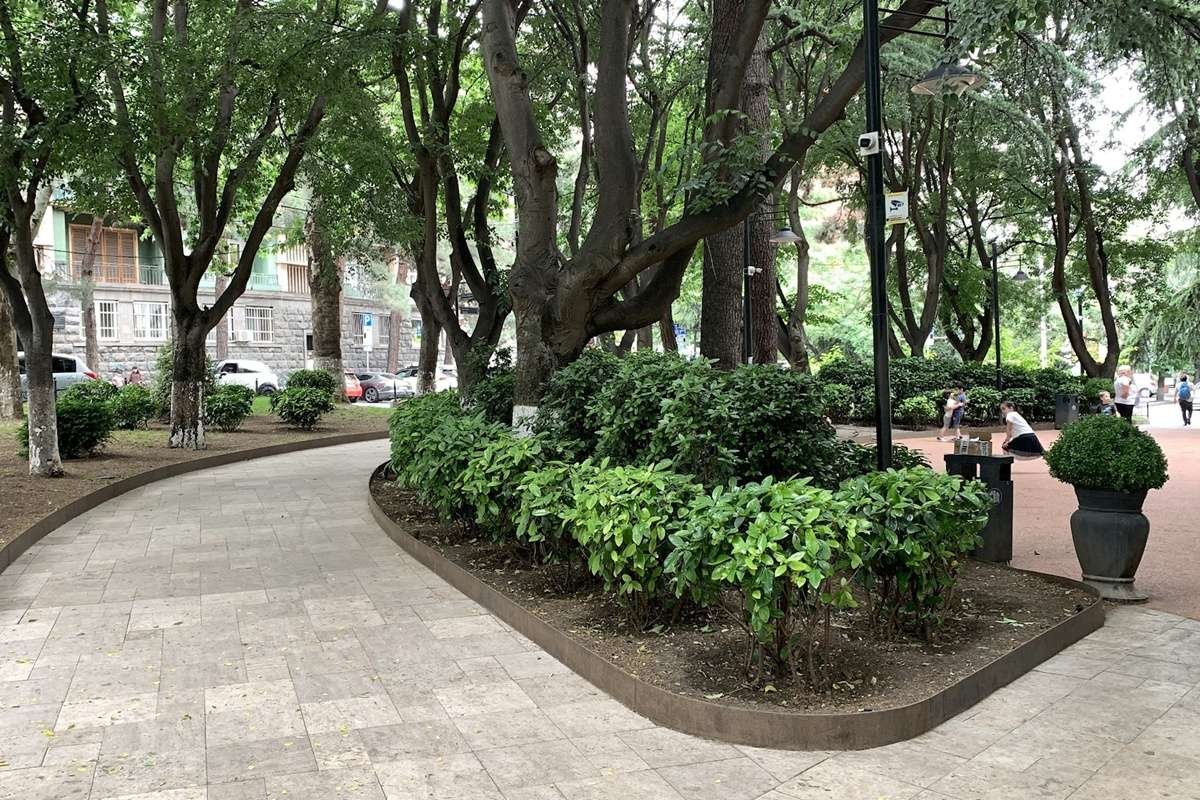
A compact park at the intersection of Abashidze and Eristavi Streets, recognizable by its round shape and a fountain with miniature sculptures in the center. Theatrical performances for children are traditionally held here a week before and for a week after New Year's.
This place is more of a neighborhood spot than a tourist destination: nearby is the Lagidze Water café, famous for its signature lemonade water, and the square by the garden is a comfortable place to sit if you find yourself in this part of Vake.
The park's small size is offset by the fact that it has become a natural meeting point for neighborhood residents: people go on dates, stroll with strollers, and simply sit on the benches around the fountain. During the New Year's holidays, the park is more transformed than many of the city's larger parks, despite its modest size. The name "Round" has become so ingrained that many Tbilisi residents don't even know its official name by address.
🏘️ 6. Parks in the northern residential areas
The courtyard and district parks of Gldani and Digomi are not tourist attractions, but places where Tbilisi residents themselves relax after work and on weekends.
💬 What people say about Tbilisi parks
Reviews of Vake and Rike almost always say the same thing: they're picture-perfect, restored spaces worth visiting at least once, but they're not the city's only green spots. Reviews of Lisi Lake and the Botanical Garden say the opposite: they're places people return to because you can spend half a day there, not just snap a single photo. Tourists rarely comment on neighborhood parks like the Round Garden or Dighomi: they're mostly known to locals, and that's a recommendation of sorts.
🏁 Why go
Tbilisi's parks aren't limited to the postcard-perfect Vake with its fountains. The city is designed in such a way that greenery is found at every turn: Soviet cultural parks, royal memorial gardens, a lake half an hour from the center, and a courtyard park that would never make it into a guidebook, but is where Tbilisians themselves stroll. It's worth seeing at least one park from each category to understand the city from this perspective.
ℹ️ Opening hours for individual park facilities (rides, cafes, rentals) and service prices are subject to change. Please check the latest information before your visit. Links to the catalog cards are above.
Which Tbilisi park became your favorite and why? Do you know a neighborhood square that didn't make it to this list? Tell us in the comments below, we read them all ❤️
❓ Frequently asked questions
💬 The Madloba catalog contains 34 parks, gardens, and squares, divided into six categories: main city parks, natural areas with lakes, historical squares in the center, green areas on the left bank, and district parks in Saburtalo, Vake, and the northern residential areas.
💬 Vake Park covers over 200 hectares. By comparison, London Park near Marjanishvili metro station barely takes up a city block, but that doesn't stop it from being one of the city's most recognizable green spaces.
💬 Vake Park and the Red Garden (Vaso Godziashvili Park): They offer playgrounds, electric car rentals, and open spaces. Lisi Lake and Mtatsminda Park are also great for families: Mtatsminda Park features a Ferris wheel and amusement rides.
💬 There's a three-kilometer bike path around Lake Lisi, with rentals right by the water. Vake Park also has a short bike path of about 1.2 km, though it runs uphill.
💬 Neighborhood parks like the Round Garden in Vake or Gldani and Digomi Parks in the north of the city: you'll rarely see tourists there, but you can see Tbilisi residents relaxing.
💬 Yes, Rose Park on David Agmashenebeli Avenue, formerly Gorky Park. It got its name from the large number of rose bushes of various varieties on the grounds.
💬 Entry is free almost everywhere. You only have to pay for certain services inside: bike and boat rentals on Lake Lisi, rides on Mtatsminda, the sulfur baths at Lisi, and parking in certain areas.

1 comment
Log in to leave a comment