




Racha Temples: Nikortsminda and Barakoni
South of Nikortsminda lies the Shaori Reservoir (area 9.2 km², maximum depth 14.5 km). The reservoir was built in the 1950s after the Shaori River was dammed. The reservoir basin is surrounded by unique green groves of beech and Caucasian fir trees, as well as mixed deciduous trees.
In the Ambrolauri Municipality, not far from the Nakerala Pass, on a small hill stands the magnificent domed Church of St. Nicholas – Nikortsminda (or Nikoltsminda, as locals call it). The village where the church is located shares its name.
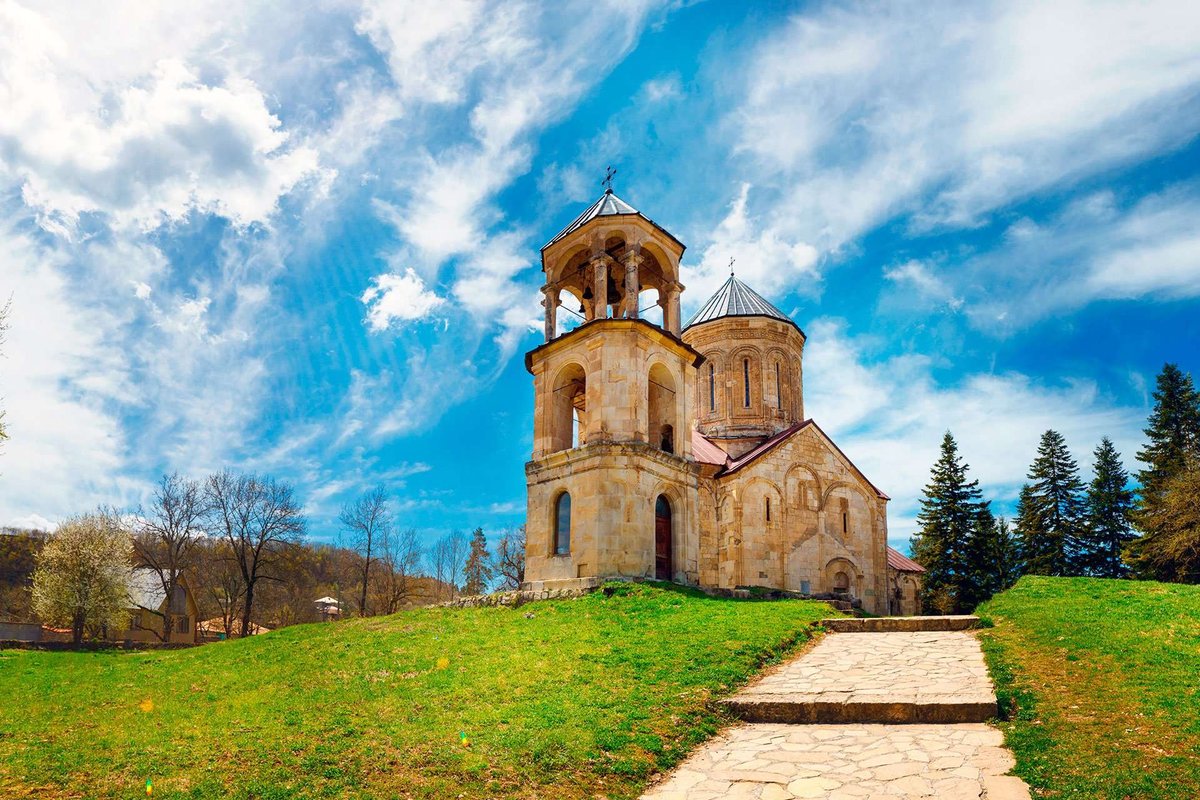
The cathedral was built by Bagrat III, the first king of a united Georgia, in 1010-1014. From the 11th to 12th centuries, the church served as a monastery for members of the Kakhaberidze family, the local eristavis. In the late Middle Ages, it served as a burial vault for the Tsulukidze family of local feudal lords. It is currently the center of the Racha Diocese.
The church belongs to the multi-façade type of cathedral and is one of a small group of buildings whose original architectural style existed within a very limited timeframe in the history of Georgian architecture. The church's layout is based on the composition of multi-façade cathedrals, where all the apses are arranged around a central dome within a single interior space, not standing out as separate parts. The interior features preserved frescoes from the 16th and 17th centuries, and decorative elements such as narrative compositions on the facades and an abundance of intricate carvings are also noteworthy. The cathedral's annexes also feature a variety of decorative embellishments.
Of all the historical monuments that have survived to this day, Nikortsminda is the only one whose reliefs have survived in their original form. The dome has also been preserved in its original form. The cathedral was damaged during the 1991 earthquake in Racha, but has since been restored.
On October 24, 2007, Nikortsminda Cathedral was added to the tentative list of UNESCO World Heritage Sites.
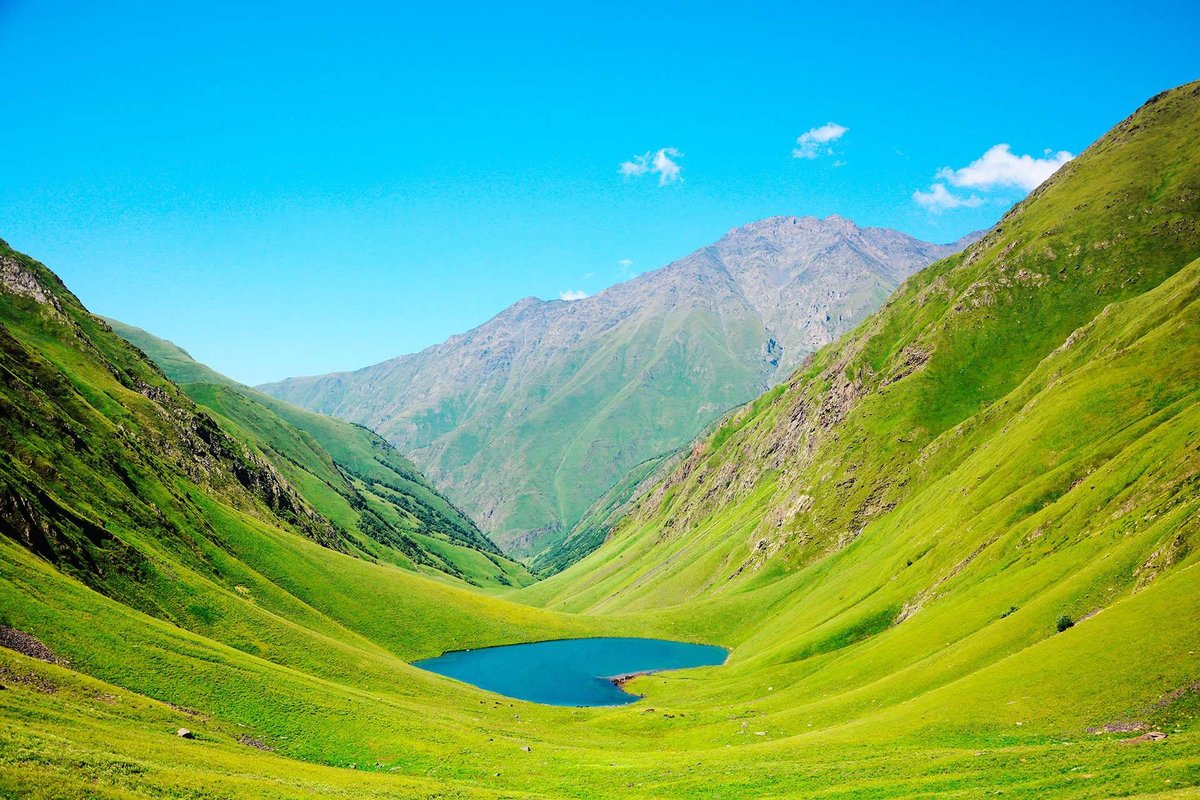
To the south of the village of Mravaldzali, at the foot of the northern slope of the Racha Range, near the area of Soseva, lies a heart-shaped karst lake. Because of its shape, locals have nicknamed it the Lake of Love. From the Khikhati section of the Racha Range, a magnificent panorama opens onto the lake, the village of Mravaldzali, and the Racha Mountains.
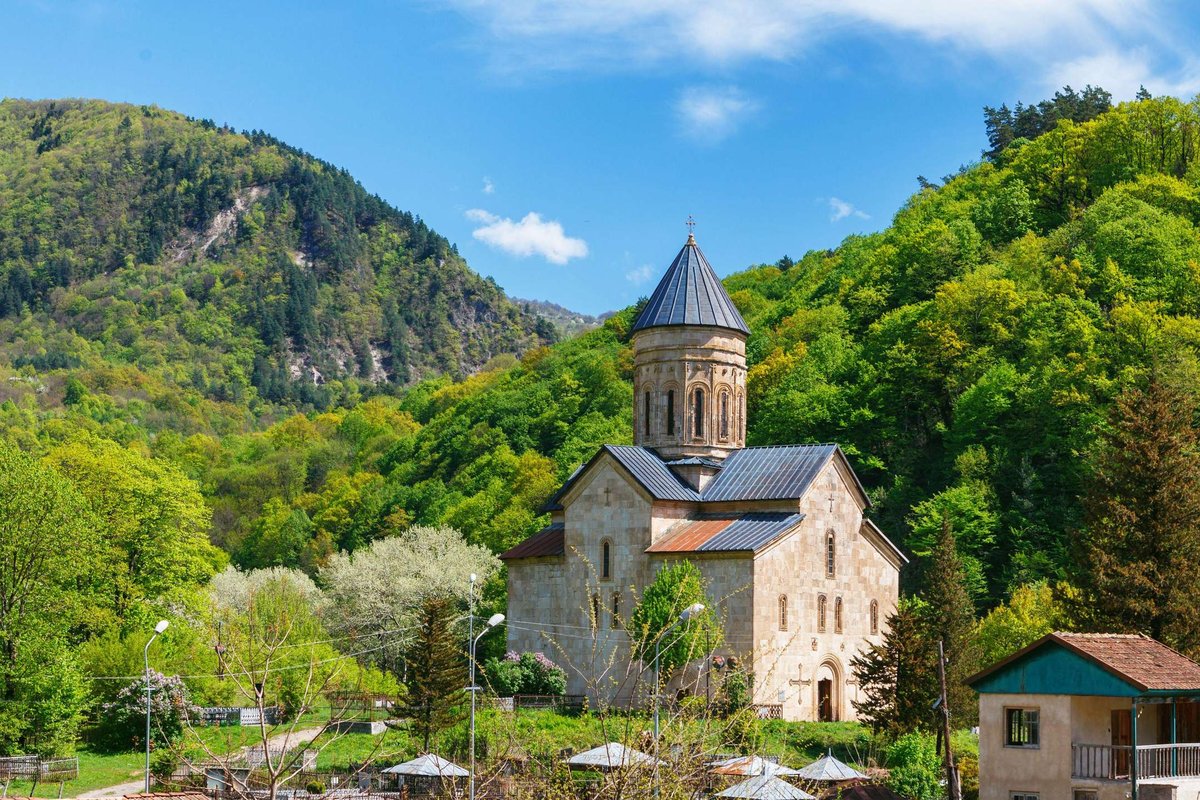
The Barakoni Cathedral, one of the most significant monuments of medieval Georgian domed architecture, is located in Racha, in the Amblorau Municipality, near the village of Tsesi, at the mouth of the Rioni and Lukhuni rivers. It was built on the initiative of Rostom, the Eristavi of Racha. The ambitious ruler considered himself the equal of the Imeretian king (his disobedience ended tragically in 1769, when King Solomon I of Imereti captured Rostom, gouged out his eyes, and abolished the Racha Eristaviate).
Rostom's vanity is evidenced by both the scale of the Barakoni Cathedral and its decoration. Barakoni, a domed structure built of hewn stone, is the largest of all the cathedrals erected in Georgia in the 18th century and is richly decorated with carved ornaments. The cathedral's architecture is closely linked to traditional Georgian architecture. The influence of Iranian culture is not evident here (unlike most monuments of Eastern Georgia of this period).
The cathedral's plan is a traditional example of a "inscribed" cross-domed church. It is rectangular, with a deep altar apse, two free-standing columns beneath the dome, and a high dome. The façade is decorated with intricate carved ornamentation. Lengthy and eloquent inscriptions recount the history of the cathedral's construction, indicate the date, and name the client and architect. The inscriptions reveal that the cathedral was built by the architect Avtandil Shulavereli, commissioned by Rostom, in 1753.
The 1991 earthquake severely damaged the cathedral. It has now been restored and is a functioning church.
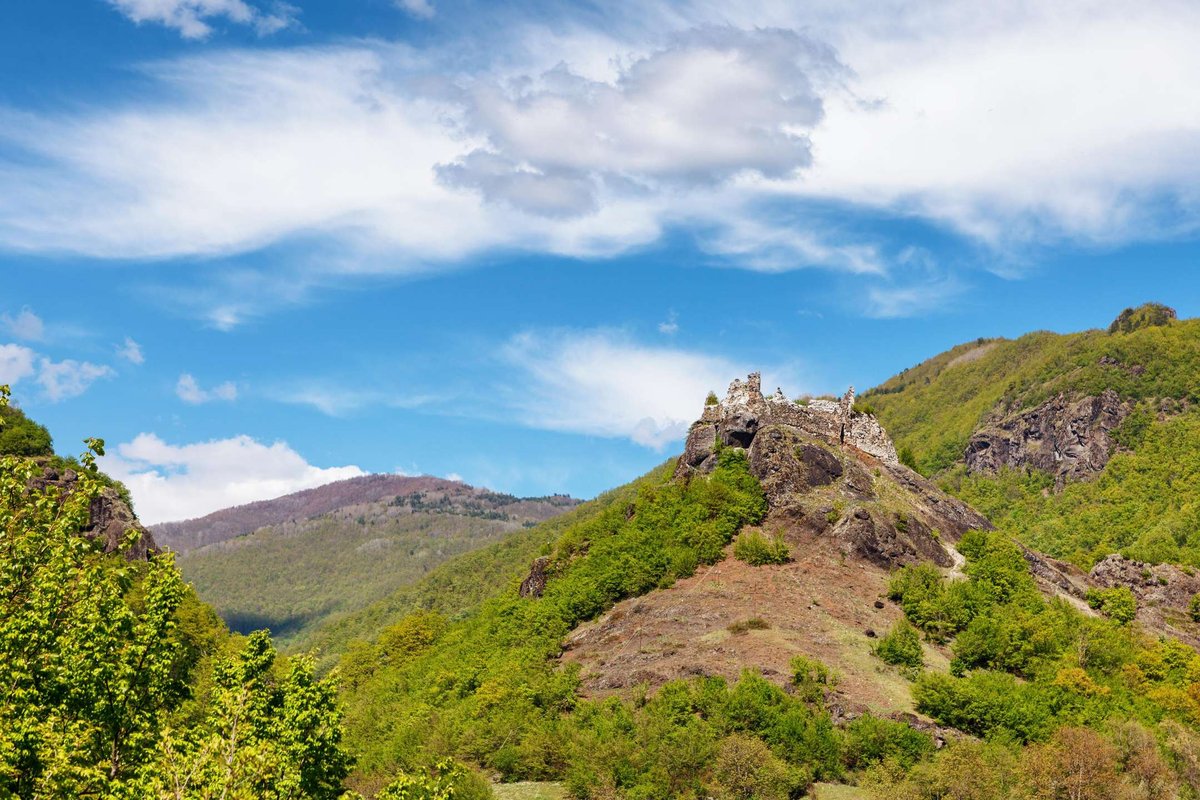
To the east of the Barakoni Cathedral lie the ruins of one of the most significant monuments of Georgian architecture—the Minda Fortress.

38 comments
Log in to leave a comment
вом храме сохранились фрески 16-17 века.Баракони являются очень значимым и самым большим собором 18 века.Природа вокруг потряса-
ющая, водохранилище, роща из буковых деревьев, пихта, лиственный лес.Тип храма многофасадный, обилие сложной резьбы.Этот храм
стоит посмотреть.В нём сохранились элементы в первозданном виде. В 1991 году храм был повреждён в результате землетрясения, сей-
час собор отреставрирован и является действующим.
Недалеко от перевала Накерала, на небольшом холме стоит храм Святого Николая - Никорцминда.
Собор построил царь Баграт III. В средние века являляющийся усыпальницей для рода местных феодалов Цулукидзе, в настоящее время – центр Рачинской Епархии.
В первоначальном виде сохранился и купол и рельефы. Во время землетрясения 1991 г. поврежден, но реставрирован.
У подножья северного склона Рачинского хребта находится озеро "Любви", в форме сердца. С Рачинского хребта открывается чудесная панорама!
Храм Баракони воздвиг честолюбивый правитель Ростом, посчитавший себя ровней имеретинскому царю, а неповиновение окончилось тем, что царь пленил и выколол ему глаза.
О тщеславии Ростома свидетельствует и убранство, и масштаб храма Баракони, построенного зодчим Автандилом Шулаверели по указу Ростома в 1753 г. То
2007 года внесён в ЮНЕСКО.