



Martkopi Monastery in Kvemo Kartli: History & Route
⛪ Active monastery · ⏱️ 2–3 hours · 📍 Kvemo Kartli, Gardabani municipality, 25 km from Tbilisi
🏔️ Before you go
| 📍 Location | Kvemo Kartli region, Gardabani municipality, village of Martkopi |
| 🚗 Distance | 25 km from Tbilisi. The road leads directly to the monastery |
| 📅 Founded | 6th century, by Saint Anthony Martkopeli — one of the Thirteen Assyrian Fathers |
| ⛪ Churches | Four: the Deity, the Mother of God, St George, Father Anton |
| 🕰️ Status | Active monastery, Abkhazian Eparchy. Open to pilgrims and visitors |
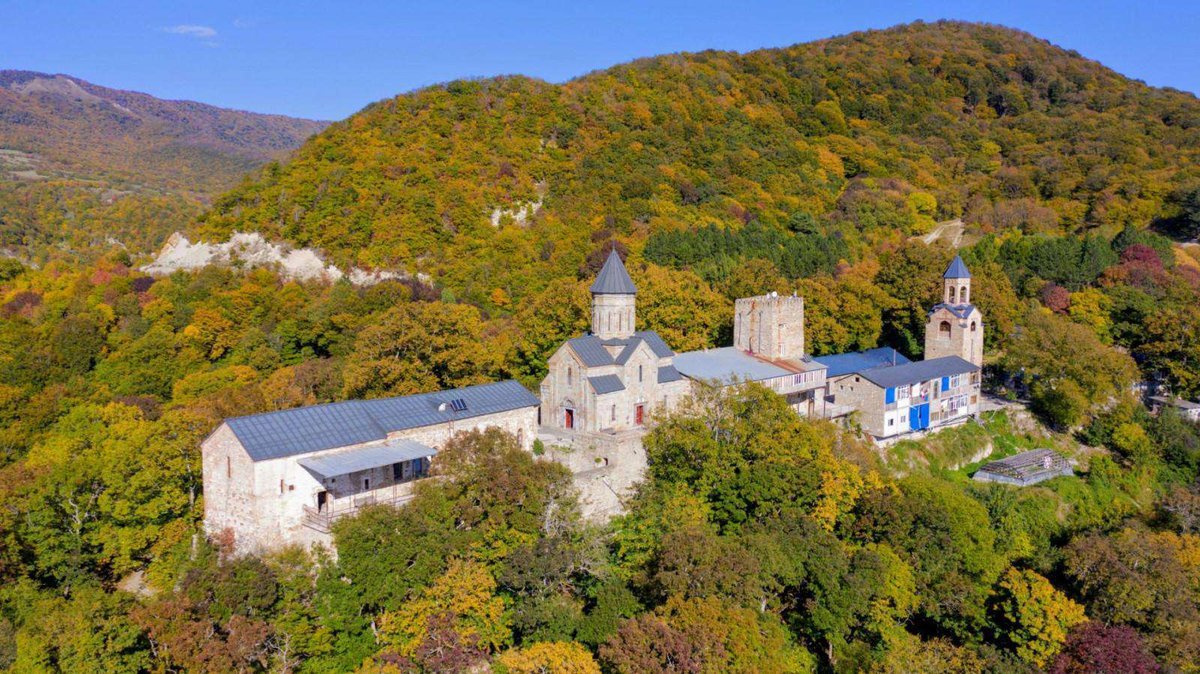
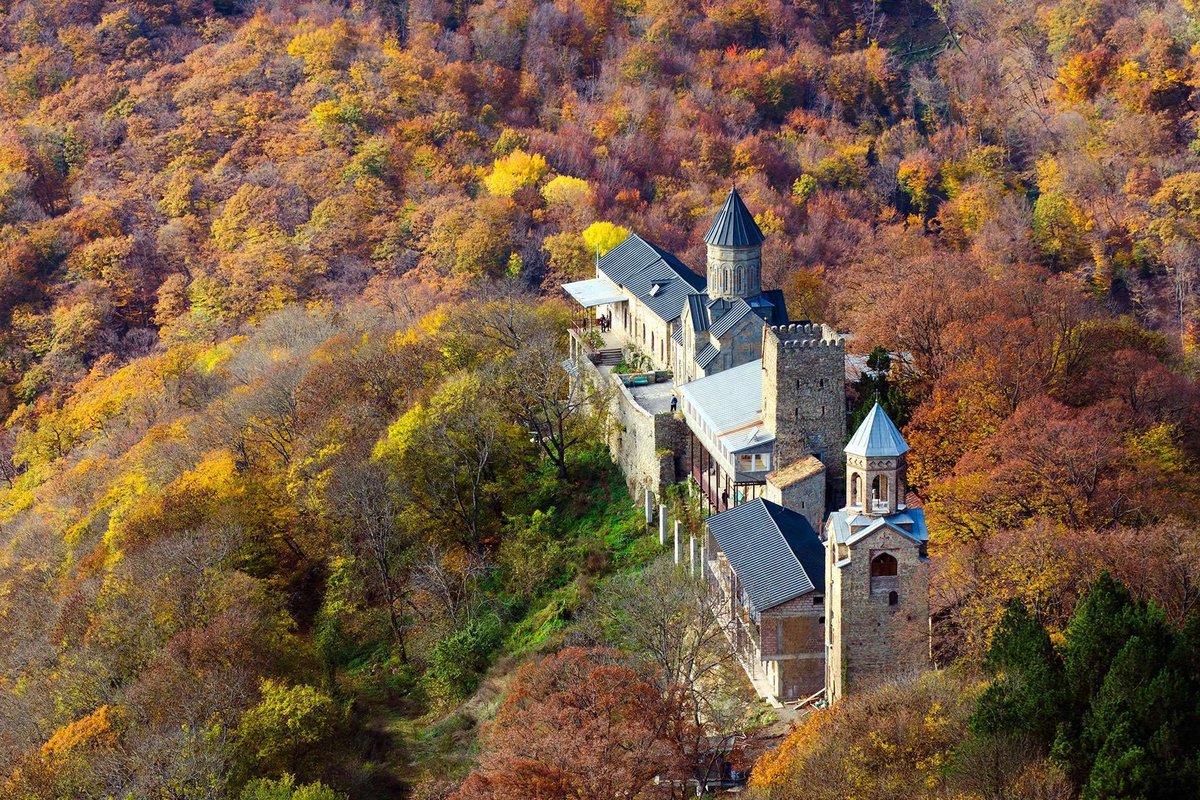
| 🍂 Best season | Autumn — the trees change colour and the monastery looks especially picturesque |
| 💰 Entry | Free. Observe the monastery's rules of conduct |
🧭 Who this trip is for
Martkopi Monastery is for those who want to get out of Tbilisi for a few hours and reach somewhere where history doesn't hang on signs but stands in stone. Fifteen centuries is not just a figure — it's a column in which the monastery's founder spent the last 15 years of his life, and walls that survived raids by the Golden Horde and Tamerlane. This article is for anyone who wants to know what to look for here and why it's worth making the trip.
📖 History worth knowing before you arrive
Before the 6th century the village on this site was called Akriani — meaning "stone place." There was already a temple here, founded by Vakhtang Gorgasali. But the monastic story began differently.
In the early 6th century, one of the Thirteen Assyrian Fathers arrived here — Syrian monks who spread across Georgia as missionaries. His name was Anthony. He lived as a hermit — in Georgian, "martkopeli." The village and monastery took their name from this word.
Word spread of his miraculous deeds. Followers began arriving. This was the beginning of Martkopi as a monastery.
The monastery's greatest loss was the Acheiropoietos Icon of the Saviour. Anthony brought it personally from Edessa. The monastery's secondary name — "of the Deity" — comes from this icon. In 1395, during Timur Leng's invasion, the icon was looted. It has never been found.
In 1265 Khan Berka and the Golden Horde destroyed the city of Rustavi. The Episcopal centre was moved here — and the monastery became more important still for the region. A school was established later and functioned for several centuries, until 1752 when the Leki raiders attacked.
🏚️ What happened in the 20th century
The most unexpected chapter — the Soviet one. In 1934 the monastery was closed. Over the following decades it served as: a shelter for homeless children (1950s–60s), then a rest house for Factory No. 31. Monastic life returned only in 1989 — since then the Abkhazian Eparchy has been based here.
There was another tragedy: in his own cell on 26 August 1918, the Patriarch of All Georgia, Kirion II, was murdered. He had lived and worked here — the monastery remained the centre of Episcopal life until the early 19th century.
🏛️ What's here: the architectural complex
For a mountain monastery, it's substantial. On the grounds:
- The Church of the Deity — the central building. Originally much larger; raids destroyed it repeatedly. What stands now is a later, smaller church built in its place.
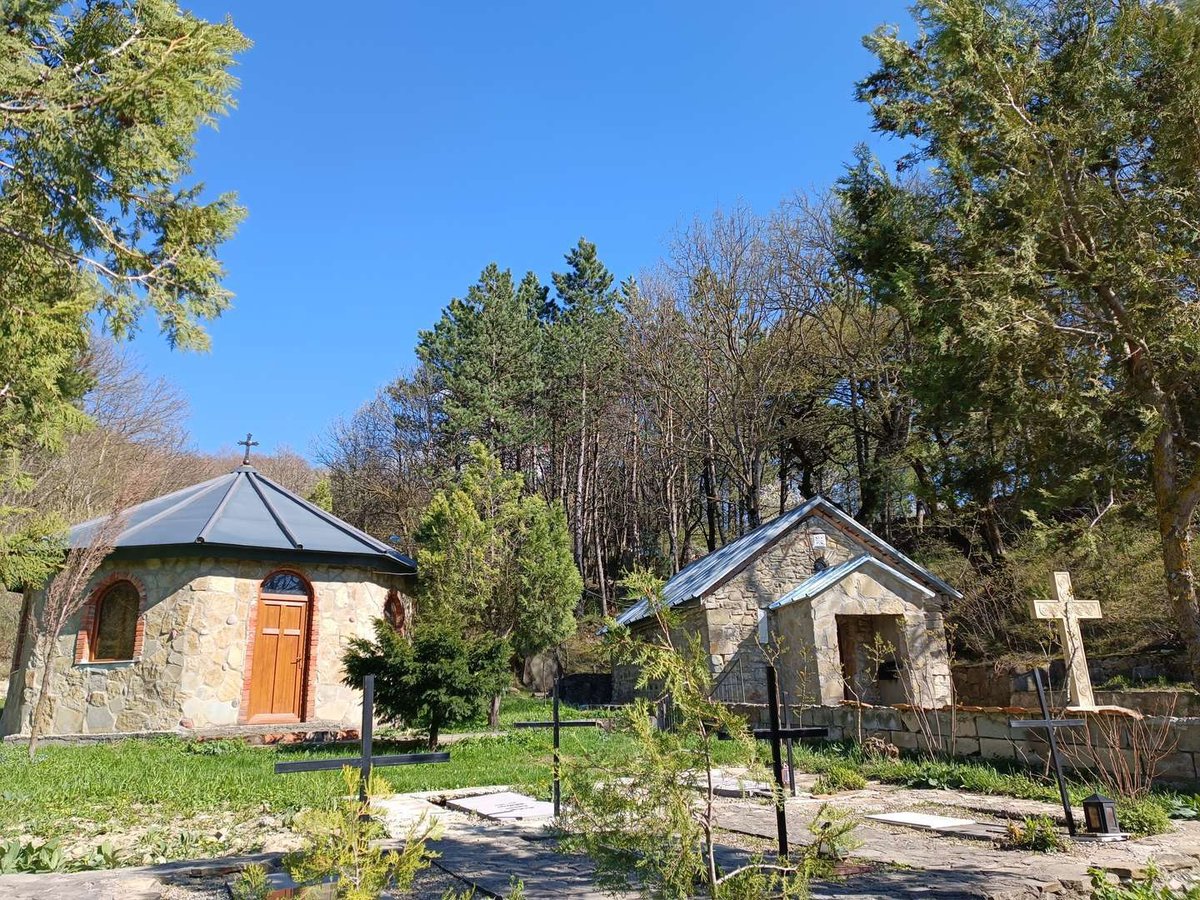
- The Church of the Mother of God, the Church of St George, the Church of Father Anton — three additional churches on the grounds.
- Bell tower and monastic buildings.
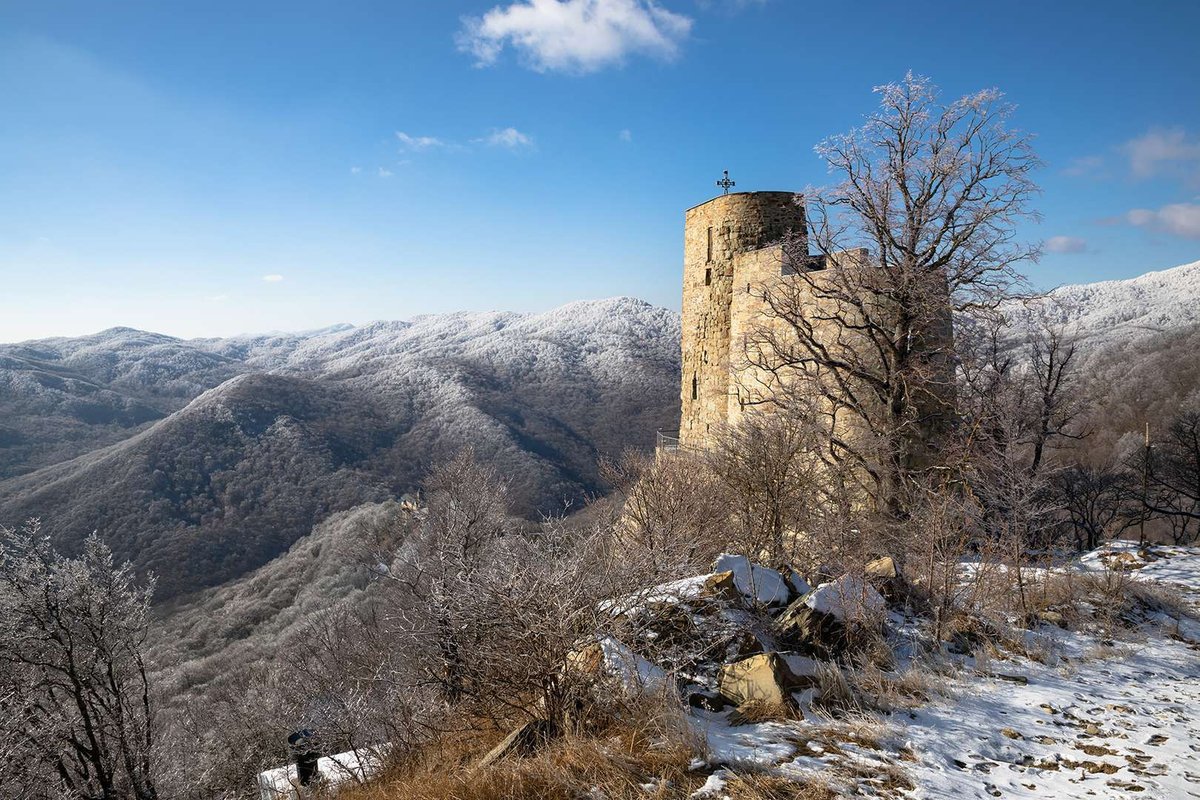
- Defensive wall with loopholes — 1,400 metres long. Only ruins remain, but they give a sense of how fortified this place once was.
- The column of Anthony Martkopeli — beside the main church. The monastery's founder spent the last 15 years of his life in this column. His grave and sepulchre are there too.
One visitor noticed a hole in the wall left by a fallen projectile — a living mark of everything this monastery has endured.
Find the column of Anthony Martkopeli beside the main church. Most visitors walk past it. Consider this: a man lived inside this stone column for fifteen years. Not for fame — because he believed it was right. That changes how you see everything else on the grounds.
🗺️ Route around the grounds
1️⃣ Enter through the main gate and take in the ruins of the defensive wall around the perimeter — 1,400 metres of history.
2️⃣ Walk to the Church of the Deity — the central building of the monastery. Look at it from outside and inside.
3️⃣ Find the column and grave of Anthony Martkopeli beside the main church.
4️⃣ Visit the three other churches: the Mother of God, St George and Father Anton — each with its own history.
5️⃣ Climb to the bell tower and look out over the grounds.
6️⃣ Step to the edge of the grounds — mountain views open through the trees. Particularly beautiful in autumn.
💬 What visitors say
"Visiting the monastery was like stepping back in time. The rich history, from its founding on an ancient religious site to its rebirth as an educational centre, is fascinating. Standing beside the tomb and pillar of Anton Martkopeli, you feel a deep connection to the past."
"The history of the Martkopi Monastery impresses with its many upheavals — from its founding on the site of a pagan temple to becoming an episcopal centre, then being destroyed and eventually restored."
"You should probably visit this place in autumn — the building hides among trees and coloured leaves."
Have you been to Martkopi Monastery? What stayed with you most — the history, Anthony's column, the mountain views, or something else entirely? Tell us — we read every comment ❤️
🏁 Is it worth going
Twenty-five kilometres from Tbilisi — and fifteen centuries of history in one place. The Golden Horde, Tamerlane, the Soviet period, the murder of a patriarch, a revival. Martkopi has survived all of it and continues to function. This is not a museum but a living place. That's exactly why it's worth the trip.
ℹ️ Martkopi is an active religious community. Modest dress and quiet behaviour inside the churches are required. Check visiting hours in advance. Information is current at the time of publication.
🏔️ Nearby attractions


❓ Questions people ask most often
💬 By car: 25 km, and the road leads directly to the monastery. Head southeast from Tbilisi towards Rustavi, then turn towards the village of Martkopi. Public transport is infrequent; a taxi or your own vehicle is more practical.
💬 From the Georgian word "martkopeli" — hermit, solitary. That is how Saint Anthony was known, living here alone in the 6th century. The village took his name.
💬 The Acheiropoietos Icon, brought personally by Anthony from Edessa, disappeared in 1395 during Timur Leng's invasion. Its whereabouts have been unknown ever since.
💬 Yes, the monastery is open to visitors. It is an active community, so modest dress and quiet behaviour inside the churches are required. Entry is free.
💬 Autumn — when the trees change colour, the monastery is especially photogenic. In summer the greenery hides the architecture; in spring the approach road can be muddy. Winter depends on weather — the road may be icy.
💬 An hour and a half to two hours on the grounds, plus roughly an hour of travel each way. Better to allow half a day, especially if you're combining it with other sites in the region.
💬 The monastery's founder spent 15 years inside it — a form of spiritual discipline. His grave and sepulchre are nearby. It is the oldest and most personal spot in the entire complex.

28 comments
Log in to leave a comment
Удивляет, как много полезного монастырь принёс людям, сколько функций он исполнял.
Мне понравилось фото, здание прячется среди деревьев и цветных листьев, наверно, стоит посетить это место именно осенью)