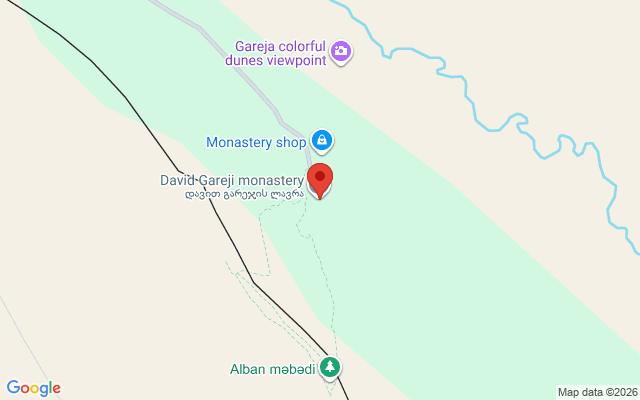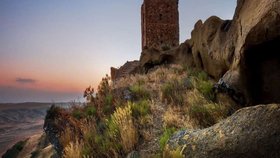




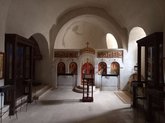

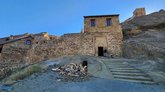

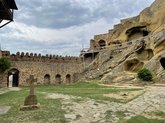

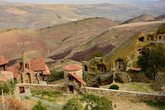

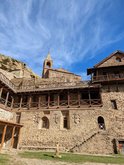

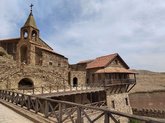

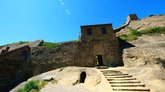

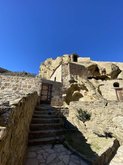

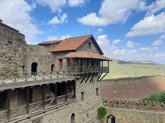

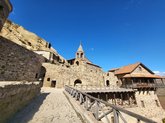

David Gareja is a cave monastery complex in southeastern Kakheti, 110 km from Tbilisi. Founded in the 6th century by Saint David Garejeli, one of the Thirteen Assyrian Fathers, the site grew over centuries into a network of more than 5,000 cave cells carved from soft sandstone — 21 monastic ensembles with churches, refectories, libraries and watchtowers. It was one of Georgia's most important centres of theology and religious painting. In 1615 Shah Abbas I's army killed an estimated 6,000 monks here; during the Soviet period, military units used the caves for target practice. Bullet holes are still visible in the Udabno frescoes.
What is accessible now: Lavra Monastery (lower complex) is fully open — a 6th-century cave church housing the tomb of Saint David Garejeli, an active monastic community, khachkars and carved sandstone walls. The Rainbow Hills beside the parking area — strikingly coloured mineral rock formations — are freely accessible. Udabno Monastery (upper complex), with its 8th-9th century frescoes including a rare portrait of Queen Tamar, has been closed since summer 2019 due to an unresolved Georgia-Azerbaijan border dispute. Georgian border guards turn visitors back on the trail.
Entry is free. Open during daylight hours. No public transport reaches the site; a car, organised tour or charter taxi is required. Bring water, sun protection and sturdy footwear. For the full history and context, see the David Gareja blog article. All churches and monasteries in Kakheti are in the Madloba catalogue.
David Gareja alongside the other main religious sites of Kakheti, with practical visit information, is covered in the Churches and Monasteries of Kakheti guide.