



🏰 Kvetera Fortress-Town: why visit these ruins in Kakheti
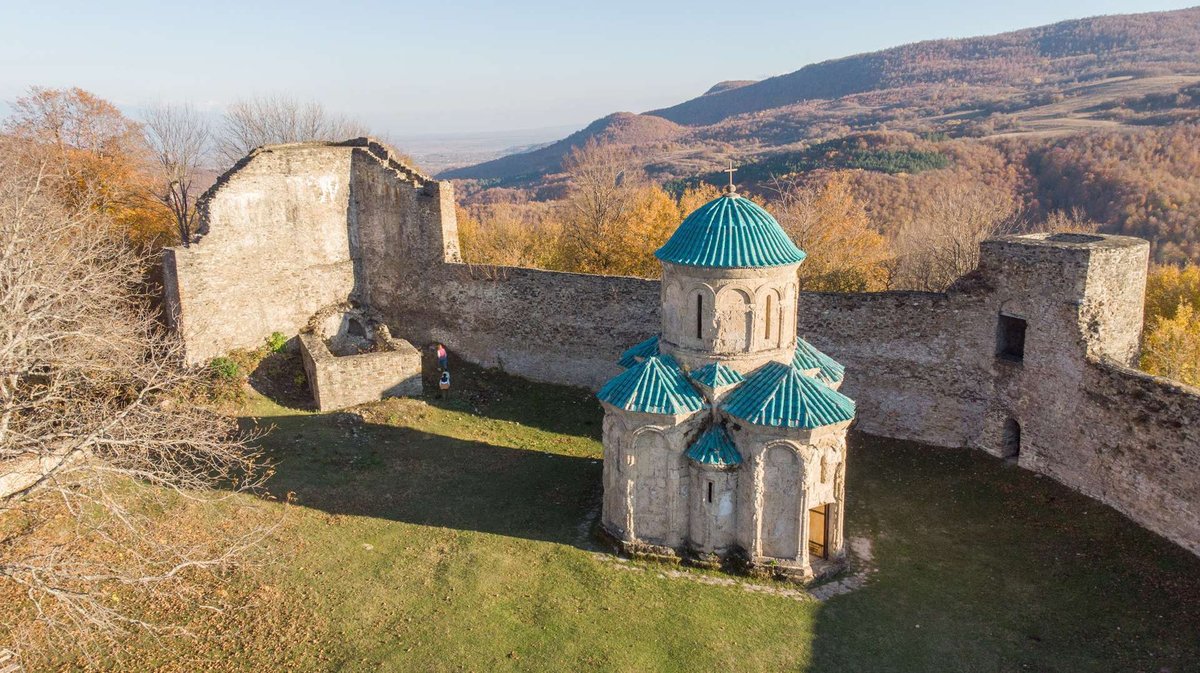
Kvetera is one of those places in Kakheti where history does not feel like a museum display, but part of the landscape. Among hills, trees and the Ilto valley, the ruins of a medieval fortress-town have survived: walls, traces of fortifications, a palace area, a church and the kind of stone silence that makes the place worth visiting slowly.
For a long time, Kvetera could be confusing: some travellers saw it as a church, others as a fortress. It is better to look at it more broadly. Kvetera is a fortress-town, and the domed church inside the complex is its main architectural jewel. This makes Kvetera work in two ways on a Kakheti route: as a historical fortress and as a place of early medieval Georgian church architecture.
If you are building a route through fortresses and ancient ruins in Kakheti, Kvetera is a good choice for travellers who want to see more than famous wine towns and monasteries. It opens a quieter, northern side of the region near Akhmeta.
🏰 Kvetera is not only a church, but a whole fortress complex
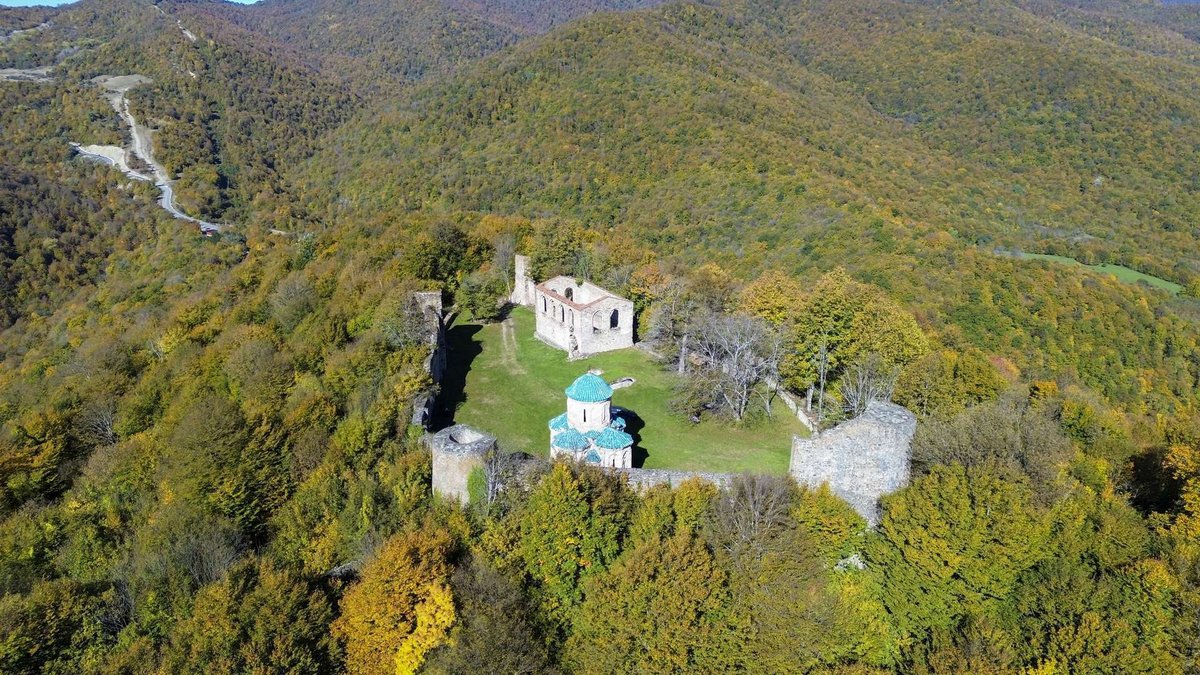
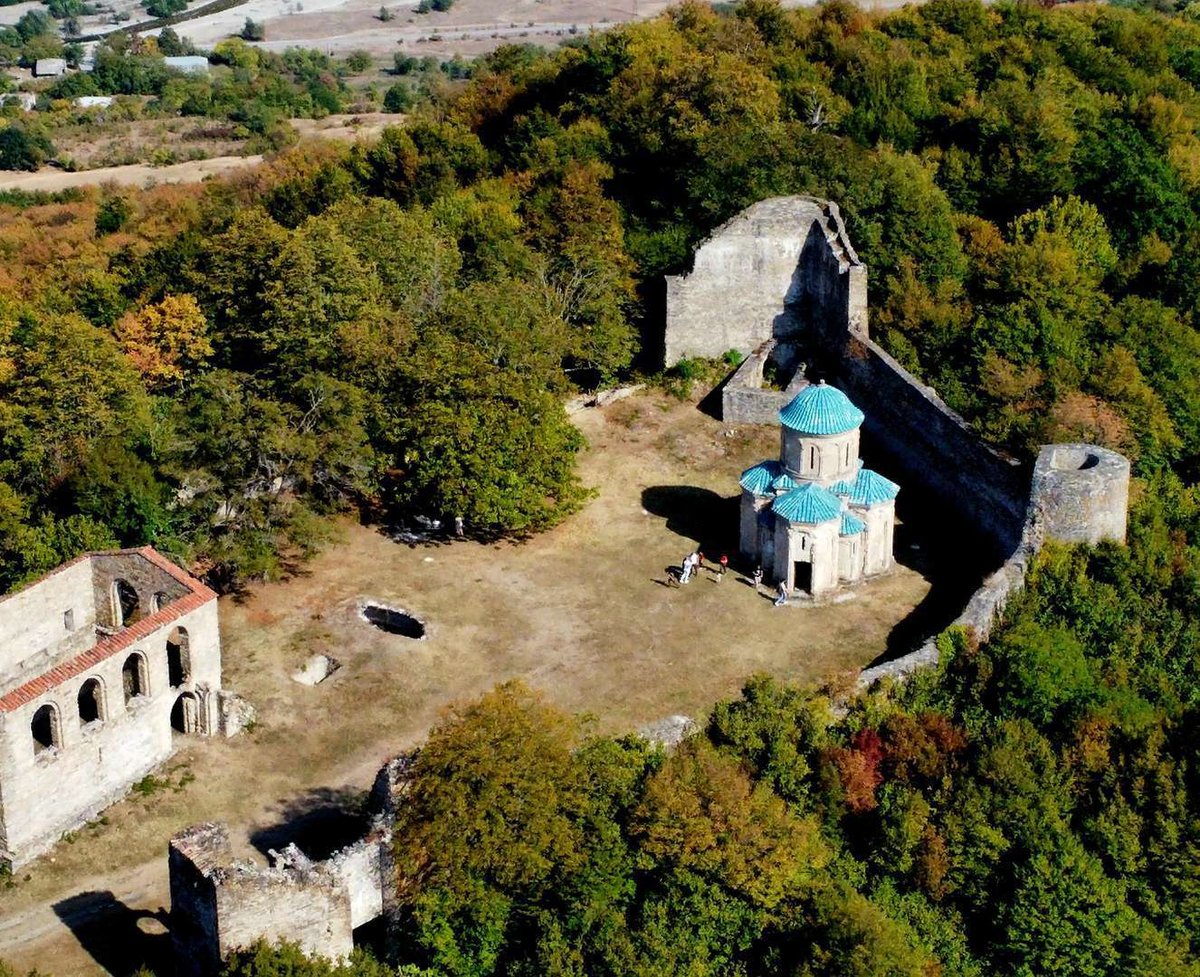
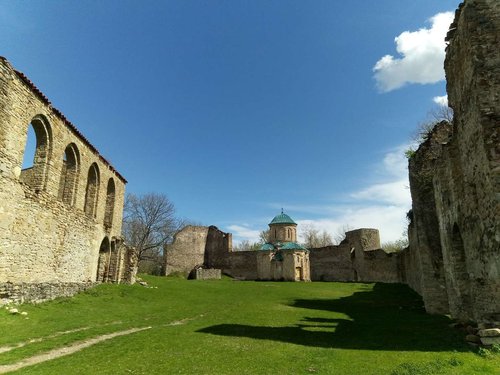
Kvetera should not be reduced to one church. Historically, it was a fortified town connected with Kakheti and the routes of north-eastern Georgia. The complex includes an inner fortress, a lower fortress, defensive walls, a palace area, a hall church and a domed church, which is the part most often seen in photos today.
This explains why Kvetera is more logically understood as a fortress than only as a religious site. Yes, the church is very important here. But it is not separate from the history of the place: it stands within the fortress-town and helps show how religious, defensive and administrative functions could exist side by side in medieval Georgia.
Kvetera does not look like a perfectly restored tourist attraction. Its strength is in the ruins: stone, fragments of walls, open space, traces of planning and the feeling that you are looking not at a decorative reconstruction, but at the remains of a real fortified centre.
⛪ The domed church of Kvetera
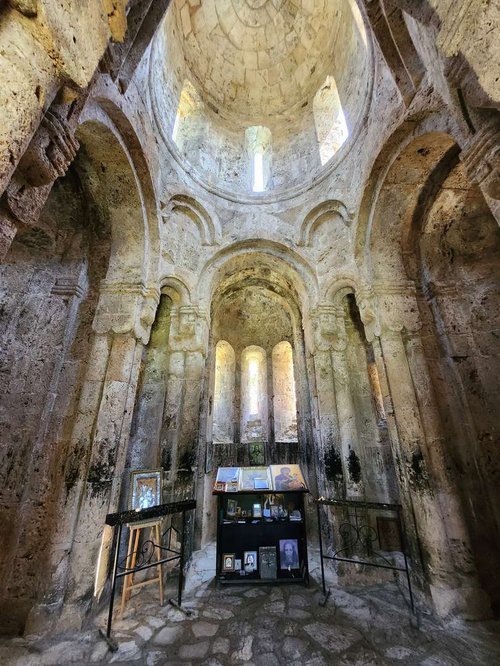
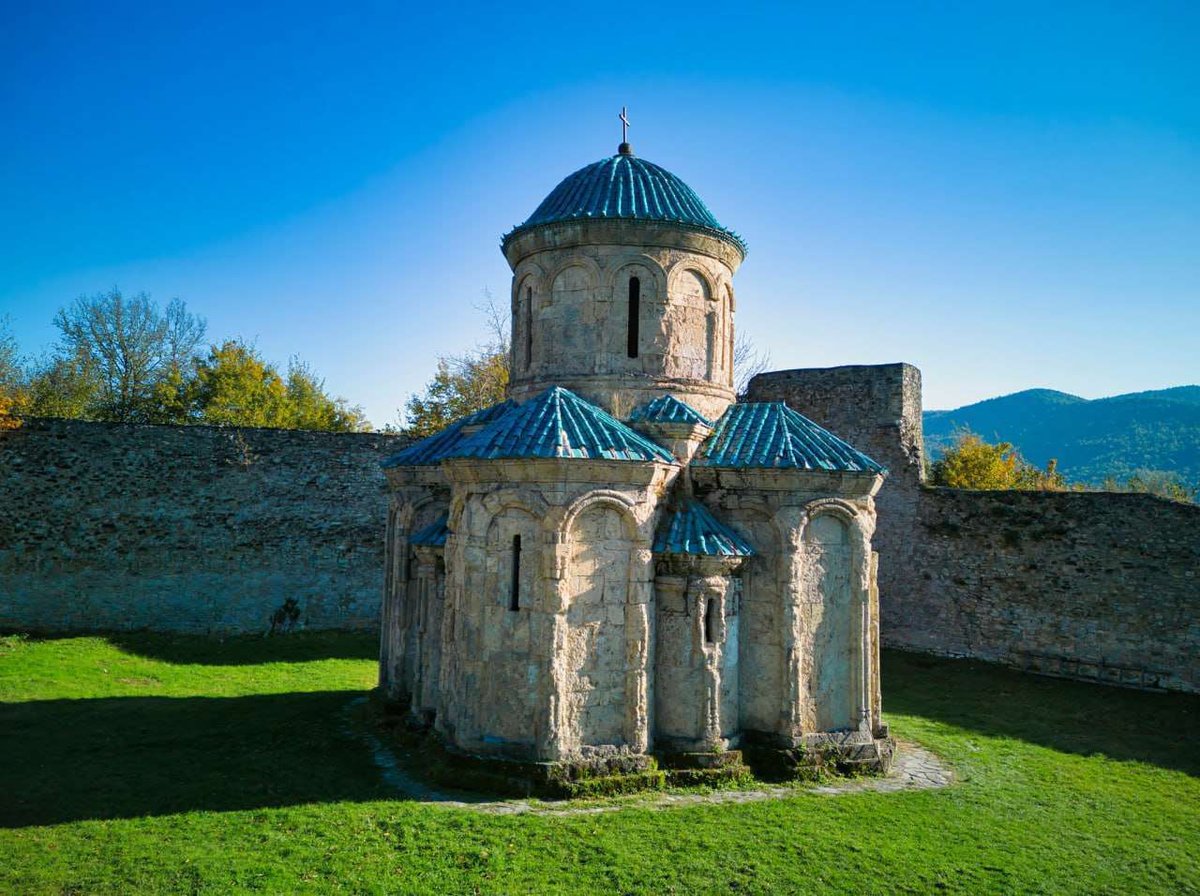
The most recognisable part of Kvetera is its small domed church. It is usually dated to the early 10th century. This is not a huge church that impresses by scale, but a compact and harmonious building where proportions, the dome, arches and the connection with the surrounding ruins matter most.
Kvetera Church is often described as an example of Georgian domed architecture. It looks especially strong against the remains of the fortress and the Kakhetian landscape: not as a separate photo spot, but as part of a historical scene. That is why the best photos are not only close to the church walls, but also from a distance, when you can see how the church stands inside the former fortified space.
For travellers, the place is convenient because you do not have to choose between “fortress” and “church”. In Kvetera, you get both. But the order of meaning should stay clear: first, a fortress-town; then, the church as its main preserved landmark.
📍 Where Kvetera is located
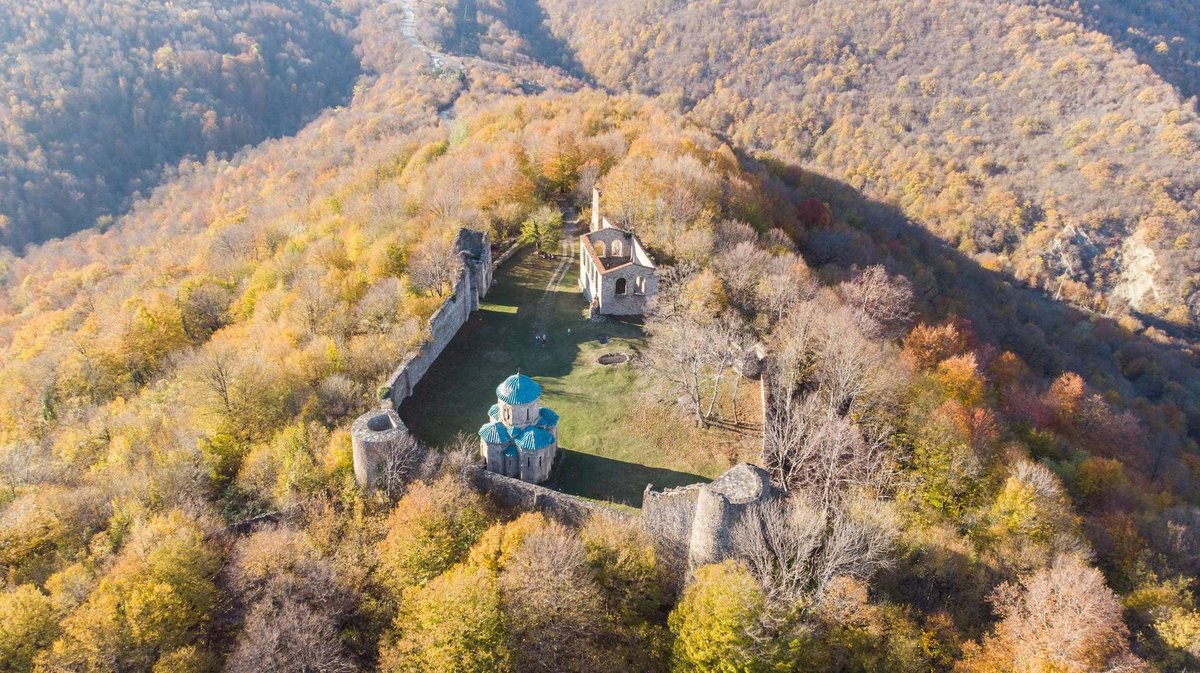
Kvetera is located in Kakheti, in Akhmeta Municipality, in the area of the Ilto River valley. It is not one of the most crowded places in the region: visitors usually come here after they have already seen Sighnaghi, Telavi, monasteries and wine routes, and want to add fortresses, ruins and quieter historical sites to their journey.
The nearest convenient reference point is Akhmeta. From here it is easier to plan the road to Kvetera, especially if you are exploring northern Kakheti. It is better to check the map in advance and not rely only on a general direction: places like this often require attention to the road, access and the final stretch of the route.
On Madloba, Kvetera is now listed as a fortress object: Kvetera Fortress-Town. Before travelling, save the page to check coordinates, photos, reviews and current tips from other travellers.
📸 Kakheti in photos: how to photograph Kvetera
Kvetera is a good place for travellers looking for atmospheric Kakheti photos rather than glossy postcards. Stone, ruins, greenery, hills, arches, the silhouette of the church and the space around it all work well here. The best shots are often taken not too close, but from a little distance, when you can see that the church stands inside a former fortress complex.
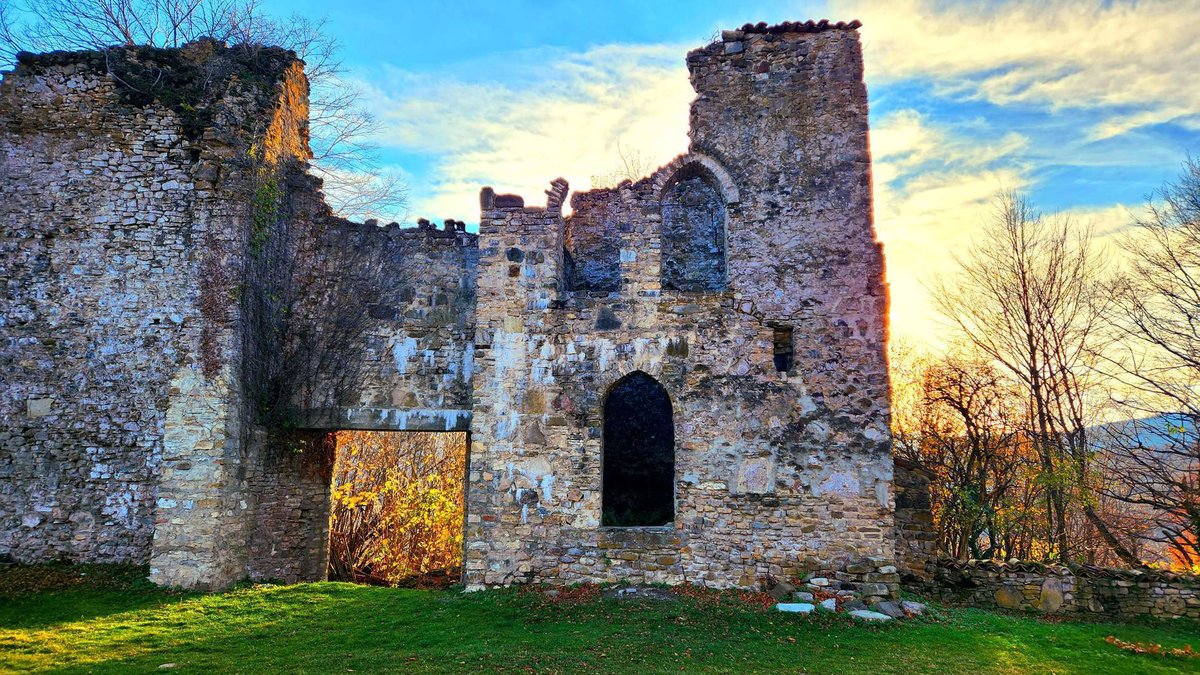
Walk through the territory slowly. Photograph not only the church, but also the remains of walls, stone texture, paths, the overall view of the ruins and the landscape around them. In autumn, Kvetera can look especially warm; in spring, green and soft; in summer, drier and more contrasting.
If you are collecting material around the idea of “Kakheti photos”, Kvetera gives the region a different visual layer. This is not vineyards or Sighnaghi balconies, but stone, medieval Kakheti: calm, slightly abandoned and full of texture.
🚗 How to get to Kvetera
The easiest way to include Kvetera in a route is through Akhmeta. If you are travelling around Kakheti by car, build the route in advance and check the final part of the road. Access to historical ruins can be less obvious than routes to popular monasteries or wineries.
From Tbilisi, the trip is longer, so it is better not to build the whole day around Kvetera unless you are especially interested in fortresses and ruins. It makes more sense to combine it with Akhmeta, northern Kakheti, the Ilto valley or other regional sites. If you are already in Kakheti, Kvetera becomes a more convenient stop for a short historical trip.
Public transport should be checked separately. Even if you can reach Akhmeta, the final stretch to Kvetera may require a taxi, a local driver or walking. Do not leave the return route to chance, especially if you travel closer to evening.
🧭 What to combine with Kvetera
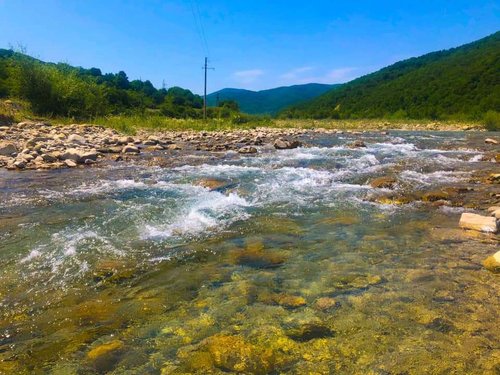
Kvetera can be added to a route through northern Kakheti. It works well with Akhmeta, natural spots near the Ilto, other fortresses and quiet rural landscapes. If you want to see more than the wine-and-tourism side of Kakheti, this route is a good fit.
For a first visit, do not overload the day with too many distant stops. Kvetera needs time: the road, the climb, the ruins, photos, a pause for the views and the way back. Add too many places, and the day quickly turns into a race.
A good format is to treat Kvetera as one of the main stops of the day, not as a “10-minute detour”. Ruins need slow movement: look at the stone, understand the structure of the complex, notice how the church is connected with the fortified space and give the place time to open up.
⚠️ What to check before visiting
Before setting off, check the weather, road, footwear and coordinates. Kvetera is not a city museum or a paved promenade. There may be uneven ground, stones, grass, a climb, slippery sections after rain and open areas with little shade.
If you are travelling with children, assess the route in advance. Kvetera can be interesting for teenagers and history lovers, but small children need supervision around stones, uneven ground and open areas. After rain, take extra care: old stone and soil may become slippery.
💬 How to use Madloba for a trip to Kvetera
Before travelling, open the Kvetera Fortress-Town page on Madloba. Save the coordinates, look through the photos, check recent reviews and decide whether the place fits your Kakheti route. For sites like this, traveller comments are especially useful: they help you understand the road, how much time to allow and what to expect on arrival.
If you have already been to Kvetera, leave a review. Tell others how you got there, what condition the access road was in, how long the visit took, where the best photos were and whether it is worth making a special trip. This will help other travellers see Kvetera not as “just a church”, but as a real fortress-town in Kakheti.
Over to you
Have you already visited Kvetera, or are you only planning a trip to this part of Kakheti? Tell us how you travelled from Akhmeta, whether the road was easy to find, which views you liked most and how much time is worth allowing for the visit. Your experience will help other travellers choose the right route and prepare without unnecessary surprises.
The information in this article is current as of June 2026. Before travelling, check the road, weather, coordinates, site accessibility and recent reviews on Madloba.
❓ Frequently asked questions
Kvetera is in Kakheti, in Akhmeta Municipality, in the area of the Ilto River valley. Akhmeta is the nearest convenient reference point for planning the route.
Kvetera is a fortress-town. The domed church is an important and highly recognisable part of the complex, but it is not the only element on the site.
Kvetera Church is usually dated to the early 10th century. It is a small domed church that shows the character of early medieval Georgian architecture.
It is most convenient to build the route through Akhmeta. Before travelling, check the map and the final stretch of the road, as access to the ruins may be less obvious than to popular tourist sites.
The best shots are taken from some distance, when the church, ruins and Kakhetian landscape fit into one frame. Stone texture, arches, walls and valley views are also worth photographing.
Choose comfortable shoes with a non-slip sole. There may be stones, uneven ground, grass and slippery sections after rain.
Yes, but with care. Children may find the ruins interesting, but adults should watch them near stones, uneven areas and open ground.
Kvetera can be combined with Akhmeta, northern Kakheti, natural spots near the Ilto and other historical sites in the region. It is better not to overload the day with too many distant places.
Allow time not only for the ruins themselves, but also for the road, photos, a pause for the views and a slow walk around the territory. Kvetera is better not visited in a rush.
Reviews help other travellers understand the road conditions, access point, route convenience, best photo spots and the real impression of the complex.

2 comments
Log in to leave a comment
I’d be lying if I said it was easy to get there; the roads can be tricky, but man, once you’re there... It feels surreal. I’m curious, did anyone happen to find the best time to visit for fewer crowds?