




Kveteri: Fortress in Kakheti, History and Route
In the picturesque region of Katekhia, Georgia, famous for its vineyards and valleys, lies the stone fortress of Kvereti. Built in the early Middle Ages, it offers something for even the most discerning traveler to see in Georgia.
To see the fortress, travel to the town of Akhmeta and then follow the Tianeti highway along the left bank of the Ilto River for 12 kilometers.
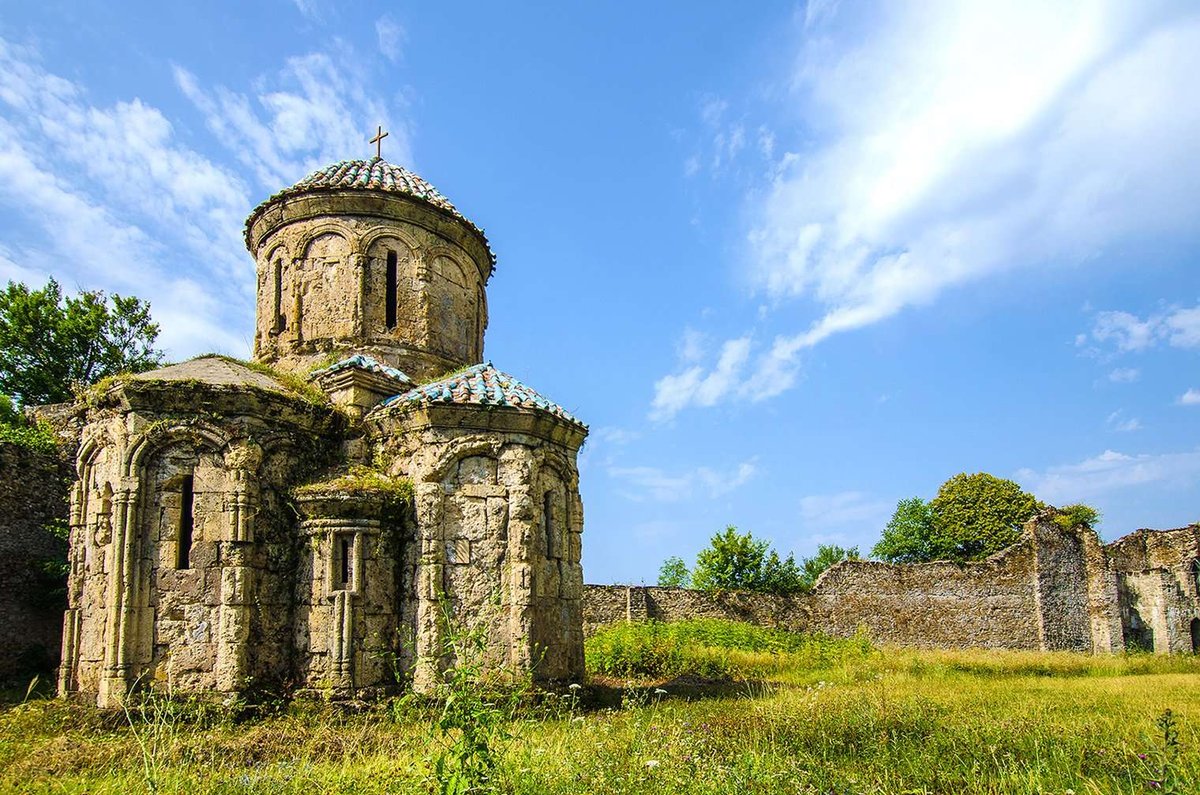
The architectural complex of Kvereti includes a central castle, a palace next to it, and signal towers and a fortress around the perimeter, enclosing the entire area. The courtyard of the complex also contains several churches, one of which is domed. Its location—the building towers over the entire town—offers a stunning panorama of Georgia's most beautiful sights.
The first mentions of the fortress-town date back to the 2nd century, when Kvirike III ruled the Georgian people. Some sources also mention the fortress in the 8th and 11th centuries. Such a wide range of dates may indicate that the fortress was repeatedly destroyed and rebuilt by invaders.
At one time, the Kakheti fortress of Kvetari was the center of the entire principality. Monarchs resided here, important meetings were held, and fateful decisions for the entire region were made. Traces of urban life can be traced back to the 13th century; residents likely moved elsewhere later.
In the second half of the 20th century, in 1968, archaeological excavations were organized on the territory of the fortress town of Kvetari. The excavations yielded household items, dishes, and jewelry, which can be viewed in the Dusheti Archaeological Museum. The most interesting find was the ruins of a medieval church.
Georgia's landmarks are respected and protected not only within the country but also internationally to preserve their cultural heritage for posterity. In October 2007, the fortress was inscribed on the UNESCO World Heritage List.
History
Thanks to its favorable location, the fortress became the center of the Kakheti principality. King Kvirike III of Kakheti divided the entire territory of medieval Kakheti into seven parts, one of which was Saeritavo Kvereti.
The fortress provided excellent defense and a barrier to enemies; it was quite difficult to conquer, as evidenced by the fact that Bagrat IV, during his conquest, failed to capture the fortress, despite having previously conquered almost all of Kakheti-Hereti.

36 comments
Log in to leave a comment
Особенно впечатляют сведения о том, как за многие столетия крепость переживала войны и реставрации, становилась центром княжества Кахети, а затем постепенно утратила своё значение, оставив после себя мощные каменные руины. Археологические находки, обнаруженные на местах бывших улиц и построек, теперь можно увидеть в музее Душети, что помогает глубже понять быт тех времён.
Мне также понравились практичные советы путешественников и отзывы, которые рассказывают, какие виды открываются сверху, когда лучше приезжать, и как сочетать посещение крепости с другими уголками Кахетии. Такие рассказы помогают планировать поездку, чтобы прочувствовать не только архитектуру, но и дух этих мест.
Я уже мечтаю включить Кветеру в свой маршрут и заглянуть в один из близлежащих винных погребов, которые рекомендовали местные, чтобы после прогулки сравнить эмоции от истории и вкуса настоящего кахетинского вина.
Как вы думаете, лучше исследовать город‑крепость Кветера самостоятельно, в неспешном темпе, чтобы вслушиваться в тишину древних стен, или выбрать экскурсию с гидом, чтобы услышать больше легенд и фактов?
А именно удивляет и восхищает архитектура крепости Кахетии, как красиво и изящно сделано это построение.