




Kodzhori Fortress (Korogly Castle), Tbilisi: History, Route
🏰 Fortress ruins · ⏱️ 2–3 hours · 📍 Mount Azeula, Kojori settlement, ~25 km from Tbilisi
🗺️ Before you go
| 📍 Location | Mount Azeula, near Kojori settlement. Within Tbilisi's city limits, ~25 km from the centre |
| 🏷️ Other names | Agarani (before 15th c.), Kor-ogly / Gurguli (from 17th c.), Kodjori |
| 📅 Age | Oldest layer — second half of 11th century. Surviving fragments — 16th–18th centuries |
| 🚗 Getting there | Bus from Tbilisi + 1.5 km walk. By car: the last section is a dirt road |
| 🏗️ What survives | Wall fragments, enclosure, two towers: southwest and northeast |
| 🌄 Why go | Panoramic valley and mountain views, three-era history, quiet spot for a picnic |
| 💰 Entry | Free |
🧭 Why come here
Kojori Fortress is not a museum with exhibitions and labels. These are ruins on a mountain with a history that changed its name along with its owners: a trading post, a royal summer retreat, a rebel's hideout, a battlefield. Little remains of the walls, but the view from Mount Azeula across the valley hasn't changed. This article is for those who want a half-day out of the city — and to understand what they're looking at when they get there.
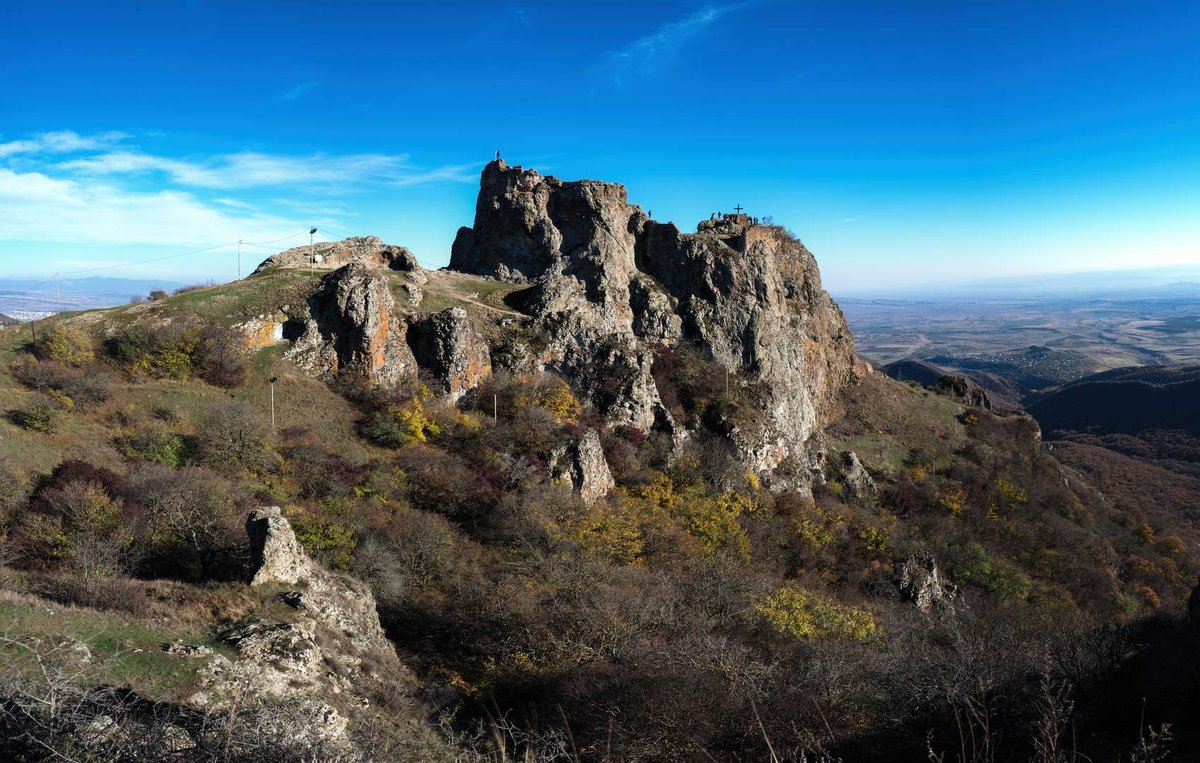
📜 Three names and a thousand years
The fortress existed before the 11th century, but the oldest surviving layer dates from the second half of the 11th century. Over its lifetime it went through three names.
✅ Agarani. Before the 15th century the fortress was called Agarani. The reason was practical: an important trading caravan route passed through this settlement. The fortress was built not for beauty but to guard the pass. In feudal times that meant strategic significance for the whole region.
In 1118 it was taken by David the Builder — in a single day, during his large-scale reconquest of Georgian lands. In 1123 he gave it to Ivan Orbeli. In 1177 a conspiracy was organised within the walls — King George lifted the siege and returned it to Georgian rulers. After that, Kojori remained for a long time a quiet summer retreat for the Georgian kings.
✅ Kor-ogly / Gurguli. In the 17th century the fortress was renamed — after a hero of Iranian mythology. Kor-ogly (also Gurguli) is a figure like Robin Hood: he killed a khan, built a refuge for poor people and lived there with his army, answering to no ruler. Why exactly his name was given to this fortress is not entirely clear from historical sources, but the legend stuck. King Rostom, also in the 17th century, revived the tradition of using the castle as a summer residence.
✅ Kodjori. The modern name settled later. In September 1795, during Agha Mohammad Khan's invasion, Georgians put up tremendous resistance to the Persian forces at the approaches to the fortress. Battles between Georgia and Russia also took place here during the period of annexation of Kartli-Kakheti.
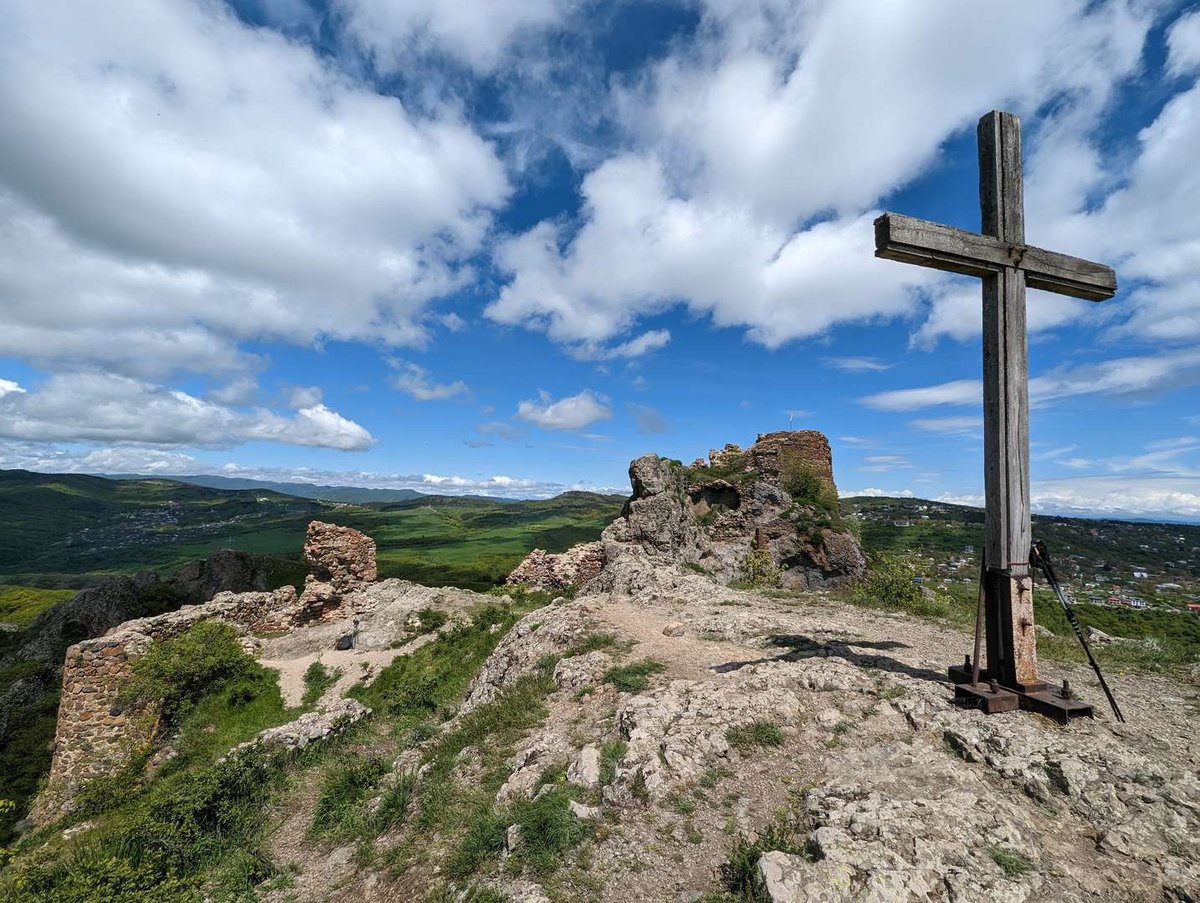
🏗️ What remains of the fortress
The original building plan has not survived — too many restorations, conquests and rebuildings over a thousand years. What has come down to us:
Wall fragments from the 16th–18th centuries — part of the enclosure and two towers: one on the southwest, one on the northeast. The building material was stone and brick. The towers give a sense of the scale of the fortifications when the fortress was at its peak.
One commenter put it honestly: "There isn't much to see, but nature lovers will enjoy the trip." That's fair — people come here more for the view and the air than for standing architecture.
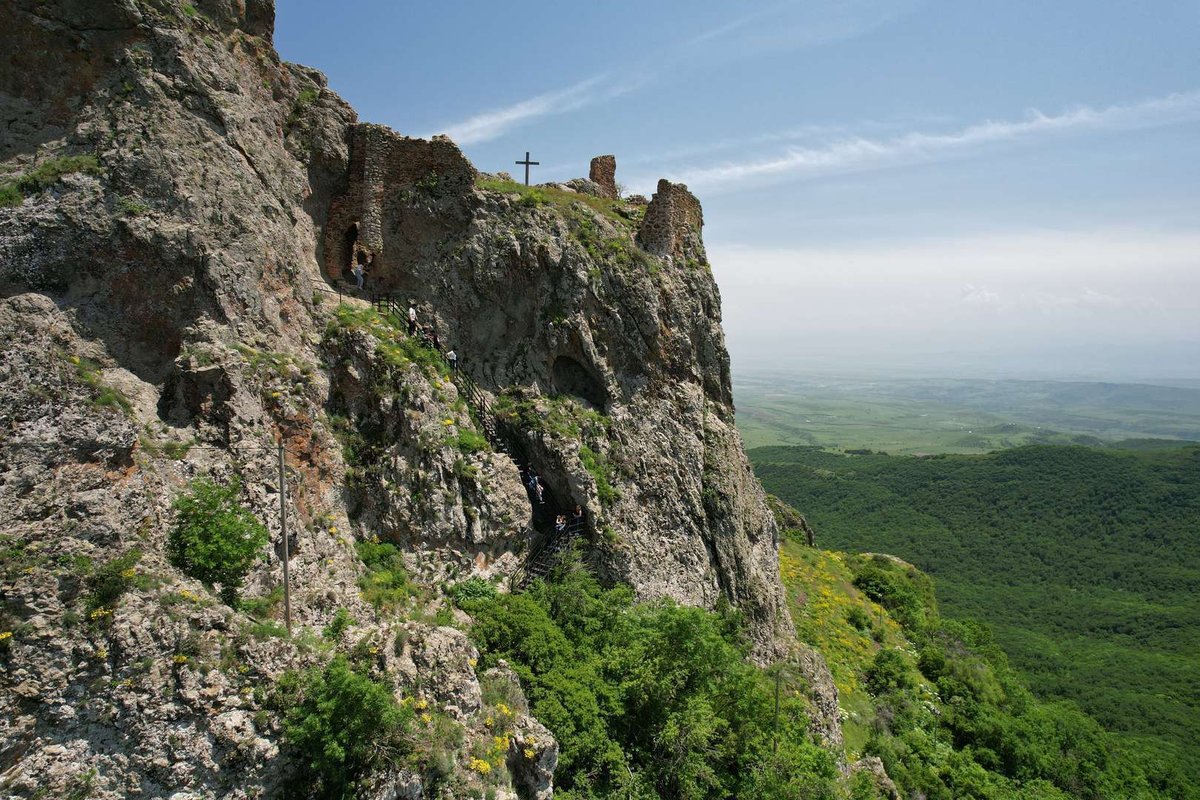
Bring food. There's nothing on sale at the site, but the mountain view and the silence are made for a picnic. Best time: weekday morning — almost no other visitors, fresh air, soft light. If you're driving, the last stretch is a dirt road. Check your car's clearance before you go.
🗺️ How to plan the route
1️⃣ From Tbilisi — by bus to Kojori settlement or by car (last section is dirt road, take care).
2️⃣ From the bus stop — 1.5 km on foot to the fortress. The path runs through a pine forest.
3️⃣ At the entrance to the grounds — look at the two towers: southwest and northeast. These are the best-preserved parts of the complex.
4️⃣ Walk around the perimeter of the remaining walls — the scale of the former fortifications is still readable.
5️⃣ Find the best viewpoint over the valley — that's what most people come for. Lay out a picnic if you brought one.
6️⃣ On the way back through the pine forest, you can stop in Kojori settlement itself — a coffee stop or just some time breathing the highland air.
🏁 Is it worth going
Kojori Fortress ruins are not for those looking for impressive architecture. Not much has survived. But if you want to get out of Tbilisi, breathe pine air, stand on a mountain with a valley view and have a thousand years of history under your feet — this is the right choice. Free, quiet and half an hour from the city centre.
ℹ️ The fortress is freely accessible with no guards or opening hours. The road is unpaved on the last stretch. Check road conditions before going, especially after rain. Information is current at the time of publication.
🏔️ Nearby attractions


Have you been to Kojori Fortress? What stayed with you most — the ruins, the mountain view, or the walk through the pine forest? Tell us — we read every comment ❤️
❓ Questions people ask most often
💬 By bus to Kojori settlement, then about 1.5 km on foot. By car: roughly 25 km from the city centre, the last section is a dirt road. After rain, check road conditions before setting off.
💬 Each name reflects a different era. Agarani — a trading post. Kor-ogly / Gurguli — named after a mythical rebel figure, something like a Georgian Robin Hood. Kodjori — the modern name, which took hold along with the nearby settlement.
💬 Kor-ogly is a hero from Iranian mythology who killed a khan and built a refuge for poor people, living there with his army and answering to no ruler — a medieval outlaw figure. Why exactly his name was given to this fortress is not clearly explained in historical sources.
💬 Ruins: wall fragments from the 16th–18th centuries, two towers (southwest and northeast) and parts of the enclosure. The original plan has not survived. The main draw is the panoramic view from Mount Azeula over the valley and surrounding mountains.
💬 Yes. That's one of the best reasons to go. It's a quiet spot, clean air, no tourist crowds. Bring your own food — nothing is sold on site.
💬 The stretch on foot from the bus stop is 1.5 km, without any steep climbs. Suitable for most visitors. The path through the pine forest is a pleasant part of the trip, not an obstacle.
💬 Spring and autumn offer the best weather and colours. Summer can be warm, but Kojori sits higher than Tbilisi so it's noticeably cooler. A weekday morning is the quietest option.

32 comments
Log in to leave a comment
我和家人计划着去,想在那儿漫步,品味当地的美食,体验一下原汁原味的格鲁吉亚文化。可是一想到要爬上山,有点担心有点期待,毕竟身边总有些不确定性。但城堡的神秘吸引着我,让我念念不忘。如果有一天能站在那废墟上,俯瞰周围的风景,心中那种激动的感觉一定难以言表。希望能够早日实现这个心愿。
Маршрут к замку отлично описан: где удобнее начинать подъём, откуда открываются лучшие виды, на что обратить внимание, чтобы не упустить ни одной архитектурной детали — это очень помогло мне в планировании собственной экскурсии. Особенно ценно, что есть советы от местных жителей, которые подсказывают, где остановиться перед восхождением, где делают лучшие фотографии и как организовать пикник с видом на горы после прогулки.
Отзывы путешественников добавляют живых красок: кто‑то делится ощущением, что в крепости слышится эхо древних битв, кто‑то отмечает, как романтично смотреть закат именно с этой точки, а кто‑то подсказал уютное кафе у подножия холма, где можно отведать местные блюда после насыщенного дня.
После такой экскурсии Грузия начинает ощущаться не только как страна с красивыми видами, но и как страна с историей, которая живёт в каждом камне.
А вы бы предпочли исследовать крепость с гидом, чтобы больше узнать о легендах и событиях прошлого, или отправились бы сюда самостоятельно, чтобы прочувствовать атмосферу своими шагами?