


Georgian Patriarchate Tbilisi: history and Patriarchal seat
🏛️ Administrative and spiritual center · ⏱️ 30–60 min · 📍 Erekle II Square, Tbilisi
🏛️ Good to know before you visit
| 📍 Address | Erekle II Square / Shateli Street, Tbilisi between Sioni Cathedral and Anchiskhati Basilica |
| 🕐 Hours | Mon–Fri: 10:00–18:00 · Sat–Sun: closed |
| 📅 Building constructed | 1809–1810 — on ruins of King Rostom's palace |
| 🏛️ Style | Russian classicism, original classicist motifs preserved on façades |
| ✝️ Handed to Patriarchate | 1990 — residence of the Catholicos-Patriarch |
| 🚇 Getting here | metro «Freedom Square», 10 min walk · or taxi to the Old Town |
🧭 Who this article is for
The Georgian Patriarchate (Patriarchate of Georgia) is the administrative and spiritual centre of the Georgian Orthodox Church — one of the oldest Christian institutions in the world — located in the historic core of Tbilisi's Old Town. The building carries layers of history: royal palace, Russian imperial residence, Soviet militia headquarters, and finally the heart of Georgian Orthodoxy. This guide is for anyone exploring the Old Town and wanting to understand what this place is and why it matters.
🏛️ A building with four lives
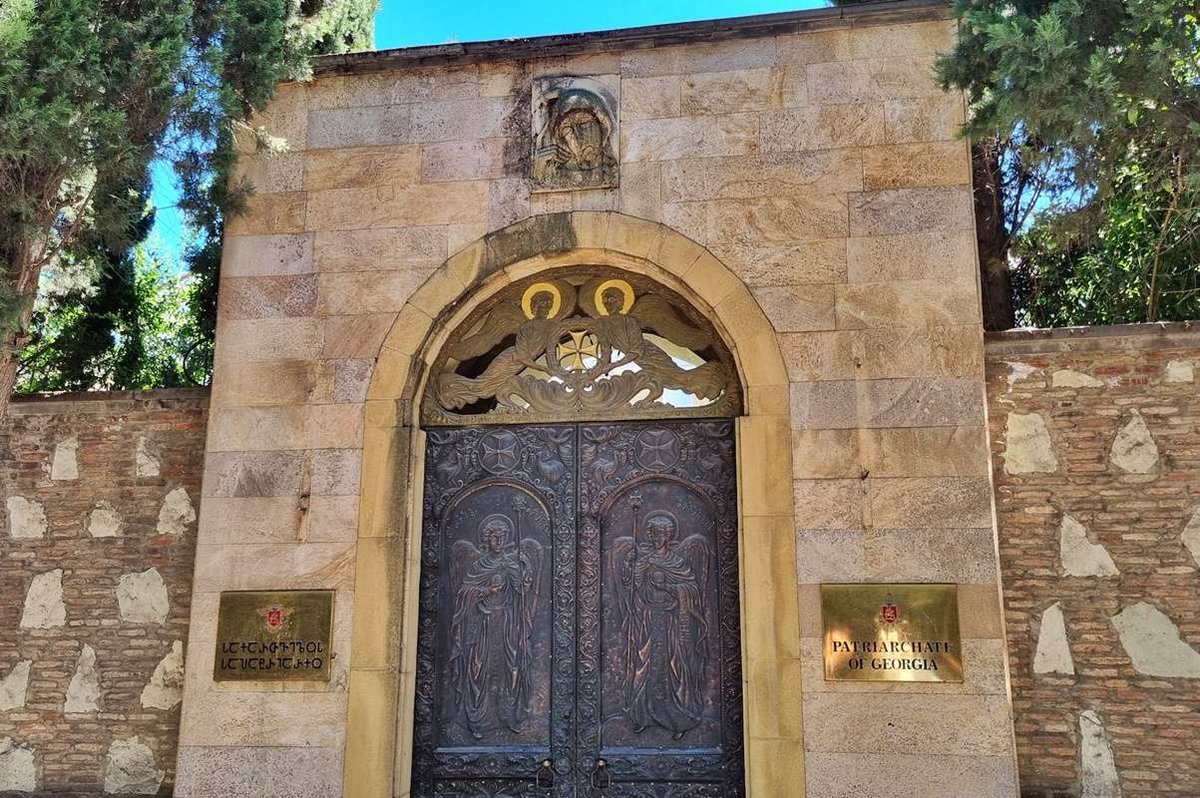
On the eastern side of Erekle II Square stands a two-storey classical building. Many visitors walk past it — the Sioni Cathedral is more prominent nearby, and the Gabriadze Clock Tower and Peace Bridge compete for attention. But this is the Georgian Patriarchate, the administrative seat of one of the world's oldest Christian churches.
The ground beneath this building remembers far more than its exterior suggests.
- 17th century. King Rostom (r. 1636–1658) chose this site — between the two most important churches in Tbilisi, Sioni and Anchiskhati — for his royal palace. The square in front was called the Royal Square, and locals nicknamed it «Salakbo» — meaning «place for chattering» — where citizens gathered to exchange news. In 1795, the forces of Agha Mohammad Khan razed the palace entirely.
- 1809–1810. A new building rose on the ruins — for the representative of the Russian Empire, which had just absorbed Georgia. In time it became the seat of the Exarch of Georgia, the head of the Russian Orthodox Church's administration in the region, which had suppressed Georgian autocephaly in 1811. The new building was given the classicist façade it partly retains today, despite multiple renovations since.
- Soviet period. The building lost its ecclesiastical character. For decades it housed a civil militia division, then was repurposed as the Georgian Art Institute.
- 1990. The complex was transferred to the Catholicos-Patriarch for his residence and church administration. Georgian Orthodoxy had returned to the square of Erekle II.
✝️ What the Patriarchate of Georgia is
The Georgian Orthodox Church is among the world's oldest. Christianity became Georgia's state religion in 337 AD under King Mirian III. The Church received its first recognition of autocephaly in the 5th century. That autocephaly was forcibly abolished by the Russian Empire in 1811 and restored in 1917.
International recognition — from the Ecumenical Patriarchate of Constantinople — came in 1990, the same year the building on Erekle II Square was handed back to the Church.
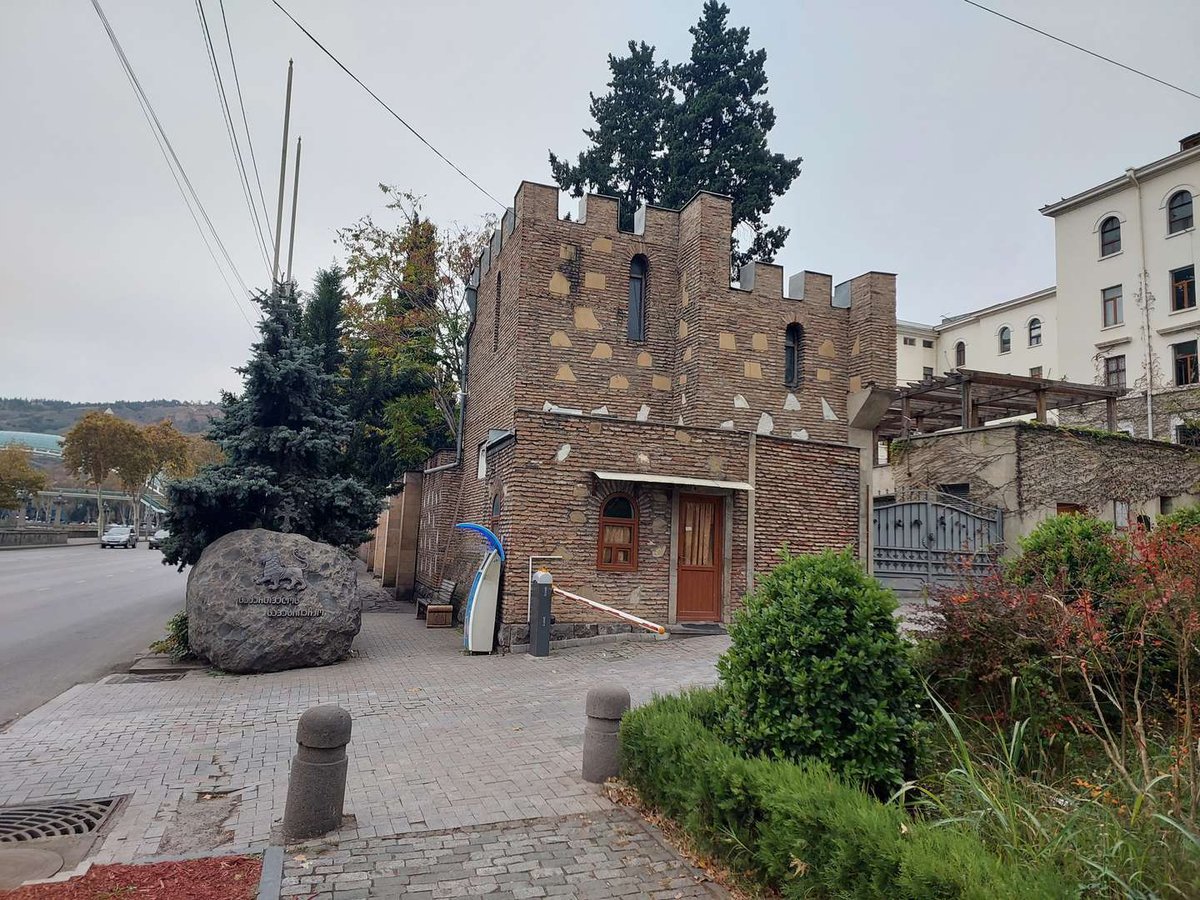
The Patriarchate of Georgia is a union of Georgian patriarchal institutions within the Georgian Orthodox Church, assisting its departments and services to the Catholicos-Patriarch to implement executive power. Here, the administration of 33 dioceses, theological education, canonisations and external church relations is coordinated. The special role of the Church in the history of the country is recognised in Article 9 of the Constitution of Georgia; its status and relations with the state were further defined in the Concordat signed by President Eduard Shevardnadze and Patriarch Ilia II on 14 October 2002.
📜 Patriarch Ilia II and the new era
For nearly half a century — from 1977 to 2026 — the Georgian Orthodox Church was led by Ilia II (1933–2026). He was the longest-serving patriarch in the history of the Georgian Orthodox Church, which spans more than a millennium. He came to office during Soviet rule, when religious life was effectively suppressed, and by his death had overseen the growth of the Church to 33 dioceses, 53 monasteries and the construction of the Sameba Cathedral — the largest in Georgia.
Catholicos-Patriarch of All Georgia Ilia II passed away at the age of 93. His patriarchate became one of the most defining periods in the modern history of the Georgian Orthodox Church, associated with the revival of religious life during and after the Soviet era. He was buried, at his own request, in Sioni Cathedral — a few steps from the Patriarchate building.
Since 2026, Shio III (born in 1969) has served as the Catholicos-Patriarch of All Georgia and Archbishop of Mtskheta and Tbilisi. The first succession since the collapse of the Soviet Union marks a significant turning point for the Georgian Church.
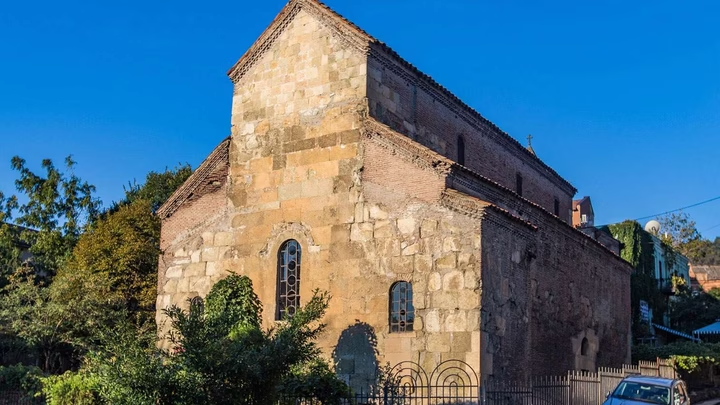
The Patriarchate building is not open to the public as a museum — it is an active administrative centre. Its value is in the exterior, the historic square and the cluster of remarkable sites immediately around it: Sioni Cathedral with the Cross of St Nino, the 6th-century Anchiskhati Basilica, and the Gabriadze Clock Tower. Come here as part of a walking tour of the Kala district. The classicist façade photographs best in morning light, before shadows develop.
🗺️ How to get there
1️⃣ Metro «Freedom Square» — exit and walk along Shateli Street toward the river, about 10 minutes.
2️⃣ On foot from the riverside — along Kote Afkhazi Street, then turn into the Old Town. Erekle II Square is one block from the embankment.
3️⃣ By taxi (Bolt / Yandex) — ask for «Erekle II Square» or give coordinates 41.69393, 44.80692.
💬 What visitors say
«The Catholicos-Patriarch's residence is on Shateli Street, not far from the Peace Bridge and Gabriadze Tower. The building, constructed in the style of Russian classicism in 1809–1810, stands on the site of King Rostom's former palace. In the 19th century it housed the chancellery of the Exarch of Georgia (of the Russian Orthodox Church). The building has been rebuilt multiple times; during the Soviet years it served as a civil militia division and later as an art institute.»
«Beautiful and historical buildings in Old Tbilisi — worth a visit while exploring the Kala district.»
«A historic site that carries layers of Georgian history, from royal palace to Russian administration to Soviet militia to the heart of Georgian Orthodoxy. The square with the Paris fountain in front is a pleasant place to pause.»
🏁 Why come here
The Georgian Patriarchate building is not a place to visit inside, but a place to understand. This ground held a royal palace, housed a Russian imperial exarchate, served as a Soviet militia post — and now, again, anchors Georgian religious life. Walking along Shateli Street and stopping at Erekle II Square takes a few minutes. What it gives you is a sense of how many centuries and powers have passed through this small stretch of Old Tbilisi.
Save this article or share it with anyone planning a trip to Tbilisi.
ℹ️ The building is an active administrative centre. Hours: Mon–Fri 10:00–18:00. For worship, visit Sioni Cathedral or Anchiskhati Basilica nearby. Information is current at time of publication.
🗺️ What to see nearby



Have you visited the Georgian Patriarchate in Tbilisi? Did you come across it while walking through the Old Town, or did you come specifically? What made an impression — the history of the site, the architecture, the square with the Paris fountain? Tell us — we read every comment ❤️
❓ Frequently asked questions
💬 The Patriarchate is an active administrative centre, not a public museum. It can be seen from the outside — the façade and the square are accessible. For worship, visit Sioni Cathedral (2 min walk) or Anchiskhati Basilica (5 min walk).
💬 King Rostom built his palace here in 1638, between the two most important churches in old Tbilisi. The palace was destroyed in 1795 during Agha Mohammad Khan's invasion. In 1809–1810, the Russian Empire — which had just incorporated Georgia — built a new building on the ruins for its administration and the Exarch of Georgia.
💬 Since 2026, the Catholicos-Patriarch of All Georgia is Shio III (born 1969). His predecessor, Ilia II, led the Church from 1977 and died on 17 March 2026 at the age of 93. Ilia II was buried in Sioni Cathedral, a few steps from the Patriarchate.
💬 In 1811, the Russian Empire abolished the autocephaly of the Georgian Orthodox Church and subordinated it to the Russian Orthodox Church. The Exarch of Georgia, based in this building, governed in the Church's name. Autocephaly was restored in 1917; international recognition from the Ecumenical Patriarchate of Constantinople came in 1990.
💬 The small fountain on Erekle II Square is a gift from the city of Paris to Tbilisi, given as part of the sister-city relationship between the two capitals.
💬 Sioni Cathedral (2 min) with the Cross of St Nino; Anchiskhati Basilica (5 min) — the oldest church in Tbilisi, 6th century; Gabriadze Clock Tower (3 min); the Peace Bridge and Rike Park (10 min).

2 comments
Log in to leave a comment