



🌿 Chachuna Managed Reserve: Steppes, Floodplain Jungle and Wild Kakheti
Chachuna Reserve at a glance
The part of Kakheti where there are no mountains. 5,200 ha of steppe, semi-desert and floodplain along the Iori River near the Azerbaijani border. 82 bird species, a Caucasian viper, jackals and, possibly, a striped hyena.
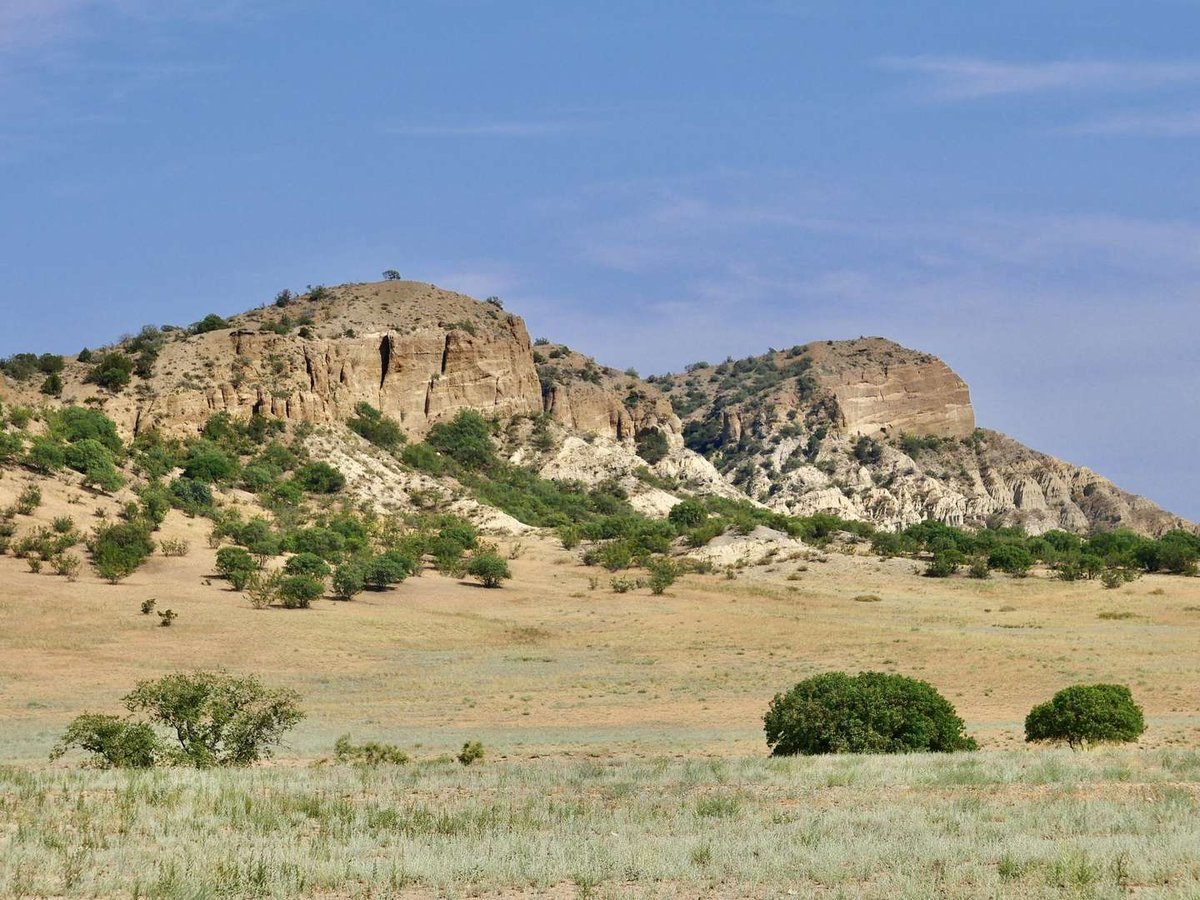
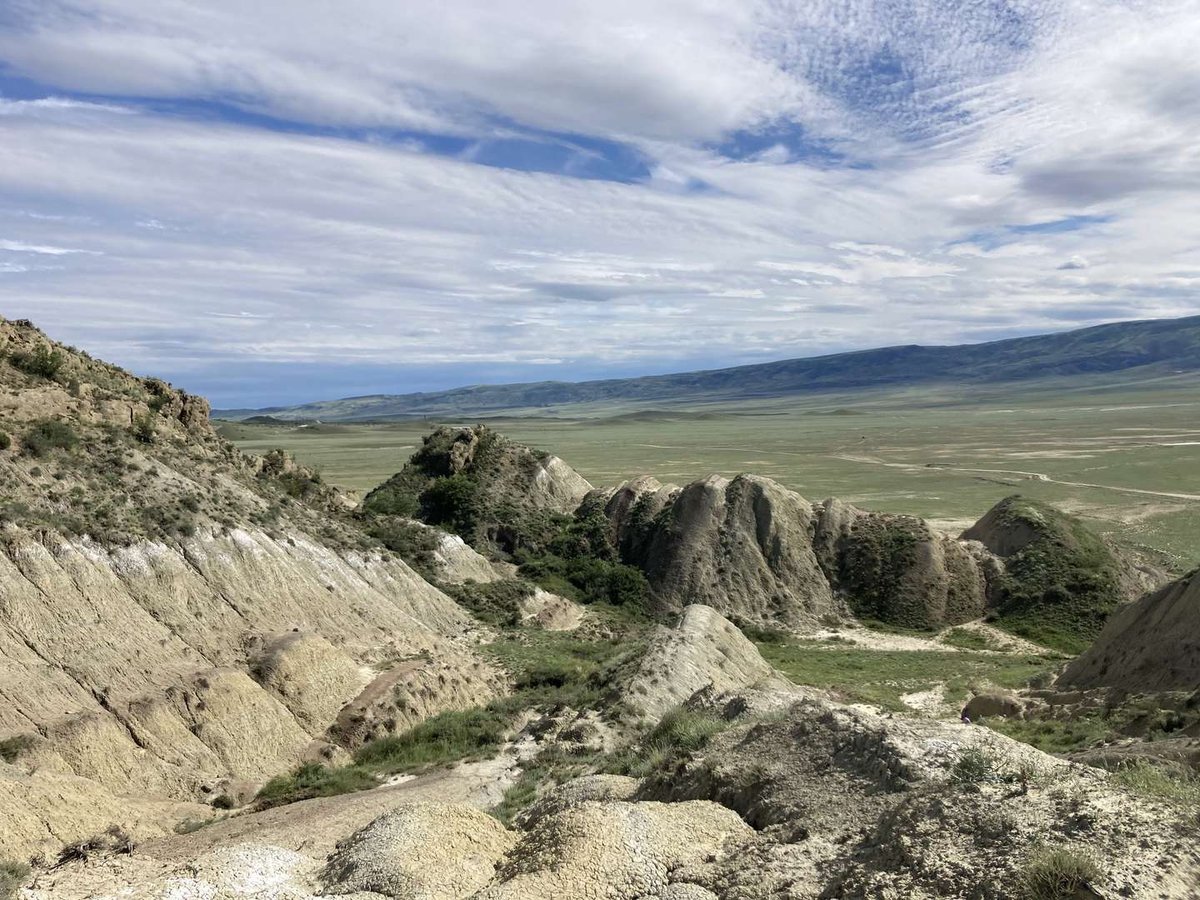
Chachuna Reserve is a different side of Kakheti. No deciduous forests, no vineyards. Instead: dry ridges, clay hills, semi-desert and tugai forest along the Iori River — wild pistachio and three juniper species. This is a place for anyone who loves nature in its steppe, almost Central Asian form. The Azerbaijani border is just a few kilometres away.
🌿 The Name and Three Landscape Zones
"Chachuna" comes from the aspen tree (Populus tremula). On a sunny winter day, the branches thaw, fill with sap and begin to rattle. That sound gave the whole place its name.
The reserve's landscape divides into three completely different zones, and all three coexist here:
Tugai floodplain forest along the Iori River, where aspen is the absolute dominant. The riverbanks also support long-stalked oak, wild pistachio, white willow and Caucasian hackberry. A wetland area covers 24 hectares.
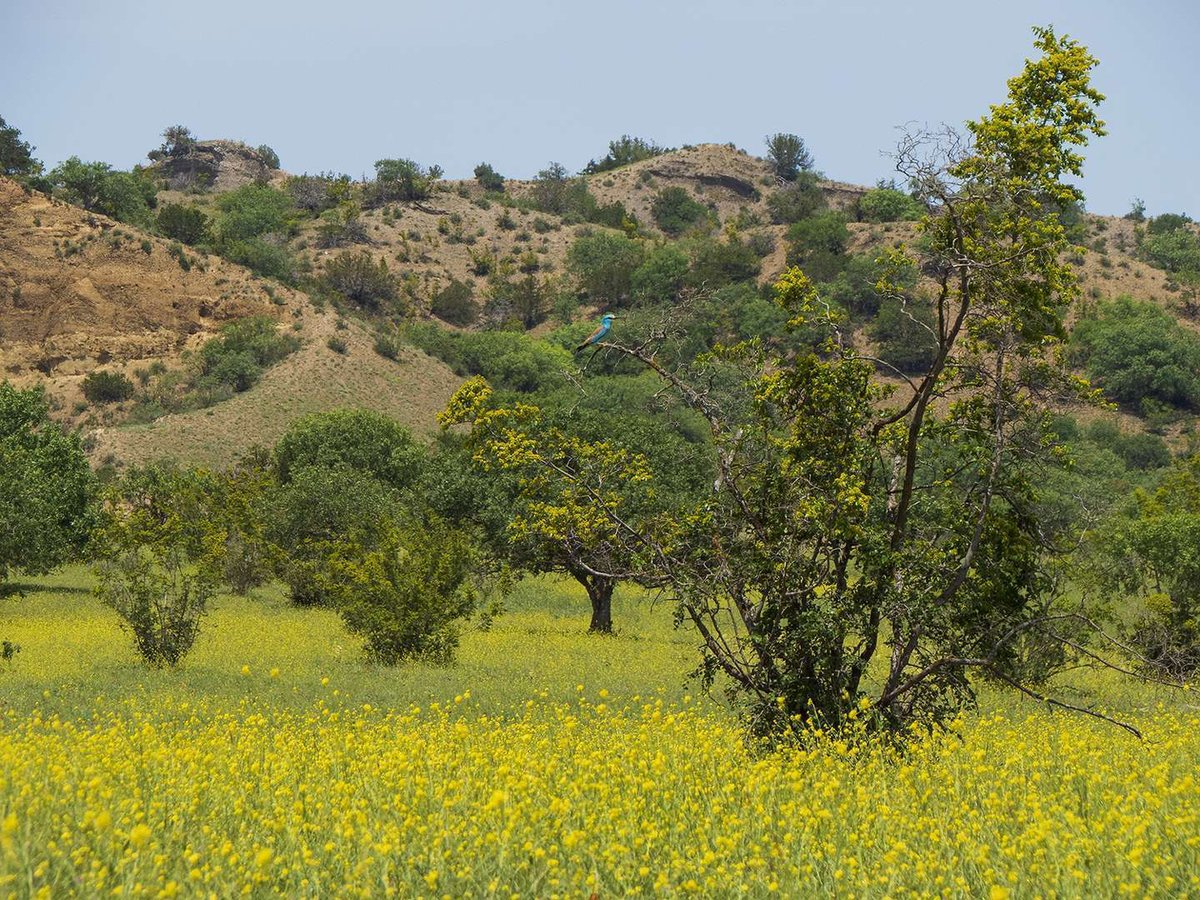
Steppe and semi-desert on the hills: open arid forests of wild pistachio, three juniper species (Juniperus oxycedrus, J. foetidissima, J. polycarpos), hawthorn, oak and pear. Steep rocky slopes, dry ravines, limestone outcrops.
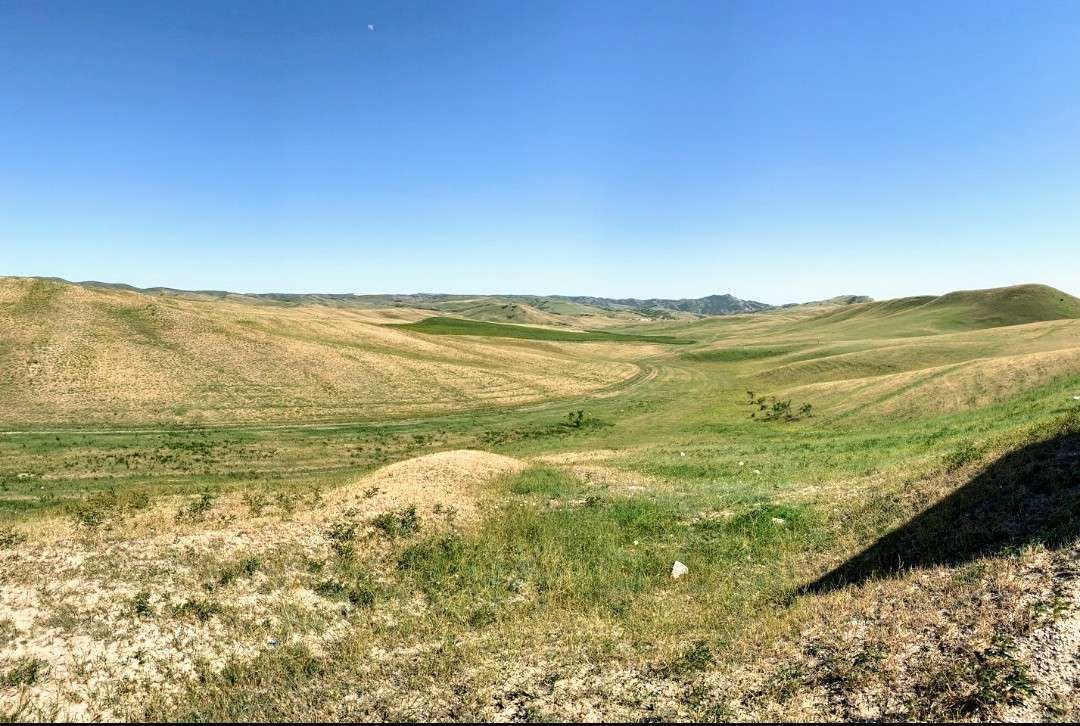
Geological foundation: sandstones, clay with layers of volcanic ash, limestone conglomerates. In 2011 a palaeontological expedition found fossilised fauna samples within the reserve territory.
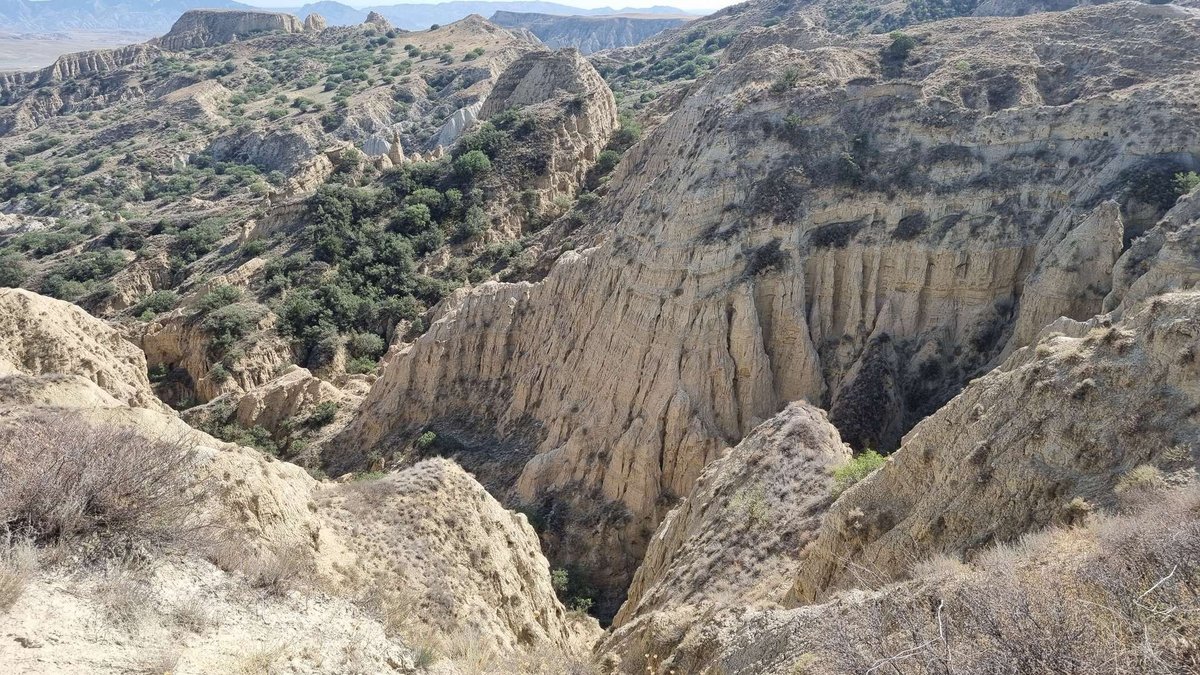
Endemic plants: Georgian iris and Eichler tulip on the open ground.
🦅 82 Bird Species: A Birdwatcher's Paradise
Chachuna is one of the best birdwatching destinations in the South Caucasus. 82 species, 10 on Georgia's Red List.
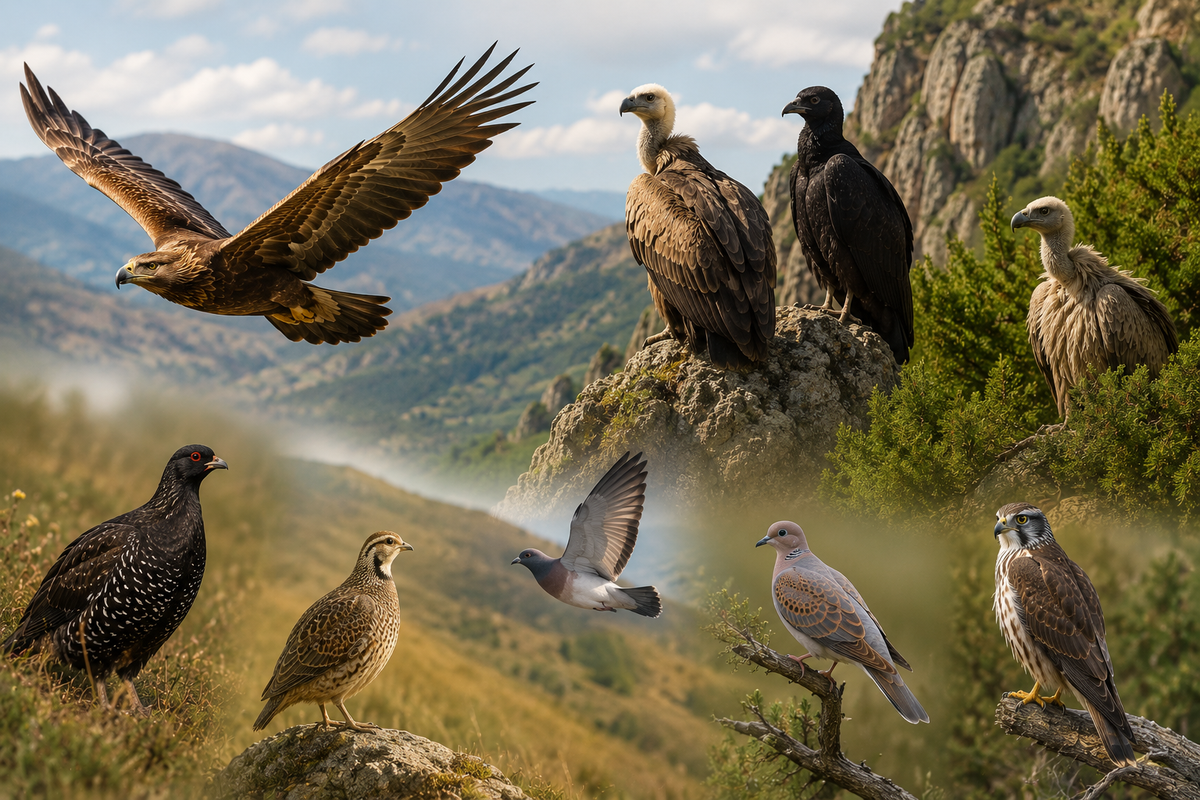
Raptors. Eastern Imperial Eagle (Aquila heliaca), particularly rare in the Caucasus. Griffon Vulture and Egyptian Vulture nest in the limestone cliffs. Cinereous Vulture nests in the juniper trees.
Steppe birds. Black francolin, chukar partridge, common wood pigeon, European turtle dove, Eurasian sparrowhawk, northern goshawk, magpie.
Observation. The reserve has birdwatching hides where birds are not disturbed. Best birdwatching: spring (March–May) and autumn (September–November).
🦎 Other Wildlife: Jungle Cat, Hyena and the Caucasian Viper
Chachuna is home to the Levantine Viper, locally known as Gurza (Macrovipera lebetina), an extremely venomous snake. Never reach under rocks, walk carefully through tall grass, and wear proper hiking boots. Scorpions and sun spiders (Solifugae) are also present. At night keep your tent closed.
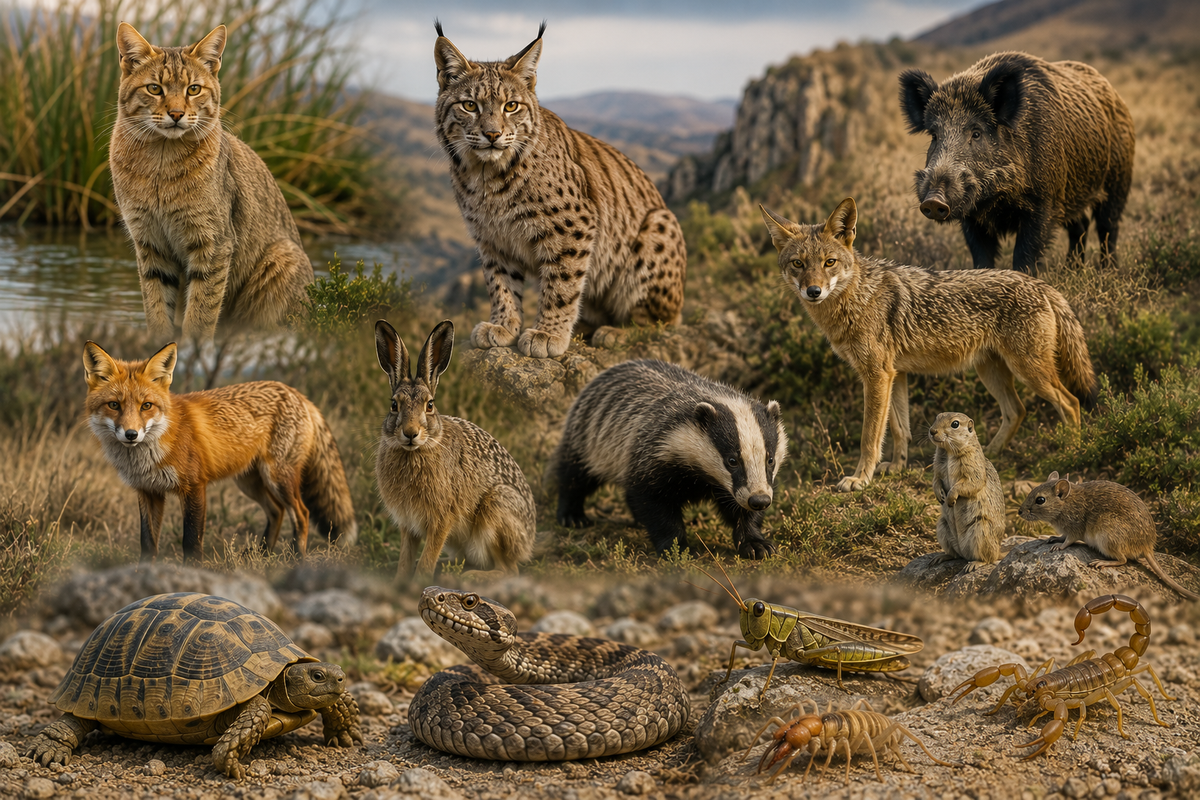
Mammals. Jungle cat (Felis chaus), Eurasian lynx (Lynx lynx), wild boar, jackal, red fox, European hare, badger, several rodent species. The reserve's most elusive symbol: striped hyena (Hyaena hyaena), one of Georgia's rarest animals. Zoologists believe it may still inhabit Chachuna, though this has not been confirmed.
Reptiles. Greek tortoise (Testudo graeca), Caucasian viper — a vivid reminder that semi-desert has its own rules. Invertebrates include grasshoppers, scorpions and sun spiders.
🏛️ Historical Sites in Kiziki
Chachuna lies in the historic region of Kiziki (also known as Kambechovani). Several significant sites are nearby.
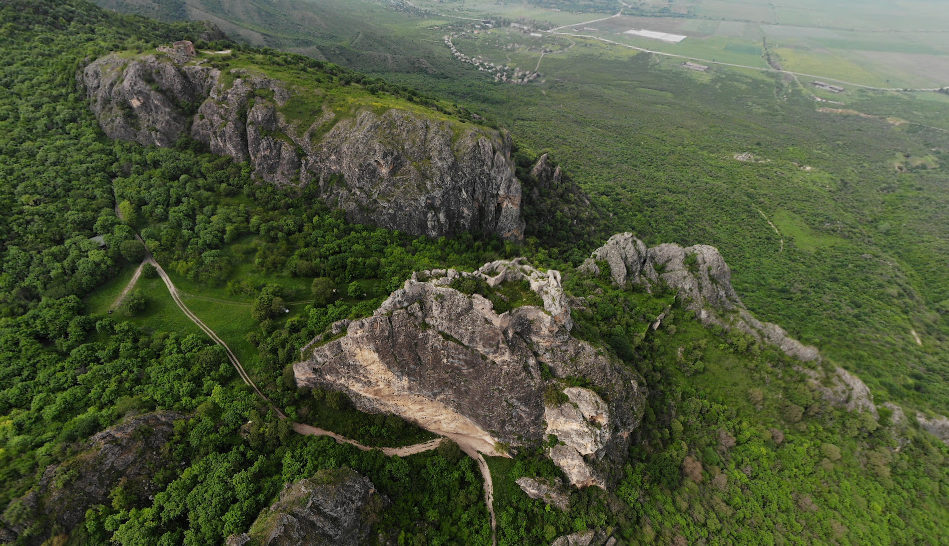
Khornabuji Fortress, a medieval fortification founded by King Vakhtang I of Iberia in the 5th–6th centuries. One of Kakheti's principal strongholds.
Ozaani Church of the Ascension, 5th–6th century.
Kiziki, a walled town built by King Erekle II in the 18th century at the crossroads of several trade routes. Twenty-three towers, five gates, preserved almost intact.
🚗 Getting There: 4x4, Permits and the Visitor Centre
4x4 is mandatory. Standard cars cannot make it. Roads inside the reserve are unpaved tracks: sand, clay, deep ruts and eroded gullies. Motorcycles and trucks over 3.5 tonnes are not permitted. Dogs are not allowed.
Permits — a two-step process:
First, the Visitor Centre in Dedoplistskaro (shared premises with the Vashlovani Protected Areas administration): Mon–Fri 10:00–18:00, with a lunch break. Here you pay the entry fee, collect a stamped permit, map and road condition update. Calling or emailing in advance speeds up the process: +995 577 90 72 72, [email protected].
Second, the Border Police station five minutes' drive from the Visitor Centre. The border zone permit is free. You need your passport and vehicle documents.
Overnight stays. A hostel operates within the territory, and tents and sleeping bags can also be hired on the spot. Base yourself in Dedoplistskaro — it's the "last point of civilisation": fill the tank, stock up on food and make sure everything is in order before driving in.
Chachuna is frequently combined with Vashlovani National Park in a single trip: both are managed from the same Visitor Centre, both are nearby, and one permit covers both sites. Vashlovani is more famous; Chachuna is quieter and richer in birds. If birdwatching is the priority, Chachuna is the better choice of the two.
🗺️ Vashlovani Nearby
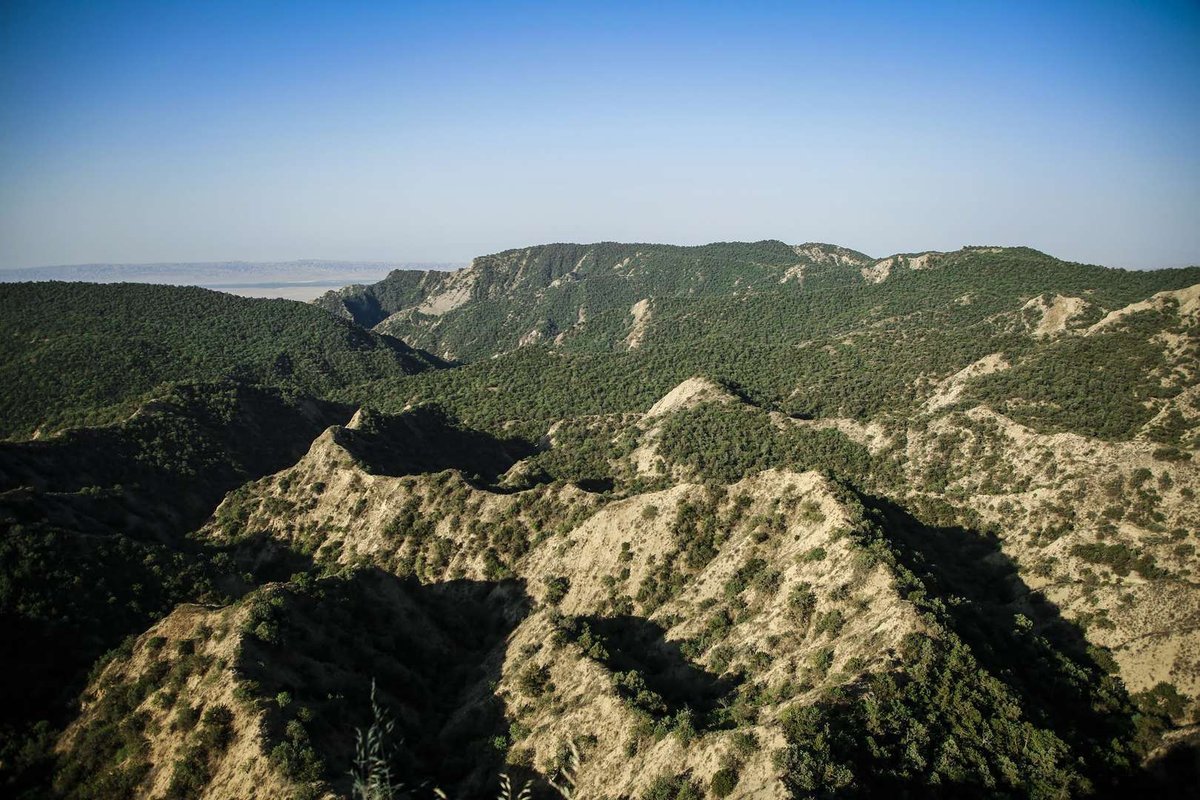
To the northwest of Chachuna lies Vashlovani National Park, with a similar landscape but different highlights: mud volcanoes, canyons, semi-desert. Both sites fit comfortably into a single trip. All natural attractions in the region are listed under Kakheti natural attractions on Madloba.
Have you been to Chachuna Reserve? Leave a review on Madloba — share how the permits went, which birds you spotted and how the road held up. It helps everyone planning the same trip.
Information current as of June 2026. Visitor Centre hours and permit conditions may change — check before travelling: +995 577 90 72 72.
❓ Frequently asked questions
A managed nature reserve in Dedoplistskaro municipality, Kakheti, covering 5,200 hectares. Established in 1996. Steppe, semi-desert, tugai floodplain forest and a wetland section along the Iori River near the Azerbaijani border. Part of a protected corridor along the Iori valley together with the Iori and Korugi Managed Reserves.
Yes. Standard cars cannot make it through. The tracks inside the reserve are unpaved — sand, clay, deep ruts and eroded gullies. Motorcycles and heavy trucks are not allowed. Dogs are not allowed.
At the Border Police station five minutes' drive from the Visitor Centre in Dedoplistskaro. The permit is free and requires your passport and vehicle documents.
82 species, 10 on Georgia's Red List: Eastern Imperial Eagle, Griffon, Egyptian and Cinereous Vultures, black francolin, chukar partridge, Eurasian sparrowhawk, northern goshawk. The limestone cliffs are nesting grounds for the vultures.
Yes. A hostel operates within the territory, and tents and sleeping bags can be hired on the spot. Book through the Visitor Centre in Dedoplistskaro.
The reserve is open year-round. Best birdwatching: spring (March–May) and autumn (September–November). Summer is very hot (up to 35°C); winter is mild (average January temperature −2.5°C).
Vashlovani is better known and famous for mud volcanoes and canyons. Chachuna is quieter and richer in bird species. Both reserves share a Visitor Centre in Dedoplistskaro and one permit covers both — convenient to combine in a single trip.

2 comments
Log in to leave a comment