




Kashveti Church in Tbilisi: History and Frescoes
⛪ Church of St. George · ⏱️ 30–60 minutes · 📍 Rustaveli Avenue, Tbilisi city center
⛪ Essential Info Before Your Visit
| 📍 Address | Rustaveli Avenue, Tbilisi. Opposite the Parliament of Georgia |
| 📅 Built | 1904–1910. It took 6 years to build, based on the design by architect Leopold Bielfeld |
| 🏛️ Model | Inspired by the 11th-century Samtavisi Cathedral: proportions, dome shape, and decorations |
| 🎨 Facade | National ornaments transitioning into religious motifs — crafted by Neofit Agladze |
| 🖼️ Frescoes | Lado Gudiashvili, 1947 — one of the greatest Georgian painters of the 20th century |
| 📖 Name | "Kashveti" — literally meaning "gave birth to a stone." Linked to the legend of David of Gareja |
| 💰 Entrance | Free admission. Dress code: modest clothing, women are expected to wear a headscarf |
🧭 Who Is This Article For?
The Kashveti Church is one of those places on Rustaveli Avenue that hundreds of tourists pass by daily, unaware that inside are frescoes painted by one of the greatest Georgian artists of the 20th century. Furthermore, the building itself was modeled after the 11th-century Samtavisi Cathedral, preserving three layers of history under a single dome. This article is for those who want to visit with a deeper sense of appreciation.
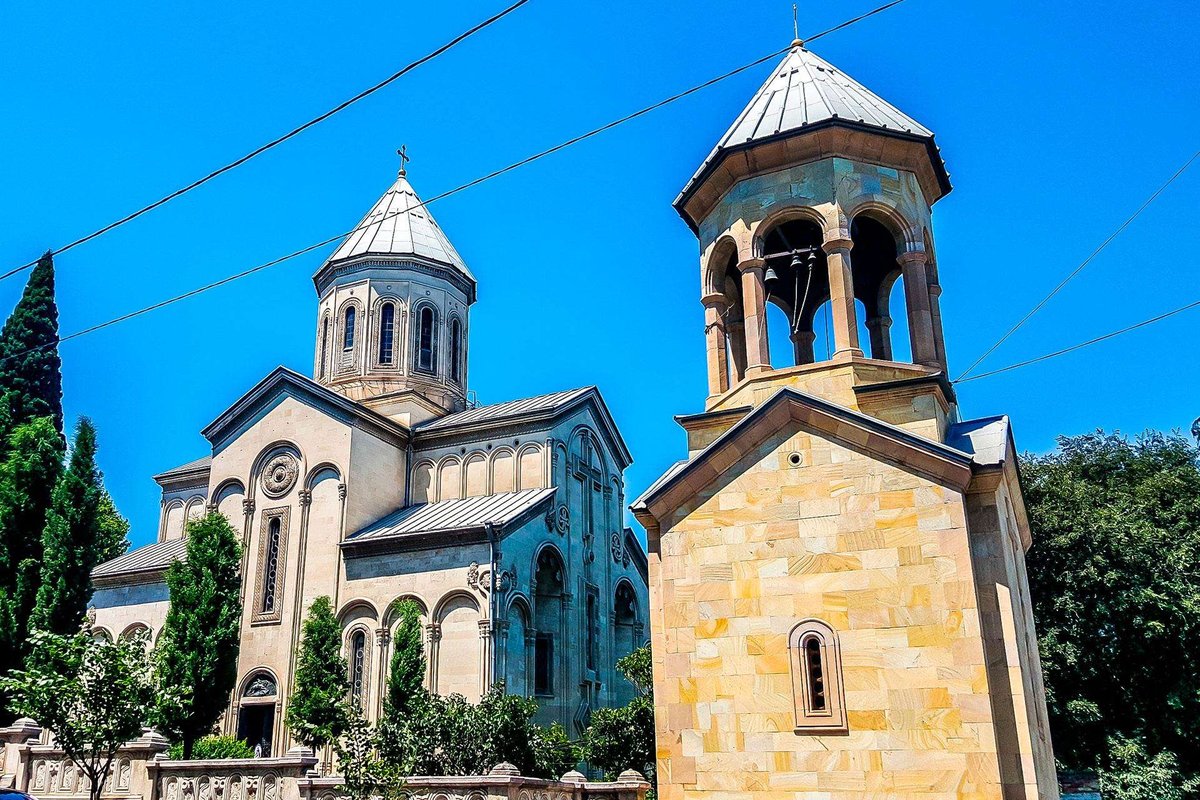
📜 Why Is the Church Named "Kashveti"?
The name "Kashveti" (Georgian: კაშვეთი) literally means "gave birth to a stone": "ქვა" (kva) — stone, "შვება" (shveba) — birth.
Behind this word lies a medieval legend. One of the Thirteen Assyrian Fathers who brought Christianity to Georgia in the 6th century, David of Gareja, was falsely accused by a woman. To prove his innocence, he placed his hand on her womb and prophesied that she would give birth to a stone. That is exactly what happened — the woman gave birth to a stone. This mystical event gave the location its name.
Initially, this place honored the memory of David of Gareja. Later, in the 18th century, the Amilakhvari noble family built a brick church on the same spot. It was demolished at the end of the 19th century, and construction of the current building began in 1904.
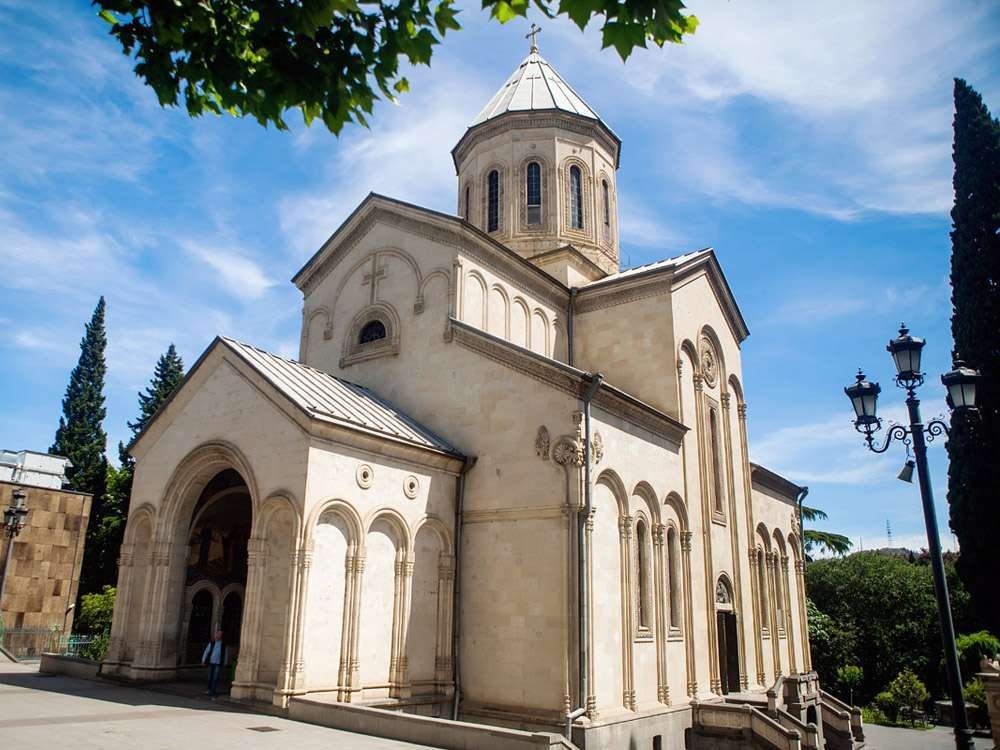
🏛️ Architecture: Samtavisi in the Center of Tbilisi
The construction was initiated by Markos Tkemaladze, a representative of the Kakheti region administration. The architectural project was designed by Leopold Bielfeld, who drew inspiration from the Samtavisi Cathedral — an 11th-century masterpiece of medieval Georgian architecture.
This was a deliberate and crucial decision: Bielfeld did not invent a completely new style; instead, he carefully studied the proportions, the shape of the dome, and the rhythm of Samtavisi’s decorations, reimagining them for the early 20th century. The result is a building that looks "ancient," even though it is just over a century old.
The construction took 6 years: 1904–1910. During this time, highly skilled master artists completed intricate decorative work both on the exterior and interior.
🎨 Facade: Ornaments by Neofit Agladze
The facades of the church were crafted by Neofit Agladze. His work represents a fluid transition: starting with national Georgian ornaments on the exterior surfaces and shifting to religious motifs as one approaches the entrances. This is more than mere decoration — it is a visual narrative where national identity and Orthodox faith intertwine seamlessly.
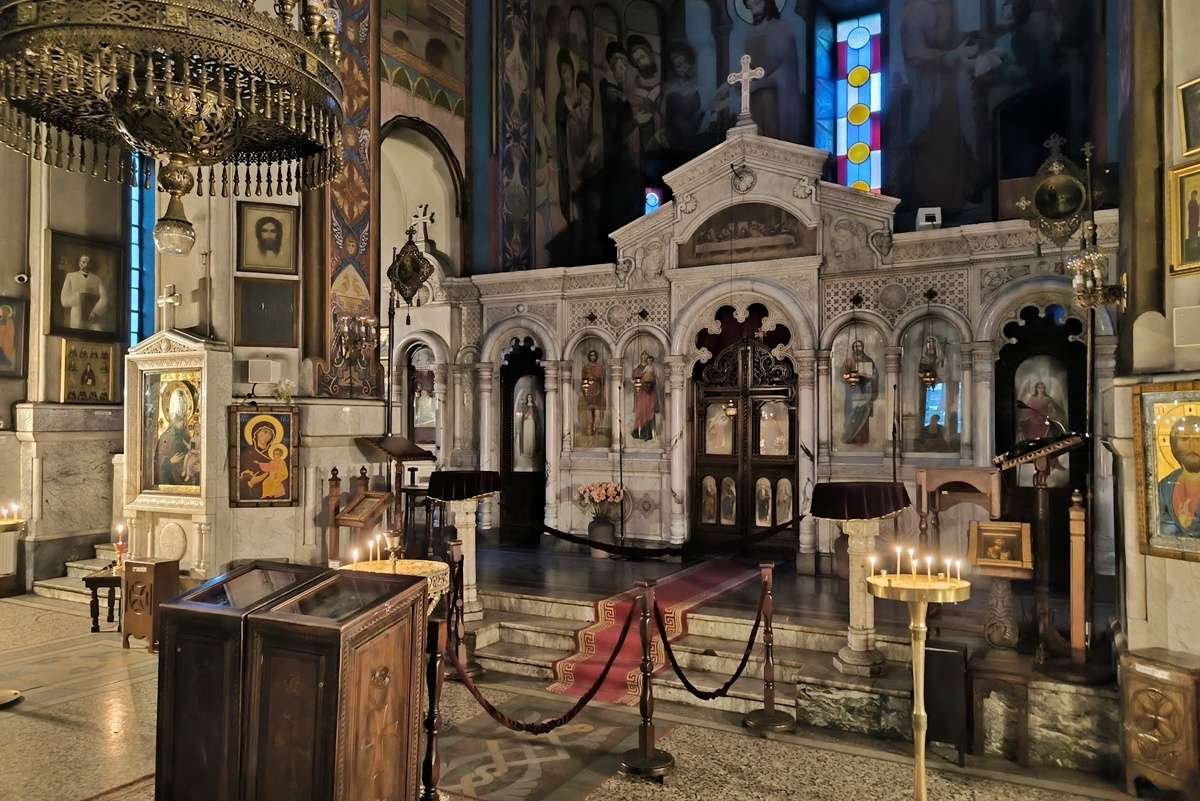
🖼️ Frescoes: Lado Gudiashvili, 1947
This is the artistic highlight of the church. In 1947, the interior walls were painted by Lado Gudiashvili, one of the most prominent Georgian painters of the 20th century.
Gudiashvili (1896–1980) was an artist whose works fused traditional Georgian aesthetics with European influences (he lived in Paris for a long period). His painting style is instantly recognizable: a distinct rhythm of figures, elegant lines, and a blend of the sensual and the spiritual.
The frescoes in Kashveti are Gudiashvili's only church paintings in Tbilisi. That is why it is well worth visiting, even if you have already seen his canvases in the neighboring Dimitri Shevardnadze National Gallery; the sacred church environment provides a completely different perspective on his work.
If you have already visited the National Gallery and seen Gudiashvili's canvases, make sure to visit Kashveti specifically for his frescoes. The contrast with his oil paintings is striking. The interior is uncrowded on weekday mornings. Pay attention to the facade: the transition from folk ornaments to religious themes unfolds gradually—it is fascinating to trace it from the bottom up. Admission is free, and the dress code is standard. The Rustaveli Theatre and Parliament are close by, making the entire route along the avenue a pleasant 2–3 hour walk.
🗺️ How to Make the Most of Your Visit
1️⃣ Approach the facade from Rustaveli Avenue and start with an exterior inspection — look for Agladze’s ornaments and trace how they gradually shift into religious motifs.
2️⃣ Walk in through the main entrance. Pause at the threshold for a moment to let your eyes adjust to the soft, dim lighting.
3️⃣ Look for Gudiashvili’s frescoes on the walls. His unique style is easy to spot: elongated figures, a characteristic color palette, and a harmony of asceticism and lyricism.
4️⃣ Step back outside and look up at the dome from the exterior — its proportions faithfully mirror the 11th-century Samtavisi Cathedral.
5️⃣ After leaving Kashveti, continue your walk naturally along Rustaveli Avenue: visit the Shevardnadze National Gallery (to see more of Gudiashvili’s art), the Rustaveli Theatre, or a nearby boulevard café.
💬 What Visitors Say
"Kashveti Church is a true gem of Georgian architecture! It is amazing that it was built in just six years, and even more impressive that the inner frescoes were created by Lado Gudiashvili himself. Every element of the temple breathes history and art."
"Gudiashvili's frescoes give it a very special atmosphere. Every visit offers something new for a camera lens."
"This place is not only beautiful but also deeply filled with history and art. It is particularly interesting that the artist Lado Gudiashvili breathed life into the frescoes while preserving religious themes."
"It's very convenient that the church is in the center of the city, so you don't have to plan an extra route. The mere fact that the church is right on Rustaveli allows you to easily continue your journey to other sights."
🏁 Why You Should Visit
Kashveti is not the oldest church in Tbilisi. However, it is the only sacred space where you can see the exceptional frescoes of Lado Gudiashvili. Add to that the facade work by Agladze, the architecture modeled after the 11th-century Samtavisi, and the intriguing legend of the stone. All of this sits in the very heart of Rustaveli Avenue, nestled between the Parliament and the Theatre. Admission is free. It is a must-visit.
ℹ️ The church is located on Rustaveli Avenue, within walking distance of the Dimitri Shevardnadze National Gallery and the Shota Rustaveli Theatre. Admission is free. Dress code: modest clothing, women must wear a headscarf. Information is current at the time of publication.
Have you been to Kashveti Church? What impressed you the most — Gudiashvili's frescoes, the facade ornaments, the dome, or simply the atmosphere? Share your thoughts — we read all comments! ❤️
❓ Frequently Asked Questions
💬 It is located on Rustaveli Avenue, right in the heart of Tbilisi, opposite the Parliament of Georgia building. It is next to the Shevardnadze National Gallery and the Shota Rustaveli Theatre. Finding it is easy, as the church is clearly visible from both sides of the avenue.
💬 In Georgian, "Kashveti" literally means "gave birth to a stone" ("ქვა" = stone, "შვება" = birth). The name stems from a medieval legend about David of Gareja, one of the Thirteen Assyrian Fathers who brought Christianity to Georgia in the 6th century. According to the legend, a woman falsely accused him, and he predicted that she would give birth to a stone — which is exactly what happened.
💬 Lado Gudiashvili (1896–1980) was one of the most prominent Georgian painters of the 20th century. He lived and worked in Paris before returning to Georgia. In 1947, he painted the interior walls of Kashveti, making it his only church mural painting in Tbilisi. His other major works are preserved in the Shevardnadze National Gallery.
💬 The architect Leopold Bielfeld drew inspiration from the Samtavisi Cathedral, an 11th-century medieval Georgian masterpiece located in the Shida Kartli region. The proportions of the dome, the overall silhouette, and the principles of decoration were adopted from it.
💬 Construction began in 1904 and was completed in 1910 — taking exactly 6 years. The construction was initiated by Markos Tkemaladze.
💬 There were at least two earlier historical buildings on this site. In the Middle Ages, a church dedicated to the memory of David of Gareja stood here. In the 18th century, the Amilakhvari noble family erected a brick church. It was demolished at the end of the 19th century to make way for the 1904 construction we see today.
💬 Neofit Agladze created the exterior decoration, featuring traditional Georgian ornaments that gradually transition into religious scenes as they move closer to the entrances. This is one of the finest examples of blending folk and ecclesiastical art in early 20th-century Georgian architecture.

31 comments
Log in to leave a comment