




🏛️ The former Georgian parliament in Kutaisi: a dome and a future technohub
📋 What to Know Before You Visit
| 📍 Address | 26 Irakli Abashidze St, Kutaisi western entrance to the city |
| 🕐 Access | not a museum, entry inside is currently unavailable, viewing is mostly from the outside |
| 💰 Admission | free |
| 📅 Built | in 2011–2012, opened on May 26, 2012 |
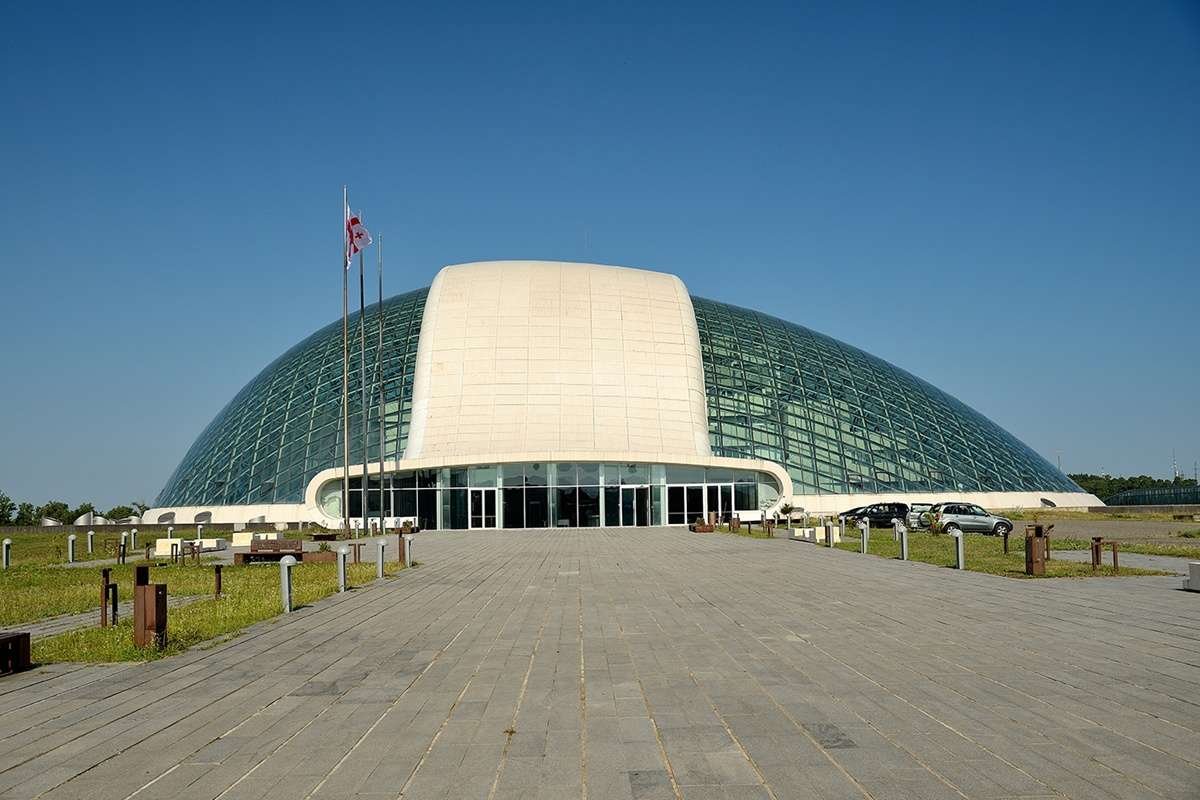
| 🏗️ Architecture | oval glass and steel dome, approx. 100×150 m, designed by CMD Ingenieros |
| 🚌 Nearby Stops | Abashidze St (400 m), Shervashidze St (560 m), "Parliament of Georgia" (680 m) |
🧭 Who will find this article useful
The former Georgian Parliament building is one of Kutaisi's most recognizable modern structures, but it has a rather convoluted history. This article will be useful for those who have already seen this glass structure at the entrance to the city and want to understand what it is, why it was built, and what will happen to it in the future.
📘 What is this building in simple terms
The former Georgian Parliament building is a massive glass and steel structure at the western entrance to Kutaisi, recognizable by its oval dome, approximately 100 by 150 meters. It was built not as a landmark, but as the working residence of the parliament, which was moved here from Tbilisi in 2012. The parliament returned to the capital in 2019, and the building stood idle for nearly six years until the decision was made to transform it into a technology center.
🕊️ History: From a memorial to the fallen to a glass parliament
Until 2009, a Soviet memorial to those who died in the Great Patriotic War stood on this site. In December 2009, it was demolished for construction, and two bystanders, a mother and daughter, died during the demolition—a tragic chapter in the site's history that deserves to be remembered.
The new building was constructed in 2011–2012 based on a design by the Spanish firm CMD Ingenieros; most sources cite Alberto Domingo Cabo as the architect, the same Spaniard who designed the transparent Georgian Ministry of Internal Affairs building in Tbilisi and the "Alphabet Tower" in Batumi—glass was then a deliberate symbol of government openness. The building opened on May 26, 2012, Independence Day, at the personal initiative of President Mikheil Saakashvili as a step toward decentralizing power. Critics immediately called the project costly: the government remained in Tbilisi, and members of parliament had to serve both cities.
💡 Editorial Tip
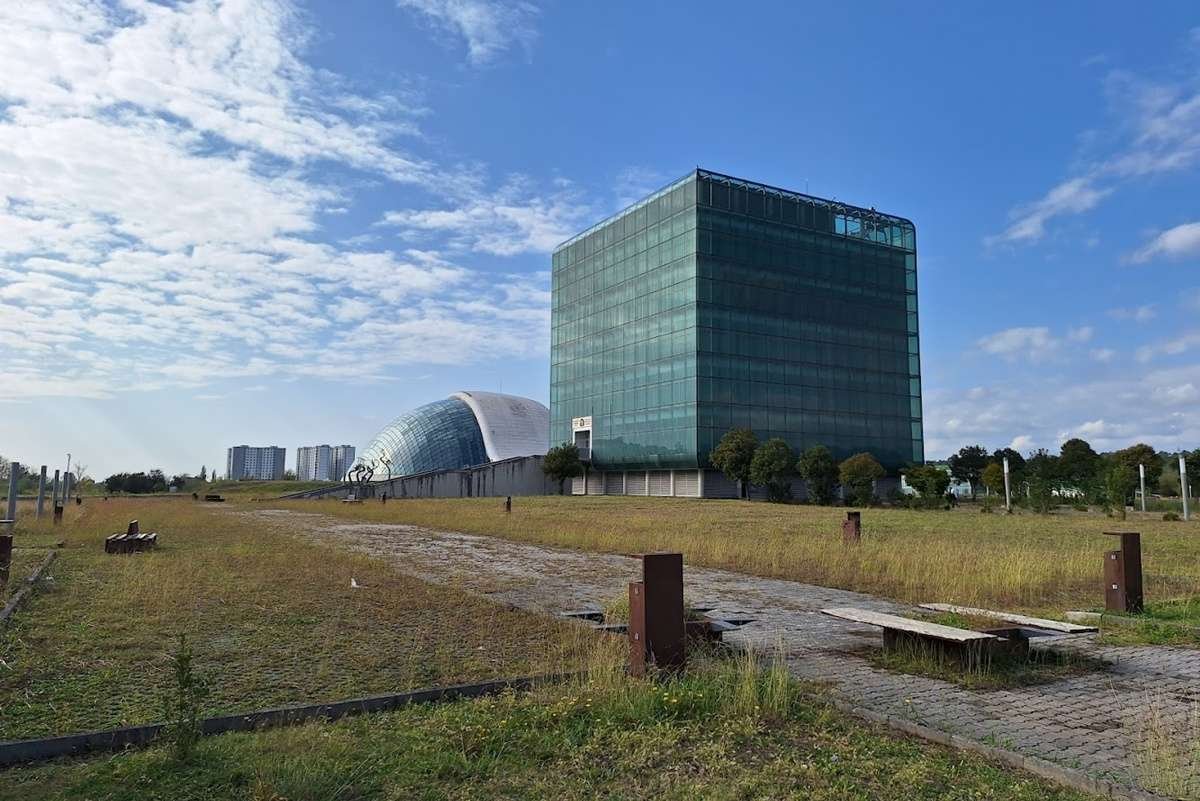
The building itself looks most photogenic from afar, from the highway at the entrance to the city: that is exactly where the scale of the oval dome stands out against the surrounding wasteland. There is not much point in coming up close just yet — entry inside is not allowed, and the surrounding grounds are still being developed for the future tech hub park.
⚖️ A short life as parliament
The first session of the newly elected parliament took place on October 21, 2012, and the building remained the parliament's formal seat until January 2019. But work began to return to Tbilisi much earlier: as early as 2014, committee meetings were permitted to be held in the Tbilisi building, and, according to journalists, at certain times the Kutaisi palace was open for no more than six days a month. A constitutional amendment that came into force in December 2018 permanently removed Kutaisi from the parliament's seat.
🚀 Technohub: What are the plans for the building
Since 2022, the government has been searching for a new use for the building—from an academy for the Ministry of Internal Affairs to a conference center—and by 2024, a solution was found: a technology hub is being created on the premises of the former parliament building, managed by the Georgian Innovation and Technology Agency (GITA). The building is slated to house a science and technology museum, an international IT school, a startup accelerator, robotics and VR/AR labs, a data center for AI development, and an international intellectual property training center. The former plenary hall is planned to be preserved in its original form—the only space that will remain intact.
The opening date has been pushed back several times: first, fall 2025, then late 2025. According to the latest information (December 2025), the opening is expected in May 2026, but the exact status should be clarified separately—work on the site is ongoing.
🗺️ What to see nearby


ℹ️ Information about the building's status, tech hub opening dates, and construction costs is current at the time of publication and is subject to change. Please check the current status before visiting.
💬 Share Your Thoughts
Have you driven past the former parliament building in Kutaisi? Share in the comments what you think about the future tech hub at this location.
🏁 Finally
The former parliament building is a rare case where a landmark is more interesting not for what it currently houses, but for what it has been over the past 15 years: a memorial, a construction site, the seat of the legislature, and now the site of a technology park.
🧡 Read More About Kutaisi
- 👑 Queen Tamar Street in Kutaisi: The University and the Chinese House
- ⛲ Colchis Fountain in Kutaisi: The Main Symbol of the Central Square
- 🗿 Monument to David the Builder in Kutaisi: History and Significance
💾 Save this article to revisit it before your trip to Kutaisi.
❓ Frequently asked questions about the former parliament in Kutaisi
💬 This was an initiative of President Mikheil Saakashvili as part of his policy of decentralization of power. The building opened in May 2012, and the parliament operated there until January 2019.
💬 The project belongs to the Spanish bureau CMD Ingenieros, and most sources cite Alberto Domingo Cabo as the architect—the same architect who designed the Georgian Ministry of Internal Affairs building in Tbilisi and the Alphabet Tower in Batumi.
💬 Until 2009, there was a Soviet memorial here in memory of those who died in the Great Patriotic War, which was demolished to make way for construction.
💬 Starting in 2024, the building is being prepared for use as a technology hub with a startup accelerator, an international IT school, and a science and technology museum. The opening date has been repeatedly pushed back, with the original opening date set for late 2025 and May 2026.
💬 Not yet: it's not a museum, and tourists don't have permanent access inside. Tours are mostly from the outside, but that may change once the tech hub opens.

3 comments
Log in to leave a comment