




Church of Forty Martyrs in Tbilisi and Archaeological Museum
⛪ Church + Open-Air Museum · ⏱️ 1–2 hours · 📍 Old Tbilisi
⛪ Know Before You Go
| 📍 What is it | An active church + open-air museum with artifacts from the 1st–3rd centuries AD. |
| 📅 Revived | The year 2010 — on the initiative of Patriarch Ilia II. Consecrated in honor of the Forty Martyrs. |
| 🏛️ Discoveries | Roman baths of the 1st–3rd centuries, a 1st-century qvevri, a water supply system, a fortress wall, roof tiles. |
| 🗺️ Historical Discovery | Tbilisi appears on Roman maps as a fortified settlement — under the name "Philada". |
| ⛏️ Excavations | Ongoing every summer. The 3rd-century bathhouse is not yet fully excavated. |
| 💰 Entrance | Free. Dress code: modest clothing, women should wear a headscarf. |
🧭 Who This Article Is For
The Church of the Forty Martyrs is one of the rare places in Tbilisi where religious history, a 4th-century military legend, and modern archaeology meet in a single courtyard. You can come here as a believer, as a tourist, or as someone curious about why the discoveries beneath this hill changed scholars' understanding of Tbilisi's age. This article is for those who want to grasp it all at once.
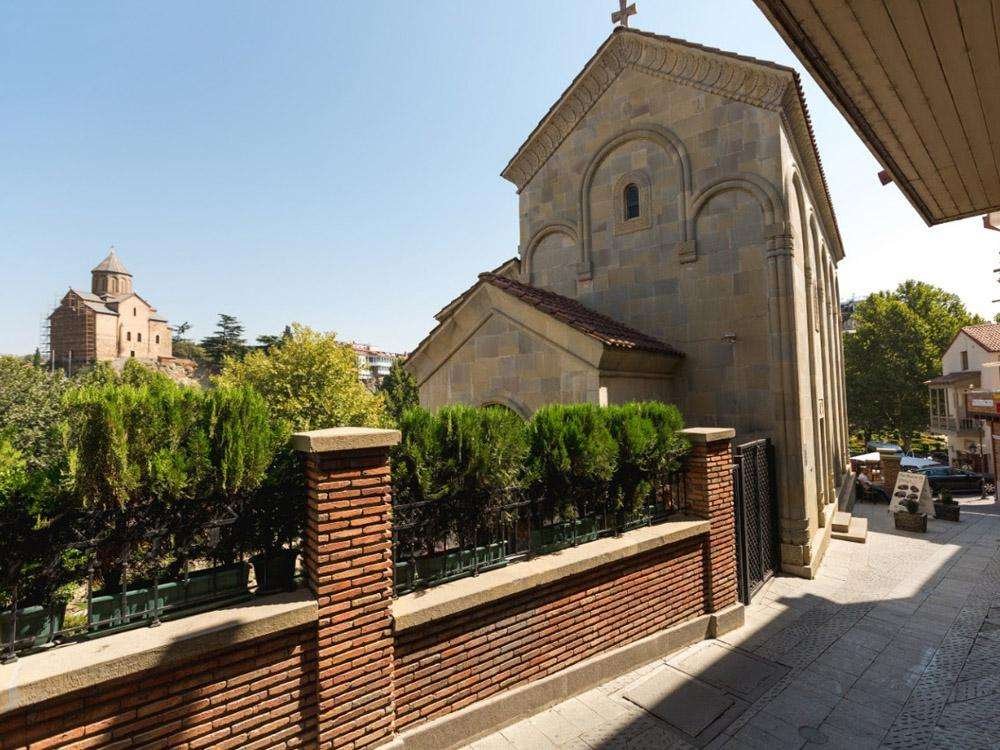
✝️ The Legend of the Forty Martyrs: What Happened in 320 AD
In 313, Saint Constantine the Great issued an edict granting freedom of religion. However, his co-ruler Licinius was a staunch pagan and began rooting out Christianity in his part of the empire. Preparing for war against Constantine, he decided to "cleanse" the army of believers.
In the Armenian city of Sebaste (modern-day Sivas in Turkey), there served a company of forty Cappadocian warriors — all Christians, all veterans of many battles. When they refused to offer sacrifices to pagan gods, the commander Agricolaus imprisoned them.
The execution was cruel: on a freezing winter night, the warriors were stripped naked and placed on the ice of a frozen lake. Nearby, a warm bathhouse was heated — to offer them a chance to recant and save themselves.
At midnight, one of the warriors could not endure it and ran towards the bathhouse. He collapsed dead right at the threshold.
At the third hour of the night, a miracle occurred: it suddenly grew bright, the ice melted, and the water became warm. The only guard awake, Aglaeus, looked at the lake and saw a glowing crown over each warrior. There were thirty-nine crowns — missing one. Aglaeus realized that the warrior who fled had lost his. He then threw off his clothes, proclaimed, "I am a Christian," and entered the water, taking the place of the fortieth.
By morning, all forty had fallen into eternal sleep.
Their relics are kept in Sebaste. A forty-domed church was erected there — but it was destroyed during the invasion of Tamerlane (Timur).
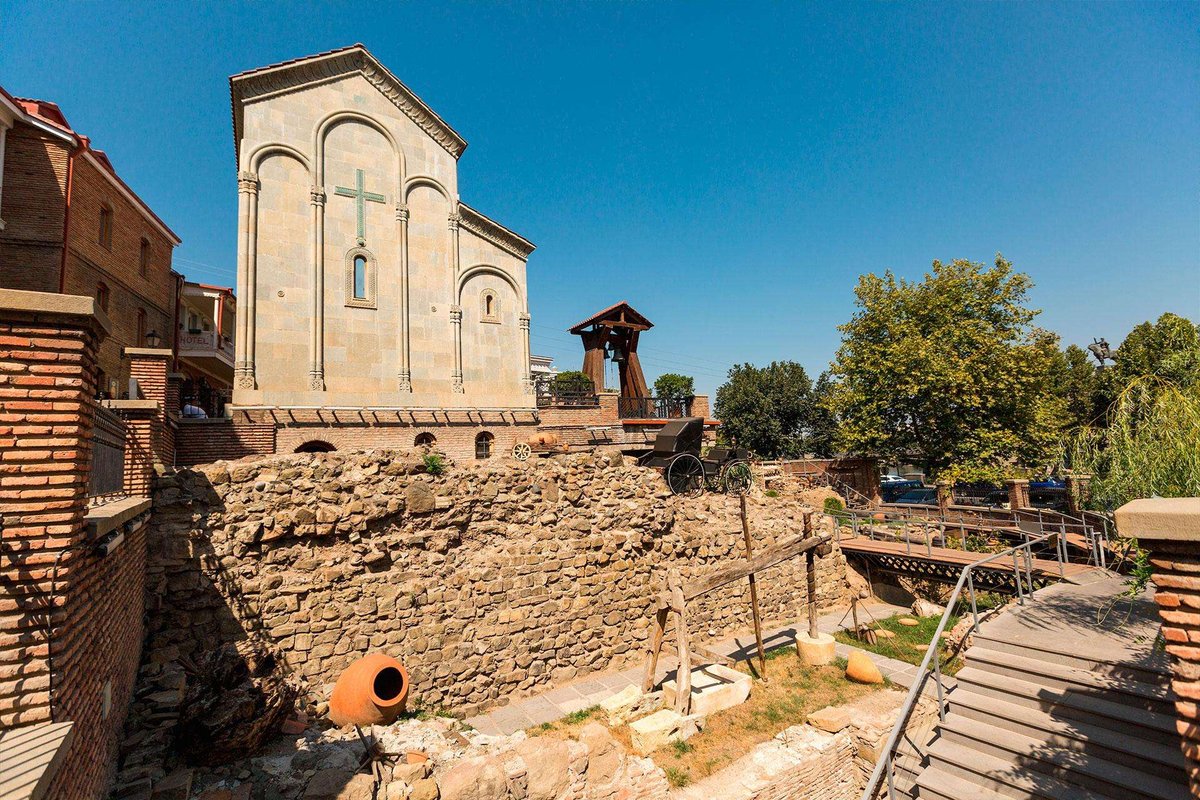
⛏️ What Was Found During Excavations
When construction began on this site and workers were searching for the ruins of the medieval Church of the Sebaste Martyrs, something completely unexpected was uncovered: Roman baths were found beneath the hill — a bath complex built in the 1st–3rd centuries AD using highest-quality materials.
The discoveries proved to be exceptional:
- Unique qvevri from the 1st century — Georgian ceramic wine vessels, the oldest ever discovered in Tbilisi.
- Water supply system — an engineering network that already existed in Tbilisi in the 1st–3rd centuries.
- Fortress wall with the remains of the baths.
- Roof tiles and various utensils.
All artifacts are gathered in the courtyard — it is an open-air museum where you can come and look at the items right at the site of their discovery.
Excavations continue every summer. The 3rd-century bathhouse is still not fully excavated — and judging by the scale, much more remains there.
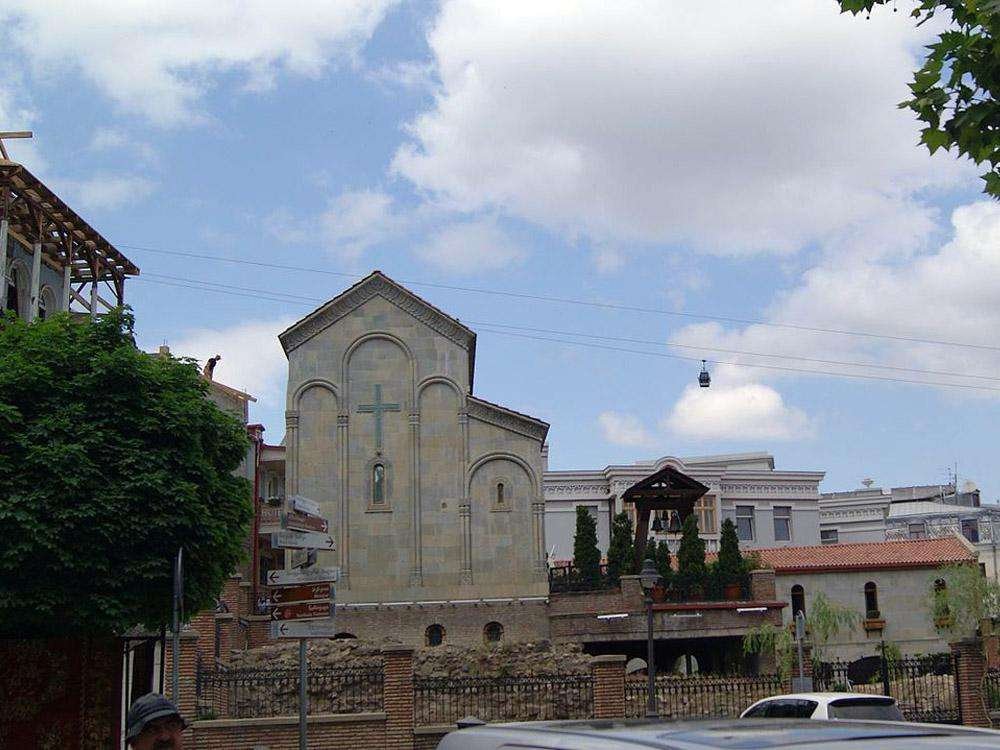
🗺️ The Main Discovery: Tbilisi Is Older Than Thought
This is the part of history that changes everything. Prior to the excavations, it was believed that Tbilisi was founded by King Vakhtang Gorgasali (5th–6th centuries) — according to legend, he was hunting, a pheasant fell into a hot spring, and the king decided to build a city here.
The discoveries on the church territory showed otherwise. A fortress wall already existed under Gorgasali. Thermal baths had already been operating since the 1st century. Gorgasali himself did not build a new city — he merely moved the capital from Mtskheta to Tbilisi, which already existed.
Furthermore: Tbilisi is marked on Roman maps as a well-fortified point and named "Philada". This means that even before the Middle Ages and before the Georgian kings, during the era of the Roman Empire, this place was already known and strategically important.
The legend of the pheasant is most likely just a beautiful story.
Start with the artifacts in the courtyard — the qvevri, tiles, and remnants of the water system. This is the best way to physically sense the scale of the discovery: 1st-century items found entirely by accident. Then step inside the church itself. The legend of the Forty Martyrs is best experienced inside, in the quiet. If you're interested in the ongoing excavations, ask the staff: works take place in summer, and you can sometimes watch it happen live.
🤝 The Question of Ownership: An Honest Answer
Several visitors ask about this directly. There is an ownership dispute between the Georgian Orthodox and Armenian Apostolic churches regarding this and several other monuments. This is a real and complex issue, rooted in the historical presence of the Armenian community in Tbilisi and how property rights over religious sites changed over time.
Since 2010, the church has operated under the aegis of the Georgian Orthodox Church. The positions of both sides on this matter exist and have their reasoning.
These disagreements do not affect the ability to visit — entrance is open to everyone.
🗺️ How to Spend Your Time Here
1️⃣ Step into the courtyard and examine the open-air artifacts — qvevri, remains of the water system, and roof tiles.
2️⃣ Find the ruins of the Roman baths — the 3rd-century bathhouse is still being excavated, but its scale is already visible.
3️⃣ Go inside the church itself — a quiet space, the iconostasis, and the atmosphere of a revived temple.
4️⃣ If you visit in the summer — ask if excavations are happening right now.
5️⃣ Continue your route through Old Tbilisi — this is an excellent starting point for exploring the historic quarters.
💬 What Those Who Have Been Here Say
"Visited the Temple of the Forty Martyrs of Sebaste and the archaeological museum. This is an incredible place that makes you think about the power of faith and the history of Georgia. It is especially interesting to see how ancient tools and buildings fit harmoniously into modern space, creating an atmosphere of living history."
"Amazed by the historical significance. I was especially impressed by the ancient Roman bath and qvevri found during excavations. This place is not only spiritual but also historical."
"The first-century bath complex completely blew my mind... high-quality materials... water supply... To say I'm impressed is an understatement!"
"Extremely interesting to learn about the historical layers: from the Roman bath to structures from the time of Vakhtang Gorgasali. The open-air museum is a great idea for preserving such a rich cultural heritage."
🏁 Why It's Worth Visiting
The Church of the Forty Martyrs is a place where three different scales unite in one courtyard. A 4th-century legend of soldiers on ice. Roman baths that changed the understanding of Tbilisi's age. And an active church open to all. The discoveries here were accidental — no one was looking for 1st-century baths. That is precisely why they are so compelling.
ℹ️ The church is active, entrance is free. The open-air museum in the courtyard is accessible for viewing. Excavations continue every summer. Dress code: modest clothing, women should wear a headscarf. Information is current at the time of publication.
Have you been to the Church of the Forty Martyrs in Tbilisi? What left a bigger impression — the legend of the soldiers on ice, the Roman baths in the courtyard, or the discovery about Tbilisi's age? Share your thoughts — we read all comments ❤️
❓ Frequently Asked Questions
💬 Forty Christian warriors from Cappadocia who served in the army around 320 AD in the city of Sebaste (modern-day Turkey). They refused to worship pagan gods → they were left on the ice of a lake in severe frost. Thirty-nine perished. Their guard Aglaeus became the fortieth — he proclaimed himself a Christian and entered the water, taking the place of the one who fled. All of them are venerated as Orthodox martyrs.
💬 In 2010 — on the initiative of the Catholicos-Patriarch of All Georgia Ilia II. It was consecrated in honor of the Forty Martyrs of Sebaste.
💬 During construction beneath the hill, workers discovered Roman baths from the 1st–3rd centuries AD, built from high-quality materials. Found items include: 1st-century qvevri (the oldest in Tbilisi), a water supply system, a fortress wall, and roof tiles along with utensils. All of this is displayed in the courtyard as an open-air museum.
💬 One of the most significant discoveries resulting from the excavations: Tbilisi appears on ancient Roman maps as a fortified point under the name "Philada". This means the city existed and was known back in the Roman Empire era, long before Vakhtang Gorgasali and the traditional version of Tbilisi's "founding."
💬 The excavations indicate exactly that: Gorgasali did not build the city from scratch, but moved the capital from Mtskheta to Tbilisi, which already existed. During his time, a fortress wall and 1st-century thermal baths were already functioning here. The legend of the pheasant in the hot spring is a beautiful story, but not the literal history of the founding.
💬 Yes. There are disagreements between the Georgian Orthodox and Armenian Apostolic churches regarding this and several other sites, stemming from the historical presence of the Armenian community in Tbilisi. Since 2010, the church has functioned under the aegis of the Georgian Orthodox Church. These disagreements do not affect visits — entry is open to all.
💬 Excavations continue every summer. The 3rd-century bathhouse is not yet fully uncovered. If you visit in summer, ask the staff — sometimes work is underway and you can observe the process.

30 comments
Log in to leave a comment