




💧 Kibura Waterfall in Adjara: the Waterfall of Love, How to Get There from Batumi and What to See Nearby
Kibura Waterfall (Waterfall of Love)
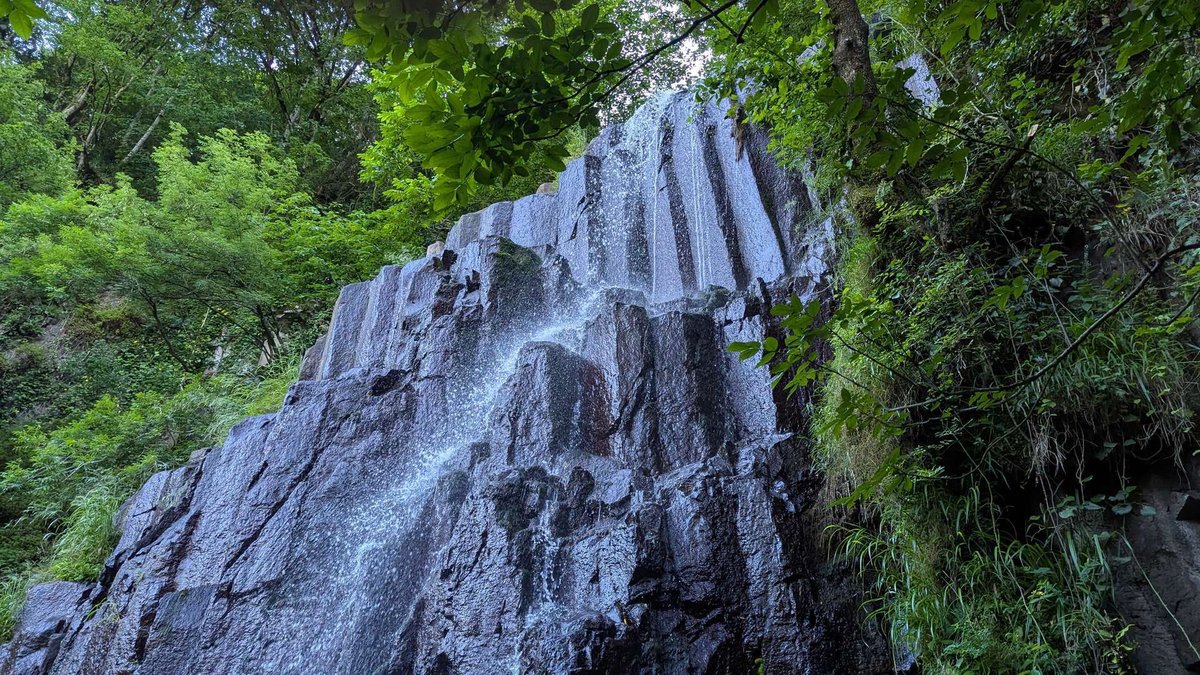
Kibura Waterfall appears in English-language Adjara tour programmes as a scheduled stop alongside Makhuntseti and Mirveti, but it rarely appears in travel writing on its own. The name has two sources: "Kibura" is the name of the 1,573-metre mountain above the site, and "Waterfall of Love" is the romantic alias the local tourism industry gave it. Both names refer to the same place, a modest cascade hidden behind a forest belt on the highway toward Keda, about 20 km from Batumi.
The Kibura Waterfall catalogue card sits in the Adjara natural attractions section of madloba. The waterfall is not the centrepiece of a day in the mountains: it is a ten-to-fifteen-minute stop with a short climb through trees, a cascade of variable strength, and one particularly good reason to pause, the confluence of the Adjaristskali and Chorokhi rivers is directly across the road. Two rivers meeting between mountains is the view the tour buses actually stop for.
🧭 Two names, one waterfall
The name "Kibura" is geographic: it comes from Mount Kibura, the 1,573-metre peak whose slopes feed this stream. The name "Waterfall of Love" is what the guides say when pointing it out on the tour bus, it has become the way the site appears on Expedia and GetYourGuide. Both refer to the same small cascade on the left side of the main road from Batumi toward Keda.
In Georgian the mountain and the area are known as კიბურა (Kibura). If you are searching on Georgian maps, this is the toponym to save.
One thing worth noting for search: some tour itineraries list the combined stop as "Confluence of the Adjaristskali and Chorokhi Rivers and Waterfall Kibura." That pairing is accurate and explains why the two are visited together. The confluence is the more visually dramatic of the two, but the waterfall is the one with a name.
📍 Where Kibura Falls is and what is around it
The waterfall is on the Batumi-Keda highway, roughly 20 km from central Batumi. The precise position is at the point where the Adjaristskali river meets the Chorokhi on the opposite side of the road. This junction of two rivers between green gorge walls is one of the distinctive sights of lower Mountain Adjara, and the Kibura waterfall adds a secondary point of interest directly across the tarmac.
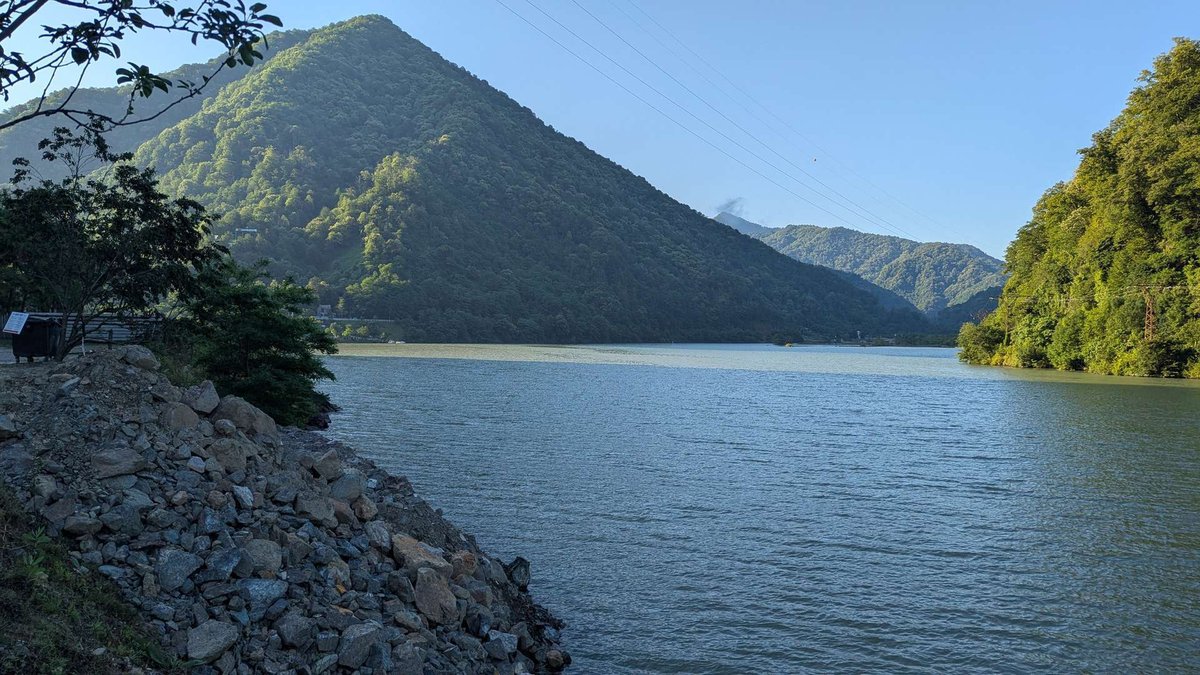
The site falls on the border of Khelvachauri and Keda municipalities. The Chorokhi is the main river of Adjara, flowing from Turkey through the mountains and reaching the Black Sea just south of Batumi. The Adjaristskali is its largest tributary. Their confluence here, surrounded by forested slopes, is a landscape that gets photographed from the bus window by nearly every group doing the standard mountain circuit.
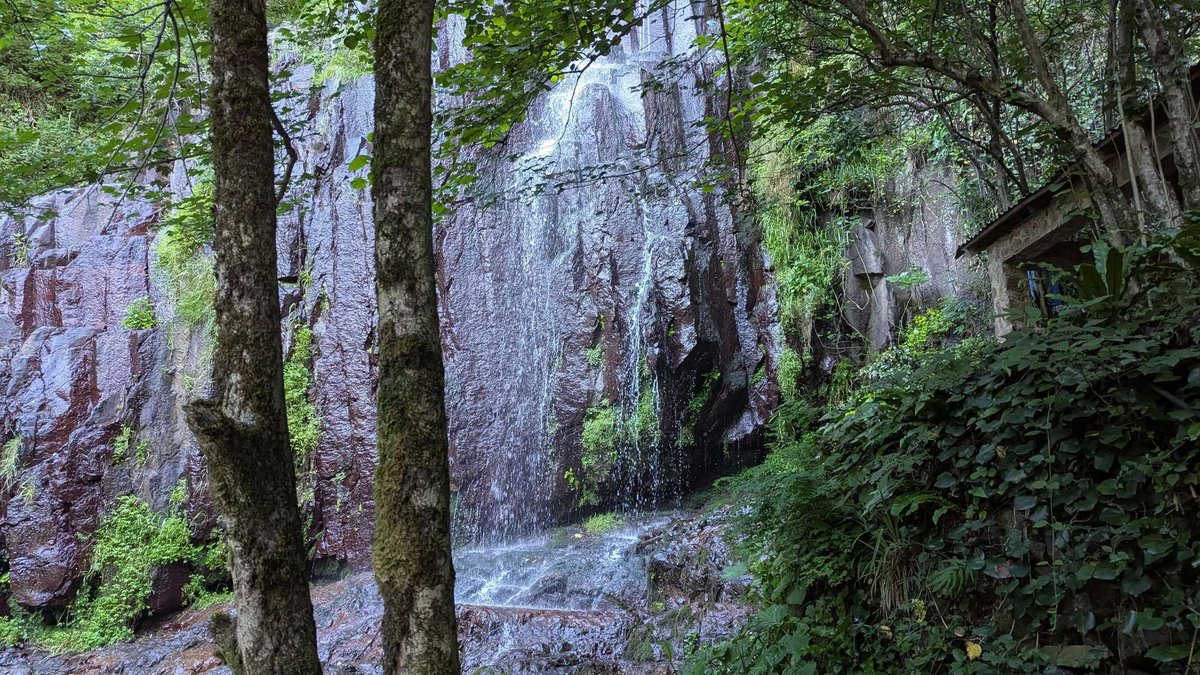
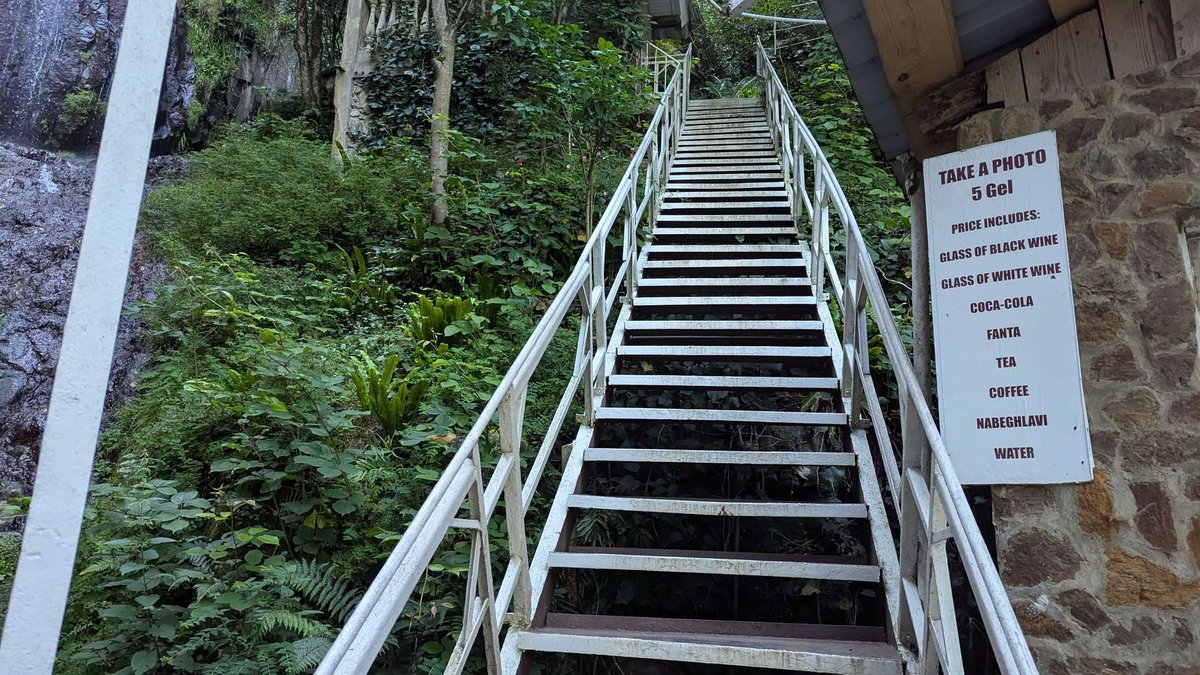
The waterfall itself is easy to miss from the road. A narrow path leads uphill through the trees; steps cut into the slope help with the climb. At the top there is a cascade falling between mossy rock faces into a small pool. In normal conditions the flow is modest. After heavy rain or during snowmelt in spring the volume increases noticeably.
🚗 Getting there from Batumi
Three ways to reach Kibura
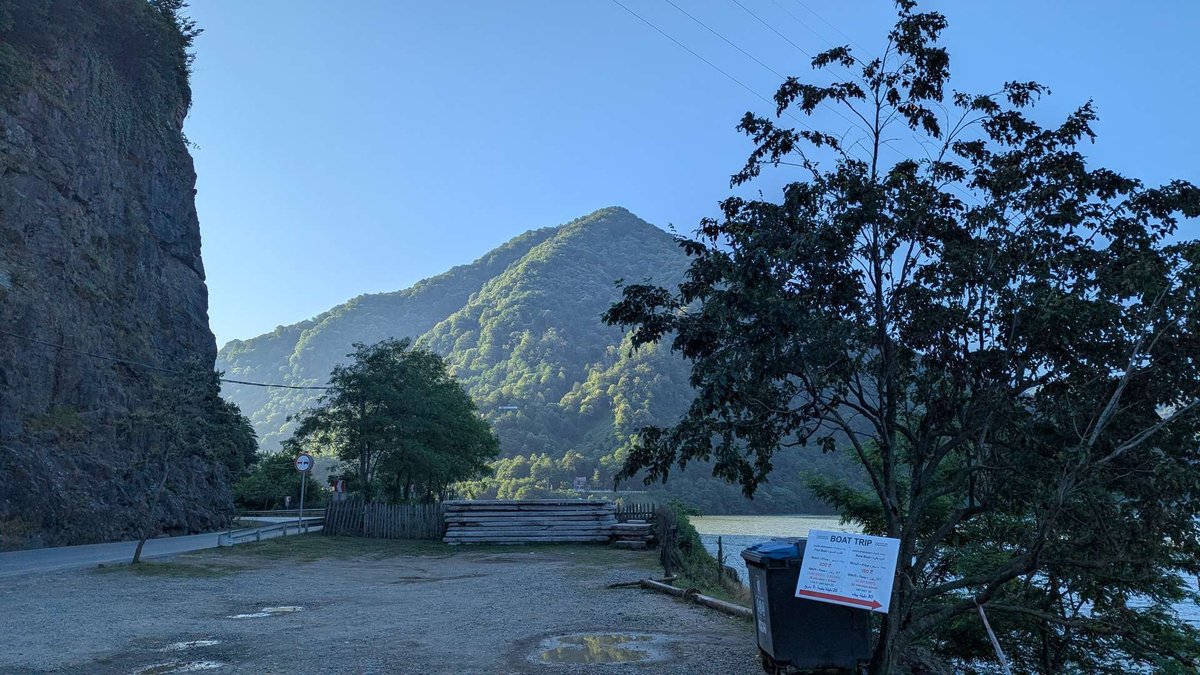
If you are driving independently, the confluence of the rivers is the easiest visual landmark. Pull over on the wide verge on the right side of the road when you see the two rivers meeting below. The path to the waterfall starts on the opposite (left) side of the road, slightly before or after the confluence point depending on the direction of travel. The road is well-maintained tarmac all the way; no off-road driving needed.
🌊 What the waterfall is like
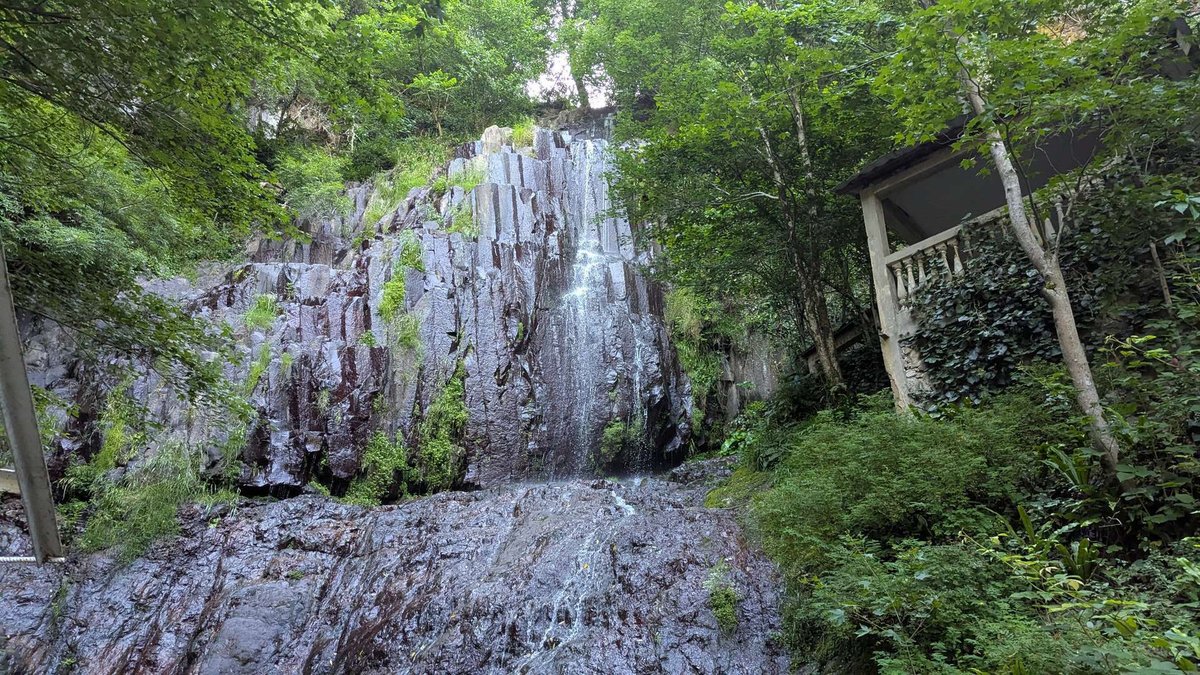
The cascade at Kibura is not imposing by the standards of Mountain Adjara. Makhuntseti, 30 km further up the valley, is 50 metres tall and thunderous. Mirveti, between Kibura and Makhuntseti, stands 22 metres. Kibura falls a few metres over rock and moss into a small pool. The appeal is not the height but the setting: enclosed by forest, cool air, the sound of the water and the knowledge that two major rivers are merging directly below.
The steps through the trees are not demanding. The climb takes a few minutes at a comfortable pace. The area around the pool is small; a handful of people can stand comfortably. In spring and after substantial rain the flow is strong enough to produce a mist and some spray. In dry summer months the waterfall is a trickle, and the confluence of the rivers then becomes the main visual reward of the stop.
Whether the name "Waterfall of Love" has any deeper story is not recorded. It is the kind of romantic name that gets attached to scenic spots in Georgian tourism, and it has stuck.
📅 When to visit
Kibura works as a stop in any season, since it is right on the main road and requires minimal effort to reach. Spring (April to June) gives the fullest flow and makes the cascade genuinely impressive. The confluence of the rivers is at its most dramatic after rain, when both the Adjaristskali and Chorokhi run high and green.
Summer visits are perfectly pleasant, though the waterfall itself will be quieter. The confluence and the forested surroundings remain scenic. Autumn gives clearer light and the forest colours change on the slopes above. Winter is passable on the road but less interesting at the waterfall.
The site is day-accessible throughout the year. There is no entrance barrier; the path is free to use.
🏞️ The Mountain Adjara circuit: how Kibura fits in
Kibura makes most sense as the opener of a longer mountain day rather than as a standalone destination. The standard circuit from Batumi runs in approximately this order:
Mountain Adjara day circuit
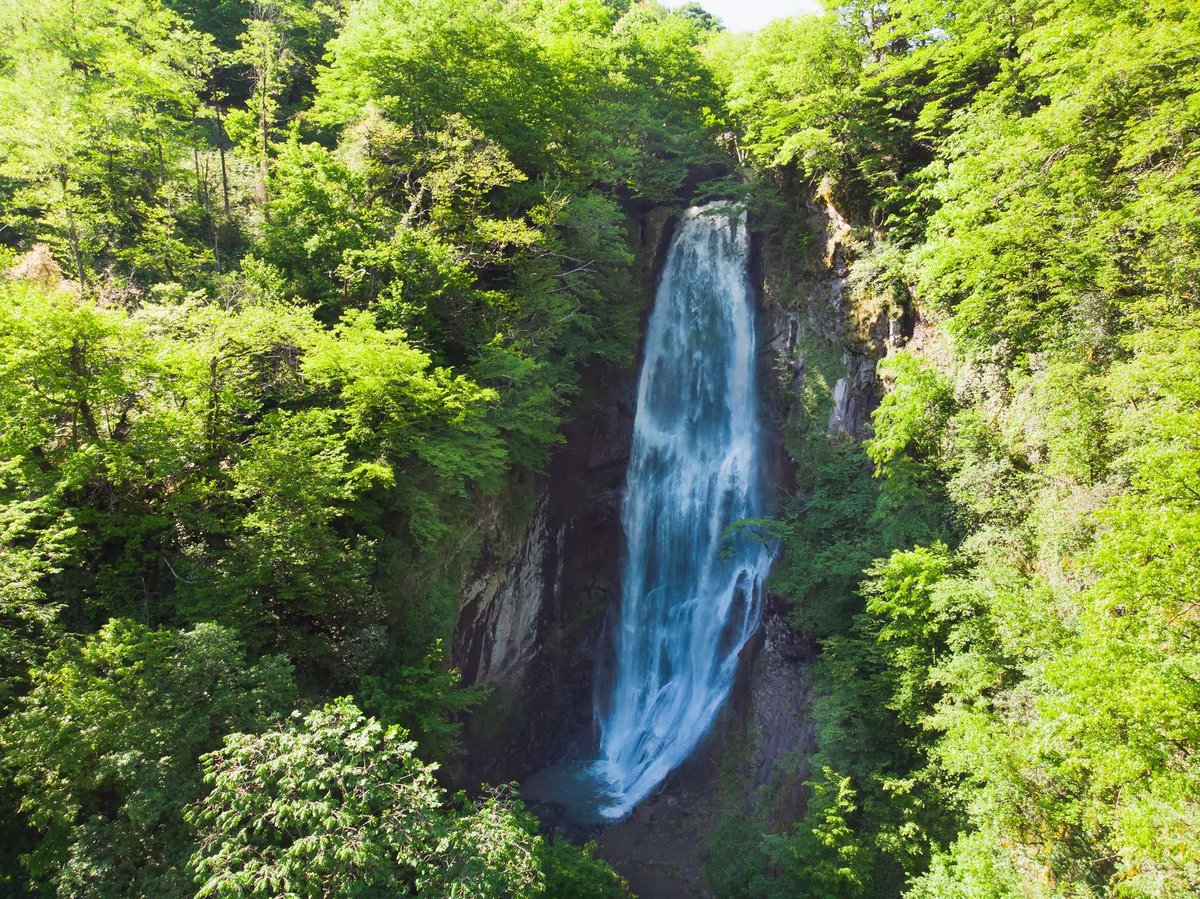
The Makhuntseti Waterfall is the anchor of the circuit and worth the trip on its own. Kibura and Mirveti are the two warm-up acts. Both add variety and extend the time spent in the mountain landscape without requiring significant effort. The natural attractions of Adjara extend well beyond this circuit, but for a first visit to Mountain Adjara this route covers the essentials efficiently.
🗺️ What else is nearby
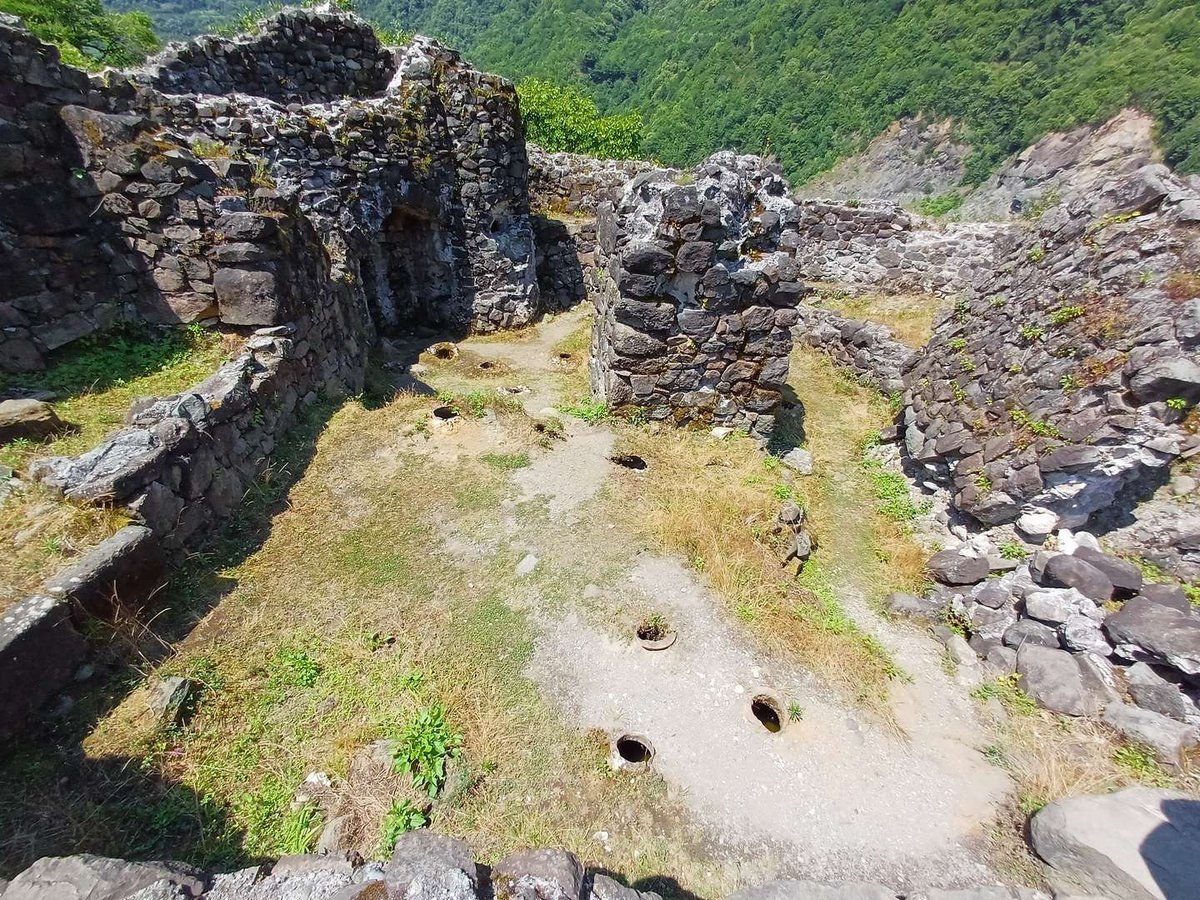
Beyond the waterfall circuit, the Keda direction opens access to several other points in Mountain Adjara. The village of Keda itself is a small market town with guesthouses. Gvara Fortress, a ruined hilltop fortification with views over the gorge junction, is in the area. The Machakhela National Park with its suspension bridges and cascading Kiramala Waterfall is a longer excursion in a different direction from Batumi.
For a full day in the mountains combining the waterfall circuit with a nature hike, parks and gardens in Batumi and the surrounding region are covered in the catalogue. A full Batumi day-trip overview is at what to see in Batumi in one day.
Over to you
Have you stopped at Kibura Waterfall on a Mountain Adjara tour? Tell us in the comments whether the flow was strong when you visited, and whether the river confluence made a bigger impression than the waterfall itself. 💧
Information is accurate as of 15 June 2026. Trail conditions and road access are stable, but flow at the waterfall varies significantly with seasonal rainfall.
FAQ
Kibura Waterfall, also known as the Waterfall of Love, is a small forested cascade in Adjara, Georgia, approximately 20 km from Batumi on the highway toward Keda village. It sits across the road from the confluence of the Adjaristskali and Chorokhi rivers and is commonly included as a brief first stop on Mountain Adjara day tours.
"Waterfall of Love" is the tourism industry name for Kibura. The geographic name "Kibura" comes from Mount Kibura (1,573 m), whose slopes feed the stream. The romantic alias is widely used by tour operators on platforms such as Expedia and GetYourGuide but has no documented historical origin.
By car: approximately 30 minutes on the Batumi-Keda highway, 40 minutes from the city centre. By public transport: minibus 77 from Batumi bus station (Mayakovsky Street 1), journey about 40 minutes; alight at the "Adjaristskali" stop and walk back roughly 900 metres, or ask the driver to stop at the river confluence.
By Adjarian standards it is modest: a few metres of drop over moss and rock, modest flow in dry conditions. The confluence of two major rivers directly across the road is often the more striking sight. Both together make a worthwhile 10-15 minute stop on a mountain day trip.
Spring (April to June) brings the highest water level and makes the waterfall most impressive. Summer and autumn are also fine; the waterfall will be quieter but the confluence and forested setting remain scenic. The road is accessible year-round.
Mirveti Waterfall (22 m, with Soviet metal bridge) and Makhuntseti Waterfall (50 m, with Queen Tamar's 12th-century arched bridge) are on the same road further toward the mountains. Together, the three waterfalls plus a wine tasting at a local cellar form the standard Mountain Adjara day circuit from Batumi.
No, the waterfall and the path to it are free to access. Tour packages include the stop in the overall tour price.

3 comments
Log in to leave a comment
ואז, מגיעים לרכס, הכנסייה שצמודה לשם, והילדים עם רגליים דביקות ממים, צוחקים ומתרוצצים. הייתי שם, והתחושה הייתה כאילו הזמן עצר. האוויר הצלול, הצמחים הרעננים, ככה זה טיולים משפחתיים - כל כך פשוט, אבל כל כך עמוק.
אם אני מגיע שוב, הייתי רוצה לשלב את זה עם מחדונצטי. באמת, איך משבצים את השניים יחד?