



Mud Volcanoes of Takhti-Tepa: Crater and Georgia Route
Mud volcanoes are found mainly in oil and volcanic areas. They also occur in the deltas of the river, the water of which brings plant residues and oil films in abundance.
Similar geological phenomena are found in many regions of the world, but the primacy in the number of active mud volcanoes is not inferior to Azerbaijan. There are about 350 mud volcanoes on the territory of this country. In Turkmenistan, Romania, Iran, Venezuela, Italy, Iceland, New Zealand, etc. there are also many mud volcanoes.
It is difficult to say what place Georgia occupies in this list in the world. Here, on the Ior plateau and the slopes of the Gombor ridge, there are many active mud volcanoes: Akhtala, Pkhoveli, Kila kupra, Takhtitepa and Forfotebi. It should be noted that the name would be suitable for any of the mud volcanoes, since each of them constantly or from time to time spews mud or gas, most often with water or oil.
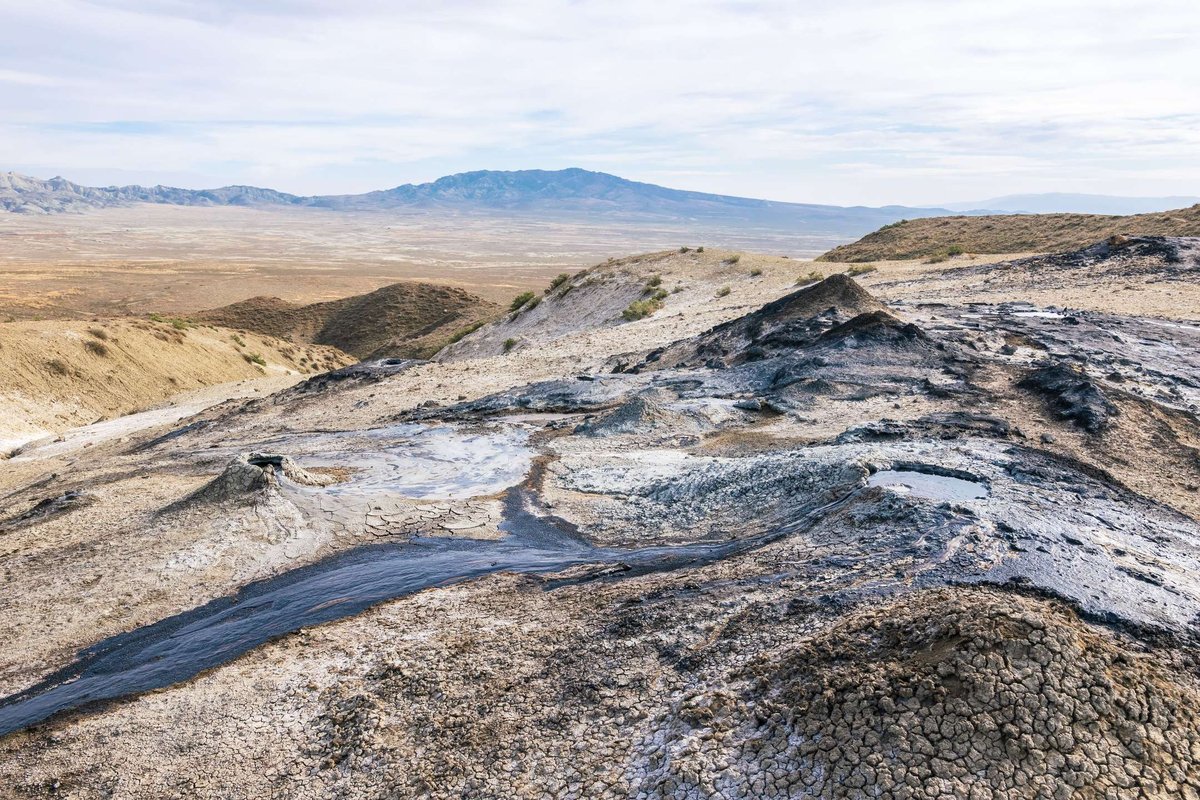
So the mud volcanoes of Takhti-Types, which are located on the Ior plateau, on the parallel slope of the Takhti-Tepsky ridge, on a white hill with a flat upland, are continuously bubbling and bubbling. The largest of the craters located on this hill is 3.4 m in diameter.
All volcanoes are constantly active: gas continuously comes out of them, mud and oil with medicinal properties are poured out. The mud flowing out of volcanoes collects and flows down into the gorge. This monument of inorganic nature is part of the nature conservation area Vashlovani. Nature conservation areas unite many more geographical attractions.
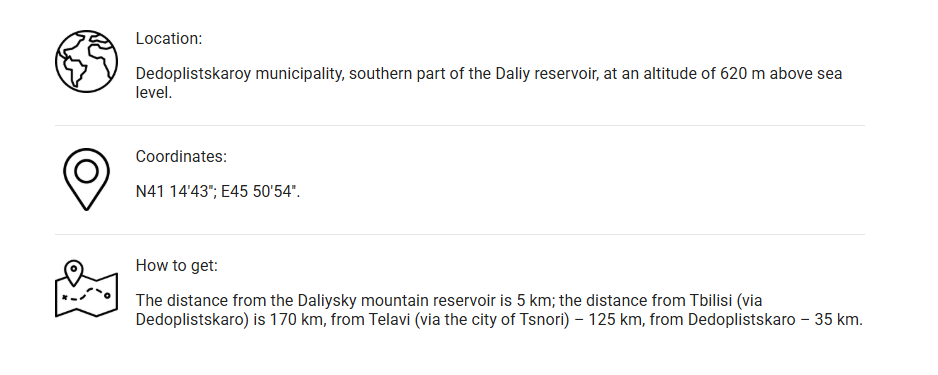
5 km north of the volcanoes, in the lower reaches of the Iori River, there is the Dali Mountain reservoir. It is the third largest reservoir in Georgia.

50 comments
Log in to leave a comment
Bir yandan bu çamur volkanlarının doğa üzerindeki etkisi hakkında düşünmeden edemiyorum. Yani, gerçekten bu kadar aktif olan bir yer, ne kadar güvenli? Biraz da kaygı uyandırıyor, açıkçası. Sanırım sadece merak duygusu değil, aynı zamanda bu yerlerin gizemi ve tehlikesi de beni cezbetti. Gezginler için bir cennet gibi, ama içinde barındırdığı belirsizlikler de var.
Burayı ziyaret etmeyi düşünsem, yanımda neler götürmeliyim?
But I couldn't shake off the strange feeling of how nature has these wild contrasts: serene mountains nearby, and then this chaotic, bubbling mud. It got me thinking about how little we actually understand about our planet, right? So, what's the best time of year to visit these mud volcanoes if I want to catch them at their most active?
Особенно впечатляет сам ландшафт — светлые холмы, глина и почти «инопланетные» виды вокруг. Самый крупный кратер здесь достигает примерно 3,5–4 метров в диаметре, и он постоянно активен. 
Мне понравилось, что в рейтинге рассказывается не только о самих вулканах, но и о том, как туда добраться и что ещё можно увидеть рядом. Например, недалеко находится водохранилище Дали, где можно остановиться, отдохнуть и сделать красивые фотографии. 
Честно говоря, после прочтения этого рейтинга очень захотелось увидеть грязевые вулканы Тахти-Тепа своими глазами. Такие необычные природные места делают путешествия по Грузии ещё интереснее и неожиданнее.
А кто-нибудь из вас уже видел грязевые вулканы вживую? Интересно, насколько сильно ощущается запах газа рядом с кратерами? 🌋✨
высоким жерлом в Грузии.Деаметр его самого большого кратера составляет 3,4 м.Находится вулкан на Иорском плоскогорье,его грязь имеет
лечебное свойство.Тахти-Тепа является памятником неорганической природы ,его территория входит в охранную зону.Грузия это природная здравница.